
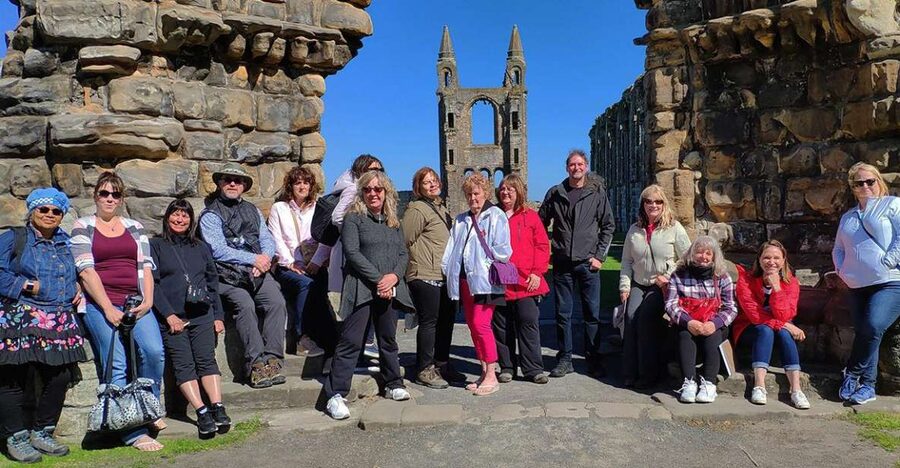
Reviewed · ST ANDREWS TOURS
St Andrews: 90-Minute Historical Walking Tour
St Andrews has more to offer than golf and postcard views. This 90-minute walk with local historian Richard Falconer traces more than 2,000 years of stories, from Pictish kings and royal visitors to vanished buildings, the Knights Templar, and treasure said to have disappeared with the cathedral.
I like the tour’s off-the-beaten-track focus, and I like the use of a wireless receiver and whisper earphone when the group is large. The main consideration is pace: this is not a gentle stroll for anyone with knee, hip, ankle, or walking problems, and you need a firm command of English to follow the talk.
Key points at a glance
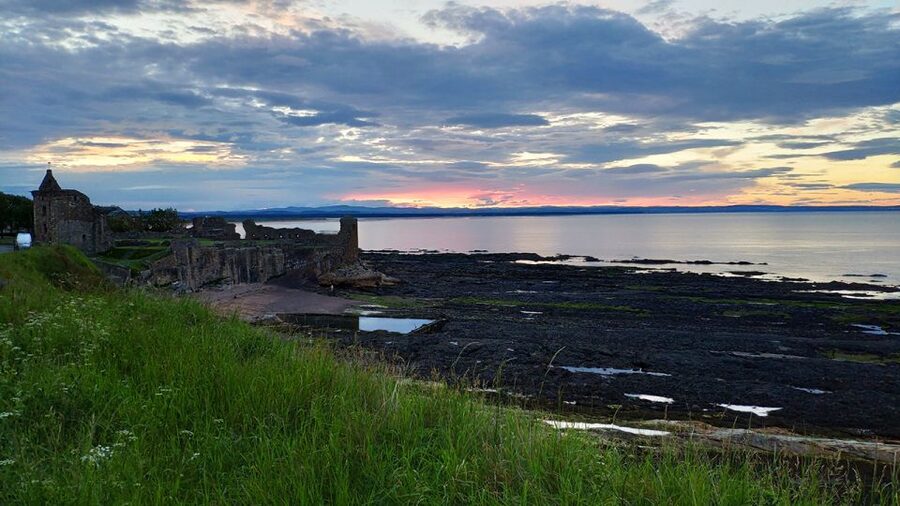
- A local historian with 40 years of research: Richard Falconer brings his own work on St Andrews’ lost places and forgotten stories.
- Much more than golf: The route focuses on royal, religious, university, and architectural history rather than the Old Course.
- A compact route through the old town: You visit or pass St Mary’s College, the Pends, harbour, cathedral, castle, and St Salvator’s College.
- Unusual subjects: Hear about the St Andrews Meridian Line, a demolished observatory, a former Knights Templar site, and a lost university dwelling.
- Good value at $20: A focused introduction to the town costs less than many longer sightseeing outings and leaves time for independent exploring.
- A brisk, English-language walk: Tours run in rain unless conditions become extreme, so wear proper shoes and outdoor clothing.
Why this walk feels different from a standard town tour
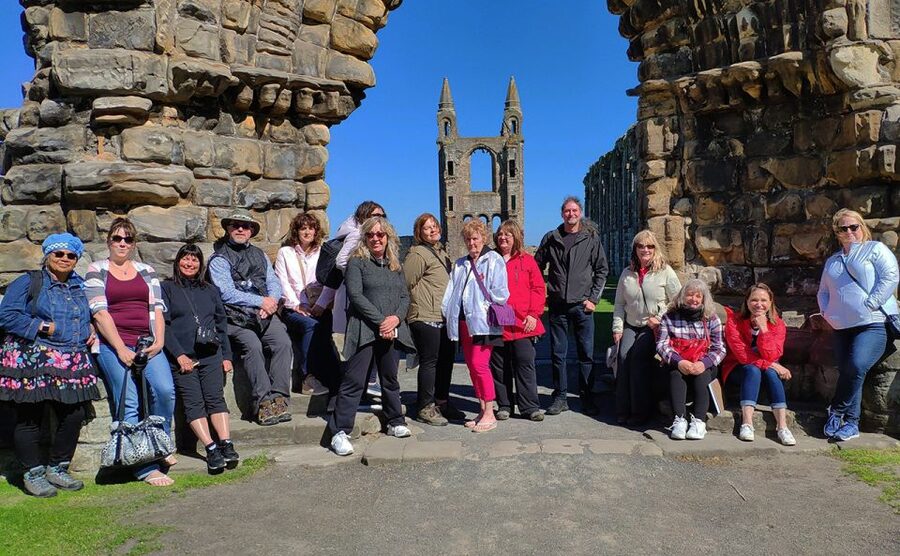
Many introductions to St Andrews naturally settle on two subjects: golf and the cathedral. This walk gives both a wider setting. You’ll hear how St Andrews became a spiritual centre as far back as 500 BC, then follow its changing role through the Pictish kings, Scottish royalty, church leaders, and the university.
The difference lies in Richard Falconer’s chosen details. His work concerns what has vanished as much as what remains. That means a ruin, street corner, or university building can lead to a story about a lost observatory, a forgotten 16th-century dwelling, or treasure connected with the cathedral.
I like that approach because St Andrews can sometimes feel as though its most famous sights do all the talking. Here, the gaps matter too. The missing buildings and half-forgotten stories help you picture a town that was once larger, busier, and more politically important than its surviving stones suggest.
The tour is conducted in English, and fluent understanding is essential. Speaking slowly or translating will not make the experience work well, since the guide covers many names, dates, and connected ideas in a short time.
More History Tours in Britain:
- London: Historic Pubs of Central London Walking Tour
★ 4.9 · 1,065 reviews - Portsmouth: Historic Dockyard Ultimate Explorer Ticket
★ 4.8 · 1,052 reviews - York: Witches and History Old Town Walking Tour
★ 4.7 · 928 reviews
Meeting at Church Square
The walk begins outside The Bothy restaurant in Church Square, at KY16 9NN. The restaurant was formerly called the Dolls House Restaurant, so that older name may still be useful if you are checking directions. Look for the local operator’s name board in front of the restaurant, behind Holy Trinity Church.
Arrive early. The tour leaves promptly, and the meeting sign can be easy to miss. One useful habit is to locate Holy Trinity Church first, then check the area behind it rather than searching only for the restaurant entrance.
Church Square is a fitting place to begin. You are already in the historic centre, close to the university and the old religious heart of town. Starting here means the tour can move straight into St Andrews’ past instead of spending its first minutes on transport or a long walk from the edge of town.
The route ends back at the meeting point area, at Central Bar. That makes the timing easy to manage. You can book the walk early in your visit, then use what you learn to choose which buildings and museums deserve a closer look later.
St Mary’s College and the university quarter
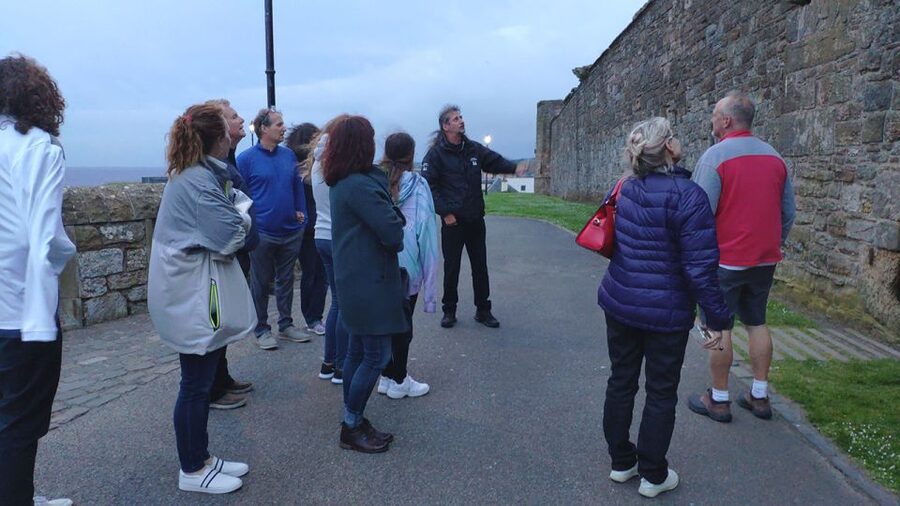
The first main stop is St Mary’s College, one of the historic colleges of the University of St Andrews. The university is Scotland’s oldest, so this part of the route gives useful context for the town’s continuing academic life.
You’ll make a photo stop and hear about the college rather than simply pausing for a picture. The attraction here is the connection between the university and the wider town. St Andrews is not a preserved medieval shell with a modern campus added later. Its colleges, streets, churches, and older institutions overlap in a compact area.
Next comes the School of History, specifically the area associated with medieval history. This is another photo stop, and it reinforces the tour’s main theme: the past is not kept in one fenced-off attraction. It appears in working university buildings, old boundaries, and places that can be easy to pass without a guide.
You then pass St Leonards School. Since this is a pass-by rather than a full visit, expect a brief exterior view and commentary, not an extended stop. That distinction matters if you are hoping to enter every building on the route.
The Pends and the old approach to the town
The Pends is one of the more atmospheric sections of the walk. You’ll visit, walk through the area, and stop for sightseeing and photographs. Its value is not only visual. It helps you understand how old St Andrews was arranged and how movement through the town once worked.
This is the kind of place that benefits from a guide’s explanation. On your own, you might notice the masonry and the narrow passage but miss the political, religious, or practical reasons behind it. Richard’s research into lost St Andrews adds another layer, linking the surviving structure to things that no longer exist.
The route is still moving at a steady pace, so this is not the time for a long independent photography session. If you want careful architectural pictures, take a few as the group pauses and return later on your own.
More Walking Tours in Britain:
- Magical London: Harry Potter Guided Walking Tour
★ 4.7 · 22,044 reviews - London: The Original Jack the Ripper Walking Tour
★ 4.7 · 7,833 reviews - Oxford: University and City Walking Tour with Alumni Guide
★ 4.7 · 4,429 reviews - London: Harry Potter Movies Walking Tour (Kids Go Free)
★ 4.7 · 3,071 reviews
Harbour views and St Andrews’ changing fortunes
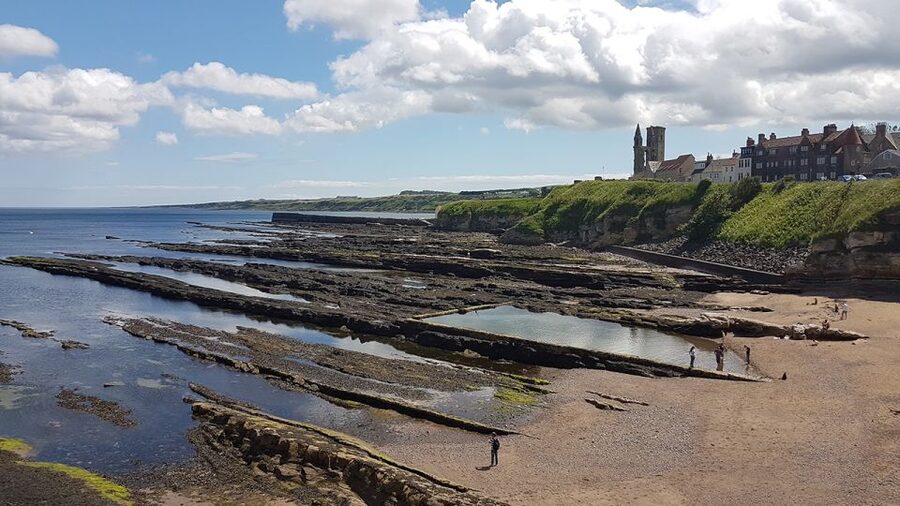
The walk continues to St Andrews Harbour for sightseeing and photographs. The harbour gives you a change of view after the college buildings and narrow old-town spaces. It also offers a useful reminder that St Andrews was not only a centre of worship and study.
The harbour’s presence connects the town to the sea and to the practical life that supported it. The tour’s broader story is about change: institutions rise, lose influence, move, or disappear. A waterfront stop helps break up the concentration of university and church history while keeping the focus on how the town functioned.
Weather matters here. The tour runs rain or shine unless conditions become too extreme, and exposed areas can feel unpleasant in poor weather. Bring a waterproof layer rather than relying on a clear forecast from the morning. Comfortable shoes are also important, since the route includes several walking sections and is not designed for a slow pace.
Cathedral, castle, and the stories beneath the ruins
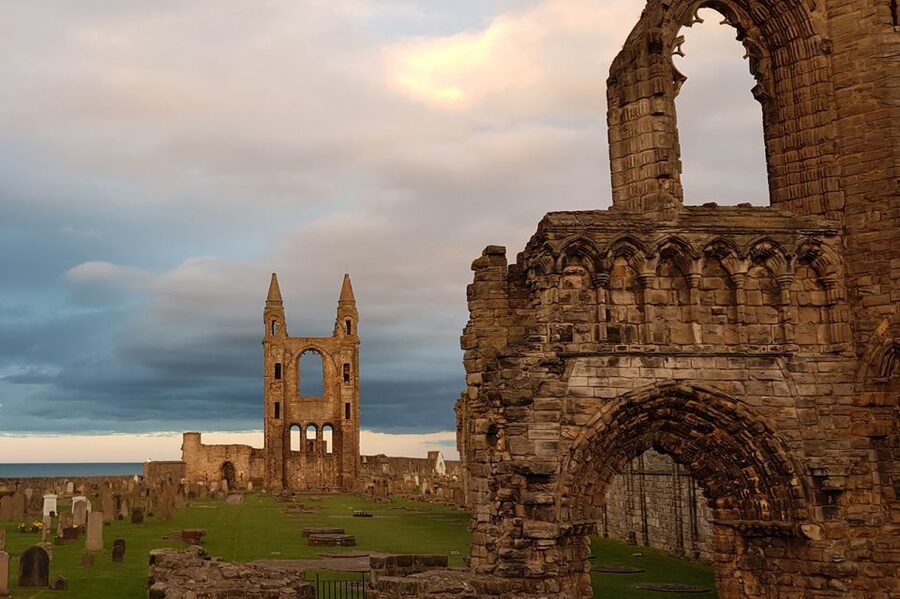
St Andrews Cathedral is the great historical centrepiece. You’ll stop for sightseeing, photographs, and a visit. Even in ruined form, it gives scale to the town’s former religious importance.
Richard’s account goes beyond the visible walls. You’ll hear about the cathedral’s rise and fall, including the lost treasure of St Andrews Cathedral and the possibility that it may still be here. That subject captures the tour’s style: documented places sit alongside open historical questions and the results of ongoing research.
You should keep your expectations clear. The tour provides a guided visit and historical explanation, but the supplied information does not promise a separate interior admission, tower climb, or extended archaeological tour. Treat the cathedral stop as one part of a fast-moving town walk, not as a replacement for spending a full afternoon at the cathedral site.
St Andrews Castle follows as a sightseeing stop and pass-by. The castle’s position in the route helps connect religious authority with political and military power. You’ll hear about the town’s changing fortunes rather than simply collecting another photograph of old stone.
Because the castle is listed as a pass-by, the stop may be briefer than the cathedral visit. If the castle is a personal priority, plan independent time for it before or after the walk.
St Salvator’s College and royal connections
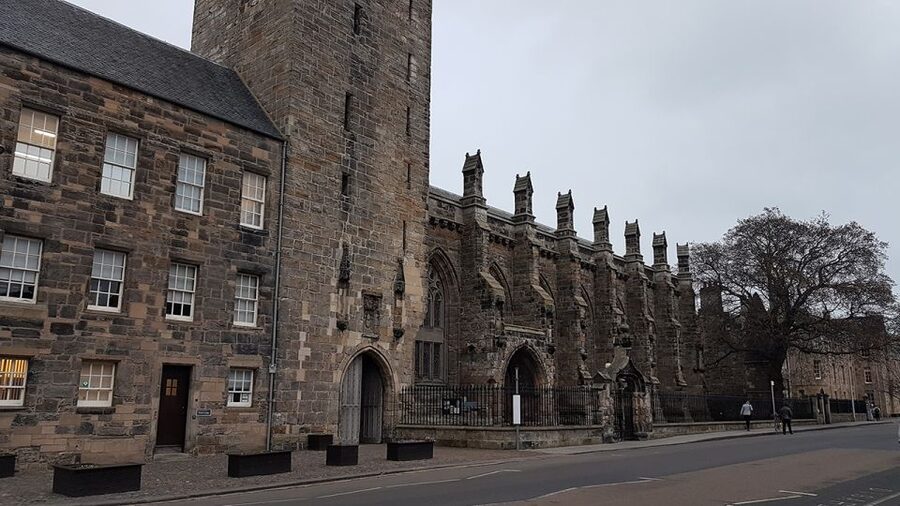
The final major landmark is St Salvator’s College, where you’ll stop for a visit, sightseeing, and photographs. Like St Mary’s College, it shows how the university remains woven into the old town.
By this point, the royal connections should have a clearer shape. The tour covers Pictish kings, Robert the Bruce, Mary of Guise, James V, Mary Queen of Scots, and Prince William. These are not presented as isolated names. They form part of St Andrews’ long connection with Scotland’s church, crown, and education.
I find this one of the strongest reasons to take the walk near the start of a stay. Once you know which royal figures, church institutions, and university traditions shaped the town, later visits to the cathedral, castle, or colleges have more meaning.
The route finishes at Central Bar, back near the starting area. You are not left on the far side of town, which is helpful if you have a timed booking, train connection, or dinner plan.
The unusual stories you’ll hear along the way
The main sights are only half the appeal. Richard’s research brings in subjects that are easy to miss on a basic orientation walk:
- St Andrews’ role as a spiritual centre since 500 BC
- Its links with Pictish kings and later Scottish royalty
- A former Scottish seat of the Knights Templar
- The St Andrews Meridian Line
- The demolition of the town’s first observatory
- A nearly forgotten 16th-century university dwelling
- The lost treasure of St Andrews Cathedral
- Recent developments in Richard’s historical research
These details suit people who enjoy connections rather than a simple list of dates. You’ll need to listen closely, though. The tour covers a lot in an hour and a half, and the information comes in spoken form as you walk between sites.
For a larger group, the personal wireless receiver and whisper earphone are a real practical benefit. You can hear the guide without everyone crowding around him. The equipment is especially useful in busy streets or near open spaces where wind and background noise could otherwise make parts of the talk hard to catch.
How much value do you get for $20?
At $20 per person, the tour is priced as a low-cost introduction rather than a full-day historical program. The value comes from the guide’s research and the number of subjects covered in 90 minutes.
You get a professional historian guide, a route through several of St Andrews’ most important areas, and access to stories you are unlikely to find from a quick self-guided walk. You also finish with most of the day available for museums, the cathedral grounds, the university, or golf-related activities.
The short duration is both a strength and a limit. It works well if you have only a few hours in town or want a clear orientation before exploring alone. It will feel compressed if you prefer long pauses, detailed building interiors, or time for extensive photography.
The tour does not feature golf. That is useful to know before booking. If your main interest is the Old Course, professional golf, or caddie stories, choose one of Richard’s separate options focused on Old Course history or town, golf, and Old Course history instead.
Who should book this walk?
I would choose this tour if you enjoy local research, historical puzzles, church and university history, and compact walking routes. It is especially useful for first-time visitors who want to understand why St Andrews matters before spending more time at its individual sights.
It also suits repeat visitors who have already seen the cathedral and castle but want a different angle. Richard’s focus on lost buildings, vanished institutions, and overlooked locations gives familiar streets a new purpose.
It is less suitable for anyone who wants a leisurely stroll. The conditions specifically rule out people who walk slowly or have mobility problems, including Zimmer frames, knee or hip problems, and sprained ankles. It is not suitable for wheelchair users, either.
Children under 16 must be accompanied by an adult. Children under five can join free, but the tour is not suitable for children under two. Since the material is delivered in English and moves quickly, older children who can listen carefully will get more from it than very young ones.
There are also firm behaviour rules. Pets are not allowed, apart from assistance dogs. Alcohol and drugs are prohibited, intoxicated participants may be asked to leave without a refund, and disruptive behaviour is not accepted.
Practical advice before you go
Wear comfortable shoes and weather-appropriate clothing. The route takes place outdoors and continues in ordinary rain, so a waterproof jacket is sensible even on a bright-looking day.
Arrive before the scheduled start time, and check the meeting point in advance. The sign behind Holy Trinity Church is easy to overlook, and a prompt departure means late arrivals may struggle to join.
If you are booking for more than 10 people, contact the local partner about availability. For ordinary bookings, free cancellation is available up to 24 hours before the tour, and you can reserve now and pay later, which helps if your wider Scotland plans are still shifting.
The tour is rated 4.8 from 23 ratings. The strongest themes are clear: Richard’s local insight, the amount covered in a short time, the humour mixed with historical detail, and the sense that the stories are based on personal research rather than folklore alone. One booking had a little trouble finding the meeting sign, so that small warning is worth taking seriously.
Should you book the St Andrews historical walk?
Book it if you want a brisk, research-led introduction to St Andrews and you are comfortable walking at a steady pace in changing weather. At $20, it offers a useful amount of historical context for a modest price, with enough unusual material to make the town feel more than a collection of famous ruins.
Skip it if golf is your main reason for visiting, if you need a slow and accessible route, or if you prefer to spend 90 minutes inside one major attraction. For everyone else, this is a smart first look at St Andrews, especially when Richard Falconer’s forgotten stories are more appealing than a standard list of dates and monuments.
FAQ
How long is the St Andrews historical walking tour?
The tour lasts 1.5 hours, or 90 minutes. Check availability for the scheduled starting times.
Where does the tour start?
Meet outside The Bothy restaurant in Church Square, St Andrews, KY16 9NN. The restaurant was formerly called the Dolls House Restaurant. Look for the local operator’s name board behind Holy Trinity Church.
Where does the tour finish?
The activity ends back at the meeting point area, at Central Bar.
Is golf included in this tour?
No. This walk does not feature golf. Separate tours are available for Old Course history and for town, golf, and Old Course history.
Is the tour conducted in English?
Yes. The live guide speaks English, and all participants need to understand English well. Speaking slowly or translating is not considered suitable for this tour.
Is the walk suitable for people with mobility difficulties?
No. It is not suitable for people who walk slowly, use Zimmer frames, or have knee, hip, or ankle problems. It is also not suitable for wheelchair users.
What happens if it rains?
The tour takes place rain or shine, although it may be cancelled if the weather becomes too extreme. Bring comfortable shoes and clothing suited to the forecast.
New listings around Britain
- London: Secrets of Freddie Mercury Tour with a Cocktail★ 4.1 · 15 reviews
- London: Hampton Court Private Guided Tour★ 3.4 · 15 reviews
- Edinburgh: Isle of Skye, Highlands & Jacobite Steam Train★ 4.6 · 15 reviews
- London: Jack the Ripper Tour and Underground Prison in Spanish★ 5.0 · 15 reviews
- Spanish Language : Original Harry Potter Walking Tour★ 4.5 · 15 reviews
- THE HANGOVER BRUNCH | Benidorm Bingo & Drag Queens★ 4.5 · 15 reviews
- London: Private Couples Photography Session with Landmarks★ 5.0 · 15 reviews
- London: The Saturday Supershow Cabaret at Phoenix Arts Club★ 4.5 · 15 reviews
St Andrews Tours, compared.
Browse the lists this tour appears in