
Reviewed · LONDON TOURS
London: Medieval History Walking Tour from The Tower
The best thing about this tour is the way it turns a simple walk along the Thames into a connected story of London. You begin beside the Tower of London and end near St Paul’s Cathedral, passing royal power, old markets, medieval churches, theatreland, warships, and river crossings along the way.
I like the route for two reasons. First, Mick Priestley’s storytelling goes well beyond dates and names, linking politics, religion, trade, and everyday life. Second, the walk includes places many first-time visitors skip, especially Winchester Palace and the remains around Southwark. The main consideration is your feet: two hours is a lot of standing and walking, even though the pace is described as manageable.
Key points to know before booking
- A Tower Hill to St Paul’s route: See a long stretch of central London without spending the afternoon on a bus.
- Medieval London with modern context: Roman beginnings, medieval power struggles, Shakespeare, D-Day, and present-day London all fit into one walk.
- A guide who welcomes questions: Mick Priestley uses stories, humor, and archive photographs to make old buildings easier to picture.
- Several less obvious stops: Winchester Palace, Southwark Cathedral, the Golden Hinde, and Borough Market add texture beyond the famous landmarks.
- A strong value at $24: You get two hours with an English-speaking historian guide and no admission fees are needed for the walk itself.
- A weatherproof plan: The tour runs in rain or shine, so shoes and clothing matter more than usual.
Starting beside the Tower of London
Meet outside the western exit of Tower Hill Underground Station, near Trinity Square, The CitizenM Hotel, and the Tower Hill Tram burger van. Look for a guide holding a flagpole with a flag flying from it. This is a useful meeting point because Tower Hill is easy to reach, but the area can be busy, so arrive with enough time to orient yourself.
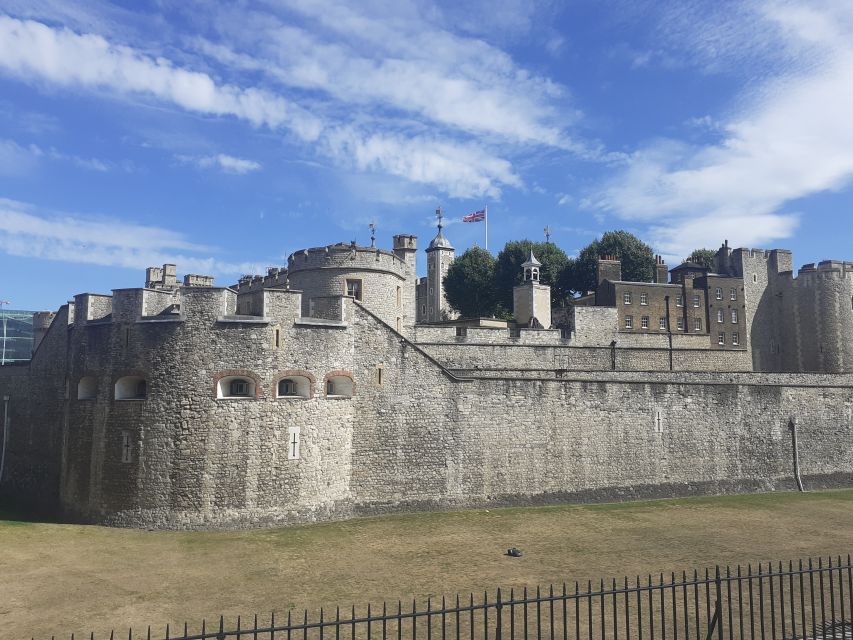
The Tower of London provides the opening scene. You do not enter the fortress on this tour, but you get a guided introduction to its 1,000-year story from outside. That distinction matters. If you want the Crown Jewels, ravens, interiors, and prison cells, you need a separate admission ticket and extra time.
From the pavement, though, the Tower still gives the tour a powerful start. It was a fortress, palace, prison, execution site, and symbol of royal control. Starting here helps explain why London grew around the river and why the Thames was both a highway and a defensive barrier.
Mick Priestley is especially strong at connecting a building to the larger story around it. You are not simply told that the Tower is old. You are given a sense of how authority worked in medieval London, how religion and politics overlapped, and how the river carried people, goods, and news.
More History Tours in London
- London: Historic Pubs of Central London Walking Tour
★ 4.9 · 1,065 reviews - London: Soho Music and Historic Pubs Walking Tour
★ 4.9 · 836 reviews - London: Rock ‘n’ Roll History Tour
★ 4.6 · 645 reviews
Crossing Tower Bridge and meeting the Thames
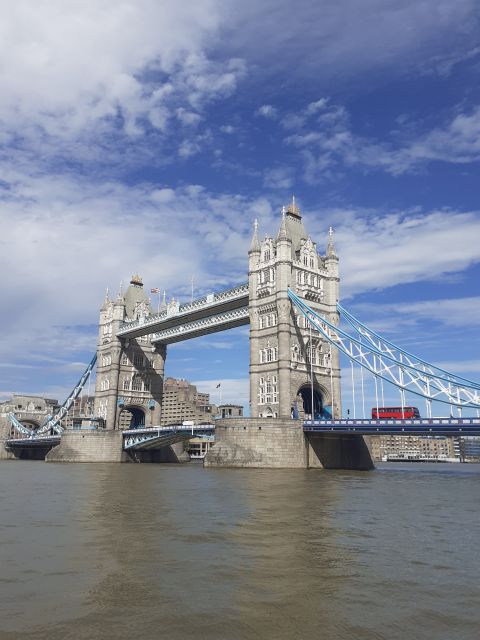
Tower Bridge is one of London’s great visual treats, but the tour gives you more than a photo stop. You cross the bridge while learning how it was built and why this crossing became necessary as London expanded eastward.
The bridge dates from the Victorian period, so it is not medieval. That contrast is useful. London’s past is not sealed into one era. A medieval fortress, a nineteenth-century engineering project, a twentieth-century warship, and a modern pedestrian bridge can all appear within the same short stretch of river.
The crossing also gives you changing views of the Thames. Look back toward the Tower and forward toward the South Bank. The city feels layered here, with glass towers, old churches, working river spaces, and historic landmarks sharing the same view.
Tower Bridge can be crowded, and the pavement is not the place for a long private photo session. You will have opportunities for pictures, but keep moving with the group and listen for the guide’s meeting instructions.
HMS Belfast and the story beyond medieval London
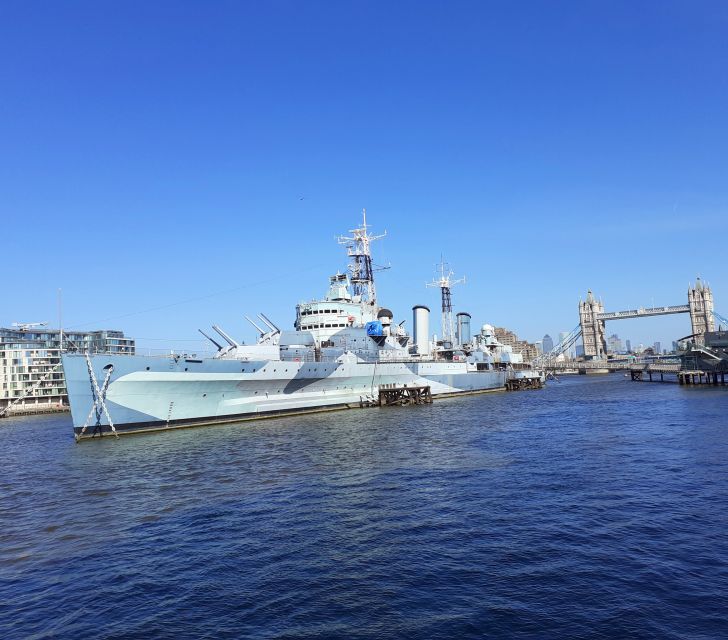
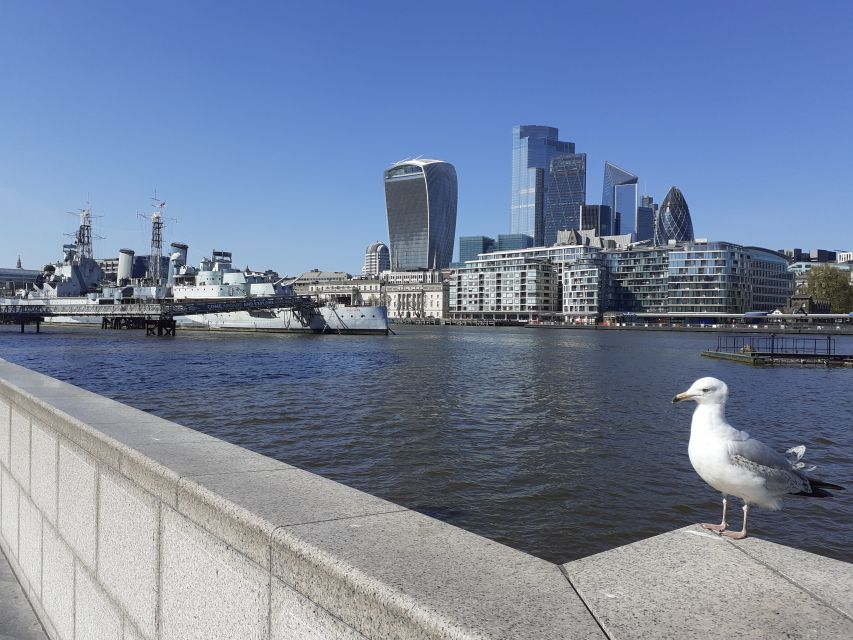
The next section brings you past HMS Belfast, the preserved warship that took part in the D-Day landings during the Second World War. It is an important reminder that the river’s story did not stop in the Middle Ages.
You will not be touring the ship during this walk. Instead, it becomes part of the wider view of London as a port, military center, and city shaped by conflict. If the ship catches your interest, note it for a separate visit. The walk gives you context, but not enough time for a full exploration of the vessel.
This change of period is one of the route’s strengths. The title focuses on medieval history, yet London makes more sense when you see how each age sits on top of the last. The guide can move from medieval kings and church power to modern warfare without making the city feel like a collection of unrelated facts.
London Bridge, Borough Market, and the city’s working river
At London Bridge, the tour moves into one of the most important crossing points in the city. Do not confuse it with Tower Bridge. London Bridge is older and historically tied to the growth of the settlement on both sides of the river.
Nearby Borough Market adds a practical, human side to the story. Markets tell you how people ate, traded, traveled, and made a living. The area has changed greatly, but it remains a place where food and commerce shape the feel of the street.
This is also a good point to think about the tour’s format. You are not moving from one isolated monument to another. You are walking through districts where historic uses still influence modern life. That makes the route feel more like an introduction to London than a checklist of sights.
Borough Market may be crowded, particularly around food stalls and busy pedestrian areas. Stay close enough to hear the guide, and expect some pauses to take place at the edge of the busiest sections rather than directly in front of every landmark.
More Walking Tours in London
- Magical London: Harry Potter Guided Walking Tour
★ 4.7 · 22,044 reviews - London: The Original Jack the Ripper Walking Tour
★ 4.7 · 7,833 reviews - London: Harry Potter Movies Walking Tour (Kids Go Free)
★ 4.7 · 3,071 reviews - London: The Great British Rock and Roll Music Walking Tour
★ 4.9 · 1,783 reviews
Southwark Cathedral and medieval church life
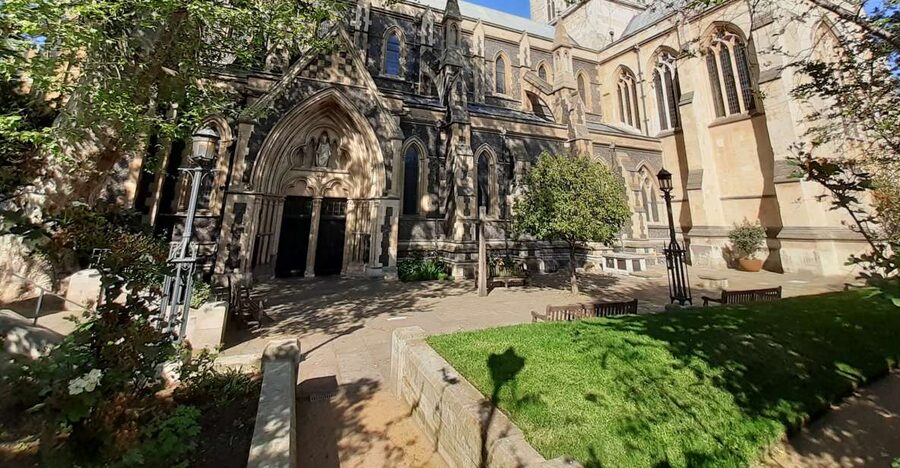
Southwark Cathedral brings the route back to medieval London. The church dates from the fifteenth century, and its setting helps explain Southwark’s long role as a settlement outside the old City of London.
Churches were not only places for worship. They were tied to education, charity, burial, politics, and local identity. A stop here gives the guide room to explain how religion shaped daily life and how the area south of the Thames related to the City.
You should not expect an extended interior visit. The tour is built around an outdoor route, so the value comes from hearing the background and seeing the building in context. If you want quiet time inside, return later on your own.
The Golden Hinde and Winchester Palace
The Golden Hinde is a full-size replica of Sir Francis Drake’s ship. It is another stop that sits outside the central medieval theme, but it fits the river story well. The Thames was a route for trade, exploration, military movement, and public spectacle.
Winchester Palace is one of the most rewarding stops for anyone interested in London’s less obvious remains. The twelfth-century palace once belonged to the bishops of Winchester, who held major influence in medieval England. What survives today is only part of the original complex, but the ruins help you picture the power and wealth concentrated along the South Bank.
This is the kind of place you could easily pass without understanding what you are seeing. The remains are not as visually grand as the Tower or St Paul’s, so the guide’s explanation does much of the work. Bring your imagination: the site is most valuable when you understand what once occupied the space.
The walk’s use of archive photographs is particularly helpful here. Mick has used historic images and pictures of notable figures to show how buildings looked at different points in their lives. That extra visual aid can make a fragment of wall feel less abstract.
Shakespeare’s Globe and the drama of the South Bank
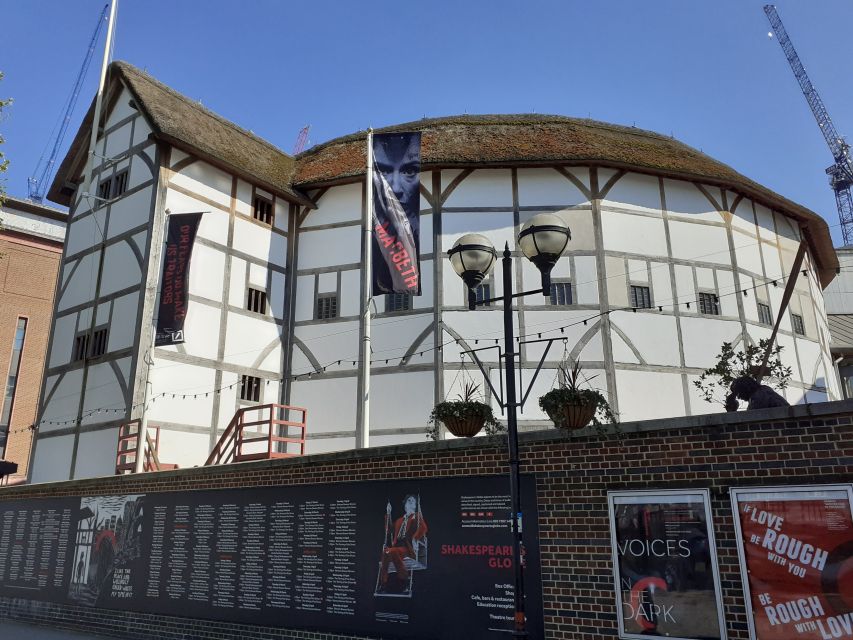
Shakespeare’s Globe is one of the route’s headline stops. The present theatre is a reconstruction, but it marks the location and atmosphere of the South Bank theatre world associated with Shakespeare.
The guide places the theatre in its social setting. This was not simply a refined cultural district. The river crossing, markets, inns, entertainment, and crowded streets all shaped the audience and the business of theatre.
You will see the famous riverside Globe theatre from outside rather than attend a performance. That is enough to understand its place in the route, but plan a separate visit if you want to tour the theatre or see a play.
This part of the walk works well for people who think they are interested only in Shakespeare. It also adds another layer to medieval and early modern London, showing how entertainment, commerce, and public life met along the Thames.
The Millennium Bridge and the final view of St Paul’s
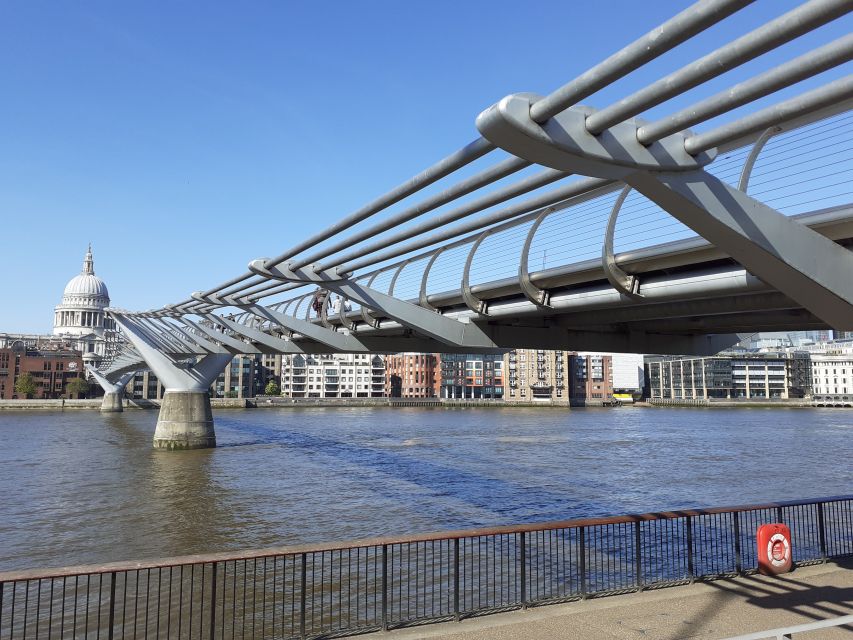
The Millennium Bridge provides the route’s modern river crossing and one of its clearest views toward St Paul’s Cathedral. Its clean lines contrast sharply with Tower Bridge, the old churches, and the historic waterfront behind you.
Crossing here helps you see how compact London can be. In two hours, you move from the Tower to the cathedral district while passing several centuries of architecture and urban change. The walk is long enough to give you a useful map in your head, but short enough to fit into a busy sightseeing day.
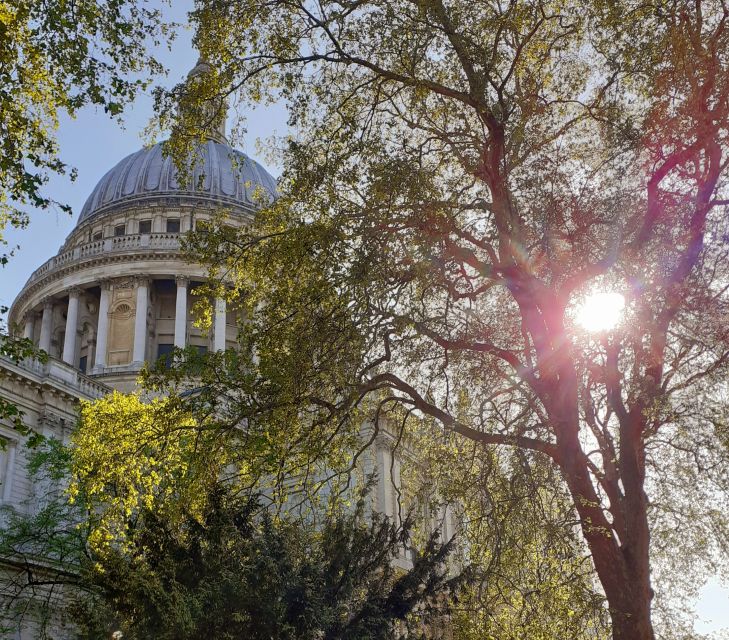
The tour finishes near St Paul’s Cathedral in the EC4M 8AD area. You get an exterior introduction to this majestic landmark, not a cathedral admission or interior tour. That is a practical advantage if you already have a ticket for later, since the guide helps you arrive with context rather than repeating a full visit.
Ending at St Paul’s also makes the tour useful as a first-day orientation. You can decide which places deserve a longer return visit, including the Tower, HMS Belfast, Borough Market, the Globe, Winchester Palace, or St Paul’s itself.
How the guide handles two hours of history
The guide is the main reason this tour works. Mick Priestley is repeatedly described as clear, funny, friendly, and able to answer detailed questions. Several people found that he could handle unusual questions rather than sticking rigidly to a script.
That matters on a history walk. London has too many dates for anyone to remember, and a pile of disconnected facts would quickly become tiring. The better approach is to explain why each place mattered. Mick’s style appears to focus on politics, faith, power, ordinary life, and the personalities tied to the area.
He also uses a portfolio of historic images. This can be especially useful when looking at ruins or changed streets. A photograph of an earlier building or a figure from the period gives the story a visual anchor.
The pace has been adjusted for different groups, including families and people walking in warm weather. The tour may run slightly over two hours, which is good if the guide is finishing a story, but it means you should avoid booking a tight appointment immediately afterward.
Group size is not specified, so I would not assume a private or very small tour. Still, the route and guide’s approach are designed to allow questions and keep people together in crowded areas.
Walking conditions and practical preparation
Wear comfortable shoes. This is not a token stroll with a few steps between stops. You cross bridges, walk beside the river, move through market areas, and spend time standing while the guide talks.
The tour is wheelchair accessible, but London’s historic streets and crowded public spaces can still require care. If you use a wheelchair, check the exact route and current conditions when booking, especially around busy market areas and bridge approaches.
The walk operates in all weather. Bring rain protection in wet conditions and weather-appropriate clothing in hot or cold weather. The Thames can feel exposed, and there may not be a convenient indoor break whenever you want one.
The meeting point is near public transport, while the finish is near St Paul’s. That makes the route easy to combine with other sightseeing. You could visit the Tower before the walk, or continue from St Paul’s after it ends.
English is the only listed tour language. You should be comfortable following a live spoken explanation for two hours, especially when the group is near traffic or crowds.
Is $24 good value for London?
At $24 per person, this is a strong-value introduction to central London. You cover a large area, see major landmarks from the outside, and get a live guide who supplies the links that a self-guided map often misses.
The comparison with a bus tour is worth making. A bus can cover more ground with less physical effort, but it also keeps you at a distance from the streets, bridges, ruins, and market spaces. This walk gives you a better feel for how the riverfront connects.
The price does not include entry to the Tower of London, HMS Belfast, Shakespeare’s Globe, or St Paul’s Cathedral. That is not a flaw, but you should budget separately if you want to explore their interiors. The walk is best seen as a guided framework for deciding where to spend more time later.
Free cancellation up to 24 hours before departure and the option to reserve now and pay later make it easier to fit into an uncertain London schedule. Check the available starting times before booking.
Who should book this walk?
I would choose this tour if you want London explained through places rather than presented as a list of royal dates. It suits first-time visitors who want a strong orientation, returning visitors looking for overlooked sites, and anyone with a particular interest in medieval politics, religion, theatre, or urban life.
It also suits solo visitors. The route has plenty of photo opportunities, and the guide can help you notice details you might miss alone. Families can join if children are comfortable walking and listening for two hours, though very young children may find the history-heavy sections demanding.
I would think twice if you dislike walking, need frequent indoor breaks, or want extensive time inside each major attraction. This is a fast-moving overview, not a series of museum visits.
Should you book the Medieval History Walking Tour?
Book it if you want a well-priced, story-led walk that connects the Tower of London, Tower Bridge, the South Bank, Shakespeare’s Globe, the Millennium Bridge, and St Paul’s. The strongest feature is the guide’s ability to answer questions and turn lesser-known sites such as Winchester Palace into meaningful stops.
Skip it if your priority is entering the attractions rather than understanding the streets between them. For most people who can manage two hours on foot, though, this is an efficient way to get your bearings and learn why this stretch of London mattered for so long.
FAQ
Where does the tour begin?
The tour begins outside the western exit of Tower Hill Underground Station, near Trinity Square, The CitizenM Hotel, and the Tower Hill Tram burger van.
How do I find the guide?
Look for a guide holding a flagpole with a flag flying from it.
Where does the tour finish?
The walk finishes in the EC4M 8AD area, near St Paul’s Cathedral.
How long does the tour last?
The scheduled duration is two hours. It may run slightly over if the guide is completing a story or answering questions.
Is the Tower of London included inside the tour?
The tour passes the Tower of London and explains its history, but an interior visit is not included.
Does the tour enter HMS Belfast, Shakespeare’s Globe, or St Paul’s Cathedral?
No interior admission is included for those sights. They are viewed and explained from the route.
What language is the tour conducted in?
The live tour is conducted in English.
What should I bring?
Bring comfortable shoes and clothing suited to the weather. The tour operates in rain or shine.
New listings around London
- London: Hampton Court Private Guided Tour★ 3.4 · 15 reviews
- London: Secrets of Freddie Mercury Tour with a Cocktail★ 4.1 · 15 reviews
- London: Jack the Ripper Tour and Underground Prison in Spanish★ 5.0 · 15 reviews
- Spanish Language : Original Harry Potter Walking Tour★ 4.5 · 15 reviews
- London: Private Couples Photography Session with Landmarks★ 5.0 · 15 reviews
- London: The Saturday Supershow Cabaret at Phoenix Arts Club★ 4.5 · 15 reviews
- London: 2-Hour Guided Tour of the British Museum★ 4.7 · 16 reviews
- London’s Ghosts & Gruesome Past Nighttime Walking Tour★ 4.8 · 16 reviews
London Tours, compared.
Westminster to Greenwich River Thames Cruise
Read our review →
Magical London: Harry Potter Guided Walking Tour
Read our review →


Warner Bros. Studio Harry Potter Tour with Transfers
Read our review →Browse the lists this tour appears in