
Reviewed · CARDIFF TOURS
Private Walking Half-Day Walking Tour of Cardiff
Cardiff’s story comes into focus when you connect its Roman fort, coal docks, civic buildings, and modern arts center in one walk. This private tour does just that, with local guide Dewi especially good at turning Welsh politics, rugby, art, and odd local tales into an entertaining introduction to the city.
I like the private format, which lets your group pause at Spillers Records, Cardiff Market, or a shop in the Victorian arcades instead of following a fixed crowd. I also like the range: you get Roman and medieval Cardiff, the coal trade, the NHS, Impressionist art, Welsh devolution, and Cardiff Bay in one outing.
The main caution is the ambitious schedule. The castle is viewed only from outside, transport to Cardiff Bay costs extra, and a Monday visit cannot include the National Museum interior. Confirm the final route and ending point before you set off.
Key points to know before booking
- Dewi brings the city to life: He is praised for funny stories, local knowledge, and adapting the tour to different interests and ages.
- Cardiff Castle is an exterior stop: You hear its story, but castle admission is not included because the tour does not enter.
- The Victorian center feels local: Spillers Records, Cardiff Market, and the arcades offer time for browsing and snacks.
- The National Museum is a major highlight: The one-hour visit includes famous Impressionist and Post-Impressionist works.
- Cardiff Bay requires paid transport: A local train or taxi follows the museum portion, and that fare is not included.
- The price works best for a group: At $205.67 for up to 15 people, the per-person cost drops sharply as your party grows.
A lively start at Cardiff Castle
Begin at 9:00 a.m. near Central Square, a handy meeting point for a city-center walk. Your first major sight is Cardiff Castle, a building with several different lives rather than one neat story.
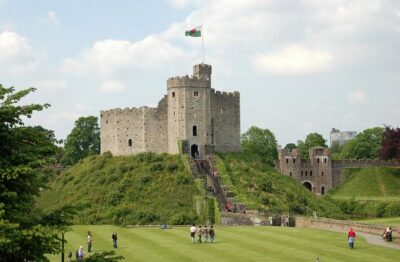
The site began as a Roman fort. The Welsh name Caerdydd means fort on the River Taff, linking the modern city directly to that early military post. The remains visible today help you picture Cardiff before it became a port and industrial center.
The Normans developed the castle, and later marcher lords changed it again. It was used as a royal prison and eventually fell into disrepair. The Bute family took control in the 17th century, and the third Marquess of Bute created the elaborate Victorian version you see now.
Your guide explains this transformation from fort to medieval stronghold to lavish stately home from outside the entrance. That is useful context, but you should be clear about the limitation: you will not enter Cardiff Castle on this tour. If the castle interiors are high on your list, plan a separate visit.
More Walking Tours in Cardiff
- Cardiff City Private Guided Walking Tour
★ 5.0 · 107 reviews - Doctor Who Cardiff City Walking Tour
★ 4.5 · 78 reviews - Cardiff Private Walking Tour with a Local
★ 4.5 · 48 reviews
Arcades, records, and Cardiff Market
The next part moves into the heart of central Cardiff. St Mary Street and the surrounding arcades show a more everyday side of the city, with small shops, cafes, boutiques, and the famous Cardiff Market.
The private setup matters here. You can stop at a shop that interests you, rather than simply walking past it while trying to keep pace. Cardiff’s Victorian arcades are a good place to browse for local products and get a feel for how the center works as a shopping district.
Spillers Records is a quick but memorable stop. Founded in 1894, it is recognized as the oldest record shop in the world and remains a South Wales institution. You get about 10 minutes here, enough to look through the stock and perhaps find something unexpected. The stop suits music fans, but you do not need a particular taste to appreciate its place in Cardiff life.
Cardiff Market gets about 20 minutes. Its covered Victorian structure houses stalls selling everything from second-hand books to cakes, meat, and fish. You can sample local food, browse the counters, or simply watch the market at work.
The market site also opens a door into Welsh labor history. It was once home to Cardiff’s jail, and Dic Pendryn was executed nearby. He was a laborer from Merthyr Tydfil who was hanged after being charged with killing a soldier during the Merthyr Rising. Your guide uses this story to explain class conflict, punishment, and the political pressures of industrial Wales.
This section is strongest if you enjoy places where history is mixed with ordinary city life. It is less appealing if you want long, quiet visits inside major monuments. The tour keeps moving.
St John’s Church and the story of the NHS
St John the Baptist City Parish Church is one of the oldest surviving buildings in Cardiff and the only remaining structure from the medieval walled town. Built around 1180, it predates much of the modern city around it.
Much of the church was redesigned in the 15th century after Owain Glyndwr attacked Cardiff in 1404. Inside, your guide points out Victorian stained glass associated with leading Pre-Raphaelite artists, including William Morris.
The church also appeared in Doctor Who, in the episode The Runaway Bride. That television link will appeal to fans, but the building is worth seeing for its age and interior details alone. You get about 10 minutes, so this is an introduction rather than a full study of the church.
The tour then turns to Aneurin Bevan, usually known as Nye Bevan. His statue is a regular Cardiff meeting point, and it provides a natural place to discuss the creation of Britain’s National Health Service.
Bevan’s ideas were shaped by poverty in Wales, his work in a mine, and his role in the postwar Labour government. The guide also covers his political battles, including his opposition to Churchill during the Second World War. This is one of the tour’s most useful stops because it ties a Cardiff figure to a national institution that still affects daily life across the United Kingdom.
You also hear how Cardiff’s growth was tied to coal. The city’s civic wealth did not appear by chance. It came from the port, mines, shipping, finance, and trade that made South Wales an industrial force.
Cathays Park and the National Museum collection
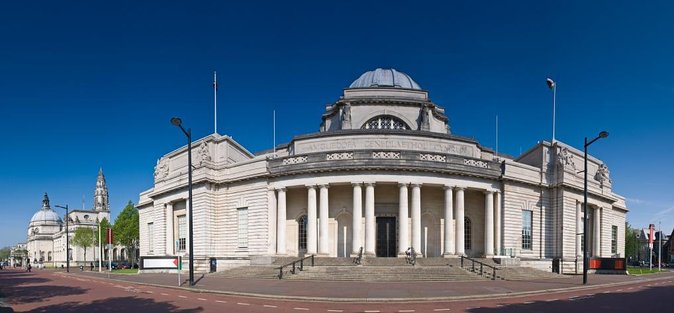
Cathays Park offers a sharp change in mood. Its early 20th-century civic buildings were built on former Bute family land, using Portland stone, the same stone used for St Paul’s Cathedral in London.
The area includes Cardiff Crown Court, Cardiff University, the Welsh National War Memorial, and the National Museum Cardiff. Together, these buildings reveal how Cardiff used industrial wealth to create a civic center meant to project confidence and public purpose.
Your guide also links the district to modern film production. Cardiff and South Wales have become popular filming locations, and the creative industries now help replace some of the work lost during deindustrialization. That connection gives the grand stone buildings a modern purpose rather than leaving them frozen in the past.
The National Museum is the longest scheduled stop, at about one hour. Its permanent collection includes 15 galleries and major works by Monet, Cézanne, Renoir, and Rodin. Renoir’s La Parisienne, often called the Blue Lady, and Rodin’s The Kiss are among the works you may see.
The museum also holds Welsh art from different periods. A guide-led visit is useful if you do not know where to begin, since an hour is enough for a focused introduction but nowhere near enough for every gallery.
I would treat this as a highlights visit. You get help finding important works and learning how the collection came together, but art lovers may want to return independently. The museum is closed on Mondays. If you book for Monday, the interior visit is replaced with other Cardiff sights, so choose another day if the paintings are a main reason for booking.
Elsewhere in Cardiff, a change of pace:
- The Wandering Bard’s Valley Tour or the Swansea Bay Tour.
★ 5.0 · 394 reviews - Cardiff Bay Boat Tour
★ 4.0 · 384 reviews - Alcotraz Prison Cocktail Experience in Cardiff
★ 5.0 · 139 reviews - The Wandering Bard’s Mythical West Wales Tour
★ 5.0 · 129 reviews
The practical break between the city center and Cardiff Bay
After the museum, the route shifts to Cardiff Bay. This is where the tour needs a little planning. You travel by local train or taxi, and the fare is not included in the $205.67 tour price.
The stated meeting information lists the National Museum as the tour’s end point, while the route description continues to Cardiff Bay and finishes at the Wales Millennium Centre. Ask the operator to confirm the exact plan for your date. The bay portion may be treated as a continuation, and the guide can either leave you there or take you back toward your accommodation, but the details should be clear before you start.
This transfer also makes the advertised three-and-a-half-hour duration feel tight. The tour includes many stops, a one-hour museum visit, and a move across the city. You should expect an overview rather than generous free time at every location.
Cardiff Bay, from coal port to cultural center
Cardiff Bay was once Cardiff Docks, among the world’s largest coal-exporting ports at its peak. The Bute family controlled much of the development, and the port drew people from many backgrounds. That past helps explain why the bay feels different from the older center.
Today, the area is home to the Senedd, the Wales Millennium Centre, Roald Dahl Plass, and BBC Wales studios. Your guide explains how the coal economy shaped the waterfront and how the docks were later transformed into a cultural and political center.
The Exchange Hotel is the former Coal Exchange. In 1904, the first one-million-pound business deal was agreed there, a striking reminder of the money moving through Cardiff during the coal era. The building later hosted concerts by artists including Tom Jones, Beverley Knight, and Gregory Porter.
Portland House was formerly the Cardiff Dock branch of the National Provincial Bank, later part of NatWest. It is associated with the first one-million-pound cheque being cashed and is now used as an events and filming space. The guide also discusses why listed buildings in the area remain at risk, adding a practical conservation issue to the port story.
Roald Dahl Plass and the modern Welsh capital
Roald Dahl Plass honors the Cardiff-born children’s author, who was educated at Llandaff Cathedral School. The open space is known for its water tower and fountain, designed by Nicholas Hare Architects with sculptor William Pye.
The plaza hosts events during the year, including food festivals and a Cardiff Bay Beach. Construction for these events can sometimes restrict access, so the exact experience depends on what is happening on the day. If an event is running, the guide can include it in the route.
The Senedd, home of the Welsh Parliament, brings the discussion into present-day politics. Designed by Lord Richard Rogers, the building uses open architectural ideas to reflect the aim of a more accessible democratic institution.
Here, you learn about Welsh devolution, the role of Wales in United Kingdom politics, and figures such as the Tudor kings and David Lloyd George. The guide also addresses the growing call for Welsh independence. This is a short stop, around 10 minutes, but it gives Cardiff Bay more meaning than a simple waterfront walk.
The Wales Millennium Centre is the final major sight. It houses arts organizations including Welsh National Opera, the BBC National Orchestra of Wales, and the BBC National Chorus of Wales.
The building was designed to reflect Welsh culture, and the tour looks at details that were considered part of that message, including the door handles. You also hear how support from a South African donor helped bring the project to life. The visit lasts about 10 minutes, so you will see the exterior and learn what happens inside, rather than attend a performance.
What the $205.67 group price really buys
The price is $205.67 for a private group of up to 15 people, with an English-speaking guide included. For 15 people, that is about $13.71 per person before the train or taxi fare to Cardiff Bay. For a couple, it is a much larger spend, but you are paying for privacy and flexibility rather than a low-cost group walk.
That pricing makes the tour especially sensible for families, friends, and multigenerational groups. The guide can adjust explanations to suit different ages and interests, and Dewi has been particularly effective with groups ranging from teenagers to adults.
You still need to budget for transport to the bay. There are no stated admission fees for the listed stops, but the castle interior is not included, and the museum experience changes on Mondays.
The strongest value comes from the breadth of the tour. In one morning, you cover Cardiff’s Roman beginnings, medieval center, Victorian shopping streets, industrial wealth, public health politics, art collection, devolution, and modern culture. If you want a slow museum day or a detailed castle visit, this is not the right product. If you want a clear first picture of Cardiff, it offers a lot.
Who will get the most from this Cardiff walk
I would choose this tour if you have only part of a day in Cardiff and want a guide to connect the sights. It suits first-time visitors, families, history fans, Doctor Who followers, art lovers, and anyone curious about Welsh politics.
The private format is also useful when your group has mixed interests. One person can care about Spillers Records, another about Impressionist paintings, and someone else about rugby or the NHS. A guide who adapts the conversation can keep all of you involved.
You should have a moderate level of fitness. The tour is mainly on foot, includes several stops, and requires a train or taxi transfer if Cardiff Bay is included. Service animals are allowed, and the route is near public transport.
The experience has earned strong praise for Dewi’s humor, storytelling, and ability to make history interactive. That is important here because the route covers a lot of ground. A dry guide could turn this into a list of dates and buildings. Dewi’s style, when available, appears to be a major part of the tour’s appeal.
Free cancellation is available up to 24 hours before the start time. Changes or cancellations inside that window are not accepted for a refund.
Should you book this tour?
Book it if you want a personal introduction to Cardiff, especially if you are visiting with a group and enjoy history told through people, buildings, food, music, and politics. The mix of Cardiff Castle, Spillers Records, the market, National Museum, and Cardiff Bay is unusually broad for a three-and-a-half-hour experience.
Think twice if your priority is entering Cardiff Castle, spending several hours in the museum, or exploring Cardiff Bay without paying for a transfer. Confirm the Monday museum issue and the official finishing point before booking.
For a group of several people, the price is fair for a private guide and a route that reaches well beyond the standard postcard sights. For a solo visitor or couple, compare it with a regular walking tour unless Dewi’s local storytelling and the tailored itinerary are worth the extra cost.
FAQ
How long does the Cardiff walking tour last?
The tour lasts approximately 3 hours and 30 minutes.
What time does the tour start?
The stated start time is 9:00 a.m.
Where does the tour begin?
It begins at Central Square, Cardiff CF10, United Kingdom.
Is Cardiff Castle included inside the tour?
No. You view Cardiff Castle from outside while the guide explains its Roman, Norman, medieval, and Victorian story.
Is entry to the National Museum Cardiff included?
There is no separate admission charge listed for the museum visit. The tour includes about one hour inside when the museum is open.
Can I visit the National Museum on a Monday?
No. The museum is closed on Mondays, so Monday tours replace the interior visit with other locations.
Is transport to Cardiff Bay included?
No. You travel to Cardiff Bay by local train or taxi, and that fare is not included.
Is the tour private?
Yes. Only your group participates, with a maximum group size of 15 people.
Is the tour offered in English?
Yes. The tour is offered in English and includes a private tour guide.
More half day trips in Cardiff
- From London: Stonehenge Half-Day Trip
★ 4.4 · 1,980 reviews - From London: Stonehenge Half-Day Tour
★ 4.4 · 1,091 reviews - From London: Half-Day Trip to Windsor with Castle Tickets
★ 4.4 · 840 reviews - Grand London Half-Day Bicycle Tour
★ 4.9 · 432 reviews
New listings around Cardiff
- Cardiff Dance Party Package★ 5.0 · 3 reviews
- From Cardiff: The Valleys Heritage And South Wales Landscapes★ 4.5 · 4 reviews
- Cardiff Bay Private Guided Walking Tour★ 5.0 · 4 reviews
- CO2-Offset|Cardiff by yourself with private driver 4/8hr disposal★ 5.0 · 4 reviews
- Cardiff’s Civic Centre: A Self-Guided Audio Tour★ 4.0 · 4 reviews
- Leather workshops, Private classes★ 5.0 · 5 reviews
- Sightseeing Tour Cardiff Bay and Vale of Glamorgan Full-Day Driver Guided★ 5.0 · 5 reviews
- Private Day Tour of Cardiff, including Cardiff Castle, St Fagans, & Cardiff Bay★ 5.0 · 5 reviews
Cardiff Tours, compared.

The Wandering Bard’s Valley Tour or the Swansea Bay Tour.
Read our review →


Cardiff Mystery Adventure: Cardiff’s Missing Masterpiece
Read our review →Browse the lists this tour appears in