
Reviewed · MUSEUMS
Warwick: British Motor Museum Entry Ticket
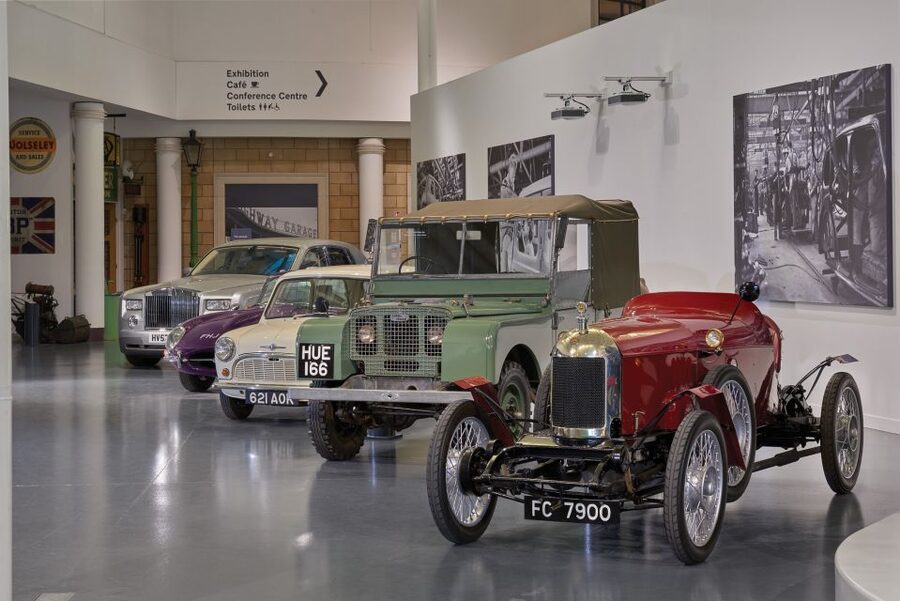
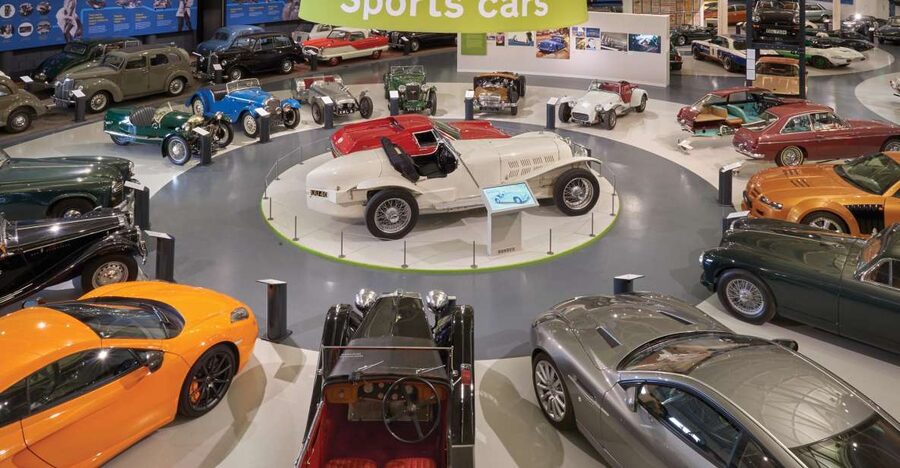
The British Motor Museum is at its best when a car becomes more than a machine. A family saloon recalls a grandparent, a racing car brings back a television moment, and a prototype shows an idea that never reached the showroom. With more than 400 British cars dating from the 1890s, this is a museum about industry, design, family life, and national change.
I like the Time Road, which links motoring with everyday life through period music and events such as the arrival of double yellow lines. I also like the chance to speak with volunteers in the conservation area. Guides such as Trevor add the human stories that display labels cannot always provide.
The main consideration is time. You can move through in about two and a half hours, but four or five hours is more realistic if you read the displays, join a tour, stop for lunch, and let children try the hands-on exhibits. On hot days, some large display buildings may feel warm and short on air movement, and guided talks can be hard to hear in a big room.
Key points at a glance
- 400-plus cars from the 1890s onward: See how British motoring changed from early bicycles and veteran cars to modern classics, racing machines, film cars, and one-off prototypes.
- The Time Road: Connect cars with family life, music, social habits, and milestones such as the introduction of double yellow lines.
- Collections Centre access: Look behind the scenes at vehicle conservation and speak with staff and volunteers about restoration work.
- Under The Skin exhibits: Test your understanding of suspension, rack-and-pinion steering, and power steering through interactive displays.
- Family-friendly admission: Activities, a play area, and small push-along cars give younger children something to do between the larger exhibits.
- Useful facilities: Free parking, an onsite café, toilets, lifts, and wheelchair-friendly routes make this an easy day out.
Starting with Britain’s car story
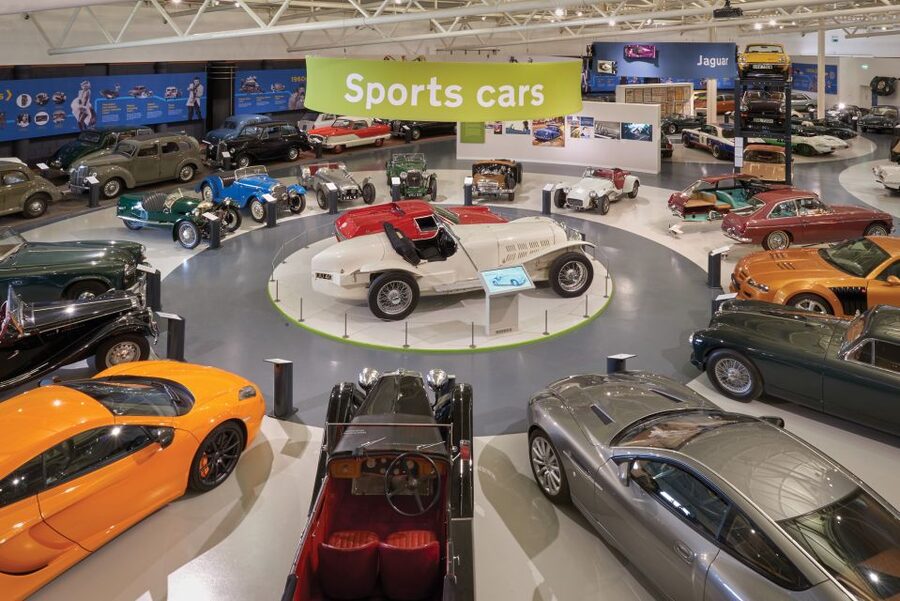
The museum does not simply line up polished cars in rows. Its purpose is to show how the British motor industry developed and how cars affected ordinary life. That wider view gives the collection more purpose, especially if you are not someone who can identify a Jaguar from a Vauxhall at twenty paces.
The collection reaches back to the 1890s and includes motorcycles and pedal bikes as well as cars. You can watch transport move from early mechanical experiments into mass production, family ownership, racing, luxury travel, and the modern era.
I would begin by taking a slow look at the introductory displays before chasing your favorite marque. The museum includes famous models, rare vehicles, movie cars, racing cars, and prototypes that never entered production. That mix keeps the visit from becoming a simple parade of familiar classics.
More Museum Tours in Britain:
- Liverpool: Liverpool Football Club Museum and Stadium Tour
★ 4.8 · 10,764 reviews - London: Chelsea Football Club Stadium and Museum Tour
★ 4.8 · 4,576 reviews - London Transport Museum Entrance Ticket
★ 4.5 · 1,323 reviews
The Time Road links cars to daily life
The Time Road is one of the most effective parts of the museum because it gives the cars a social setting. Period music and memorable events help show what was happening outside the factory and showroom.
You may see how family routines changed as car ownership spread. A vehicle becomes a clue to holidays, shopping, work, safety rules, and changing ideas about convenience. Even a road marking such as the double yellow line helps explain how driving habits and street control developed.
This section works well for mixed groups. A car enthusiast can inspect the design, while someone more interested in social history can follow the story of how motoring altered home life. One visitor who did not consider herself especially interested in cars still found the family memories and older vehicles engaging.
Allow extra time here. It is easy to hurry toward the most famous cars, but the period details are what give the museum its sense of place. If you are visiting with older relatives, this can also become a personal journey through cars they drove, owned, or remember from childhood.
Making British Cars explains the industry
The Making British Cars section widens the story from individual vehicles to the companies and workers behind them. It shows how important the motor industry has been to Britain and considers where it may be heading.
This helps answer questions that a standard car display often ignores. Why did certain makes become household names? How did British factories shape towns and jobs? Why did some designs succeed while others remained as prototypes?
The collection includes a strong range of British makes, though no museum can display every marque at once. Some visitors have particularly enjoyed the Jaguar cars, Vauxhall material, MG examples, and rare prototypes. If Triumph is important to you, it is sensible to check the current display before booking, since one visit found no Triumph cars on show.
The museum also includes material connected with Silverstone, from its earlier days through the recognized circuit and into the Formula One story. Racing fans should make time for this area, since it adds competition, engineering, and speed to the broader account of British motoring.
Rare prototypes and film cars reward a closer look
The familiar cars may draw you in, but the prototypes are among the most interesting objects in the collection. These vehicles reveal the choices manufacturers considered before a final model reached the public.
A prototype can look strange, clever, or surprisingly modern. It also shows that car design is full of dead ends. A promising shape, layout, or feature may never work commercially, yet it remains valuable as a record of what engineers tried.
Film cars add a lighter note. They connect the museum to popular culture and give children a clear way into the collection. You do not need to know the technical details to appreciate a car that has appeared on screen.
The racing cars work in a similar way. They show how design priorities change when speed, handling, and competition matter more than luggage space or family comfort. I would not rush past the less glamorous exhibits, though. A modest family car can tell you just as much about British life as a famous competition machine.
A handful of other Britain outings to weigh up
- London: The London Eye Entry Ticket
★ 4.6 · 35,875 reviews - London: Tower Bridge Entry Ticket
★ 4.7 · 15,560 reviews - London: Westminster Abbey Entrance Ticket
★ 4.6 · 11,254 reviews - London: St Paul’s Cathedral Entry Ticket
★ 4.7 · 9,813 reviews
Under The Skin turns engineering into something practical
Under The Skin is the place to go when you want to understand how cars work rather than simply admire their paintwork. Interactive exhibits explain engineering ideas in a direct, hands-on way.
You can compare how suspension has improved over time and examine the difference between rack-and-pinion steering and power steering. These subjects can sound technical on a label, but physical demonstrations give you a better sense of what the systems do.
This section is especially useful for families. Children can press, turn, compare, and test things instead of being told not to touch. Adults who have always driven without knowing exactly what happens beneath the bonnet can also pick up useful basics.
I would visit this area after the Time Road. First see why cars changed, then look at the mechanical solutions that made those changes possible. The progression feels clearer when you connect social demands with engineering choices.
The Collections Centre offers a behind-the-scenes view
The Collections Centre lets you look at how vehicles are conserved for future generations. This is different from viewing a finished car under bright lights. You get a better sense of the care required to preserve a collection of this size.
The staff and volunteers can explain restoration and refurbishment work, and conversations here are often a highlight. Graham, who has worked with the Jaguar collection, has been especially helpful in explaining the marque’s story and showing details such as car interiors and workmanship.
That human contact matters. A display label may tell you a model’s date and engine size, but a volunteer can point out an unusual feature, explain why a vehicle matters, or share what is involved in keeping it in good condition.
Ask questions if you have them. The volunteers are there to bring the cars to life, and their enthusiasm is part of the experience. Trevor’s guided tour has been praised for adding context to the development of the cars, while other guides, including Jim and Graham, have made individual collections easier to understand.
One practical weakness is acoustics. A guided talk in a large room can be difficult to hear, so stay near the guide and do not be shy about asking for a point to be repeated. An amplified system would make some tours easier to follow.
Family visits work better than the subject might suggest
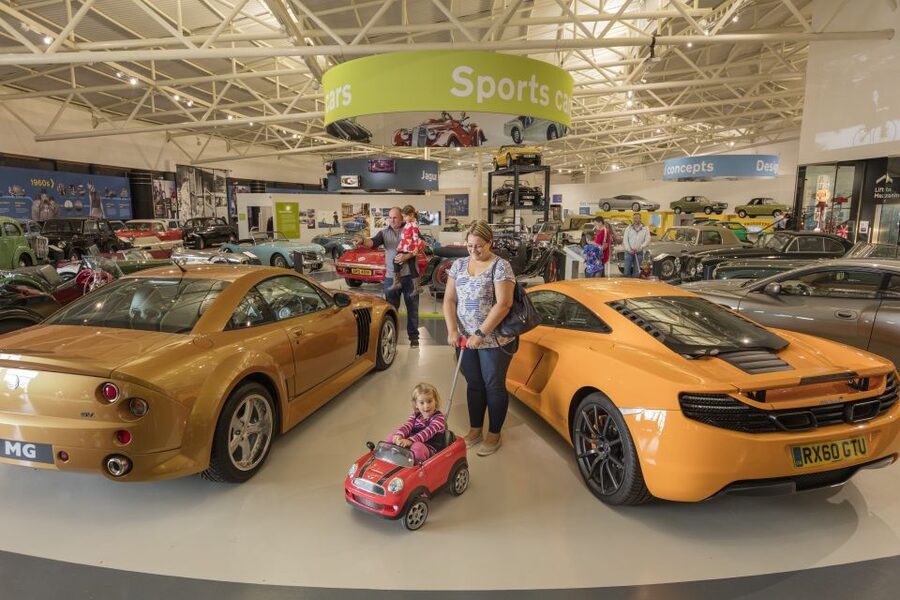
A car museum can sound like a specialist outing, but this one gives families several ways to share the day. Museum admission includes family activities, there is an onsite play area, and younger children can use small push-along cars.
The interactive engineering exhibits also help. Children may not care about the production history of a British make, but they can understand the basic idea of steering or suspension when they can see it in action.
Older children and teenagers have more to work with in the racing, film, and prototype sections. A 15-year-old can enjoy the unusual designs and performance cars while adults follow the social history and family memories.
Still, do not assume every child will remain interested for five hours. Plan a break at the café or play area, and let family members choose sections instead of treating the museum like a race from entrance to exit.
How long to allow and how to pace your day
The ticket is valid for one day, so you can make this a relaxed visit rather than a quick stop. A steady circuit takes about two and a half hours, while a careful visit with tours, reading, food, and conversation can reach four or five hours.
I would allow at least half a day. If you have a serious interest in cars, motorcycles, British industry, or motorsport, plan closer to a full day.
A useful order is:
- Start with the main historical displays and get a sense of the collection.
- Follow the Time Road and connect motoring with family and social change.
- Move through Making British Cars to understand the industrial story.
- Spend time with Under The Skin while the technical ideas are fresh.
- Visit the Collections Centre and ask volunteers about conservation.
- Finish with the cars that matter most to you, such as Jaguars, Vauxhalls, racing cars, film cars, or prototypes.
That last pass is worthwhile. You will notice more once you understand the museum’s larger story.
Café, parking, and access
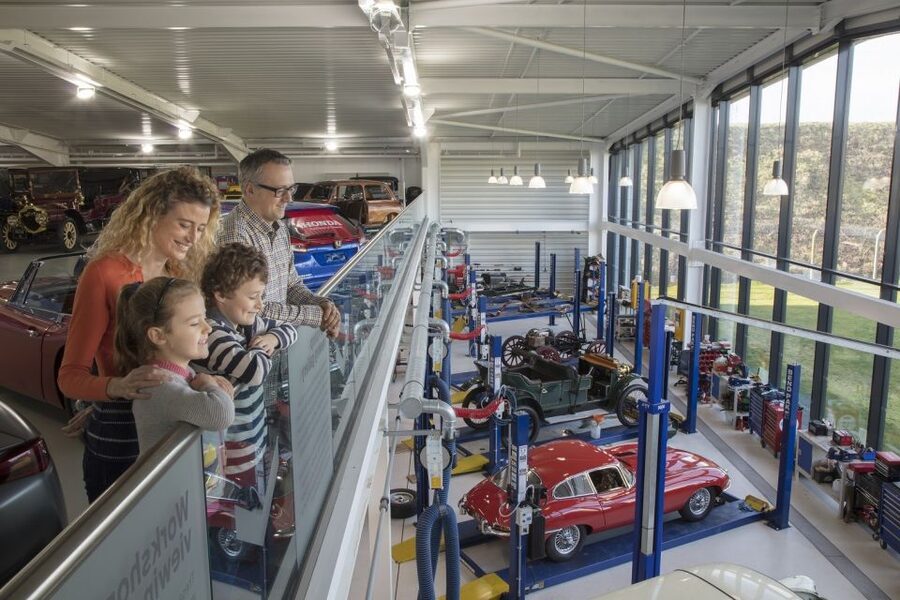
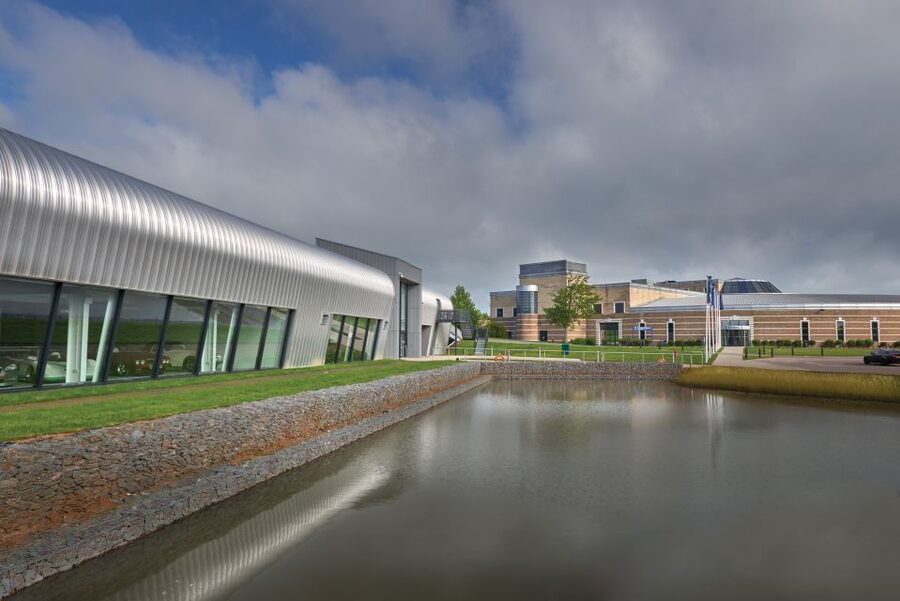
Free parking improves the value of the ticket, especially if you are driving from elsewhere in Warwickshire. The site also has an onsite café serving hot and cold meals and snacks, along with toilets and a shop.
Food is useful here because the visit can easily stretch beyond a morning. The café has been praised for its choice and food, though one person found the prices a little high. I would treat it as a convenient break rather than assume it is the cheapest meal of your day.
The museum is wheelchair accessible, with lifts and routes that are easy to manage with a mobility scooter. Displays are arranged so you can move around without difficulty, making this a sensible choice for a group with mixed mobility.
Assistance dogs are allowed, but other pets are not. On hot days, take the indoor temperature into account. The buildings may not have the best air circulation, so a slower pace and a café break will make the visit more comfortable.
Is the $24 ticket good value?
At about $24 per person, the ticket offers good value if you plan to spend several hours on site. Free parking, family activities, the play area, and access to the main museum are all part of the outing, so the cost does not stop at a short walk through one gallery.
The strongest value comes from the range. You are not paying only to see vintage cars. You are also getting British industrial history, period displays, engineering exhibits, motorsport material, prototypes, film cars, and access to volunteers who can explain the collection.
The value is less clear if you have little interest in cars and want only a brief attraction near Warwick. Even then, the Time Road and family-life displays give the museum more reach than a specialist showroom.
Prices and seasonal arrangements can affect the calculation. One winter visit was considered expensive around Christmas, while a summer return was expected to offer better value. Check the current price before booking, especially for a seasonal event or special exhibition.
Flexible booking helps if your plans may change. You can cancel up to 24 hours before the visit for a full refund, and the reserve-now, pay-later option lets you hold a place without paying immediately.
Who should book this museum visit?
I would recommend it first to car enthusiasts, especially anyone interested in British makes, Jaguars, classic cars, motorsport, or unusual prototypes. You will find enough variety to fill several hours, and the conservation area adds a useful behind-the-scenes layer.
It also suits couples with different interests. One person can follow the cars while the other focuses on social history, design, film, or family memories. The museum works for grandparents and grandchildren because the exhibits cover several generations of motoring.
Families with younger children should appreciate the play area, activities, and interactive exhibits. People with limited mobility should also find the site practical, thanks to accessible routes and lifts.
I would be more cautious if your main goal is live driving, karting, or an off-road activity. The collection is a museum visit, not a track-day experience, and former attractions such as a four-wheel-drive track or karting are not part of the current offer.
Should you book the British Motor Museum?
Book it if you want more than a room full of old cars. The Time Road, British industry displays, engineering activities, racing material, prototypes, and Collections Centre give you several different ways to spend the day.
The best strategy is to arrive with enough time, join a guided tour if one is available, and speak with the volunteers. Their practical stories can transform a polished display into a piece of working history.
Skip it only if you want a short, action-heavy attraction or if your must-see British make is not currently displayed. For most families, mixed-interest couples, and car fans, the $24 price is fair, the facilities are convenient, and the collection offers enough variety to justify a return visit.
FAQ
Where is the British Motor Museum?
The museum is in Warwickshire, United Kingdom.
How much does admission cost?
The listed price is $24 per person.
How long is the ticket valid?
Admission is valid for one day.
How many cars are on display?
The collection includes more than 400 cars dating from the 1890s.
What can I see at the museum?
You can see historic British cars, motorcycles, pedal bikes, racing cars, film cars, prototypes, and vehicles from different periods of the British motor industry.
What is the Time Road?
The Time Road shows how motoring and family life changed through the decades. It includes period music and events such as the introduction of double yellow lines.
Are there interactive exhibits?
Yes. Under The Skin includes interactive displays about car systems, including suspension, rack-and-pinion steering, and power steering.
Is parking included?
Yes. Parking is free.
Is the museum wheelchair accessible?
Yes. The museum is wheelchair accessible and has lifts. It is also suitable for visitors using mobility scooters.
Can I bring my pet?
Pets are not allowed. Assistance dogs are allowed.
Is there somewhere to eat?
Yes. The museum has an onsite café serving hot and cold meals and snacks.
Can I cancel my booking?
You can cancel up to 24 hours in advance for a full refund.
Can I reserve now and pay later?
Yes. The reserve-now, pay-later option allows you to book without paying at the time of reservation.
New listings around Britain
- London: Secrets of Freddie Mercury Tour with a Cocktail★ 4.1 · 15 reviews
- London: Hampton Court Private Guided Tour★ 3.4 · 15 reviews
- Edinburgh: Isle of Skye, Highlands & Jacobite Steam Train★ 4.6 · 15 reviews
- London: Jack the Ripper Tour and Underground Prison in Spanish★ 5.0 · 15 reviews
- Spanish Language : Original Harry Potter Walking Tour★ 4.5 · 15 reviews
- THE HANGOVER BRUNCH | Benidorm Bingo & Drag Queens★ 4.5 · 15 reviews
- London: Private Couples Photography Session with Landmarks★ 5.0 · 15 reviews
- London: The Saturday Supershow Cabaret at Phoenix Arts Club★ 4.5 · 15 reviews
Museums, compared.

Liverpool Football Club Museum and Stadium Tour
Read our review →
Chelsea Football Club Stadium and Museum Tour
Read our review →




Browse the lists this tour appears in