
Reviewed · CHESTER TOURS
Chester: The Heart of Chester Walking Tour
Chester’s past is packed into a small, walkable center, and this tour makes those layers easy to read. In 90 minutes, you move from Roman soldiers and Saxons to Vikings, medieval merchants, Victorian makeovers, and today’s shops and restaurants, with the city’s famous Rows and Eastgate Clock along the way.
I like the way the route combines major sights with smaller lanes such as Godstall Lane, and I like the local touch provided by guides Phil and Caroline. The pace also gets high marks: enough time to stop and listen, but not so much that the walk becomes tiring. The main thing to consider is that this is an outdoor overview, so admission to Chester Cathedral or other historic buildings is not included.
Key points at a glance
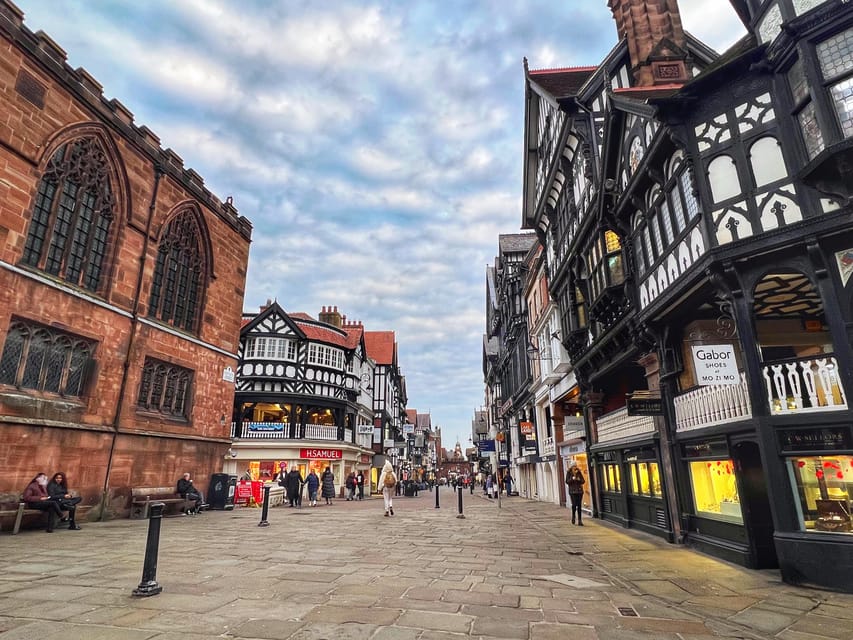
- A compact route with plenty to see: Cover Chester Cathedral, Chester Rows, Chester Cross, Watergate Street, Bridge Street, the city walls, and Eastgate Clock in 90 minutes.
- Stories from Roman times to today: The guide connects Roman soldiers, Saxons, Vikings, a Mercian princess, Norman rule, the Dissolution, and Victorian Chester.
- Small-group format: A professional Green Badge Guide leads the walk, making it easier to hear, ask questions, and keep a steady pace.
- Useful local detail: Phil and Caroline add tips about places to visit, eat, and explore after the tour.
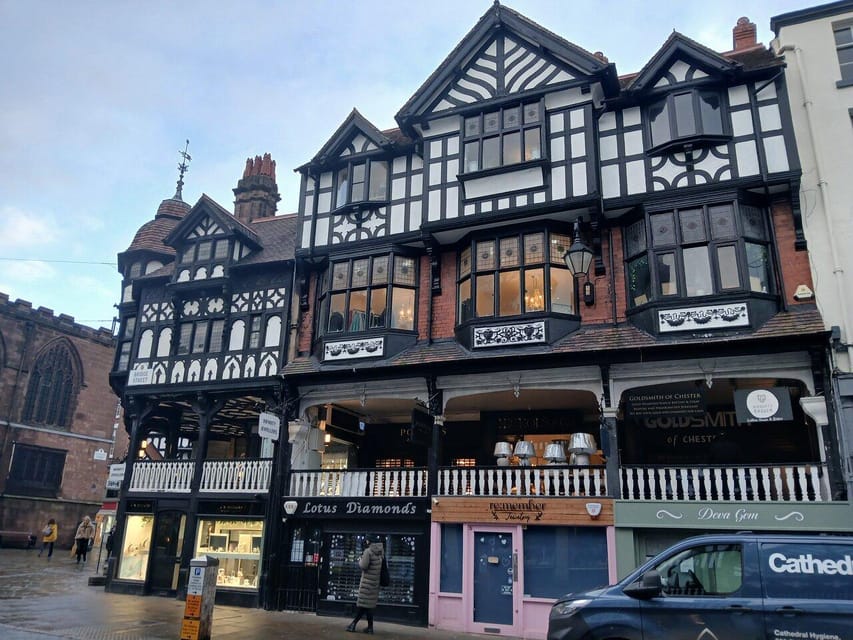
- Good photo stops: The Cathedral, historic streets, timber-framed buildings, city walls, and Eastgate Clock give you many chances to take pictures.
- Outdoor sightseeing only: You see the historic buildings from the outside, and the route includes some stairs.
Why this 90-minute walk works well in Chester
Chester is easy to underestimate. You can stroll through the center, admire the black-and-white buildings, and take a picture at Eastgate Clock without understanding why the streets look the way they do. A guide helps connect those pieces.
The Heart of Chester walk is built for that first layer of understanding. It does not try to cover every museum or tell every story in Cheshire. Instead, it keeps to the central streets and shows you how Chester developed from a fortified Roman settlement into a medieval market town and then a modern shopping and dining center.
I especially like the time limit. Ninety minutes is long enough to provide real context, yet short enough to fit before lunch, after arriving by train, or alongside an afternoon of independent sightseeing. One local guide can pack a surprising amount into that window, but the pace still includes regular stops for stories and questions.
The tour begins at the steps of the Visitor Information Centre in Town Hall Square. This is a practical meeting point in the center, and you finish at Chester Cathedral, so you are left near one of the city’s major sights rather than returned to a distant starting point.
More Walking Tours in Britain:
- Magical London: Harry Potter Guided Walking Tour
★ 4.7 · 22,044 reviews - London: The Original Jack the Ripper Walking Tour
★ 4.7 · 7,833 reviews - Oxford: University and City Walking Tour with Alumni Guide
★ 4.7 · 4,429 reviews
Town Hall Square and Northgate Street
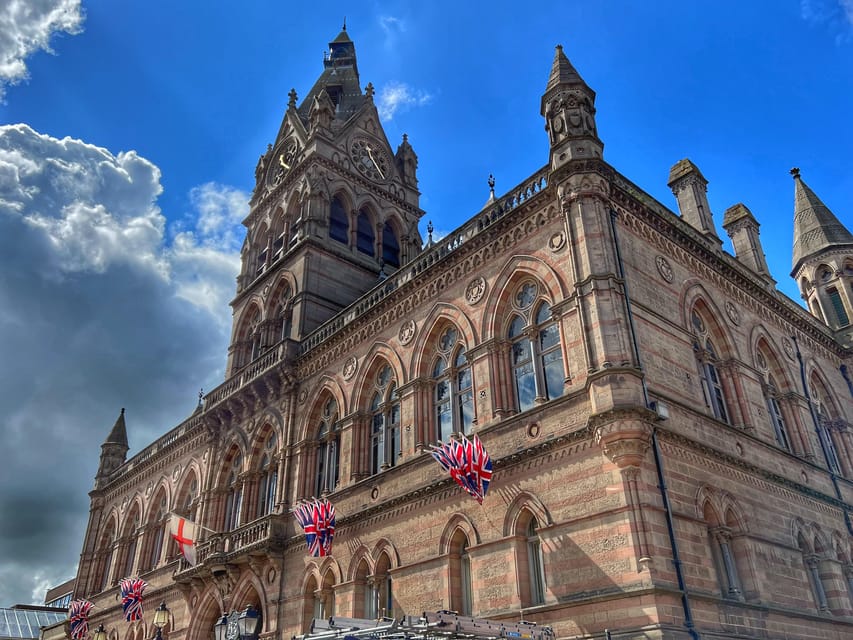
Your introduction starts around Chester Town Hall. The stop is brief, but it places you in the civic heart of the city and gives the guide a natural opening for Chester’s long story.
From there, the route moves along Northgate Street. This early part of the walk helps you get used to looking above street level. Chester’s architecture rewards that habit, since historic upper floors, timber framing, and changing building styles are part of what gives the center its character.
The guide’s job here is not simply to name buildings. The better value comes from hearing how the city’s streets changed over time and how ordinary people lived among grand public and private buildings. Phil and Caroline are both described as engaging storytellers, and the tour’s stories can include Roman soldiers, Saxons, Vikings, a Mercian princess, and even a talking goose.
That mix is useful. Chester’s past is not presented as a list of dates. It includes politics, local legends, daily life, and the odd memorable tale that helps you recall a place after the walk is over.
Chester Cathedral and Saint Werburgh Street
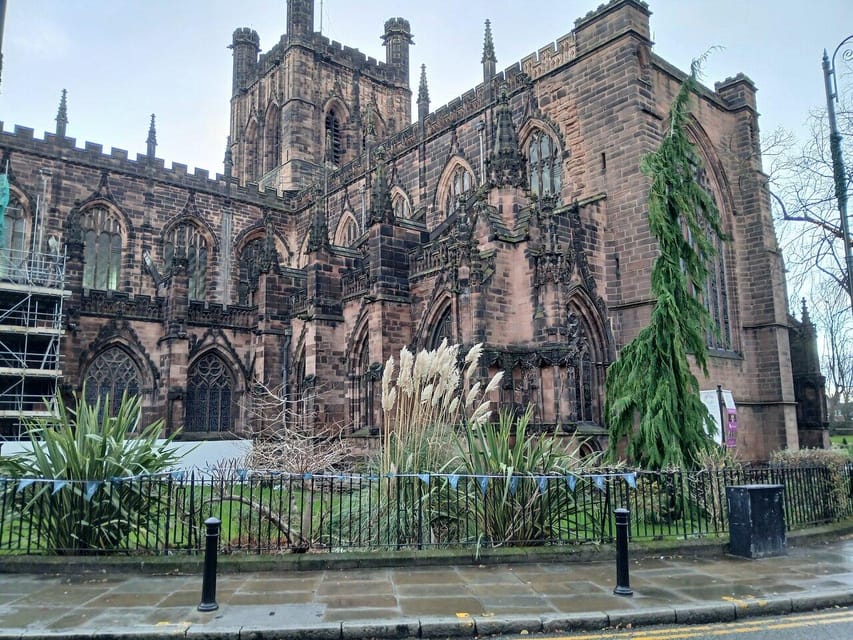
Chester Cathedral receives about ten minutes of guided attention, making it one of the longer stops. The exterior tells part of the story, but the guide adds the missing background: a Norman Earl, a medieval abbey, the Dissolution of the Monasteries, and the building’s later Victorian changes.
The Cathedral is particularly important because it survived the period when many religious houses were closed or damaged. You will not receive admission to the interior as part of this walk, but seeing the building from outside gives you a clear reason to return for a separate visit if your schedule allows.
After the Cathedral, the route follows Saint Werburgh Street. The short stop here keeps the group in the historic core and helps explain how religious, commercial, and residential spaces sat close together in old Chester.
This is also a good point to decide what you want to revisit. If the outside explanation makes you curious about the Cathedral’s interior, you can return after the tour rather than trying to absorb everything while keeping up with the group.
Godstall Lane and Chester Cross
Godstall Lane is one of the route’s appealing details. Small lanes often reveal more about a city than its grandest monuments, since they show the scale and shape of everyday movement through the old center.
The walk then reaches Chester Cross, where several major streets meet. The guide uses this central junction to orient you and explain how the city works as a place, not just as a collection of old buildings.
You may hear about medieval houses and the people who lived in them, along with the contrast between modest homes and the townhouses or mansions of the landed gentry. That social contrast gives the architecture more meaning. A decorative façade is not only something to photograph; it also hints at who had money, influence, and a reason to make an impression.
The stop is short, so do not expect a long pause at every building. The benefit is the cumulative picture: lane, street, house, market junction, and cathedral all begin to fit together.
A handful of other Britain outings to weigh up
- Chester: Chester Zoo Entry Ticket
★ 4.5 · 967 reviews - Chester: City Sightseeing Hop-On Hop-Off Bus Tour
★ 4.6 · 274 reviews - Chester: Half-Hour City Cruise
★ 4.6 · 231 reviews - From Chester: Full-Day Guided North Wales Sightseeing Tour
★ 4.8 · 114 reviews
Watergate Street and Booth Mansion
Watergate Street receives one of the longer stops, about eight minutes. This is an important stretch for seeing Chester’s signature Rows and the historic buildings that line the street.
The Rows are a defining feature of Chester. Their raised walkways and covered shopping levels give the center a different feel from an ordinary British high street. The guide helps you notice how these spaces work and why they remain useful today, with shops, bars, and restaurants occupying buildings that carry centuries of change.
Booth Mansion adds another angle. Here, the focus shifts toward the homes of wealthy residents and the way status appeared in town architecture. The mansion helps balance the stories of ordinary medieval houses, showing that Chester’s central streets served people with very different lives.
I would keep your camera ready around Watergate Street and Booth Mansion. The timber framing, changing rooflines, and close views along the Rows make this one of the strongest sections for photographs. The route is still active city streets, though, so you will need to keep aware of other pedestrians.
Bridge Street and the Chester Grosvenor
Bridge Street continues the architectural story while bringing you through another active part of the center. The guide discusses the buildings and the way old Chester has been adapted for present-day use.
That connection between past and present is one of the tour’s strengths. You are not looking at a preserved set that exists only for sightseeing. Chester remains a working city, and historic buildings now house shops, restaurants, bars, and hotels.
The Chester Grosvenor provides a short stop connected with the city’s more formal and prestigious side. The building helps illustrate how Chester’s center includes both medieval survivals and later additions designed to project wealth and status.
At this stage, you will have walked through several distinct streets without needing transport between them. That makes the experience useful for a first visit, especially if you want to learn the layout before choosing where to spend more time on your own.
Eastgate Street and the famous clock
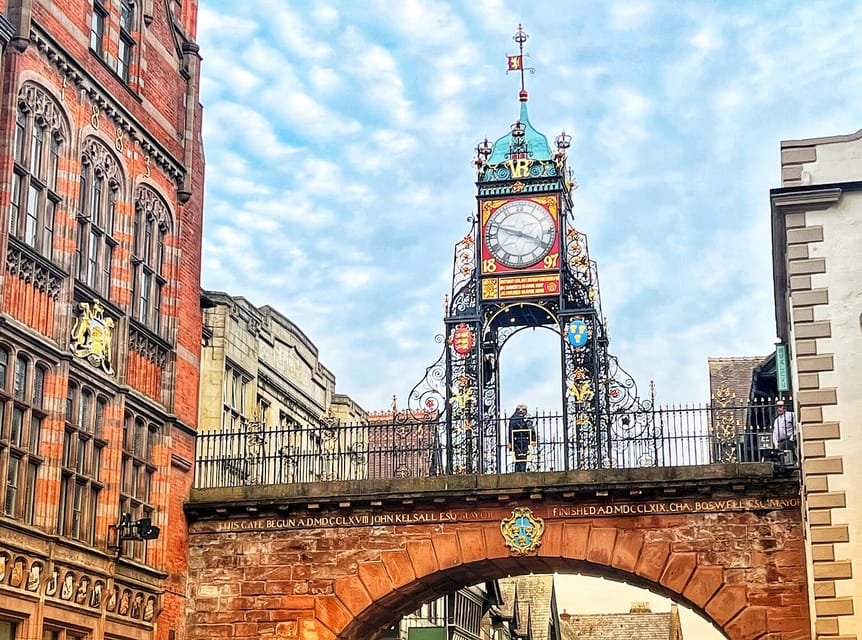
Eastgate Street leads toward the tour’s best-known photo stop. The Eastgate Clock sits on the old Eastgate, and its position above the street makes it one of Chester’s instantly recognizable sights.
The clock is also a good example of how Chester’s defensive structures changed purpose. The city walls were first built for defence, but later became a promenade. That shift from military barrier to public walking route is exactly the kind of detail that makes the city easier to understand.
The guide spends about five minutes at the Eastgate Clock, enough time for background and photographs. You should be prepared for the area to feel busier than the quieter lanes earlier in the route. It is still a central street, not a private viewing platform, so the best photo may require a little patience.
The route finishes at Chester Cathedral. That ending works well because you can choose your next step: visit the Cathedral separately, return to a street that caught your attention, or continue exploring the center with a clearer sense of direction.
What the guide adds
The professional Green Badge Guide is the heart of the experience. Phil and Caroline are named guides, and the strongest praise focuses on their clear delivery, local tips, humor, and ability to link different periods together.
Phil is described as enthusiastic and easy to follow, with a friendly style and the ability to answer questions. Caroline is noted for an engaging presentation, useful recommendations, and a good sense of pace. The exact guide depends on the departure, but you can expect the tour to be led in English.
A small group matters here. Chester’s lanes and Rows are not ideal for a large crowd, and a smaller party makes it easier to hear the explanation and see what the guide is pointing out. It also leaves more room for questions, which is useful if you want to understand a particular building rather than simply take a picture.
One point to watch is sound. In a busy street, it may be harder to hear every word, especially if the group spreads out. Stay near the guide and ask for a repeat if needed. The tour is built around spoken storytelling, so being able to listen is central to getting your money’s worth.
Price, pace, and practical value
At $16 per person, this is a modest-cost way to orient yourself in central Chester. The value comes less from the number of stops than from the explanations between them. You could walk past most of these sights alone, but you would miss the links between Roman Chester, medieval housing, the Cathedral, the Rows, the walls, and modern city life.
The route includes many short stops, with longer attention at Chester Cathedral, Watergate Street, and the city’s key landmarks. That keeps the walk moving, but it also means you should not expect a full lecture at each location.
Wear comfortable shoes. The route is not described as difficult, but it is a walking tour and includes some stairs. It is not suitable for wheelchair users or people with mobility impairments. Weather does not stop the tour, so bring clothing that suits the forecast and be ready to spend the full 90 minutes outdoors.
Historic building admissions are not included. That is not a flaw for a sightseeing overview, but it matters if your main goal is to tour the Cathedral interior. Treat this experience as an introduction, then decide which buildings deserve a separate paid visit.
The booking terms are flexible: you can cancel up to 24 hours in advance for a full refund, and you can reserve now and pay later. Starting times vary, so check availability when you book.
Who will get the most from this tour
I would choose this walk if you have only a day in Chester and want to make your time count. It gives you a useful map of the center and points out places you might otherwise pass without noticing, including the back lanes and historic buildings.
It also suits anyone who likes history delivered through stories rather than a museum label. Roman soldiers, Norman rule, medieval houses, the Dissolution, Victorian changes, and modern businesses all appear within one compact route.
Families with older children may enjoy the variety, especially the legends and unusual details. The 90-minute length is also more manageable than a full-day historical tour.
You may want something else if you need step-free access, want to explore building interiors during the walk, or prefer a slow photography outing. The guide keeps the group moving, and the route can change. It is best for seeing a broad slice of Chester, not for studying one site in great depth.
Should you book the Heart of Chester walk?
Yes, if you want a clear and lively introduction to central Chester at a sensible price. The mix of major sights, quieter lanes, architectural detail, and local stories gives you more than a basic orientation stroll.
Book it early in your visit if possible. You can use the guide’s suggestions to plan the rest of your day, then return to the Cathedral, Rows, city walls, or a recommended restaurant with better context.
Skip it only if you have already explored Chester closely and understand its historic center, or if stairs and outdoor walking are a serious problem. For most first-time visitors, this is a practical way to see the city’s main sights and learn why they matter.
FAQ
How long does the Heart of Chester Walking Tour last?
The tour lasts 90 minutes.
Where does the tour begin?
It begins at the bottom of the steps of the Chester Visitor Information Centre in Town Hall Square.
Where does the tour finish?
The tour finishes at Chester Cathedral.
Which sights are included on the route?
The route includes Chester Town Hall, Northgate Street, Chester Cathedral, Saint Werburgh Street, Godstall Lane, Chester Cross, Watergate Street, Booth Mansion, Bridge Street, Eastgate Street, the Chester Grosvenor, and Eastgate Clock.
Is entry to Chester Cathedral included?
No. The tour shows the Cathedral and other historic buildings from outside. Admission to historic buildings is not included.
Who leads the tour?
A professional Green Badge Guide leads the walk. The named guides are Phil and Caroline, and the tour is conducted in English.
What should I wear?
Wear comfortable shoes and dress appropriately for the weather. The tour operates in all weather conditions.
Is the tour suitable for wheelchair users?
No. The activity is not suitable for wheelchair users or people with mobility impairments, and the route includes some stairs.
New listings around Britain
- London: Secrets of Freddie Mercury Tour with a Cocktail★ 4.1 · 15 reviews
- London: Hampton Court Private Guided Tour★ 3.4 · 15 reviews
- Edinburgh: Isle of Skye, Highlands & Jacobite Steam Train★ 4.6 · 15 reviews
- London: Jack the Ripper Tour and Underground Prison in Spanish★ 5.0 · 15 reviews
- Spanish Language : Original Harry Potter Walking Tour★ 4.5 · 15 reviews
- THE HANGOVER BRUNCH | Benidorm Bingo & Drag Queens★ 4.5 · 15 reviews
- London: Private Couples Photography Session with Landmarks★ 5.0 · 15 reviews
- London: The Saturday Supershow Cabaret at Phoenix Arts Club★ 4.5 · 15 reviews
Chester Tours, compared.




Browse the lists this tour appears in