
Reviewed · MUSEUMS
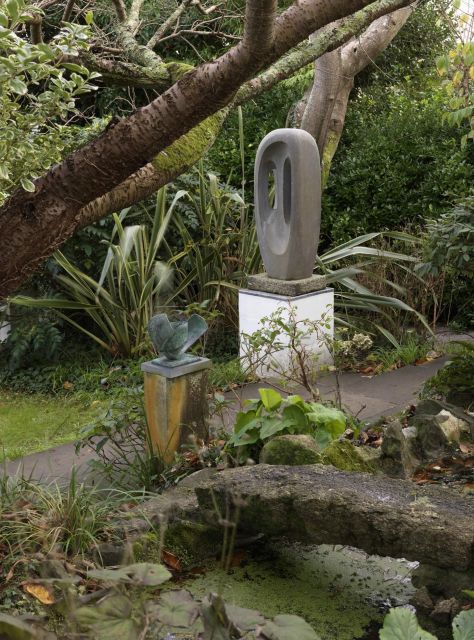
Barbara Hepworth Museum & Sculpture Garden: entry to site.
Barbara Hepworth’s former home in St Ives gives you something a gallery cannot: her sculptures remain in the rooms and garden where she lived and worked. You move from archive photographs to her living area, then outside among larger works framed by a sub-tropical garden.
I like the way the visit connects Hepworth’s art with her daily surroundings, and I like the calm, personal scale of the site. The garden is not a backdrop added later. It is part of the experience. The main drawback is the lack of a café, limited souvenirs, and only one toilet, so plan this as a focused cultural visit rather than a full afternoon attraction.
Key points
- Original St Ives home: See Hepworth’s former living spaces and understand her work in a personal setting.
- Chronological archive display: Begin with photographs and artefacts that trace her career.
- Sculpture garden: View larger works among carefully planted sub-tropical greenery.
- Paintings and drawings: The indoor collection gives you a broader view of Hepworth beyond sculpture.
- Studios and working spaces: Views into the studios help connect the finished pieces with her creative process.
- Small, focused visit: The booking is limited to nine participants, and many people spend about an hour on site.
Why Barbara Hepworth’s St Ives home matters
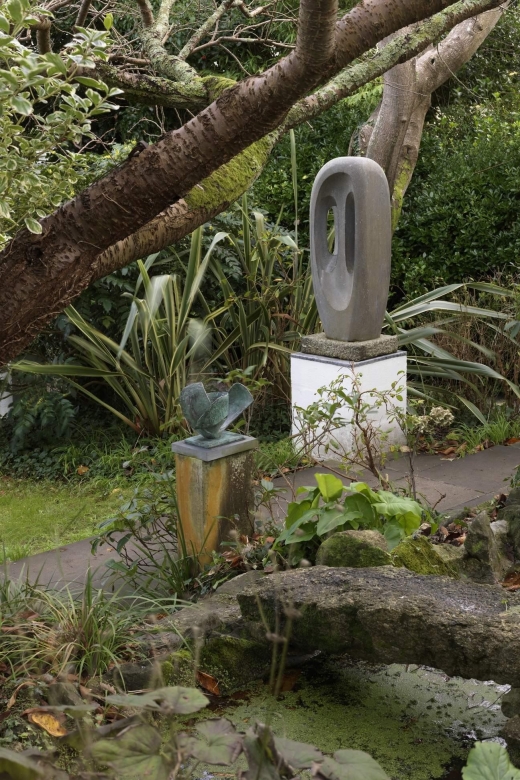
Barbara Hepworth is closely linked with modern art in St Ives, but the most useful thing about this visit is its scale. You are not entering a large museum designed to hold hundreds of objects. You are entering a former home and working place that has been kept close to how it was during her time there.
That changes how you look at the art. A sculpture in a white gallery can feel remote. Here, the rooms, garden, and studio views give the works a sense of daily use and personal choice. You can consider not only the shape of a piece, but also where Hepworth chose to live with it.
I find this especially helpful if you are new to modern art. You do not need a background in art history to get something from the visit. The setting gives you a clear starting point: look at the sculpture, then look at the space around it.
The site also suits anyone who prefers a short, concentrated museum stop. A recent visitor described spending a magical and inspiring hour here, which is a useful guide to the scale. You can take longer if you read every display and pause in the garden, but this is not an all-day attraction.
More Museum Tours in Britain:
- Liverpool: Liverpool Football Club Museum and Stadium Tour
★ 4.8 · 10,764 reviews - London: Chelsea Football Club Stadium and Museum Tour
★ 4.8 · 4,576 reviews - London Transport Museum Entrance Ticket
★ 4.5 · 1,323 reviews
Start with the archive photographs and artefacts
Your visit begins in the admission area, where chronological photographs and artefacts cover Hepworth’s career. This opening section gives you a timeline before you meet the sculptures themselves.
That order is important. Modern art can seem hard to place when you see individual pieces without context. The archive material helps you follow Hepworth’s development and gives you a sense of the person behind the work.
I would take a few minutes here rather than rushing upstairs. Look for the changes across the photographs and the evidence of her working life. The display is not simply a collection of labels. It prepares you to see the house as part of the story.
The information also includes material connected with Hepworth’s life and work alongside Ben Nicholson. One visitor particularly appreciated how clearly the site presented information about both artists. If you have come to St Ives with only a general interest in modern art, this section helps set your bearings before the more visual part of the visit.
Hepworth’s former living area and indoor works
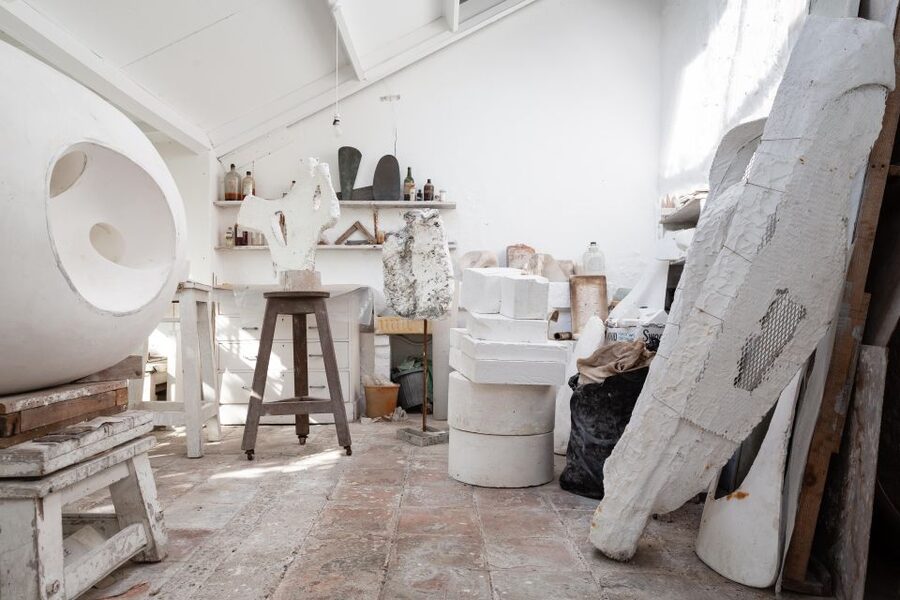
Upstairs, you see a selection of Hepworth’s works displayed in her former living area. The collection includes abstract sculptures, paintings, and drawings, so you get more than a quick look at one part of her career.
The indoor rooms feel personal in a way that a purpose-built exhibition hall cannot. The works are presented within the home she occupied, and the site has been kept largely unchanged since she lived and worked there. That sense of continuity is one of the strongest reasons to pay the admission fee.
I like the mix of sculpture and two-dimensional work here. The drawings and paintings give you another way into Hepworth’s ideas, while the smaller indoor sculptures let you study form at close range. The rooms also provide a quieter contrast to the larger pieces waiting outdoors.
Do not expect a huge number of objects. This is a selected collection in a relatively small home. That can be a strength if you want a clear, manageable visit, but it may feel brief if you are hoping to see a large survey of Hepworth’s entire career.
The garden turns sculpture into an outdoor experience
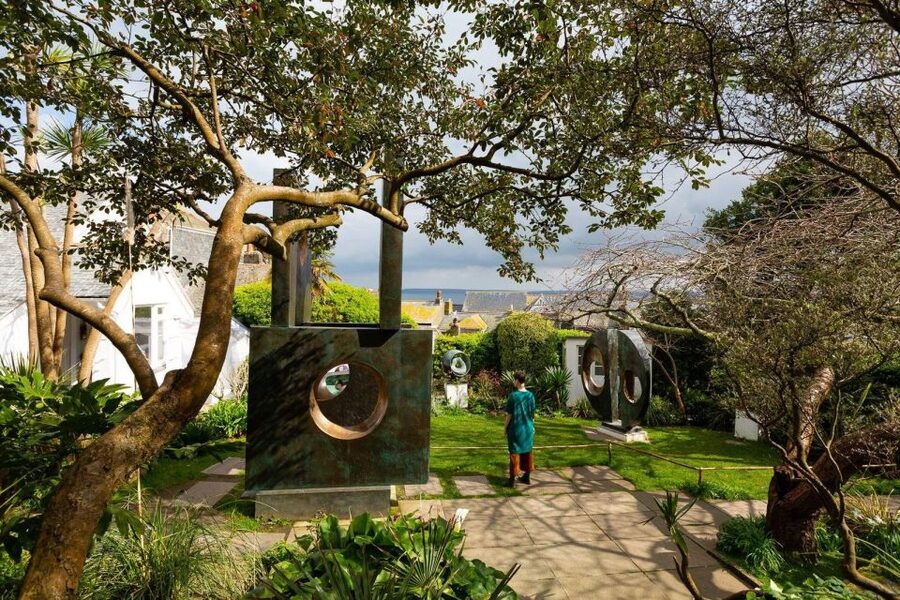
The sculpture garden is the emotional centre of the visit. After the indoor rooms, you step outside to see larger works set among sub-tropical planting.
The plants matter. They soften the hard surfaces of the sculptures, frame different views, and change the way you read the shapes. The combination of abstract art and garden design is one of the most praised parts of the experience. A visitor from the Netherlands summed up the appeal as the combination of sculptures and garden design.
I would give the garden proper time rather than treating it as a passage between rooms. Walk slowly, look at the sculptures from more than one angle, and notice how the planting affects each view. You might find that a work that seems severe indoors feels more open outside, or that the garden makes you pay closer attention to its outline.
Because the garden is part of Hepworth’s original home, it feels connected to her working life rather than added as a decorative display. That makes the outdoor section especially valuable for people who want to understand how an artist lived with large-scale work.
The garden also broadens the appeal of the site. You do not need to be deeply interested in abstract sculpture to enjoy the planting and the arrangement of the space. At the same time, serious admirers of Hepworth’s work will find that the garden gives the larger pieces room to breathe.
Elsewhere in Britain, a change of pace:
- London: The London Eye Entry Ticket
★ 4.6 · 35,875 reviews - From London: Harry Potter Warner Bros Studio Tour
★ 4.7 · 26,588 reviews - London: Westminster to Greenwich River Thames Cruise
★ 4.5 · 22,836 reviews - Magical London: Harry Potter Guided Walking Tour
★ 4.7 · 22,044 reviews
Studios and the feeling of a working place
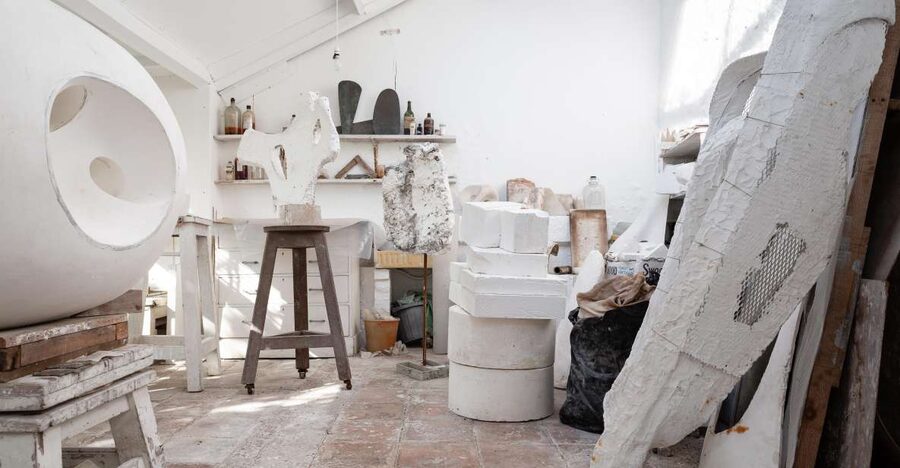
The admission includes views of the work studios. These views are useful because they connect the polished finished pieces with the practical spaces where Hepworth lived and worked.
You may find the studio element more revealing than a long written explanation. A studio suggests scale, tools, movement, and unfinished ideas. Even when you cannot handle or closely inspect anything, seeing the working spaces helps you think about how the sculptures came into being.
The site’s unchanged character is central here. It does not feel like a modern visitor centre built around Hepworth. Instead, the home, garden, and studio views work together as one place.
That authenticity also means the visit has limits. The rooms are relatively small, and the site cannot offer the wide facilities of a major museum. You should come for the art and setting, not for café time, extensive shopping, or a full day of entertainment.
How much time should you allow?
The ticket is valid for one day, but the actual visit is compact. Many people will find around an hour enough for the archive, indoor collection, garden, and studio views. You can stay longer if you read carefully, take time with the planting, or want to study each sculpture from several positions.
I would pair this with other time in St Ives rather than making it your only plan for the day. The one-day validity gives you flexibility, but it does not mean the museum itself fills a whole day.
The small-group limit of nine participants should help keep the visit focused. It also suits the scale of the house, where a large crowd would make the rooms and garden feel cramped. The supplied information does not name individual guides, and this is primarily an admission visit rather than a guided tour with a published guide.
If you are booking around a tight schedule, check the available starting times. The ticket information says availability determines the start time, so do not assume you can arrive at any moment without checking.
Is the $13 admission good value?
At $13 per person, I consider this fair value for a short specialist museum visit. You are paying for access to the original home and garden, selected sculpture, paintings, drawings, archive material, and studio views. The setting adds something a standard art display cannot provide.
The value is strongest if you already enjoy Hepworth, modern art, historic homes, or gardens. You are not just ticking off a museum. You are seeing the relationship between the artist, her work, and the place she chose to inhabit.
The value is less clear if you want a long itinerary or extensive facilities. There is no café or refreshment service, the souvenir range is limited, and the site has only one toilet. Food and drinks are not allowed, so have refreshments before or after your visit.
I would also avoid judging the price by the number of objects alone. This is a small collection with a strong sense of place. The reason to come is not quantity. It is the chance to see Hepworth’s work in her own domestic and garden setting.
Practical details before you go
The ticket includes entry to the original home and garden, archive information and images, abstract sculptures, paintings, drawings, the sub-tropical garden, and views of the work studios.
The site is wheelchair accessible through a side-street entrance, but you must arrange this ahead of your visit. That advance notice matters because the usual route may not be the route used for wheelchair access. Mobility scooters are not permitted.
Keep your belongings light. Large bags, oversize luggage, and coolers are not allowed. Food and drinks are also prohibited, along with smoking and vaping. Assistance dogs are allowed, but other pets are not.
Photography rules are strict. Flash photography, tripods, drones, and professional cameras are not permitted, and you cannot touch the exhibits. These limits protect the house and its collection, so bring your attention rather than a large camera setup.
The site is not designed for parties or noisy groups. Alcohol, speakers, climbing, bikes, skateboards, and similar items are prohibited. Unaccompanied minors are not allowed, and children must visit with an accompanying adult.
You can cancel up to 24 hours before the visit for a full refund, and the reserve now, pay later option can help if your St Ives plans are still moving. The booking is valid for one day, subject to the available starting time.
Who will enjoy this visit most?
I would recommend it first to admirers of Barbara Hepworth and modern art. The indoor works, archive material, studio views, and outdoor sculpture give you a rounded visit without making you spend hours reading wall text.
It also suits garden lovers. The sub-tropical planting is not an afterthought, and the way it frames the sculptures is a major part of the appeal. If you enjoy seeing art in a domestic setting, you will find the unchanged character of the house especially worthwhile.
This is a good choice for a quiet cultural break in St Ives, particularly if you prefer intimate museums to large institutions. The small-group capacity of nine fits that mood.
I would be more cautious if you need a full-day attraction, a café on site, a large shop, or generous visitor facilities. Families should also note the rules about unaccompanied minors and the prohibition on touching exhibits. Visitors using wheelchairs should arrange side-street access before arriving.
Should you book Barbara Hepworth Museum and Sculpture Garden?
Book it if you want to see Hepworth’s work where she lived and worked, not simply in a neutral gallery. The strongest parts are the unchanged home, the larger sculptures among sub-tropical planting, and the clear progression from archive material to indoor works and garden.
The visit is short, but that is not a flaw if you plan it properly. Allow about an hour, arrive with light luggage, and arrange wheelchair access in advance if needed. At $13, it offers good value for art lovers, garden enthusiasts, and anyone curious about St Ives’ modern art tradition.
Skip it only if you are looking for a large museum, a long guided programme, or a place to stop for refreshments. For everyone else, this is a focused and memorable look at one artist’s work, home, and garden.
FAQ
How long does a visit to the Barbara Hepworth Museum and Sculpture Garden take?
The ticket is valid for one day, but the site is relatively small. Many people spend about an hour viewing the archive, indoor collection, garden, and studio views.
What does the admission ticket include?
Admission includes the original home and garden, archive information and images, abstract sculptures, paintings, drawings, the sub-tropical garden, and views of the work studios.
Is the museum wheelchair accessible?
Yes, wheelchair access is available through a side-street entrance. You need to arrange this ahead of your visit.
Is there a café or refreshment facility?
No. The site has no café or refreshment facilities, and food and drinks are not allowed inside. There is also only one toilet on site.
Can I take photographs?
Flash photography, professional cameras, drones, and tripods are not permitted. You must also avoid touching the exhibits.
Can I cancel my booking?
Yes. You can cancel up to 24 hours in advance for a full refund. A reserve now, pay later option is also available.
New listings around Britain
- London: Secrets of Freddie Mercury Tour with a Cocktail★ 4.1 · 15 reviews
- London: Hampton Court Private Guided Tour★ 3.4 · 15 reviews
- Edinburgh: Isle of Skye, Highlands & Jacobite Steam Train★ 4.6 · 15 reviews
- London: Jack the Ripper Tour and Underground Prison in Spanish★ 5.0 · 15 reviews
- Spanish Language : Original Harry Potter Walking Tour★ 4.5 · 15 reviews
- THE HANGOVER BRUNCH | Benidorm Bingo & Drag Queens★ 4.5 · 15 reviews
- London: Private Couples Photography Session with Landmarks★ 5.0 · 15 reviews
- London: The Saturday Supershow Cabaret at Phoenix Arts Club★ 4.5 · 15 reviews
Museums, compared.

Liverpool Football Club Museum and Stadium Tour
Read our review →
Chelsea Football Club Stadium and Museum Tour
Read our review →


Browse the lists this tour appears in