
Reviewed · LONDON TOURS
British Museum Tour: Rosetta Stone, Parthenon, Mummies
The British Museum can swallow an entire day before you have found the Egyptian galleries. This two-hour guided route solves that problem by taking you straight to the Rosetta Stone, Parthenon sculptures, mummies, Sutton Hoo treasures, and the massive Winged Bulls of Khorsabad.
I like the focused selection of objects, and I like the historical links between them. You move from ancient writing to Greek sculpture, Egyptian burial customs, Anglo-Saxon ritual, and Assyrian palace art without trying to cover every room. The main drawback is the busy museum: one reviewer found the guide’s voice hard to hear at times, so staying close matters.
I also like that the guide explains not only what each object is, but how it reached London and why its ownership can be controversial. The tour costs $84.69 per person, which is a fair price if you want context and a clear route, but less attractive if you prefer to wander alone or plan to spend most of the day inside.
Key points before you book
- The Rosetta Stone anchors the tour: See the inscription that helped scholars read Egyptian hieroglyphics.
- The Parthenon sculptures come with a difficult story: Your guide explains their removal from Athens and the debate that followed.
- Egyptian mummies reveal more than death rituals: Burial objects also show beliefs, craft, and daily life.
- Sutton Hoo adds an early medieval British chapter: Its treasures offer a sharp change of pace from Egypt and Greece.
- The Winged Bulls are built for impact: These huge Assyrian guardians show how ancient rulers used art and scale.
- The route requires walking and close listening: Arrive 15 minutes early, wear comfortable shoes, and stay near the guide in crowded rooms.
Why a focused British Museum route makes sense
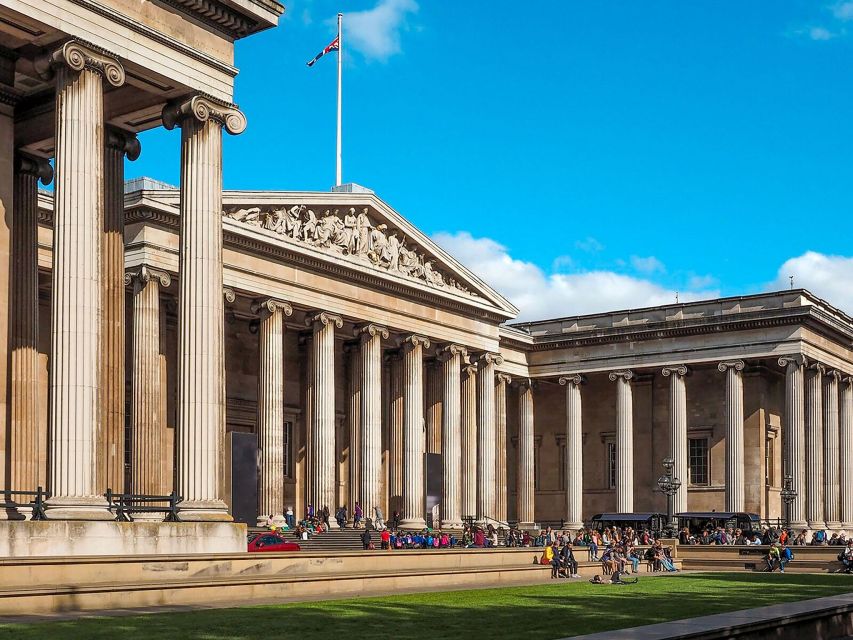
The British Museum is not a small, tidy collection. It holds objects from many regions and thousands of years, and the sheer size can leave you spending half your visit finding the next gallery. I find a short guided route useful here because it gives you a framework instead of a random march from case to case.
This experience is not designed to show you everything. It picks a handful of famous and important objects, then uses them to explain larger subjects: writing, empire, burial, religion, warfare, art, and the way museums acquire their collections.
That focus matters during a two-hour visit. You should expect a guided introduction to major highlights, not the freedom to linger for twenty minutes beside every display. If you want to return later and explore independently, this tour can help you get your bearings quickly.
The tour is shared rather than private, and it is conducted in English. The guide is described as competent and well informed, with useful background on history, mythology, prehistory, antiquity, and the museum’s own story. One practical warning is worth taking seriously: the museum can be noisy and crowded, and one guide was soft spoken. Stand near the guide and avoid drifting to the back of the group.
More Museum Tours in London
- London: Chelsea Football Club Stadium and Museum Tour
★ 4.8 · 4,576 reviews - London: British Museum Guided Tour
★ 4.3 · 1,182 reviews - London: Jack the Ripper Museum Tickets
★ 4.2 · 894 reviews
Meeting at the Great Court and main entrance
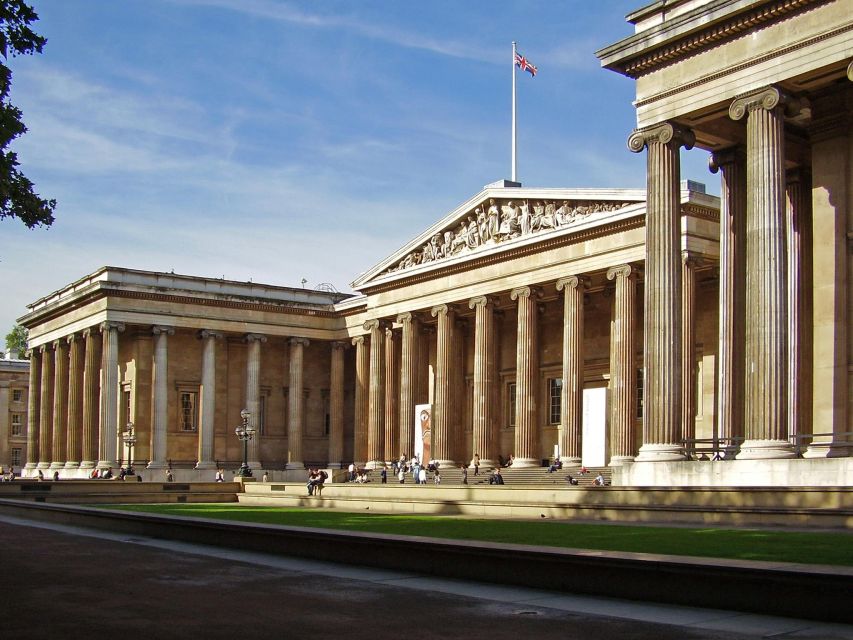
You meet at the British Museum’s main entrance, on the stairs after passing through security. Arrive at least 15 minutes before your scheduled time. That buffer is sensible because you need to locate the meeting point, clear security, and find the guide before the group moves inside.
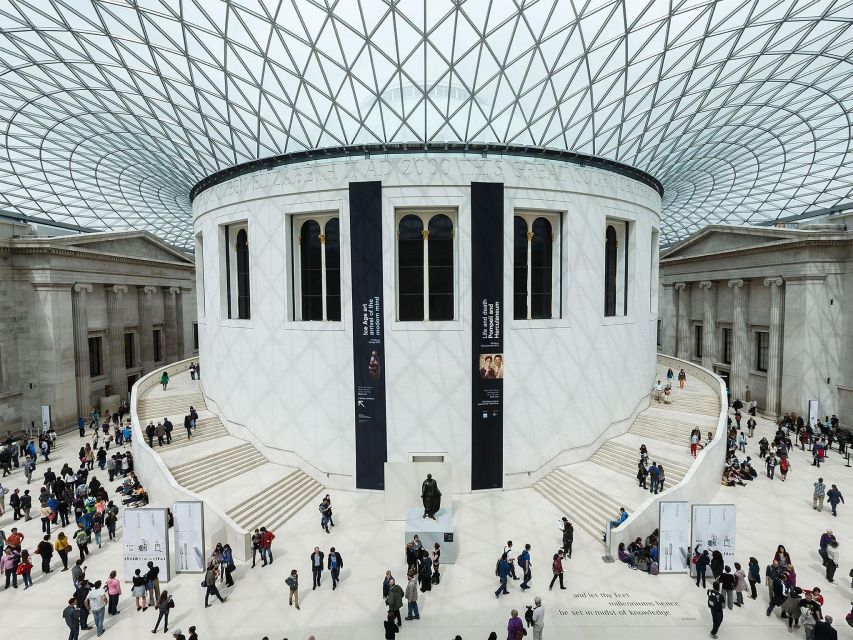
The Great Court is your first major visual moment. Its broad glass roof brings a modern, airy feel to the centre of an old institution. Even if architecture is not your main reason for coming, take a moment to look up. The roof, stone walls, and surrounding museum rooms create an unusual mix of old and new.
The meeting arrangement is simple, but it is not hotel pickup. You make your own way to the museum, and the tour finishes back at the same meeting point. Food and drinks are not included, so plan those separately around the visit.
The booking information also uses the phrase skip the line. Here, that means a faster priority queue shared with other people who have selected that option. It does not mean walking straight past every check or entering a completely empty museum.
The Rosetta Stone and the power of translation
The Rosetta Stone is one of those objects that can look more modest than you expect. Its importance comes from the writing on it and the breakthrough it enabled. The same decree appears in three scripts, including Egyptian hieroglyphics, which gave scholars the comparison needed to work out a writing system that had been unread for centuries.
Your guide can turn a slab of dark stone into a story about language, scholarship, and persistence. You will hear why the stone mattered so much to the study of ancient Egypt and how one inscription helped open the door to a much wider body of texts.
This is a good early stop because it teaches you how to look at the rest of the museum. Objects are not only beautiful things. They can be evidence, records, political statements, or clues to how people lived.
The room can be crowded, so you may not get a long, quiet look. Still, the value of a guide is clear here. Without context, you might glance at the writing and move on. With context, you understand why this particular object changed the study of ancient languages.
The Parthenon sculptures and a living argument
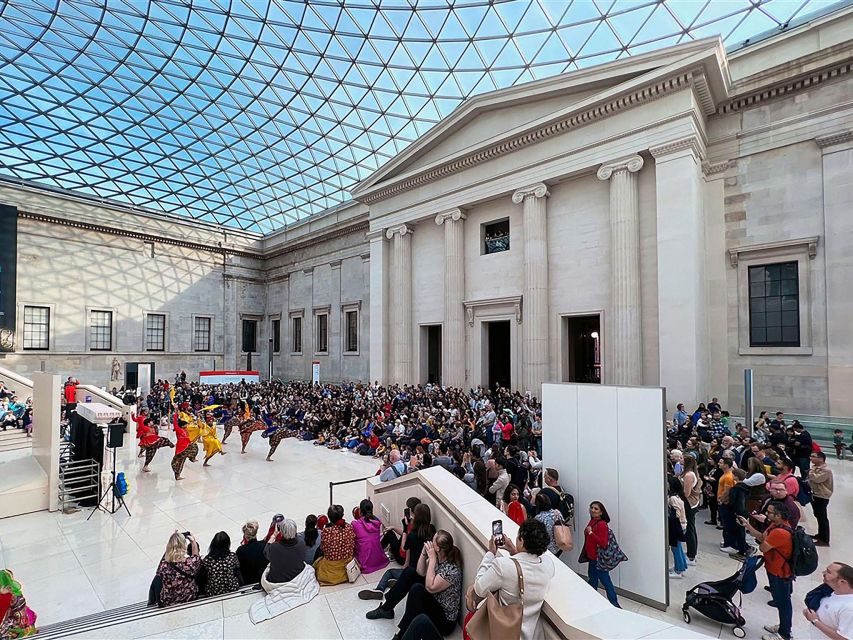
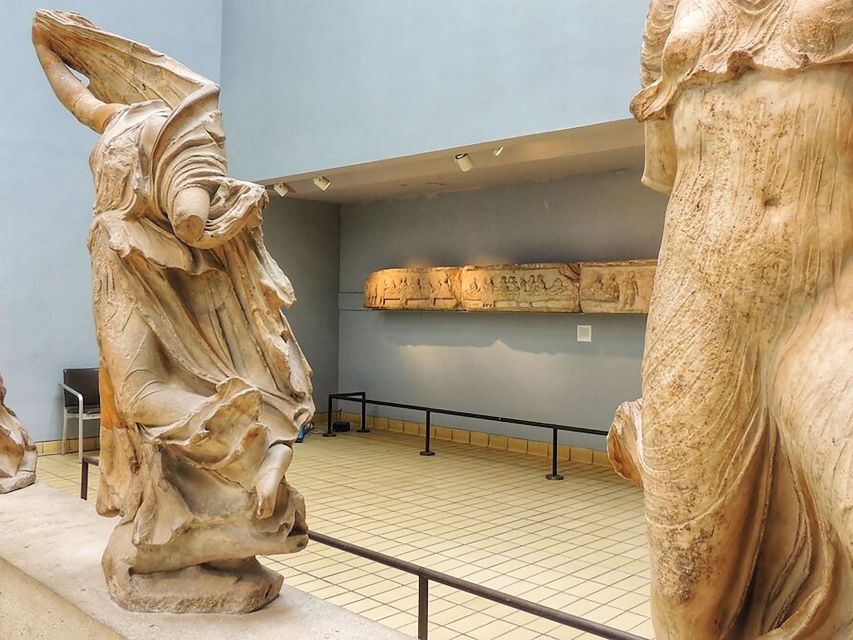
The Parthenon sculptures bring beauty and controversy into the same gallery. They were removed from the Parthenon in Athens by Lord Elgin, who was British ambassador to the Ottoman Empire, and later brought to Britain. Their presence in London remains a source of strong debate about ownership, cultural heritage, and the movement of ancient art.
I appreciate that this stop is not treated as a simple display of famous marble. The sculptures are remarkable for their workmanship, but the story of how they arrived here matters just as much. Your guide connects the objects to the political and cultural world in which they were taken and to the arguments that continue today.
Look for the way the figures and reliefs once worked as part of a larger architectural setting. In a museum, you see individual pieces separated from the building they decorated. That can make close viewing easier, but it can also make the original purpose harder to grasp.
This section rewards careful listening. A short tour cannot settle the ownership question, and it should not pretend to. Instead, you get the key facts and a clearer sense of why the sculptures are both major works of art and contested cultural property.
Further British Museum visits:
- London: Tour of the British Museum
★ 4.1 · 678 reviews - London: British Museum Audio Tour & Priority Entrance Ticket
★ 4.5 · 631 reviews - Afternoon Tea at the British Museum
★ 4.2 · 511 reviews - London: British Museum Guided Tour
★ 4.5 · 267 reviews
Egyptian mummies and the world beyond death
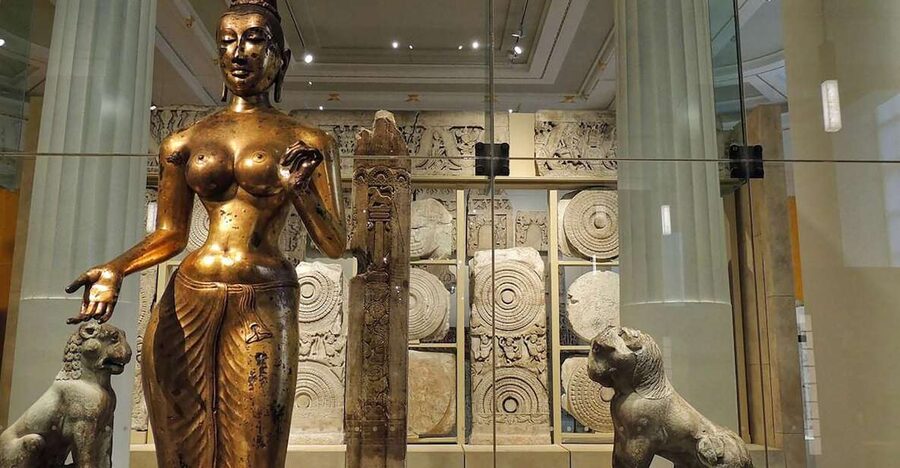
The Egyptian galleries are likely to be one of the most memorable parts of the route. The mummies draw attention first, but the surrounding objects add the meaning. Burial equipment, containers, sculptures, and other artifacts show how Egyptians prepared for death and imagined existence beyond it.
I like this part because it moves the subject away from simple spectacle. A mummy is not merely an ancient body. It reflects religious beliefs, family concerns, technical skill, social rank, and ideas about preserving identity.
Your guide may also help you notice the ordinary details among the grand ones. Burial objects can tell you about craft and daily life, while funerary practices reveal how a society understood the body and the afterlife. The collection gives you a chance to consider both the spiritual and practical sides of ancient Egyptian culture.
Crowding can be an issue in the galleries, especially around the most famous displays. Keep your group in sight and stay close enough to hear. Comfortable shoes are important because the route covers a large museum on foot, with no promise of long seated breaks.
Sutton Hoo and early medieval Britain
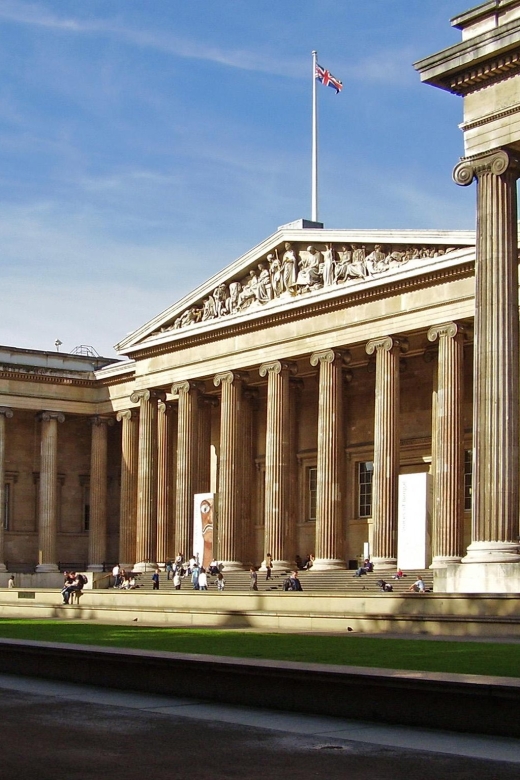
Sutton Hoo changes the mood of the tour. After the large civilizations of Egypt, Greece, and Mesopotamia, you turn to an Anglo-Saxon burial site in England. The treasures found there offer a glimpse into the status, beliefs, craftsmanship, and contacts of early medieval Britain.
The site is best known for an elite burial and its ship-shaped impression, while the displayed objects give the story its human scale. Even without seeing the entire excavation, you can appreciate the skill and expense represented by the burial goods.
This stop is especially useful because it reminds you that Britain’s past is not limited to castles and medieval churches. The objects connect local British history to a much earlier world of rulers, ritual, metalwork, and long-distance exchange.
I would not expect the same grand visual impact as the Winged Bulls or the Parthenon pieces. Sutton Hoo is more rewarding when you slow down and consider what the objects suggest about a society that left fewer written records. The guide’s background in prehistory and antiquity can help bridge that gap.
The Winged Bulls of Khorsabad
The Winged Bulls of Khorsabad provide the tour’s great change in scale. These enormous Assyrian sculptures once guarded a palace and were designed to impress anyone approaching the royal complex. Their size, human faces, wings, and animal bodies combine into a powerful image of protection and authority.
At close range, the details matter. Look at the carving and the way the figures were designed to appear effective from more than one angle. Ancient artists were not simply making decoration. They were shaping the experience of entering a palace and presenting the ruler as powerful and protected.
This is one of the places where the museum’s architecture helps. Large objects need room, and the British Museum can display them in a way that lets you grasp their scale. You will probably remember these sculptures long after smaller objects blur together.
The Khorsabad stop also broadens the tour beyond the best-known European and Egyptian sights. You get a look at ancient Mesopotamian art and the political world of Assyria, where palace decoration carried a direct message about kingship and power.
What the guide adds to the two-hour visit
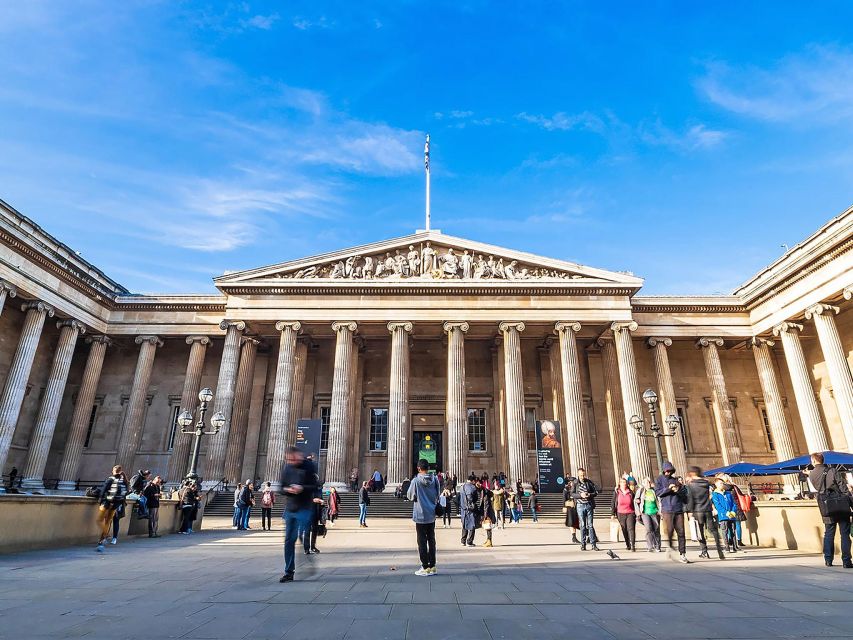
A good museum guide does more than point at famous objects. The strongest part of this experience is the connection between objects and ideas. The Rosetta Stone leads to writing. The Parthenon pieces lead to questions about removal and ownership. The mummies lead to religion and daily life. Sutton Hoo opens a window onto Anglo-Saxon society, while the Assyrian bulls show how rulers used art to project authority.
The supplied feedback also suggests a useful distinction. The guide received strong praise for historical and mythological background, but the crowded setting made it difficult to hear at times. That means the quality of the visit depends partly on where you stand. Stay within a few steps of the guide, especially in large rooms where sound can scatter.
This is not a private tour, so you will share the pace and commentary with other people. That can be a benefit if you enjoy a social visit and want a set route. It can be a limitation if you have a very specific interest or need extra time at one object.
The tour includes an English-speaking guide and online support at boarding. It does not include a meal, drinks, or transport from your hotel. The activity ends where it begins, at the museum meeting point.
Is $84.69 a fair price?
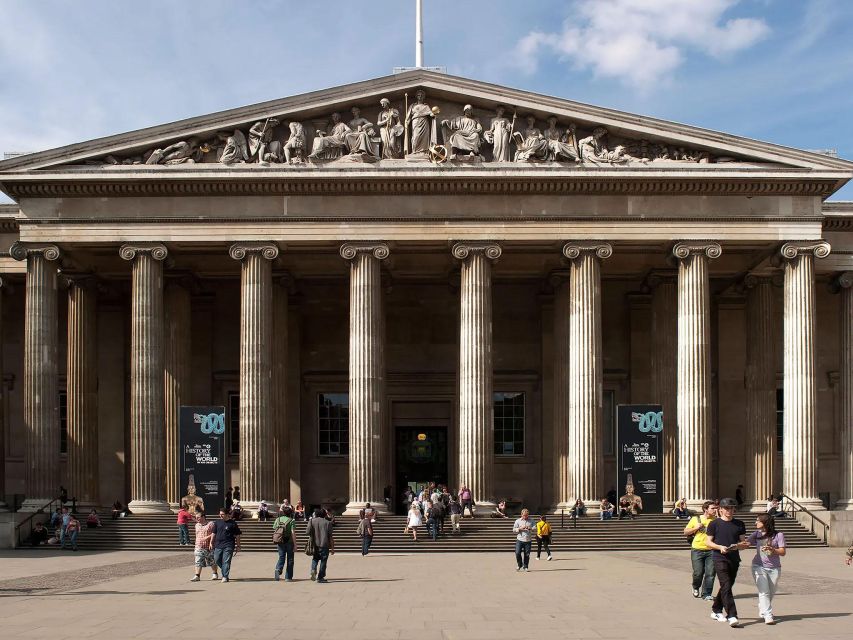
At $84.69 per person, this is not the cheapest way to enter a museum. The value comes from the guide, the structured route, and the time saved deciding what to see in a vast collection.
I think the price makes the most sense for a first visit when you have only two hours and want the major highlights explained. It also suits you if you enjoy history but do not want to read every label or plan a route through dozens of galleries.
The value is weaker if you already know the museum well, want to explore at your own pace, or plan to spend a full day inside. In that case, a self-guided visit may give you more freedom. You can still use this tour as an introduction, then return independently if your schedule allows.
Free cancellation up to 24 hours before the tour and reserve-now, pay-later booking add useful flexibility. Still, pay close attention to the time you select. If that time is unavailable, you may be moved to another available time on the same day. Last-minute bookings can also be shifted to the following day if no seats remain.
Who will enjoy this museum tour?
I would choose this experience for a first-time British Museum visitor who wants a clear route through the big subjects. Families with older children may also find the mix of writing, mummies, treasure, and giant sculptures more engaging than a broad, unfocused museum walk.
It suits people who value explanation over solitude. You will get more from the tour if you like hearing the story behind an object and asking how it reached the museum.
I would be cautious if you use a wheelchair, since the activity is not suitable for wheelchair users. It is also a poor match if you dislike walking, crowded rooms, or fixed timing. Bring a passport or ID card, wear comfortable shoes, and arrive early enough to meet the guide after security.
Should you book the British Museum tour?
Book it if you want the Rosetta Stone, Parthenon sculptures, Egyptian mummies, Sutton Hoo, and the Winged Bulls in one efficient visit, with historical and mythological context along the way. The focused route is its main strength.
Skip it if you want a quiet, private museum experience or hours to study individual galleries. At $84.69, you are paying for guidance and organisation, not just access. For the right visitor, that structure is worth it. For an independent museum browser, it may feel restrictive.
FAQ
How long does the British Museum tour last?
The tour lasts two hours.
What language is the tour conducted in?
The live guided tour is conducted in English.
Where do I meet the guide?
Meet the guide on the stairs at the British Museum’s main entrance after completing security checks.
How early should I arrive?
You should arrive at least 15 minutes before your scheduled start time.
Does the tour include hotel pickup?
No. Hotel pickup is not included. You must make your own way to the British Museum.
Is the tour suitable for wheelchair users?
No. The activity is listed as not suitable for wheelchair users.
Can the tour time change after booking?
Yes. If your selected time is unavailable, you may be transferred to another available time on the same day. For last-minute bookings, you may be placed on the following day if no seats are available.
New listings around London
- London: Bermondsey Craft Brewery Tour★ 5.0 · 3 reviews
- Colourful Notting Hill Photography Tour★ 5.0 · 3 reviews
- The London Historic Pubs Tour★ 4.0 · 3 reviews
- London: Wallace Collection & National Gallery Private Tours★ 5.0 · 3 reviews
- Ultimate Royal London, Thames River Boat Ride & Walking Tour★ 5.0 · 3 reviews
- London: The Birthplace of The Rolling Stones Private Tour★ 5.0 · 3 reviews
- Historic pub tour with Brazilian guide (in Portuguese)★ 5.0 · 3 reviews
- London: Royal Tour with Westminster Abbey & Afternoon Tea★ 3.0 · 3 reviews
London Tours, compared.

Westminster to Greenwich River Thames Cruise
Read our review →
Magical London: Harry Potter Guided Walking Tour
Read our review →


Warner Bros. Studio Harry Potter Tour with Transfers
Read our review →Browse the lists this tour appears in