
Reviewed · CANTERBURY TOURS
Canterbury Cathedral: Entry Ticket with Audio Guide
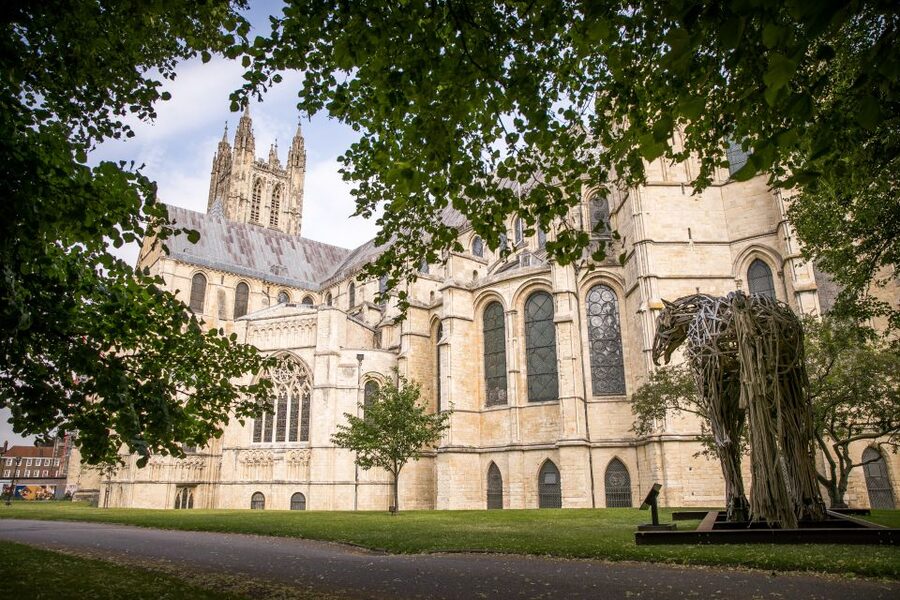
Canterbury Cathedral is not just a grand church. It is a place where England’s religious and political story is written in stone, glass, and worn medieval passageways. Your handset and headphones help turn a vast building into a sequence of human stories, from Augustine’s arrival in 597 to the murder of Thomas Becket and the pilgrims immortalized by Chaucer.
I especially like the self-guided pace, which lets you pause beneath the stained glass instead of being hurried along. I also like the access beyond the main church, including the Great Cloister, Chapter House, gardens, and exhibitions. The drawback is that the audio route can be hard to follow because many points are not clearly numbered inside the cathedral.
Key points to know before you go
- 1,400 years of history: Trace the story from Augustine’s mission in 597 to the cathedral’s medieval rebuilding.
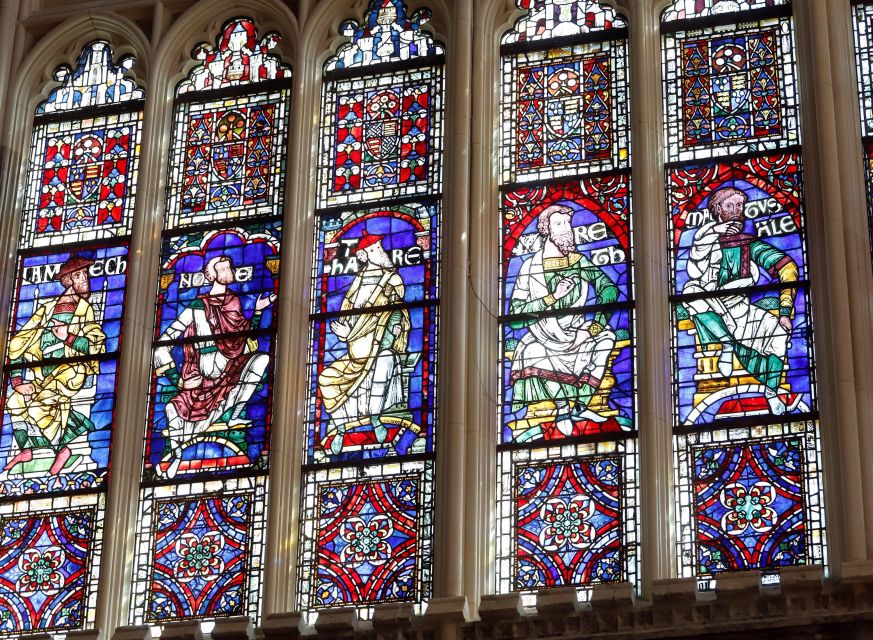
- Old stained glass: See windows believed to be among the oldest in the world.
- Included audio equipment: Collect a handset and headphones, with English, French, German, and Japanese available.
- More than the nave: Your ticket includes the Chapter House, Great Cloister, three public gardens, and up to three exhibitions.
- Allow at least two hours: The main route can take two to three hours, and much longer if you read the displays and explore outdoors.
- Good value for history lovers: At about $31, the ticket makes more sense when you use the full precinct rather than making a quick stop in the cathedral.
Why Canterbury Cathedral matters
Canterbury Cathedral sits at the center of England’s Christian story. In 597 AD, Pope Gregory the Great sent Augustine to England as a missionary. Augustine established his seat, or cathedra, at Canterbury and became England’s first Archbishop.
That beginning gives the cathedral a significance beyond its architecture. It is the mother church of the worldwide Anglican Communion and remains the seat of the Archbishop of Canterbury. You are walking through a working religious site as well as a major historic monument, so some sections may close at short notice for worship or other cathedral use.
The site later became one of Europe’s great pilgrimage centers after miracles were associated with it. The best-known literary record of that pilgrimage is Geoffrey Chaucer’s Canterbury Tales, which follows a group of pilgrims traveling to Canterbury and telling stories on the way.
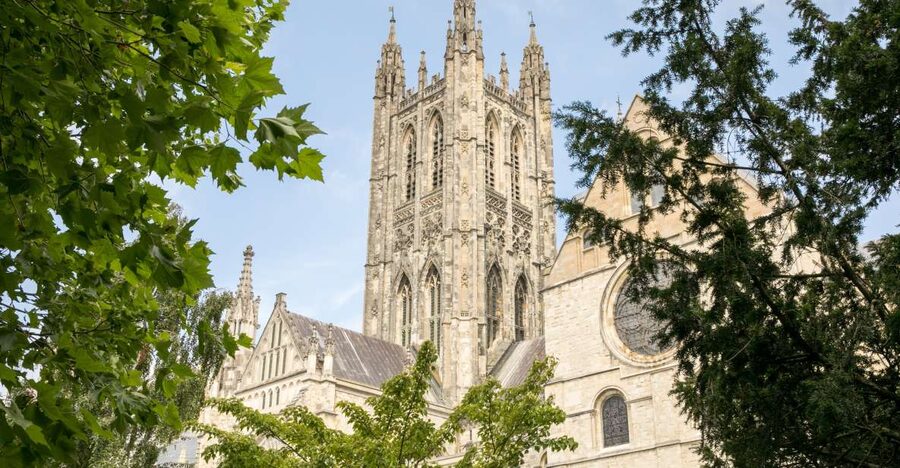
The building itself reflects centuries of change. Fire damaged the cathedral in 1174, and parts were rebuilt in the newer Perpendicular Gothic style. Look closely and you will see how different periods sit beside one another. The result is not a single clean architectural statement. It is a long record of building, rebuilding, fashion, disaster, and devotion.
More Self-Guided Tours in Britain:
- London: Emirates Stadium Entry Ticket and Audio Guide
★ 4.7 · 5,513 reviews - London: British Museum Audio Tour & Priority Entrance Ticket
★ 4.5 · 631 reviews - Bath: Roman Baths Entry Ticket with Audio Guide
★ 4.7 · 425 reviews
Collecting the audio guide at the cathedral
You present your voucher at Canterbury Cathedral and are directed to the desk for the media guide set and headsets. The audio guide is included with the ticket, and the available languages are English, French, German, and Japanese.
The equipment is a handset with headphones, not simply a printed map with a few captions. That matters here. Canterbury is large, and the meaning of a chapel, window, tomb, or architectural detail is not always clear from looking at it alone.
The audio commentary adds stories about royals, monks, martyrs, pilgrims, and the cathedral’s long building history. It also includes visual material, which helps bring the explanations to life while you look at the same feature in front of you.
Give yourself a few minutes at collection to check that the handset is charged and the cable is properly connected. A device has occasionally needed replacing, and some equipment has been awkward to return. This is a small part of the visit, but checking the set early can save you frustration later.
The audio system allows you to choose where to go next and to pause between sections. That is useful if you want time for photographs, quiet thought, or a closer look at the glass. It also means you are not tied to a guide’s pace.
The cathedral interior, from high ceilings to the crypt
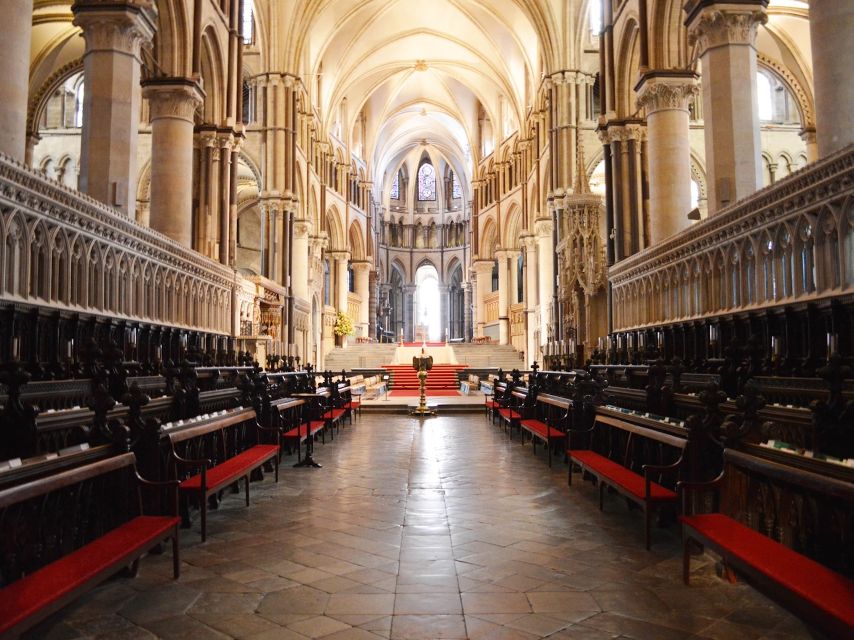
Begin inside the cathedral, where the scale makes the first impression. The high ceilings and long views through the building show why Canterbury became such an important destination for pilgrims. The architecture is impressive, but the audio guide gives it purpose by explaining how the spaces developed.
You will hear about the people tied to the cathedral, not only the archbishops and kings but also the monks and pilgrims who shaped daily life here. The story of martyrdom is central to Canterbury, and the commentary helps connect the physical building with the events that made it famous.
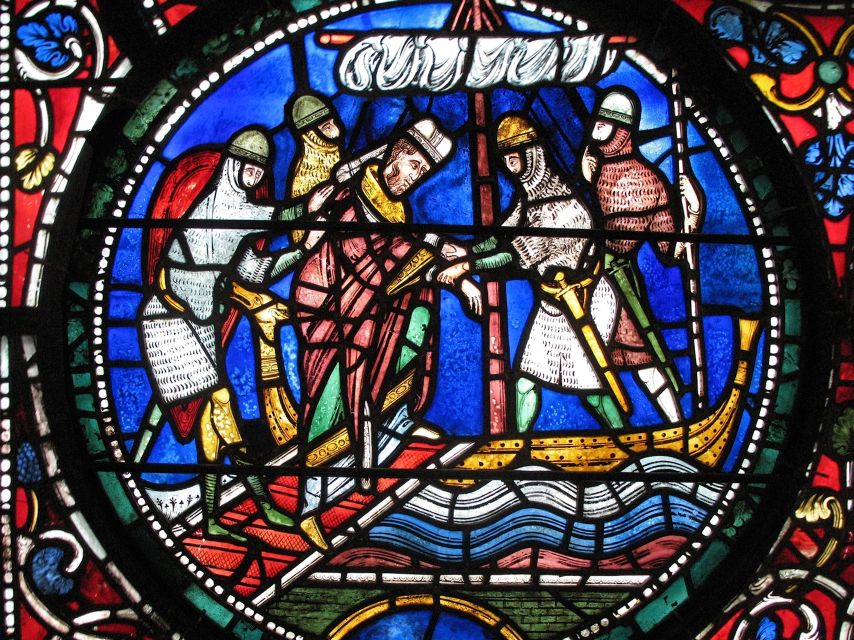
The stained glass deserves slow attention. Some windows are among the oldest in the world, and their colors change as you move through the cathedral. I would not rush this part. Stand back first to take in the overall effect, then move closer to study the individual panels and details.
The crypt offers a different mood. It is lower, quieter, and more enclosed than the upper church, with uneven floors and varying light levels in some museum areas. The change in atmosphere makes it one of the most memorable parts of the visit, but you should take care on the stone surfaces and steps.
Access is mixed. Some entrances have ramps, while other points include stone steps. The cathedral is wheelchair accessible, but the uneven flooring and changing routes mean you may want to ask staff for the best way through on the day.
The Great Cloister and Chapter House
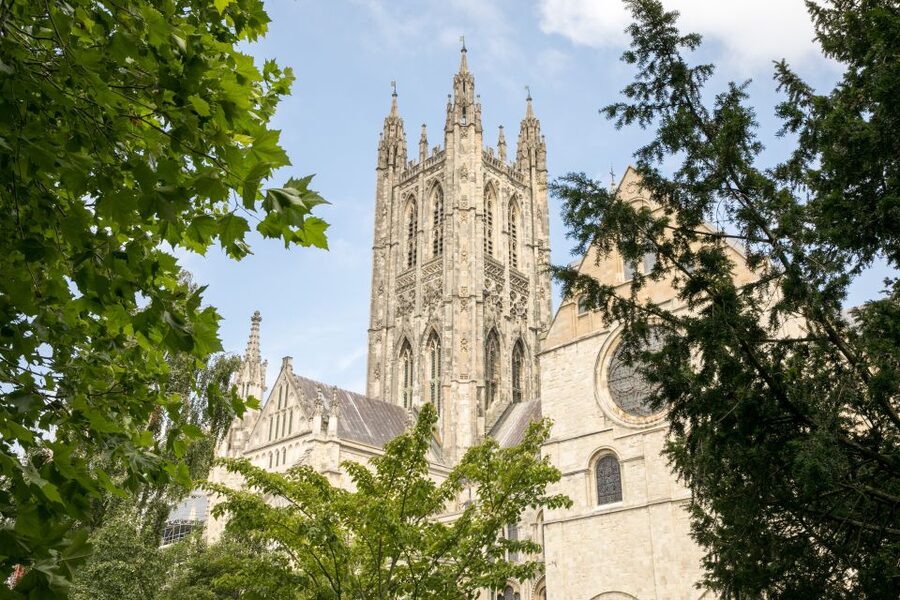
The Great Cloister gives you a strong sense of the cathedral’s monastic past. Monks walked these passages for centuries, and the enclosed design creates a more private atmosphere than the main church.
The cloister is also a good place to slow down after the grand scale of the nave. The stonework, repeated arches, and covered walkways reward a steady pace. Listen to the audio sections here, then pause the handset and take in the space without commentary for a few minutes.
The Chapter House is another highlight included with the entry ticket. Its detailed ceiling is the main visual feature, and it shows how much care went into spaces that were not built simply for public display.
For me, these two areas add real value to the ticket. A quick visit to the cathedral alone can leave you with the impression of a magnificent church. The cloister and Chapter House show how the wider community functioned around it.
The route can be confusing. Audio sections may suggest where to go next, but discreet numbering inside the building would make the system easier to use. I recommend checking the handset directions before moving on and keeping your bearings by noting where you entered each section.
More audio tours in Britain:
- London: Churchill War Rooms Ticket & Political London Audio
★ 4.6 · 224 reviews - London: Royal Walking Tour and Buckingham Palace Audio Tour
★ 4.8 · 154 reviews - Bristol: Self-Guided Sightseeing Audio Tour
★ 4.4 · 151 reviews - Llandaff’s Ghosts: A Self-Guided Audio Tour
★ 4.5 · 29 reviews
Gardens, exhibitions, and the wider precinct
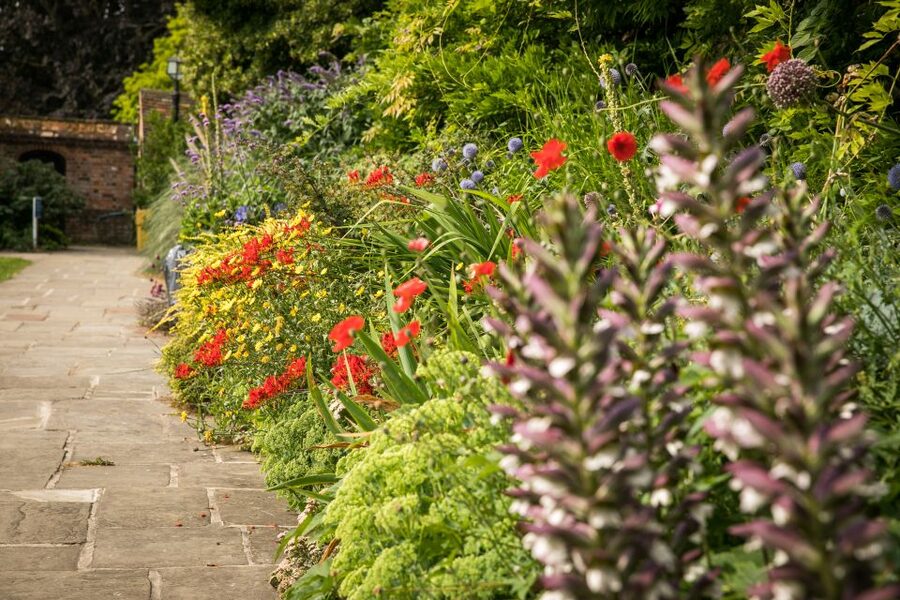
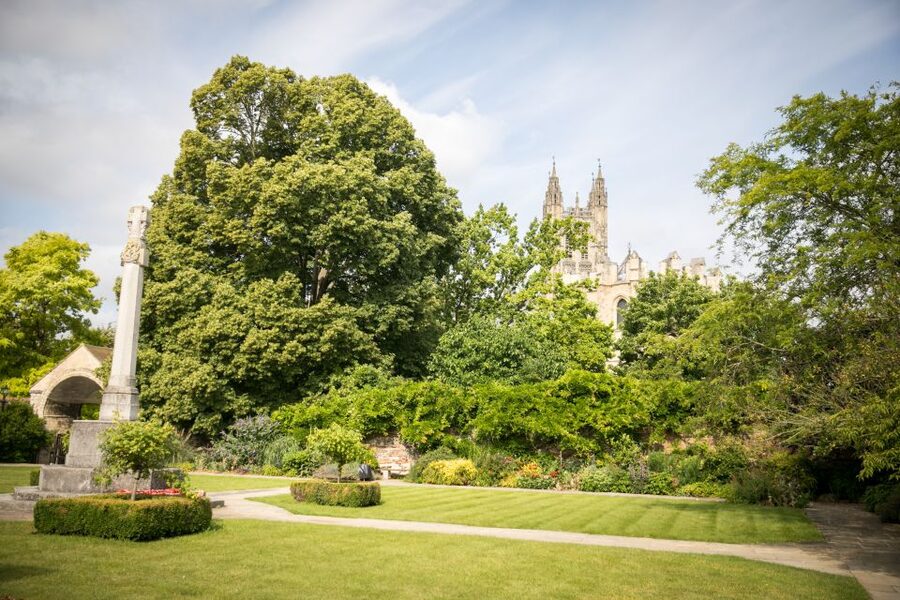
Do not leave after the main church. The ticket includes three public gardens, including a reimagining of a medieval Herbarium. These outdoor spaces provide a welcome change from the stone interior and help explain the practical side of medieval religious life.
The gardens are not simply decorative add-ons. They connect the cathedral precinct with the plants, routines, and enclosed spaces that supported the community. You can use them as a quiet break between audio chapters or as the final part of your visit.
You also receive access to up to three exhibitions around the site. The exact displays may vary, and some areas can close without warning, but the exhibitions give you a closer look at objects and themes that the building itself cannot explain fully.
This is where the one-day validity helps. You do not need to force the entire visit into a short block. You can explore the interior, take a break in the gardens, and return to another section while the ticket remains valid that day.
Most people should plan for two to three hours. That covers a thoughtful visit through the cathedral, cloister, Chapter House, and some outdoor areas. If you read every display, listen to the full commentary, and take your time with the glass, you could stay much longer. One especially enthusiastic visitor spent six hours on site, though that is a full history day rather than a quick sightseeing stop.
How good is the audio guide?
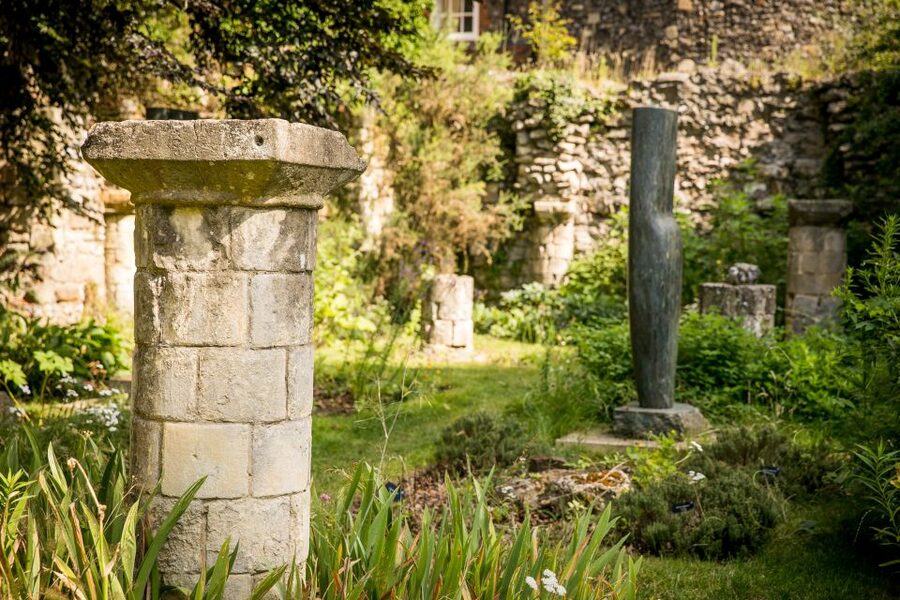
The audio commentary is one of the strongest parts of this experience. It gives structure to a building that can otherwise feel like a series of beautiful but disconnected rooms.
The best way to use it is to treat the handset as a flexible companion rather than a strict marching order. Follow the suggested route when you can, but pause when something catches your eye. The ability to choose the next section and take natural breaks is especially helpful for families and for anyone who dislikes fixed tours.
The main weakness is navigation. The audio guide may refer to a point that is not clearly marked in the cathedral, so you can occasionally walk past the right place or backtrack. I would keep the handset in hand, listen for location clues, and ask a staff member if you lose the route.
The equipment has also had mixed results. A working set provides clear, detailed commentary, but a handset may need a restart or replacement. If yours crashes, return to the desk rather than trying to struggle through the whole visit without it.
A staffed tour may also be available at the cathedral, and Phillips Langton has been praised for his clear explanations and strong command of the site. This ticket is designed for self-guided exploration, though, so do not book it expecting a guaranteed live guide.
Price, timing, and practical restrictions
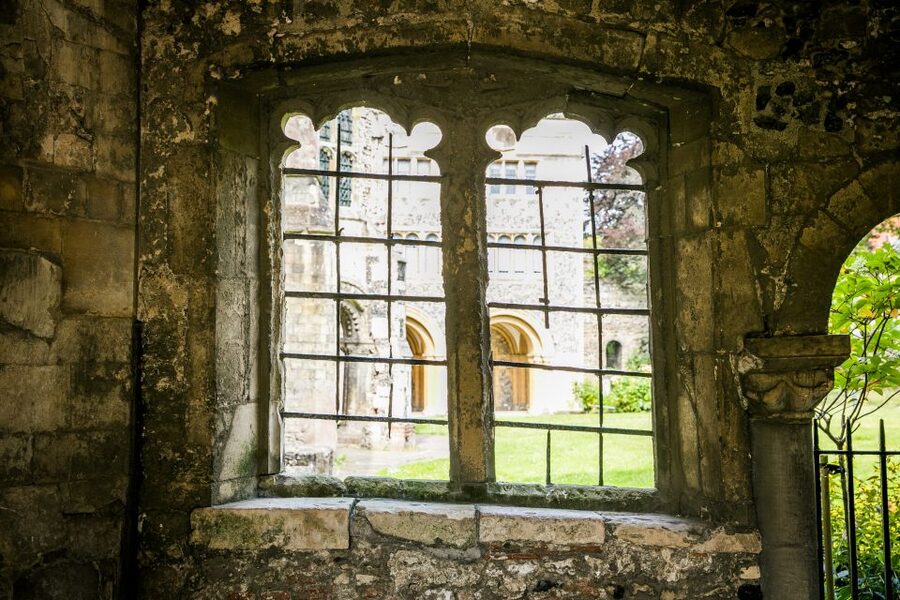
At about $31 per person, the ticket is not a bargain for a ten-minute look inside. It becomes fair value when you use the audio guide and visit the Chapter House, Great Cloister, gardens, and exhibitions as well.
The one-day validity is useful because Canterbury Cathedral rewards a patient visit. You can take a break, attend to children, or adjust your route if a service is taking place. The cathedral may be partly closed at certain times, so keep your plans flexible.
The ticket includes the audio guide, handset, and headphones. One booking experience involved an extra charge of £5 per person at entry, so I would confirm the audio arrangement with the staff desk if anything seems unclear when you arrive.
Skip-the-line entry is listed, but you still need to collect the equipment and pass through the cathedral’s entry process. Random bag searches can take place. Large bags and luggage are not allowed, and public car parks are available nearby. Parking at the cathedral itself is for Blue Badge holders only and depends on availability.
The site does not allow food or drinks, smoking, weapons, sharp objects, pets except assistance dogs, skateboards, scooters, fireworks, or skates. Children under 16 must stay with an adult, and children’s sit-on wheeled toys and throwing toys are not permitted.
Photography rules matter. Commercial photography is not allowed, and no photography or video recording is permitted in the crypt at any time.
Who will enjoy this visit most?
I would choose this experience if you care about architecture, English religious history, medieval life, stained glass, or literary history. The audio guide gives enough background to make the building meaningful even if you arrive without prior knowledge.
It also suits independent sightseers. You can spend five minutes on one window or half an hour in the cloister without holding up a group. The handset is available in four languages, which makes the visit easier for many international visitors.
Families can benefit from the flexible pace, though younger children may not stay engaged with every audio section. The uneven floors, steps, and changing light also call for extra care.
You may prefer a live guided tour if you want constant direction or enjoy asking questions. The self-guided format gives you freedom, but it does not always point you cleanly from one numbered stop to the next.
Should you book Canterbury Cathedral with the audio guide?
Yes, if you want more than a quick look at a famous building. The cathedral itself is the reason to come, but the audio commentary helps you understand the people, events, and changes that shaped it. Add the cloister, Chapter House, gardens, crypt, and exhibitions, and the $31 price becomes easier to justify.
I would book it for a half-day visit, not as a rushed stop between trains. Check the handset before setting off, expect a few confusing directions, and allow time to wander beyond the main church. If you value freedom and can tolerate imperfect wayfinding, this is a strong way to experience Canterbury Cathedral.
FAQ
How long is the Canterbury Cathedral ticket valid?
The ticket is valid for one day. Check the available starting times when booking.
Is the audio guide included?
Yes. The entry includes the audio guide, handset, and headphones. Audio is available in English, French, German, and Japanese.
What areas does the ticket include?
The ticket includes Canterbury Cathedral, the Chapter House, the Great Cloister, three public gardens including a medieval Herbarium reimagining, and up to three exhibitions.
Is Canterbury Cathedral wheelchair accessible?
Yes, the cathedral is wheelchair accessible. Some areas have access ramps, while other entryways include stone steps, and floors can be uneven in places.
Can children visit without an adult?
No. Children under 16 must be accompanied by an adult at all times.
Are bags and luggage allowed inside?
Large bags and luggage are not allowed. The cathedral may also conduct random bag searches at entry.
Can I take photographs inside the cathedral?
Commercial photography is not permitted. Photography and video recording are prohibited in the crypt at all times.
New listings around Britain
- London: Secrets of Freddie Mercury Tour with a Cocktail★ 4.1 · 15 reviews
- London: Hampton Court Private Guided Tour★ 3.4 · 15 reviews
- Edinburgh: Isle of Skye, Highlands & Jacobite Steam Train★ 4.6 · 15 reviews
- London: Jack the Ripper Tour and Underground Prison in Spanish★ 5.0 · 15 reviews
- Spanish Language : Original Harry Potter Walking Tour★ 4.5 · 15 reviews
- THE HANGOVER BRUNCH | Benidorm Bingo & Drag Queens★ 4.5 · 15 reviews
- London: Private Couples Photography Session with Landmarks★ 5.0 · 15 reviews
- London: The Saturday Supershow Cabaret at Phoenix Arts Club★ 4.5 · 15 reviews
Canterbury Tours, compared.
Browse the lists this tour appears in