
Reviewed · LONDON TOURS
Guided Italian Tour of the National Gallery in London
London’s National Gallery is a place where a little guidance can save you from wandering past great paintings without knowing why they matter. This private Italian tour brings the focus to five major masterpieces, including Titian’s Bacchus and Ariadne and Caravaggio’s The Supper at Emmaus. I like the Italian-language format and the chance to request a favorite artist or painting. I also like that the group is private, so the guide can set the pace instead of giving a fixed talk to strangers.
The main caution is booking reliability. Three of the four recorded ratings are five stars, including praise for guides Luca and another guide called simply wonderful, but one one-star account describes trouble reaching the provider at the agreed time. The overall rating is 4.4, so I would confirm the meeting details and keep your voucher handy before setting out.
Key Points Before You Book
- Five landmark paintings shape the route: Titian, Raphael, Leonardo, Michelangelo, and Caravaggio each offer a different lesson in color, beauty, mystery, movement, and drama.
- Italian is the only listed tour language: This is a useful choice for Italian-speaking visitors who want art history explained in their strongest language.
- The itinerary can be adjusted: You can ask to focus on a particular work or artist instead of following only the suggested highlights.
- The private format changes the experience: The $445 price covers up to four people, making the cost easier to justify for a full group than for one person.
- Plan for a light visit: The tour lasts two hours, and large bags or luggage are not allowed.
- The guide matters: Luca received specific praise for making the visit interesting, though the available information does not promise that he will lead every departure.
Why These Five Paintings Make a Strong Two-Hour Route
The National Gallery holds more than 2,000 paintings, so a private route needs a clear point of view. This one uses five celebrated works to show how European painters handled color, sacred subjects, movement, and human emotion.
That is a sensible plan for two hours. You will not see everything, and you should not expect to. Instead, you get a guided look at paintings that reward close attention, with historical and artistic context supplied as you go.
The route also gives you useful contrasts. Titian’s Bacchus and Ariadne lets you think about color and movement. Raphael’s Madonna of the Carnation brings the mood inward, toward tenderness and divine beauty. Leonardo offers uncertainty and shadow in The Virgin of the Rocks. Michelangelo brings force and grief to The Deposition, while Caravaggio turns The Supper at Emmaus into an urgent human scene.
I like that the selection includes both famous names and different kinds of visual experience. You are not simply ticking off five artists from a list. You are comparing how each painter creates meaning.
More Museum Tours in London
- London: Chelsea Football Club Stadium and Museum Tour
★ 4.8 · 4,576 reviews - London: British Museum Guided Tour
★ 4.3 · 1,182 reviews - London: Jack the Ripper Museum Tickets
★ 4.2 · 894 reviews
Titian’s Bacchus and Ariadne: Color That Carries the Story
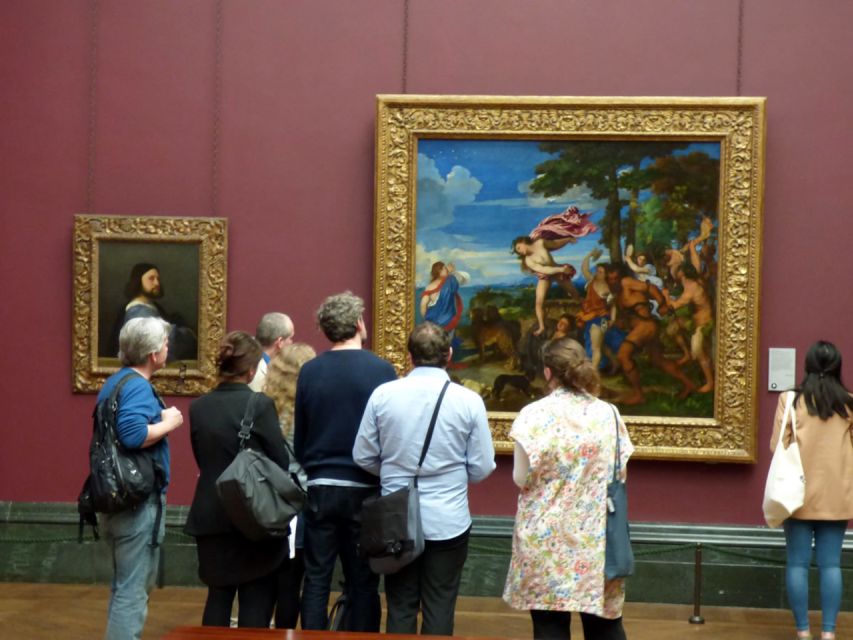
Titian’s Bacchus and Ariadne is one of the tour’s best openings because it gives the guide an immediate way to discuss color as a storytelling tool. The painting is celebrated for its brilliant use of color, and the subject brings energy and movement into the visit.
You can expect attention to Titian’s handling of the scene rather than a quick name-and-date explanation. The important question is how color affects your response. Bright tones can make a mythological story feel active and emotional, while the arrangement of figures helps direct your eye through the action.
This is also a good painting for visitors who are new to art museums. You do not need a long background in Renaissance painting to see that the work is designed to hold your attention. A guide can help you notice details that are easy to miss when you are standing in front of it alone.
The limitation is simple: one painting cannot explain all of Titian. If he is the main reason you want this tour, tell the guide in advance and ask for more time with his work if the collection allows it. The itinerary is customizable, so your preference should be part of the conversation.
Raphael’s Madonna of the Carnation: A Quieter Kind of Beauty
After Titian’s theatrical color, Raphael’s Madonna of the Carnation offers a calmer subject. The painting invites you to consider divine beauty, intimacy, and the relationship between the Madonna and Child.
I appreciate this stop because it prevents the tour from becoming a parade of dramatic scenes. A good museum visit needs pauses. Raphael gives you one, and the guide can explain how composition, expression, and idealized beauty work together.
The painting also helps show why context matters. Without guidance, you might register grace and tenderness but move on quickly. With an art-focused explanation, you can spend more time asking what makes the image feel balanced and devotional.
For many people, this may be the most approachable work on the route. It is less immediately startling than Caravaggio and less mysterious than Leonardo, but that does not make it less important. If you prefer religious art with a gentle human focus, this may become one of your favorite stops.
Leonardo’s The Virgin of the Rocks: Leave Room for Questions
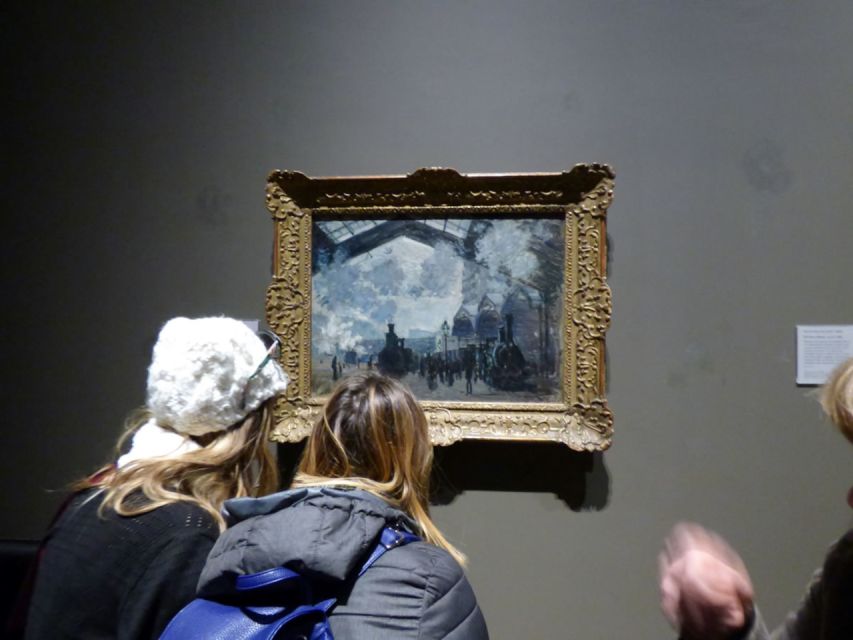
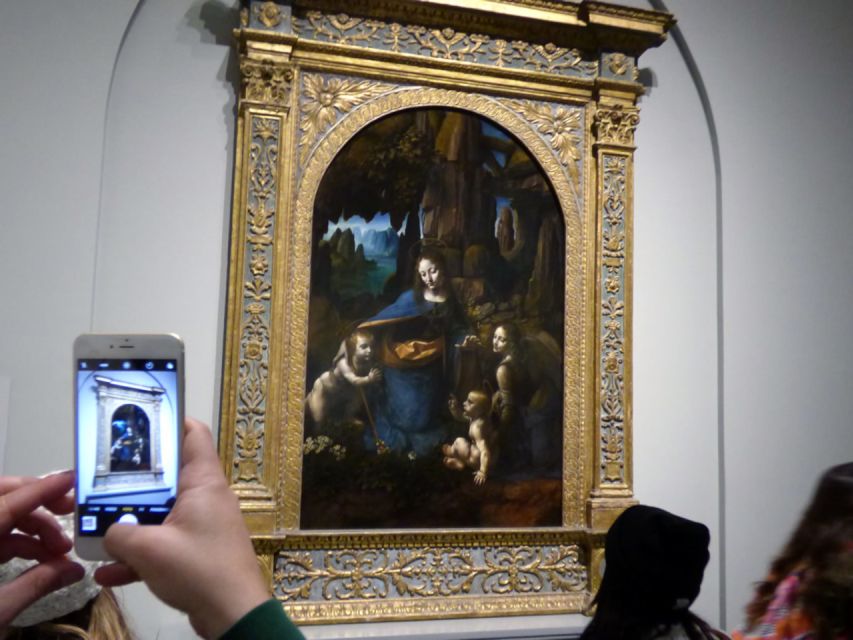
Leonardo’s The Virgin of the Rocks brings a different mood. The work is known for its mystery, and the guide’s role here is not simply to give you a fixed answer. It is to help you look closely and understand why the painting can feel elusive.
Leonardo often rewards patience. The title itself places the sacred figures in an unusual rocky setting, and that setting changes the emotional temperature of the scene. Instead of a plain devotional image, you get a world with shadow, natural forms, and questions about the figures’ arrangement.
I would pay attention to how the guide explains the relationship between the landscape and the people in the painting. The surroundings are not just decoration. They shape the atmosphere and make the scene feel less like a formal display and more like a moment discovered in a strange, quiet place.
This is one stop where a private tour has real value. You can ask why the painting feels mysterious, request clarification in Italian, or spend longer looking without worrying about holding up a large group. If Leonardo is your priority, mention that when booking because the advertised route includes many major artists within only two hours.
Further National Gallery visits:
- London: National Gallery Guided Tour with Art Expert Guide
★ 4.7 · 440 reviews - London: National Gallery Guided Tour
★ 3.8 · 67 reviews - London: National Gallery Guided Tour and Afternoon Tea
★ 4.5 · 64 reviews - Westminster and National Gallery 3.5-Hour Tour in Italian
★ 4.9 · 28 reviews
Michelangelo’s The Deposition: Grief With Physical Force
Michelangelo’s The Deposition shifts the visit toward sorrow and physical intensity. The subject is religious, but the emotional effect comes through the arrangement of bodies and the force of the scene.
A guide can help you distinguish Michelangelo’s approach from Raphael’s. Raphael’s Madonna of the Carnation centers on closeness and beauty. Michelangelo’s work brings weight, strain, and loss. Seeing both in one visit gives you a clearer sense of how different artists could handle sacred subjects in very different ways.
I would expect this section to focus on expression and structure. Michelangelo is often associated with the human figure, and The Deposition gives you a chance to consider how anatomy and gesture communicate grief.
This may be a challenging painting for anyone hoping for only pretty pictures. That is part of its value. The work asks more of you emotionally, and the guide can provide the context needed to understand its place among the gallery’s important paintings.
Caravaggio’s The Supper at Emmaus: Drama at Close Range
Caravaggio’s The Supper at Emmaus is a strong final stop because it brings sacred history into an ordinary human setting. The subject is religious, but the painting’s power comes from its directness and dramatic realism.
Caravaggio’s figures do not feel remote. Their gestures, expressions, and reactions pull you into the scene. The guide can explain how light, composition, and realistic details create tension, helping you see why the work still feels immediate.
This is a painting I would want to study slowly. It is easy to look at the broad drama and miss the smaller choices that make the scene work. A private Italian-language explanation can help you connect those choices to the emotional impact of the painting.
The drawback is time. Five major works in two hours leaves about 24 minutes per painting if the time were divided evenly, before allowing for movement and introductions. You may receive a strong overview rather than an exhaustive study of each canvas. If you want detailed analysis of every work, ask for a narrower route.
How the Private Italian Format Changes the Visit
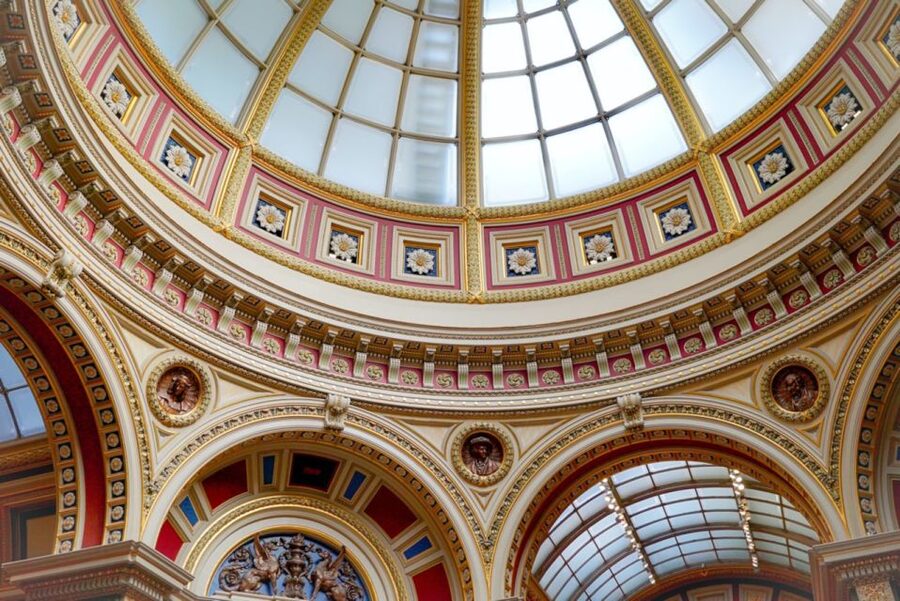
The tour is designed for a private group of up to four people. That matters more than it might seem. You can ask questions without interrupting a large party, and the guide can adjust the pace to suit your interests.
The listed language is Italian, with a live Italian-speaking guide. For an Italian-speaking couple or family, that can make complex art terms easier to follow. You are not spending mental energy translating every explanation while trying to look at the painting.
The customizable itinerary is another useful feature. You can request a particular artist or work, though the supplied information does not specify every painting available on a custom route. The safest approach is to make your priorities clear before the tour begins.
One guide named Luca received specific praise for making everything seen during the visit interesting. That is useful information, but it does not mean Luca is assigned to every booking. Guide quality is central here, so clear communication before arrival is worth your time.
Is $445 Good Value for Up to Four People?
The price is $445 per group of up to four. For four people, that works out to $111.25 each. For two people, it becomes $222.50 per person, and for a solo visitor it is a steep private-tour price.
I see the value mainly in the format. You are paying for a private art guide, a flexible itinerary, and two hours focused on paintings that would otherwise compete with more than 2,000 works in the building. The price makes the most sense for a family or group of friends who will use the full four-person capacity.
It is less convincing if you simply want to enter the National Gallery and browse. The gallery’s scale means you can enjoy a great deal without a private guide, especially if your main goal is a quick look at famous paintings.
I would book this for a group that wants interpretation in Italian and prefers a clear route. I would hesitate if you are alone, highly independent, or mainly interested in seeing many rooms rather than understanding a handful of paintings.
Timing, Bags, and Meeting Details to Handle Carefully
The tour lasts two hours and operates every day, with starting times based on availability. Since the exact meeting instructions supplied are limited to showing your voucher to the guide, read the confirmation carefully and keep it accessible on your phone.
Do not bring luggage or large bags. This is especially important if you are visiting between hotels or arriving directly from a train. Plan to leave large items elsewhere before the tour.
The activity is wheelchair accessible. That makes the private structure useful for discussing pace and comfort, although the available details do not specify an accessibility route inside the gallery.
You can cancel up to 24 hours in advance for a full refund, and you can reserve now and pay later. Those terms give you some flexibility, but they do not remove the need to confirm the provider and meeting arrangement.
The mixed service record deserves attention. Three ratings are five stars, with strong praise for the guides and the gallery visit. One one-star experience reports that a call to the contact center at the agreed time could not locate the provider, despite advance payment. I would save the voucher, confirm the appointment, and avoid arriving without a clear understanding of where to meet.
Who Will Get the Most From This Tour?
This is best for Italian-speaking visitors who want art explained in Italian rather than simply pointed out. It also suits first-time National Gallery visitors who find a giant collection intimidating.
Families and small groups can get good value from the $445 group rate. The private format lets you ask basic questions, spend longer on a favorite painting, or request a different balance between religious art and mythological subjects.
Art students and serious museum fans may like the flexibility, but they should be precise about their goals. Five masterpieces in two hours can provide a thoughtful introduction, but it may not satisfy someone seeking specialist-level analysis of every artist.
I would not choose it for a loose, unplanned gallery stroll. The strength of this experience is focus. You are paying to have someone shape the visit and explain why these paintings deserve your attention.
Should You Book the Italian National Gallery Tour?
Book it if you are a group of up to four, want an Italian-speaking guide, and care more about understanding five major paintings than racing through the full collection. Titian, Raphael, Leonardo, Michelangelo, and Caravaggio provide a strong artistic arc, and the private format gives you room to ask for a preferred artist.
Think twice if you are traveling alone, carrying luggage, or uncomfortable with the service concern in the booking record. Confirm the meeting details and guide availability before the day.
The strongest reason to choose this tour is not the number of paintings. It is the chance to slow down and look properly, with explanations in Italian and an itinerary shaped around your group. If that is what you want, the price can be fair for four people.
FAQ
How long does the National Gallery tour last?
The tour lasts two hours.
What language is the tour conducted in?
The live tour guide speaks Italian, and Italian is the listed tour language.
How many people can join the private tour?
The price covers a private group of up to four people.
Which paintings are highlighted?
The route highlights Titian’s Bacchus and Ariadne, Raphael’s Madonna of the Carnation, Leonardo da Vinci’s The Virgin of the Rocks, Michelangelo’s The Deposition, and Caravaggio’s The Supper at Emmaus.
Can I request a different artist or painting?
Yes. The itinerary is customizable, and you can ask the guide to accommodate a particular preference for a work or artist.
Is the tour wheelchair accessible?
Yes, the activity is listed as wheelchair accessible.
Can I bring luggage or a large bag?
No. Luggage and large bags are not allowed.
What is the cancellation policy?
You can cancel up to 24 hours in advance for a full refund. You can also reserve now and pay later.
New listings around London
- London: Bermondsey Craft Brewery Tour★ 5.0 · 3 reviews
- Colourful Notting Hill Photography Tour★ 5.0 · 3 reviews
- The London Historic Pubs Tour★ 4.0 · 3 reviews
- Ultimate Royal London, Thames River Boat Ride & Walking Tour★ 5.0 · 3 reviews
- London: Wallace Collection & National Gallery Private Tours★ 5.0 · 3 reviews
- London: The Birthplace of The Rolling Stones Private Tour★ 5.0 · 3 reviews
- Historic pub tour with Brazilian guide (in Portuguese)★ 5.0 · 3 reviews
- London: Royal Tour with Westminster Abbey & Afternoon Tea★ 3.0 · 3 reviews
London Tours, compared.
Westminster to Greenwich River Thames Cruise
Read our review →
Magical London: Harry Potter Guided Walking Tour
Read our review →

Warner Bros. Studio Harry Potter Tour with Transfers
Read our review →Browse the lists this tour appears in