
Reviewed · CARDIFF TOURS
Half Day Complete Cardiff Walking Tour
Cardiff’s story unfolds unusually well on foot. In four hours, this private walk links the Roman roots of Cardiff Castle with the coal port, Welsh Parliament, rugby stadium, and redeveloped bay. You get a clear sense of how a compact capital changed from a castle town into an industrial powerhouse and then a modern cultural center.
I like the route for two reasons. First, it covers far more than the usual city-center circuit, including Butetown, the Norwegian Church, the Pierhead, and Roald Dahl Plass. Second, guide Eugene brings in practical details about food, rugby, Welsh culture, and the Welsh language, so the tour helps you plan the rest of your stay.
The main consideration is the pace. The route covers the city center and Cardiff Bay, ending at Roald Dahl Plass rather than returning to the starting point. You’ll want comfortable shoes, weather protection, and a plan for getting back from the bay if you are staying near the castle or central train station.
Key points about this Cardiff walk
- Four hours from castle to bay: The route crosses Cardiff’s central sights and ends beside the Wales Millennium Centre.
- Private groups of up to 15: Your group receives the guide’s attention rather than joining a large scheduled crowd.
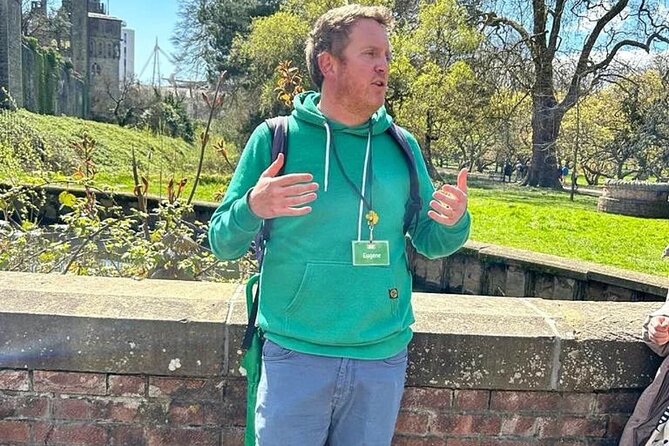
- Eugene leads with humor and context: Expect history, cultural background, and suggestions for places to eat and visit.
- Cardiff’s coal story is central: Butetown, the Coal Exchange, and Mermaid Quay explain the city’s rise and reinvention.
- Castle and stadium admission cost extra: The walk includes exterior visits and commentary, but admission tickets are not included where stated.
- A strong orientation tour: You finish with a working map of Cardiff’s main districts, sights, and stories.
From Roman walls to a modern Welsh capital
The best feature of this tour is its changing scenery. You begin beside Cardiff Castle, where the city’s oldest layers are easiest to see, then pass through parks, civic buildings, shopping arcades, old dock districts, and the waterfront. The route gives you a useful timeline instead of a pile of disconnected facts.
Cardiff can be confusing on a first visit because its most important sights are spread between the castle area, the Civic Centre, the commercial core, and Cardiff Bay. This walk ties those pieces together. By the end, you understand why the city center feels formal and Edwardian, why rugby matters so much, and why the bay looks so different from the rest of Cardiff.
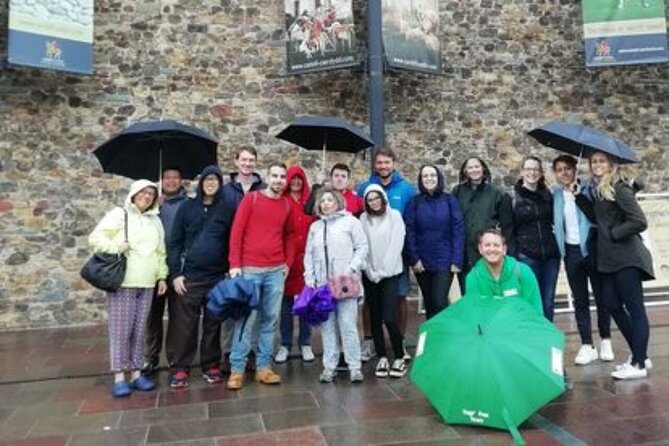
The private format is valuable here. A group of up to 15 is small enough for questions, and Eugene has shown a willingness to keep the experience going even with only two people and poor weather. That matters if your trip falls on a rainy Welsh day. Still, this is an outdoor walking tour, so rain can affect your comfort even when the guide continues.
More Walking Tours in Cardiff
- Cardiff City Private Guided Walking Tour
★ 5.0 · 107 reviews - Doctor Who Cardiff City Walking Tour
★ 4.5 · 78 reviews - Cardiff Private Walking Tour with a Local
★ 4.5 · 48 reviews
Cardiff Castle sets the timeline
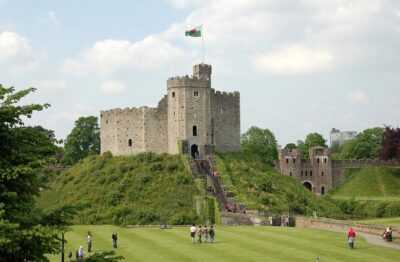
The tour begins at Castle Welsh Crafts Ltd, Oska’s Office, at 1 to 3 Castle Street, close to Cardiff Castle. The castle is the right starting point because it compresses roughly 2,000 years of local history into one site.
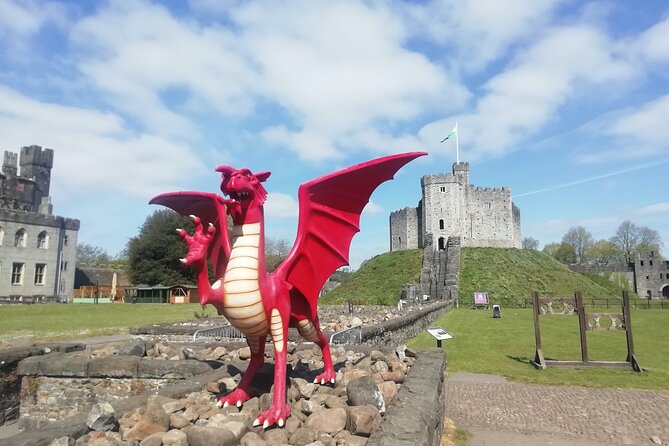
You begin by learning about the Roman presence, the medieval period, and the Bute family, whose influence shaped modern Cardiff. The castle’s location also helps explain the city’s growth. It sits at the meeting point of the old town, the river, and the routes leading toward the docks.
The castle visit is listed as a 15-minute stop, with admission not included. That means you should think of this part as an introduction and orientation rather than a full exploration of the interiors, apartments, or grounds. If you want to tour the castle properly, allow separate time and budget for an admission ticket.
I like this arrangement for a first morning in Cardiff. You get the story’s opening chapter without spending the whole tour indoors. If the castle is high on your list, schedule a return visit before or after the walk.
Bute Park and the Civic Centre
From the castle, the route moves into Bute Park, one of Cardiff’s most useful surprises. Cardiff is known as one of Britain’s greenest cities, and this huge park gives that claim some weight. You’ll see the River Taff, trees, a stone circle, and the remains of an old monastery.
The 20-minute park stop provides a welcome break from city streets. It also shows how closely Cardiff’s formal center sits beside open green space. The park is free to enter, so you can return later for a slower walk if you want more time among the trees.
Next comes Cathays Park, also known as Cardiff’s Civic Centre. Here, the tone changes from parkland to grand public architecture. War memorials, City Hall, and other major buildings reflect the confidence of Edwardian Cardiff, when coal wealth funded large civic projects.
Cardiff City Hall receives its own short stop later in the route. Entry may be possible depending on the day, time, and events taking place, but you should not count on an interior visit. The value of this section is mainly the outside architecture and the explanation of how Cardiff presented itself as a prosperous capital.
The market, arcades, and the Principality Stadium
The walk then turns toward the commercial heart of Cardiff. Cardiff Market is a lively and useful stop, with food, traditional stalls, and modern businesses under one roof. It is also a place where the city’s past is less cheerful than its present appearance, and the guide explains that darker side.
You get about 15 minutes here, which is enough for an introduction but not enough for a long browse or meal. I would note a food stall that catches your eye and return after the tour. The market is a good place to test local tastes without committing to a formal restaurant.
The Principality Stadium follows as Cardiff’s great modern landmark. Formerly called the Millennium Stadium, it is one of the world’s best-known rugby arenas and occupies an unusual central position. Cardiff’s social calendar often revolves around events here, from international rugby to major concerts.
The stadium stop lasts about 15 minutes, and admission is not included. The itinerary refers to Principality Stadium Tours, but you should treat this walk as an exterior and history stop unless you arrange a separate stadium visit. If rugby is a major reason for your trip, a dedicated stadium tour may be worth adding.
The nearby Royal Arcade offers a completely different kind of Cardiff. It is the oldest of the city’s Victorian and Edwardian shopping arcades, with distinctive architecture and small shops. Cardiff has the highest concentration of these arcades in the United Kingdom, making them part of the city’s character rather than just a shopping detour.
Elsewhere in Cardiff, a change of pace:
- The Wandering Bard’s Valley Tour or the Swansea Bay Tour.
★ 5.0 · 394 reviews - Cardiff Bay Boat Tour
★ 4.0 · 384 reviews - Alcotraz Prison Cocktail Experience in Cardiff
★ 5.0 · 139 reviews - The Wandering Bard’s Mythical West Wales Tour
★ 5.0 · 129 reviews
Butetown explains Cardiff’s global connections

The route’s 30-minute visit to Butetown is one of its most useful sections. Modern Cardiff would not exist without this district, which grew rapidly when the city became a major industrial and coal-exporting center.
People arrived in Cardiff from many parts of the world, and that international past remains visible in Butetown’s streets, buildings, and community identity. This is where the tour moves beyond grand buildings and gets closer to the people who powered the port.
You should pay attention here if you want more than a polished city-center introduction. Butetown helps explain Cardiff as an international industrial city, not only as a Welsh political and cultural capital. The area also links naturally to the Coal Exchange and the waterfront.
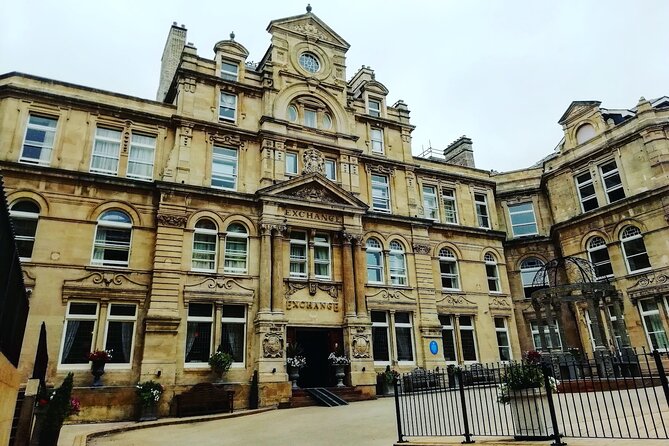
The Coal Exchange Hotel occupies the former Coal and Shipping Exchange, once the center of global coal trading. Its grand design reflects the money and ambition that flowed through Cardiff during the coal era. Today, the building operates as a hotel, but its earlier role gives the stop real weight.
The visit is brief, about 10 minutes, so the guide’s explanation matters more than a long interior inspection. You may pass by or see parts of the building, but this is not presented as a full hotel tour.
Mermaid Quay and the remade waterfront
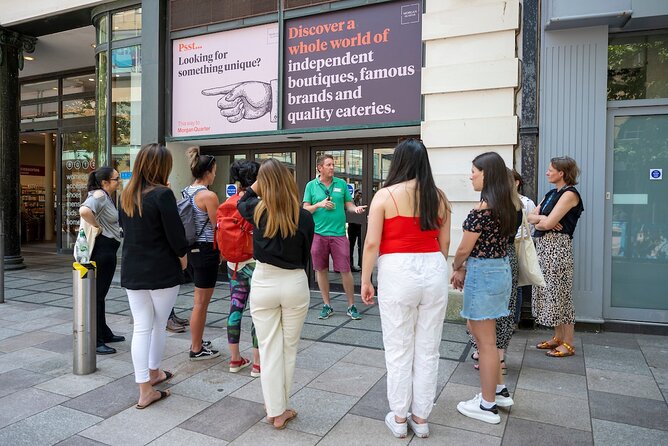
At Mermaid Quay, Cardiff’s industrial past meets its present-day waterfront. The area was once part of the world’s largest coal-exporting port. Since the Cardiff Bay Barrage was created in the 1990s, it has become a modern district of restaurants, cafés, and waterfront gathering places.
The 20-minute stop lets Eugene explain the bay’s development over two centuries, including both the age of coal and the later redevelopment. That context is important because Mermaid Quay can otherwise seem like a recently built leisure district with little connection to old Cardiff.
You’ll have time to notice the contrast between older surviving port buildings and newer waterfront construction. You can also mark Mermaid Quay as a convenient place to return for food after the tour, though the walk itself does not include meals or bottled water.
The Norwegian Church Arts Centre is a particularly memorable stop because it feels unexpected in Cardiff Bay. It is one of the oldest surviving buildings in the area and reflects the strong connection between Wales and Norway during the port’s working years.
The tour also connects the church with Roald Dahl, who was born in Cardiff. Nearby views reach toward Penarth and the Scott Memorial, giving you a broader sense of the bay’s shape and setting.
Roald Dahl Plass, the Millennium Centre, and Welsh politics
Roald Dahl Plass is the end point and the symbolic heart of the bay. The plaza honors Cardiff-born author Roald Dahl, whose connection to the city has received greater attention in recent years. Eugene explains Dahl’s local ties, work, and legacy rather than treating the name as a simple photo opportunity.
The Wales Millennium Centre is next, or directly beside the ending area depending on the exact flow of the walk. Its bold exterior has become the signature image of modern Cardiff Bay. The building represents the city’s cultural ambitions and the transformation from working port to arts district.
The tour also covers the Senedd, home of the Welsh Parliament since 2006. Its design looks toward the future while using ideas connected to Welsh heritage. Here, the guide brings in Welsh politics and the question of where this small nation may go next.
This is one of the tour’s strongest features because it connects buildings with current identity. You are not simply looking at architecture. You are considering how Wales presents itself, governs itself, and balances its own language and traditions within the United Kingdom.
The Pierhead Building provides a strong historical counterpoint to the Millennium Centre. Its red brick, ornate appearance, and tall clock tower make it easy to recognize. The building’s former importance to Cardiff’s docks helps tie the bay’s old commercial life to its new public role.
You may pass the Pierhead or go inside if access is available. As with City Hall, interior entry depends on conditions at the time, so do not plan your day around guaranteed admission.
What Eugene adds to the walk
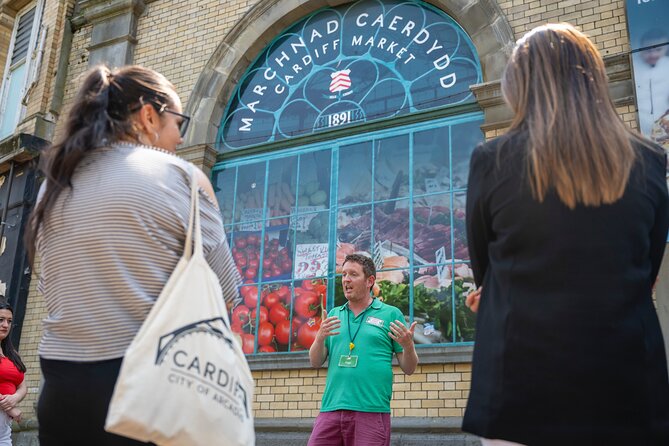
Eugene’s role is more than pointing out buildings. He brings together the subjects that shape a visit to Cardiff: the Bute family, rugby, Welsh food, the Welsh language, local heroes, coal, and the city’s changing neighborhoods.
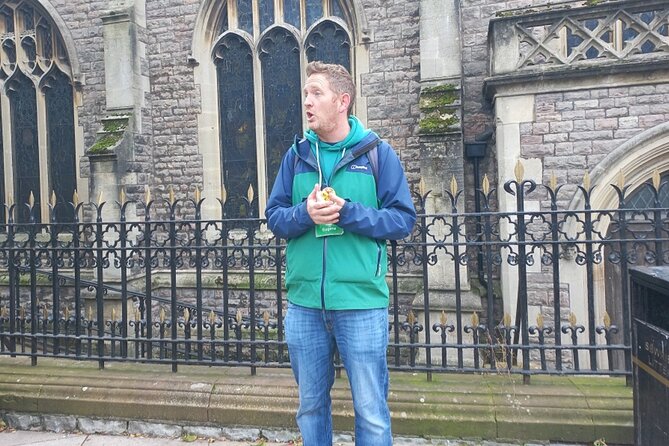
His style suits a long walking route. He is described as funny, friendly, and engaging, with an ability to keep a group together while still speaking to people individually. That personal attention matters in a private tour, especially if your group includes different ages or interests.
You should also make use of his recommendations at the end. He offers suggestions for places to eat and visit, as well as ways to learn more about Cardiff. A good orientation tour saves you from wasting the rest of your stay on places that do not match your interests.
The tour has earned a five-star rating from 21 reviews, with 100 percent recommending it. That is a small sample, so I would not treat the rating as a guarantee. Still, the repeated praise for Eugene’s humor, clarity, cultural insight, and flexibility points to the experience’s real strength: the guide makes the city easier to understand.
Price, pace, and practical value
The listed price is $377.92 per group of up to 15 people. That is expensive for one or two people, but the calculation changes with a larger party. Split among 10 people, it works out to about $37.79 each. With 15 people, it is about $25.19 each.
The private format also gives you control that a standard group walk may not. You can ask more questions, move at a comfortable pace, and get advice suited to your own plans. For a family or group of friends, that can make the higher total price reasonable.
The tour lasts about four hours, and the stop times add up to a full half-day. Wear shoes suited to city streets and park paths. Cardiff weather can change quickly, and the guide has continued in rain, but you should bring a waterproof layer rather than depend on good conditions.
The walk begins in central Cardiff and ends at Roald Dahl Plass in Cardiff Bay. Since those are different parts of the city, consider your return plan before booking. You may prefer to continue your afternoon around Mermaid Quay and the Millennium Centre instead of heading straight back.
Confirmation is provided at booking. The tour is offered in English, service animals are allowed, public transportation is nearby, and most people can participate. Free cancellation is available up to 24 hours before the start time. Changes or cancellations inside that window are not accepted for a refund.
Who should book this Cardiff walk
I would choose this tour if you have one day or a first full morning in Cardiff and want the city to make sense quickly. It suits people who care about history but do not want four hours of dates and dynasties. The mix of buildings, neighborhoods, politics, sport, and food keeps the route moving.
It also works well for families and private groups. Eugene’s ability to handle a chaotic family group and keep everyone involved is a useful sign for groups that do not walk in perfect formation.
You may want another option if you prefer long indoor visits, a slow food tour, or a focused castle experience. The route is broad by design, so several stops are short. You see many places, but you do not spend enough time at each one for a detailed museum visit.
Should you book the Half Day Complete Cardiff Walking Tour?
Book it if you want a big-picture introduction that connects Cardiff Castle, the civic center, the stadium, Butetown, and Cardiff Bay in one outing. It offers especially good value for a private group of several people, and Eugene’s humor, local advice, and clear explanations add more than a basic sightseeing route.
Skip it if you only want the castle interiors or a stadium tour, since those admissions are not included. For most first-time visitors, though, this is a smart way to get your bearings, understand Cardiff’s coal-to-culture story, and finish in the bay with the rest of the day still ahead.
FAQ
How long is the Half Day Complete Cardiff Walking Tour?
The tour lasts approximately four hours, with stops across central Cardiff, Butetown, and Cardiff Bay.
Where does the tour start?
It starts at Castle Welsh Crafts Ltd, Oska’s Office, 1 to 3 Castle Street, Cardiff CF10 1BS, near Cardiff Castle.
Where does the tour finish?
The walk ends at Roald Dahl Plass in Cardiff Bay, opposite the Wales Millennium Centre.
Is the tour private?
Yes. Only your group participates, and the group can include up to 15 people.
Are Cardiff Castle and Principality Stadium admission tickets included?
No. Admission to Cardiff Castle and the Principality Stadium is not included. Entry to Cardiff City Hall or the Pierhead Building may be possible depending on availability.
What language is the tour offered in?
The tour is offered in English with an experienced native English-speaking guide.
New listings around Cardiff
- The Heart of Wales: Cardiff’s Story with a True Local★ 5.0 · 17 reviews
- Cardiff City of Arcades Food Experience★ 5.0 · 19 reviews
- Cardiff: Welsh Castles, Mountains & Steam Railway Day Tour★ 4.5 · 25 reviews
- Cardiff: Waterfalls, Mountains & Castles Day Tour★ 5.0 · 27 reviews
- From Cardiff: Hike The Amazing Six Brecon Beacons Waterfalls★ 5.0 · 28 reviews
- Llandaff’s Ghosts: A Self-Guided Audio Tour★ 4.5 · 29 reviews
- Cardiff: Gower Peninsula’s Cliffs Scenic Day Tour★ 5.0 · 31 reviews
- Cardiff: South Wales Cliffs, Beaches & Castles Day Tour★ 5.0 · 36 reviews
Cardiff Tours, compared.
The Wandering Bard’s Valley Tour or the Swansea Bay Tour.
Read our review →


Cardiff Mystery Adventure: Cardiff’s Missing Masterpiece
Read our review →Browse the lists this tour appears in