
Reviewed · LONDON TOURS
London: British Museum Archaeology Course and Guided Tour
The most interesting part of this British Museum experience is its clear human story. Instead of racing from one famous object to another, archaeologist Rossa links Stone Age tools, the first cities, ancient writing, great empires, and later cultures into one long account of how people lived and made sense of their world.
I like the archaeology-first approach, and I like that you learn how experts date objects and decipher lost scripts, not just what the objects are. The five-and-a-half-hour length gives the subject room to breathe, but it is also the main consideration: this is an intensive class and guided tour, not a quick highlights visit.
Key points to know
- A 5.5-hour journey through human history: Follow the story from early human origins and Neanderthal tools to Egypt, Assyria, Greece, Rome, the Vikings, and the Aztecs.
- Led by archaeologist Rossa: His storytelling, broad subject knowledge, and lively delivery are a major part of the experience.
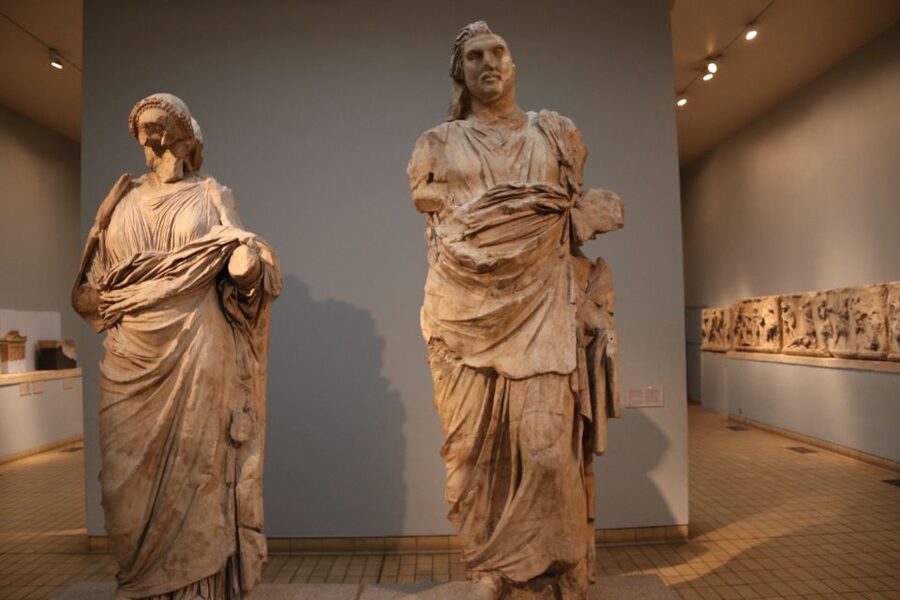
- See major British Museum objects: The route includes the Rosetta Stone, Parthenon Marbles, Sutton Hoo Helmet, and Lewis Chessmen.
- Learn how archaeology works: Explore dating methods, burial processes, excavation, and the problems that still puzzle researchers.
- Try an ancient board game: Play the Royal Game of Ur, a Mesopotamian game whose rules were worked out by British Museum scholars.
- Plan for a long museum session: Bring water, wear comfortable shoes, and consider using a folding stool available near the entrance.
A museum visit with a human storyline
The British Museum can feel like several museums packed into one building. Its galleries cover thousands of years and many continents, so the hard part is deciding what deserves your attention. This tour solves that problem with a chronological route through human civilization.
You begin with early human origins in Africa and move toward the first tools, settlements, cities, writing systems, kingdoms, and empires. The objects become evidence in a larger story. A tool is not just an old stone. A tablet is not just a slab covered in marks. Each helps explain how people organized work, power, religion, trade, and daily life.
That structure is useful if you are visiting the British Museum for the first time. You get context before arriving at the museum’s famous pieces, so the Rosetta Stone and the Parthenon Marbles carry more meaning than they would on a quick walk past a label.
The guide is an important part of the experience. Rossa is an archaeologist and presents the material with energy, humor, and plenty of detail. His style has worked especially well for families with teenagers, including children around age 13. He also makes room for questions, which can turn the planned tour into a longer session when the group is curious.
More Museum Tours in London
- London: Chelsea Football Club Stadium and Museum Tour
★ 4.8 · 4,576 reviews - London: British Museum Guided Tour
★ 4.3 · 1,182 reviews - London: Jack the Ripper Museum Tickets
★ 4.2 · 894 reviews
From Russell Square to the British Museum
The meeting point is outside Russell Square Station. You should arrive 10 minutes early and look for the guide holding an iPad displaying the local partner’s name. From there, it is about a five-minute walk to the British Museum.
This short walk is easy, but the meeting detail matters. Russell Square has several exits and London crowds can make a simple rendezvous less simple than expected. Arriving early gives you time to find the correct exit and spot the iPad without rushing.
The tour finishes inside the British Museum. The museum entrance itself is free, but this experience charges $81 per person for the guide, instruction, and planned route. You are paying for interpretation and time management rather than admission. If you would otherwise spend hours trying to make sense of the galleries alone, that can be a fair exchange.
Stone Age tools and the beginnings of civilization
The opening section looks at humanity’s earliest origins and the evidence archaeologists use to reconstruct the distant past. You move from early human tools toward the first settled communities and cities.
This part is especially useful because it explains the limits of archaeological evidence. Ancient people did not leave behind a complete written record of their lives. Archaeologists work with tools, buildings, burials, fragments, and patterns of use. A skilled guide can show why one small object may tell us more than a grand monument.
The route then moves toward Mesopotamia, often associated with the first cities and some of the earliest writing. Here the tour connects urban life with administration. Once communities grew larger, people needed ways to record goods, property, labor, taxes, and transactions. Writing did not appear only for poetry or royal announcements. It also helped run a city.
That practical angle makes the gallery more approachable. You begin to see cuneiform tablets as working documents created for real problems, not simply mysterious marks from a vanished world.
Egyptian hieroglyphs and the Rosetta Stone
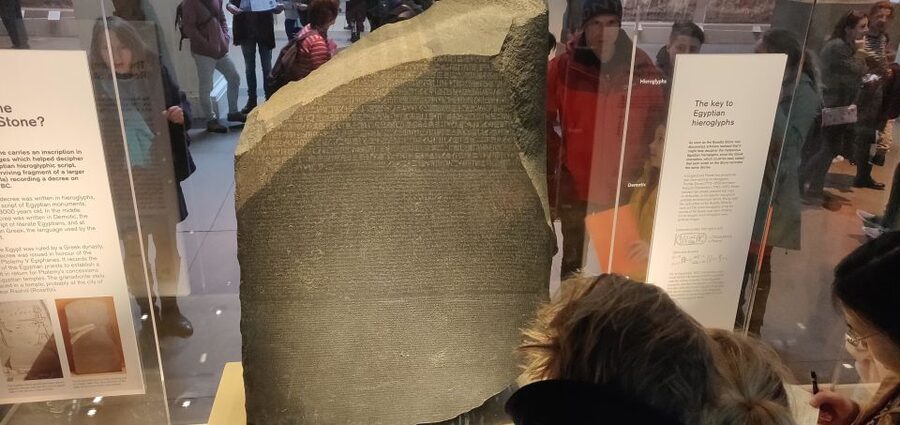
Ancient Egypt is one of the tour’s major sections. The focus is not only on pharaohs and funerary objects, but also on how modern scholars learned to read Egyptian hieroglyphs.
The Rosetta Stone is the natural centerpiece. Its importance comes from the same decree being written in more than one script, which gave scholars a way to compare known and unknown forms. The tour explains the effort behind this breakthrough and introduces the people who helped decipher ancient languages.
This is one of the strongest parts for anyone who has looked at hieroglyphs and wondered how anyone could possibly understand them. You learn that decipherment was a process of comparison, patience, language study, and careful testing. The symbols became a written system with grammar and meaning, not merely a collection of pictures.
The Egyptian galleries can be crowded, especially on a Saturday. Rossa’s clear, strong speaking voice helps, but you still need to stay close and pay attention. A five-and-a-half-hour tour cannot give every object equal time. The benefit is that you receive a selected route with a purpose instead of wandering through room after room without a plan.
Further British Museum visits:
- London: Tour of the British Museum
★ 4.1 · 678 reviews - London: British Museum Audio Tour & Priority Entrance Ticket
★ 4.5 · 631 reviews - Afternoon Tea at the British Museum
★ 4.2 · 511 reviews - London: British Museum Guided Tour
★ 4.5 · 267 reviews
Assyria, empire, and the power of images
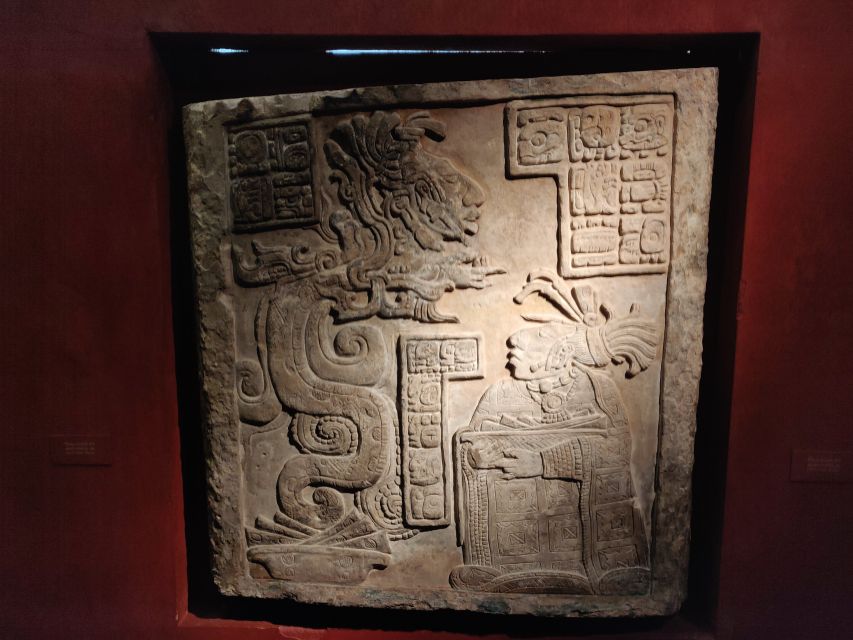
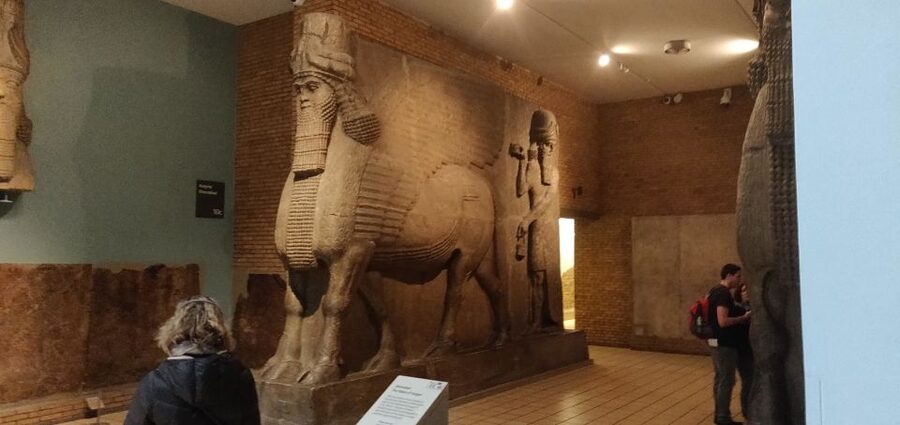
The Assyrian galleries add another layer to the story. Monumental reliefs and royal imagery show how an empire presented military strength, order, and authority.
The value here is the link between art and power. An object can tell you what a ruler wanted people to believe, even if it does not provide a neutral account of events. Looking closely at repeated scenes, symbols, and royal figures helps you think like an archaeologist and question who made an object, who saw it, and what message it carried.
This approach keeps the tour from becoming a simple list of dates. You are encouraged to read the objects as evidence. That is a good fit if you enjoy history but want to understand how historians and archaeologists reach their conclusions.
Greece and Rome, with famous objects in context
The tour continues through Ancient Greece and Rome, including the Parthenon Marbles and the wider story of classical civilization.
The Parthenon sculptures are famous enough to attract attention on their own, but their setting within the tour gives you more to consider. You look at the artistic and political world that produced them, then place Greek culture alongside the later Roman Empire and its influence.
The Roman section also helps mark a change in the human story. Large empires can appear permanent when you look at their monuments, roads, laws, and armies. Yet the tour also asks what happened when these systems weakened and collapsed. That transition helps connect the ancient galleries to later cultures rather than treating Rome as the end of history.
You should not expect a full university course on Greece and Rome in a single visit. Instead, you get selected objects and ideas that explain how these societies fit into the wider sequence of human development.
Vikings, Sutton Hoo, and the medieval world
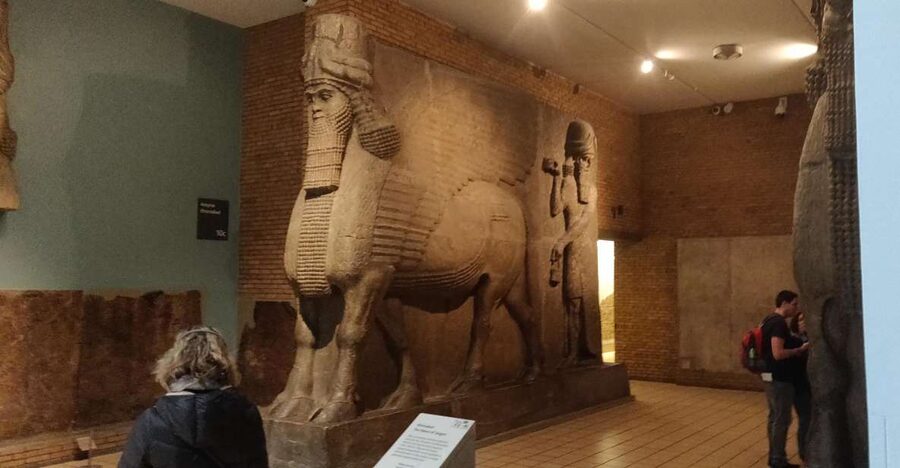
The route includes the Vikings and the Sutton Hoo Helmet, bringing the story into a later period of Europe.
The Sutton Hoo material is particularly helpful for seeing how archaeology can reshape written history. Objects from a burial can reveal craftsmanship, status, long-distance connections, and beliefs that written sources may overlook or describe from only one side.
The Viking galleries also benefit from this treatment. You are not left with a narrow picture of raiders and ships. Objects can point toward trade, travel, social rank, belief, and skilled workmanship. The tour’s wider method encourages you to consider what survives, what disappears, and how modern ideas about the past can be incomplete.
These later sections also provide a welcome change of pace after the early civilizations. Still, they are part of a packed itinerary. If Vikings or Anglo-Saxon archaeology are your main interests, you may want to return afterward and explore those galleries at your own speed.
The Lewis Chessmen and the Aztecs
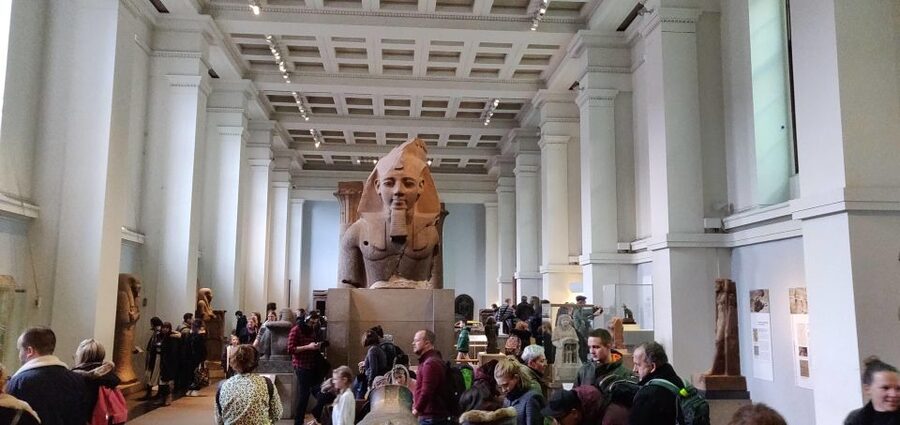
The Lewis Chessmen are among the memorable later objects on the route. Their small scale makes them an enjoyable contrast to the large Egyptian and Assyrian pieces. They also open a window onto medieval games, design, status, and the ways ordinary leisure can survive in the archaeological record.
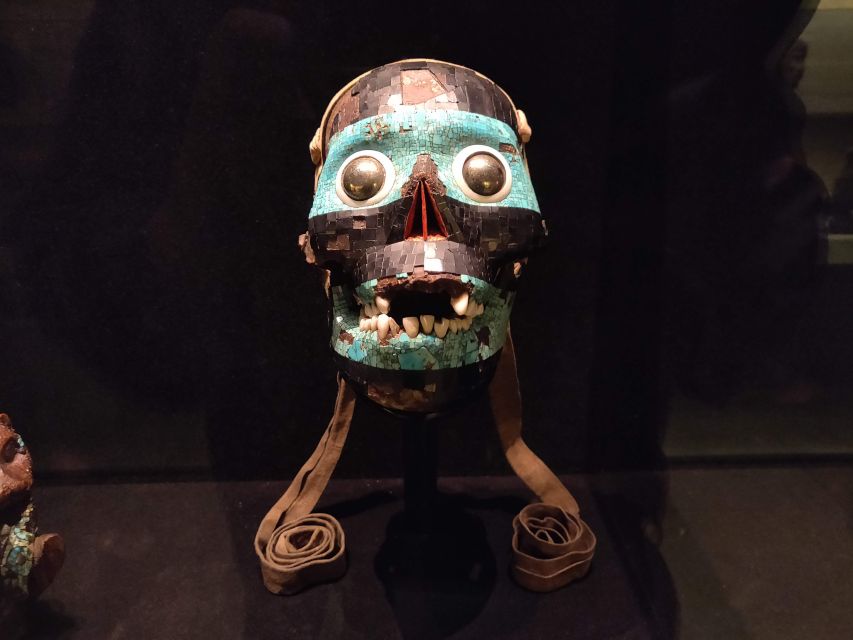
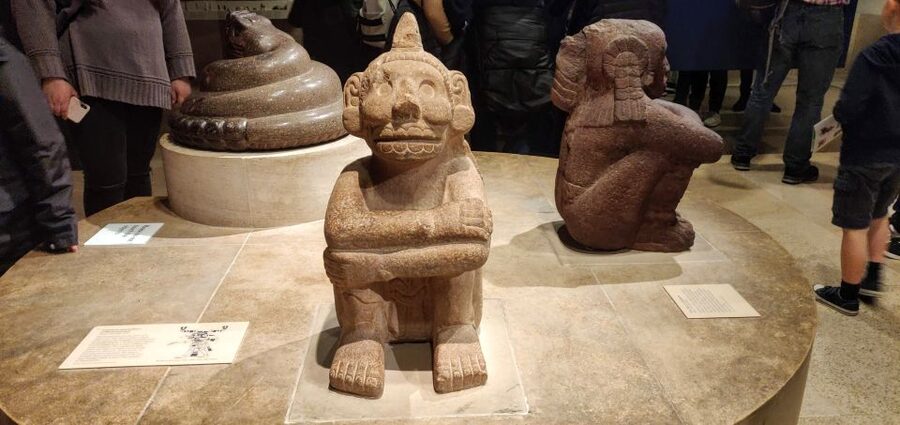
The Aztec section extends the story beyond Europe and the ancient Mediterranean. That matters because a tour built around a European museum can easily become too focused on Egypt, Greece, and Rome. Including the Aztecs gives you another major civilization to compare, with its own political systems, religious ideas, artistic traditions, and material evidence.
The selected route spans a huge area and a very long period. You will not see every gallery or learn every culture in equal detail. The strength is the comparison between societies and the steady return to archaeological questions: how do we know, what survives, and what remains uncertain?
Playing the Royal Game of Ur
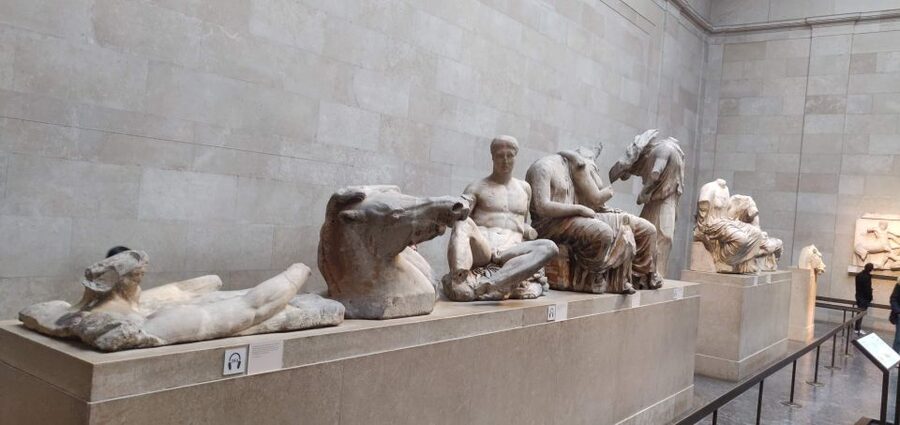
One of the most unusual moments is a chance to play the Royal Game of Ur, an ancient Mesopotamian board game. British Museum scholars worked out the rules from the evidence available, allowing you to try a pastime that began thousands of years ago.
This small activity breaks up the lecture-style parts of the day. It also makes the past feel practical. Ancient people did not only build monuments and conduct rituals. They played games, competed, made rules, and spent time together.
Families may find this especially useful. Younger visitors can lose focus during a long museum session, but a hands-on game offers a change of rhythm. Adults who enjoy puzzles and ancient cultures should appreciate the connection between a surviving object and the careful work needed to reconstruct its rules.
How archaeologists date objects
The final theme is the science behind archaeology. You learn how ancient sites become buried, how objects are dated, and why some questions remain unanswered.
Burial is not random in a simple way. Soil, buildings, later construction, flooding, collapse, and human activity can all affect what survives. An object’s position and relationship to other finds can be as important as the object itself.
Dating also requires care. The tour introduces the methods archaeologists use to establish when a site or artifact belongs in the human timeline. You do not simply accept a date printed on a label. You learn why experts compare materials, layers, styles, and other evidence.
This section is a major reason to choose the experience instead of an ordinary highlights walk. You leave with a better sense of how archaeological claims are made. You also learn to appreciate uncertainty. Sometimes the honest answer is that researchers still do not know exactly what an object was for, who made it, or how it moved from one place to another.
The five-and-a-half-hour pace
Five and a half hours is a long time to spend on your feet and concentrating in a museum. The schedule includes breaks, including a lunch break of about 40 minutes. That pause passes quickly, so bring a packed lunch or plan to buy food at one of the British Museum’s outlets.
You should also bring water and wear comfortable shoes. The museum has folding stools near the entrance, and using one is a smart idea if standing for long periods is difficult. A small daypack has been acceptable, but large bags and luggage are not allowed, so pack lightly.
The pace suits people who want a serious learning experience. It may feel too long if you only want to see the Rosetta Stone, take a few photos, and move on. On the other hand, the extended format lets Rossa explain connections, answer questions, and spend time on the method behind the objects.
The experience is wheelchair accessible and suitable for people with limited mobility. Contact the provider ahead of time if you have specific requirements. The tour is in English, and a clear speaking voice is useful in crowded galleries, though you will still need to keep near the group.
Is $81 good value?
At $81, this is not the cheapest way to enter the British Museum, especially because general admission is free. The price makes sense only if you value a guide who can organize the enormous collection and explain the archaeology behind it.
I see good value here for a first visit, a family with older children, or anyone who wants a guided course rather than a short orientation. The tour covers a broad sweep of human civilization, includes major objects, and adds details you might miss when reading labels alone.
The value is less convincing if you already know the museum well or prefer to linger over your own chosen subjects. You may spend much of the day in galleries that are not your personal priority. The tour is best understood as an organized history lesson inside a museum, not as a flexible private visit.
Free cancellation up to 24 hours before the start and a reserve-now, pay-later option make planning easier. The meeting point is outside Russell Square Station, the walk is short, and the tour ends at the museum, so it is simple to fit into a central London day.
Who should book this British Museum course?
I would choose this for you if you like history, ancient cultures, museums, and the detective work behind archaeological knowledge. It is also a strong family option for children who can manage a long, focused session. The experience has held the attention of 13-year-olds, but younger children may find the length demanding.
It is a good match for first-time British Museum visitors who want a route through the collection. It also suits repeat visitors who want a fresh framework for familiar rooms.
I would think twice if you dislike long tours, need complete control over your schedule, or want to focus on only one culture. You should also protect time after the tour if you want to wander alone, since the guided route covers only a fraction of the museum.
Should you book it?
Book this British Museum archaeology course if you want the objects to form a story and you enjoy learning how scholars interpret the past. Rossa’s energy, the chronological route, the language-decipherment lessons, and the Royal Game of Ur make it more than a standard highlights walk.
Skip it if your ideal museum visit is a short, self-guided stop. For everyone else, $81 buys structure, expert explanation, and a much clearer sense of how the British Museum’s objects fit into the long human story.
FAQ
Where does the British Museum archaeology tour begin?
Meet your guide outside Russell Square Station. The guide will hold an iPad showing the local partner’s name. Arrive 10 minutes before the scheduled start.
How long does the experience last?
The guided course and museum visit last 5.5 hours. The schedule includes breaks and a lunch break of about 40 minutes.
What does the tour include?
The price includes a qualified archaeologist guide, the guided tour, and entrance arrangements for the British Museum. General museum admission is free.
Is lunch included?
No. Lunch is not included. You can bring a packed lunch or buy food at one of the British Museum’s outlets.
Which British Museum objects will I see?
The route includes the Rosetta Stone, Parthenon Marbles, Sutton Hoo Helmet, and Lewis Chessmen, along with galleries devoted to Ancient Egypt, Assyria, Greece and Rome, the Vikings, and the Aztecs.
Is the tour accessible for people with limited mobility?
The experience is wheelchair accessible and suitable for people with limited mobility. Contact the provider in advance if you have special requirements. Comfortable shoes are recommended, and folding stools are available near the museum entrance.
New listings around London
- London: Hampton Court Private Guided Tour★ 3.4 · 15 reviews
- London: Secrets of Freddie Mercury Tour with a Cocktail★ 4.1 · 15 reviews
- London: Jack the Ripper Tour and Underground Prison in Spanish★ 5.0 · 15 reviews
- Spanish Language : Original Harry Potter Walking Tour★ 4.5 · 15 reviews
- London: Private Couples Photography Session with Landmarks★ 5.0 · 15 reviews
- London: The Saturday Supershow Cabaret at Phoenix Arts Club★ 4.5 · 15 reviews
- London: 2-Hour Guided Tour of the British Museum★ 4.7 · 16 reviews
- London’s Ghosts & Gruesome Past Nighttime Walking Tour★ 4.8 · 16 reviews
London Tours, compared.

Westminster to Greenwich River Thames Cruise
Read our review →
Magical London: Harry Potter Guided Walking Tour
Read our review →


Warner Bros. Studio Harry Potter Tour with Transfers
Read our review →Browse the lists this tour appears in