
Reviewed · LONDON TOURS
London: British Museum Guided Tour with Priority Entrance
The British Museum is the kind of place where you can walk for ten minutes and still have no idea where you are. This two-hour guided route fixes that problem by linking the museum’s biggest treasures into one clear story, from pharaohs and Greek gods to Anglo-Saxon kings. You’ll see the Rosetta Stone, Egyptian mummies, the Parthenon Sculptures, and Sutton Hoo without spending half your visit studying the floor plan.
I like the priority entrance with an allocated timeslot, which takes some of the uncertainty out of arriving at one of London’s most visited museums. I also like the supplied headsets, especially in crowded galleries. The main catch is simple: two hours can only introduce the British Museum. You’ll get the highlights, then need extra time on your own if you want a closer look at Asia, Africa, the Americas, or the many smaller galleries.
Key points at a glance
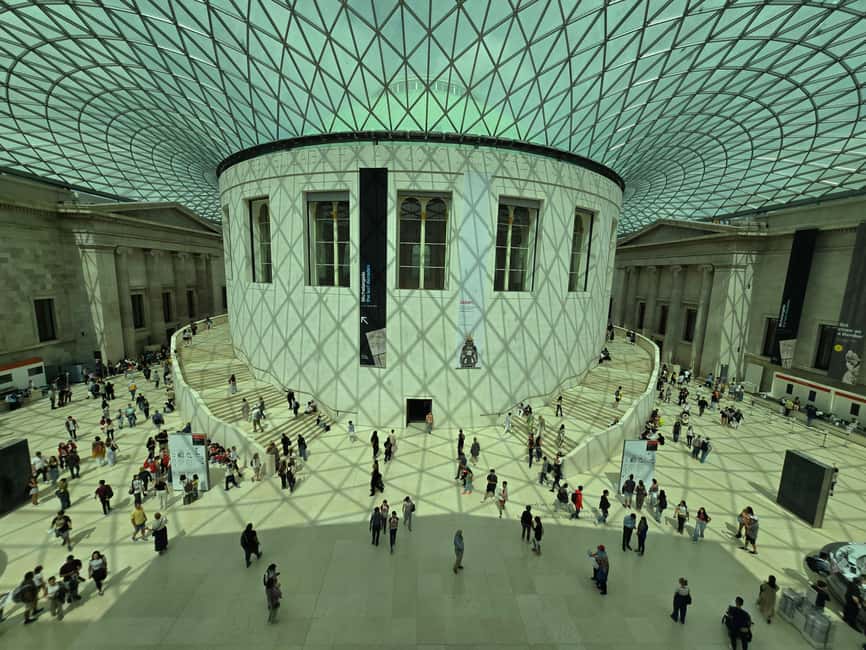
- The Great Court sets the scene: Begin beneath the British Museum’s striking glass roof before heading into the collection.
- Major objects come in a sensible order: The route includes the Rosetta Stone, Egyptian mummies, the Parthenon Sculptures, Sutton Hoo, and the Enlightenment Room.
- Guides add stories, not just labels: Guides such as Antonio, Tony, Tara, Mira, Alex, and James have been praised for clear explanations, humor, and lively historical context.
- Headsets help in crowded rooms: You can hear the guide without having to stand shoulder to shoulder with the group.
- The price buys direction and time saved: At $53.87 per person, it makes the most sense for a first visit when you want an overview rather than a full day alone.
- Plan to stay afterward: The tour ends back at the museum meeting point, leaving you free to explore at your own pace.
Why a guide helps inside the British Museum
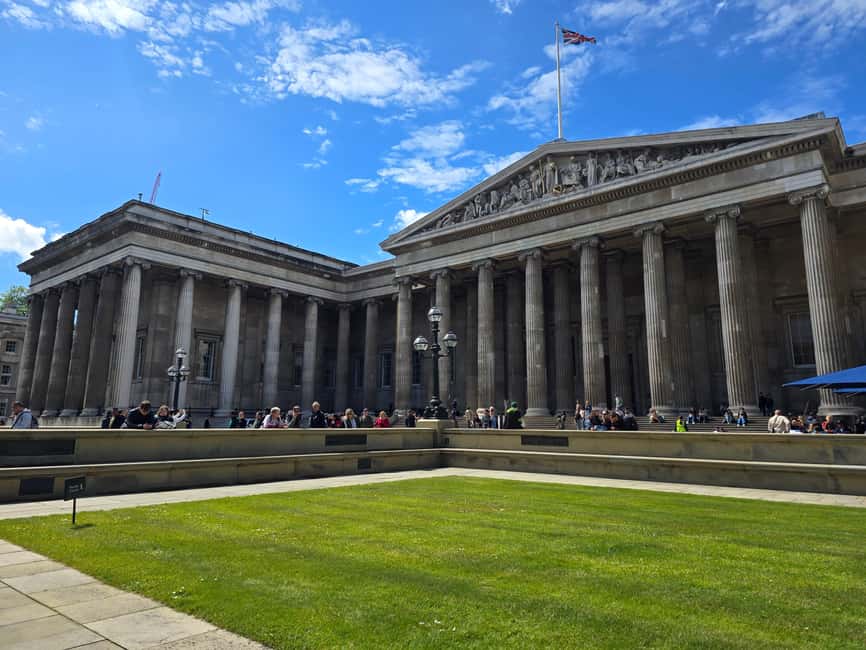
The British Museum holds more than 8 million objects, displayed across more than 70 galleries. That number is impressive, but it also explains the problem: you cannot simply stroll in and expect to see the best material in a logical sequence.
A guide gives you a route. Instead of stopping at whatever catches your eye first, you move between key rooms with an explanation of how each object fits into a larger story. That structure is especially useful if this is your first visit or if you have only one afternoon in London.
The best part of this experience is not simply seeing famous objects. It is learning why they matter. A guide can connect the Rosetta Stone to the reading of Egyptian hieroglyphs, place the Parthenon Sculptures within ancient Greek culture, and explain what Sutton Hoo reveals about early medieval England.
The commentary is delivered through headsets when available. That small detail matters more than you might expect. Museums can be noisy, and a guide’s voice is easy to lose when another group gathers nearby. With an earpiece, you can look at the object while still following the explanation.
The tour is designed as a highlight route, not a scholarly examination of every gallery. That is a strength for many people, but it also sets a limit. If you already know the museum well, or if you want a long session with one collection, a self-guided visit may give you more freedom.
More Museum Tours in London
- London: Chelsea Football Club Stadium and Museum Tour
★ 4.8 · 4,576 reviews - London: British Museum Guided Tour
★ 4.3 · 1,182 reviews - London: Jack the Ripper Museum Tickets
★ 4.2 · 894 reviews
Finding the guide at 52 Great Russell Street
The listed starting point is 52 Great Russell Street, but the guide waits inside the museum next to the information desk. Read that instruction carefully. You are not meeting on the pavement for a walking tour of Bloomsbury.
The priority ticket is for the main entrance and comes with an allocated timeslot. You are also told to use a separate entrance to skip the line. Since the exact entry process can depend on museum crowd control, arrive with enough time to enter and reach the information desk before the tour begins.
This arrangement has one practical wrinkle: a meeting point inside a large museum can be less obvious than a guide holding a sign outside. Keep your booking details ready and go directly to the information desk once inside. The tour returns to this same meeting point at the end.
There is no transportation included, and the activity is entirely based at the museum. Food and drinks are also not included, so plan those around the two-hour visit rather than expecting a break during the route.
The Great Court and the museum’s grand beginning
The tour begins with one of the museum’s most memorable spaces, the Great Court. Its glass roof turns the central courtyard into a bright, modern hall, and it gives you an immediate sense of the building’s scale.
This is more than a quick photo stop. The Great Court helps you understand the museum as a meeting place for objects from many parts of the world. From here, your guide can orient you before leading the group into the galleries.
That orientation is valuable because the museum can feel like a maze. A good guide keeps the group moving and explains where you are going next. Mira and Alex, in particular, have been praised for keeping track of the group in crowded rooms, while still making time for questions and light humor.
The Great Court is also a useful place to pause if you return after the tour. Once you know the main layout, it becomes easier to choose another gallery without losing your sense of direction.
Egyptian mummies, the Rosetta Stone, and the world of the pharaohs
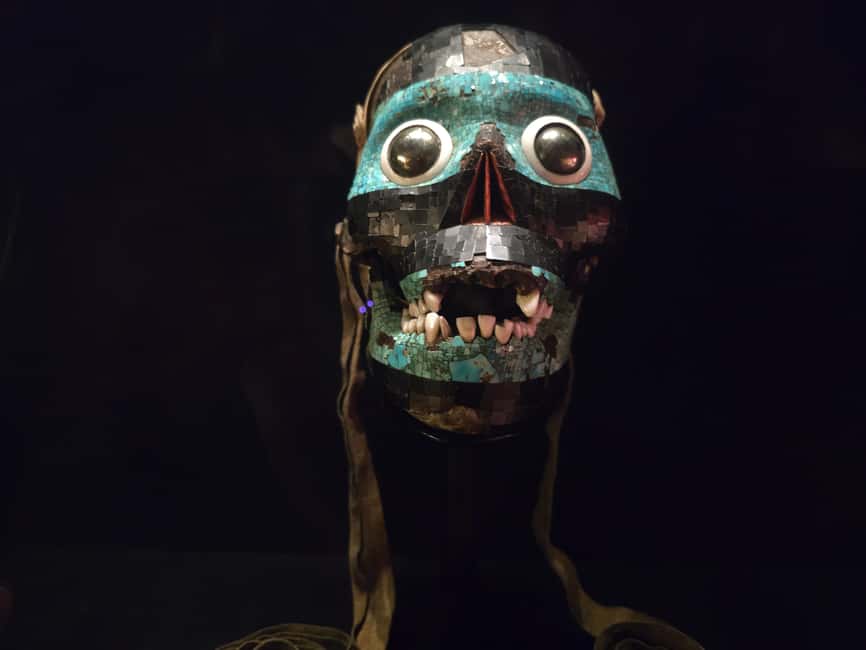
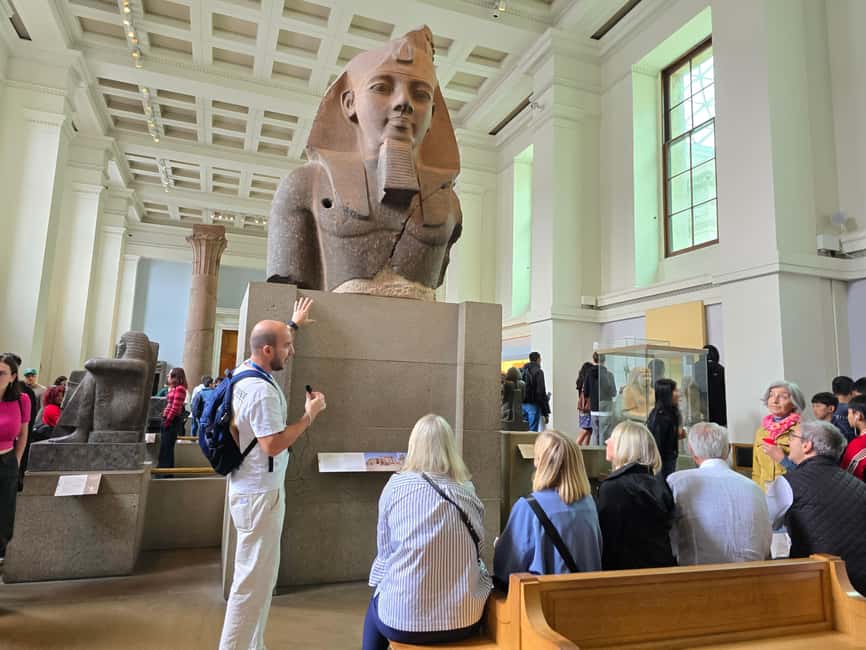
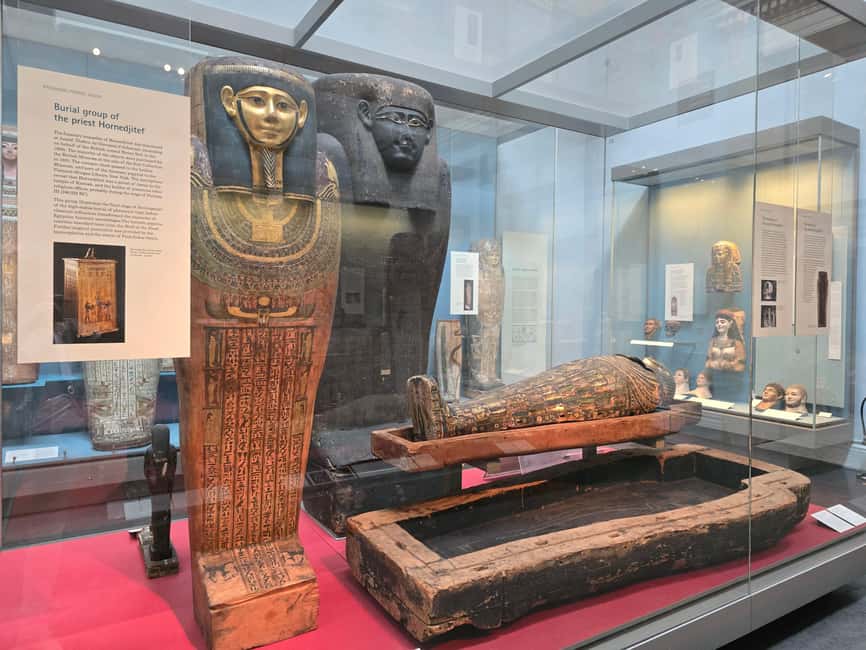
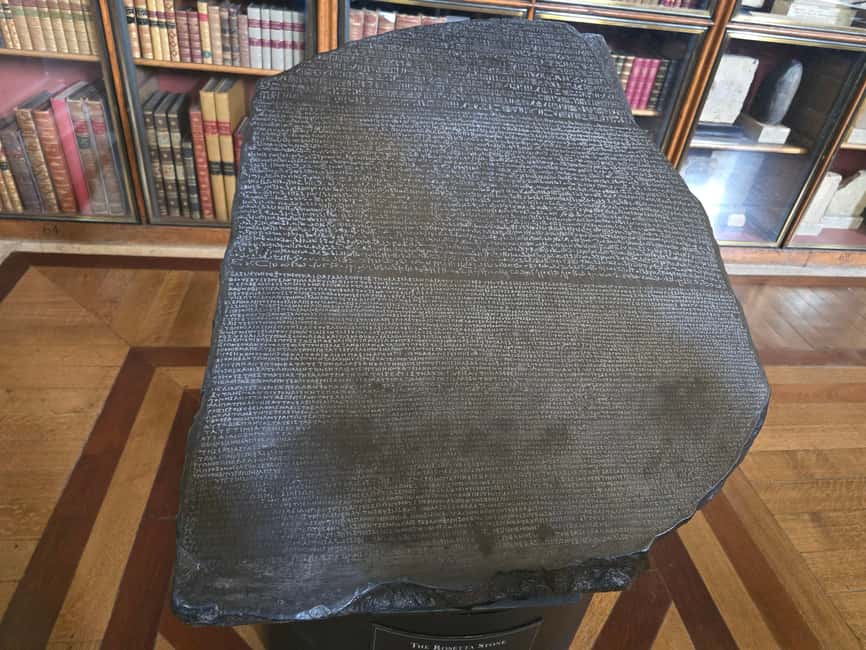
Ancient Egypt is one of the tour’s strongest sections. You can expect to see Egyptian mummies, the Book of the Dead, the bust of Ramesses II, and the Rosetta Stone.
These objects work well together because they cover several sides of Egyptian life. The mummies raise questions about burial customs and the afterlife. The Book of the Dead opens a window onto religious beliefs. The Rosetta Stone connects language, writing, and the later study of ancient Egypt.
A guide can turn the room from a collection of glass cases into a sequence of human concerns: how people prepared for death, what they believed happened afterward, and how rulers presented themselves. The bust of Ramesses II gives the royal side of that story, while the mummies bring it back to individual lives and burial practice.
This is also where a live guide can be especially useful for explaining hieroglyphics. Several guides have been praised for their grasp of Egyptian writing and for making the subject approachable rather than technical.
The drawback is that the Egyptian galleries can attract large crowds. You may not have a completely unobstructed view of every case. The headsets help, and the guide’s route is designed to keep the group together, but patience is still part of visiting a major London museum.
Further British Museum visits:
- London: Tour of the British Museum
★ 4.1 · 678 reviews - London: British Museum Audio Tour & Priority Entrance Ticket
★ 4.5 · 631 reviews - Afternoon Tea at the British Museum
★ 4.2 · 511 reviews - London: British Museum Guided Tour
★ 4.5 · 267 reviews
Greek myths beside the Parthenon Sculptures
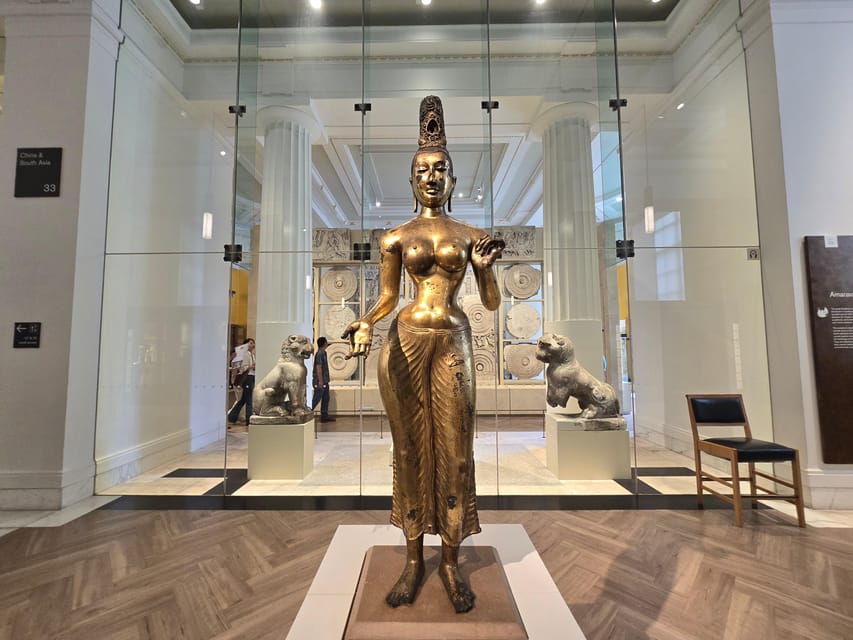
The Parthenon Sculptures, often called the Elgin Marbles, are among the museum’s most famous displays. The tour uses them to introduce ancient Greek myths, sculpture, and the artistic world of the Parthenon.
These pieces are powerful because you see them at close range, with enough detail to study carved figures and fabric. A guide can point out features that are easy to miss when you are moving through the room alone, then place the sculptures within the stories and religious ideas of ancient Greece.
There is also a modern political and cultural debate around the sculptures’ ownership and location. The supplied tour details do not promise a lengthy treatment of that subject, so you should view this stop primarily as an introduction to the objects and their place in Greek art.
If this is one of your main reasons for visiting, plan to return to the room after the guided route. Two hours moves quickly, and the Parthenon display deserves more than a rushed glance.
Sutton Hoo and the craftsmanship of Anglo-Saxon England
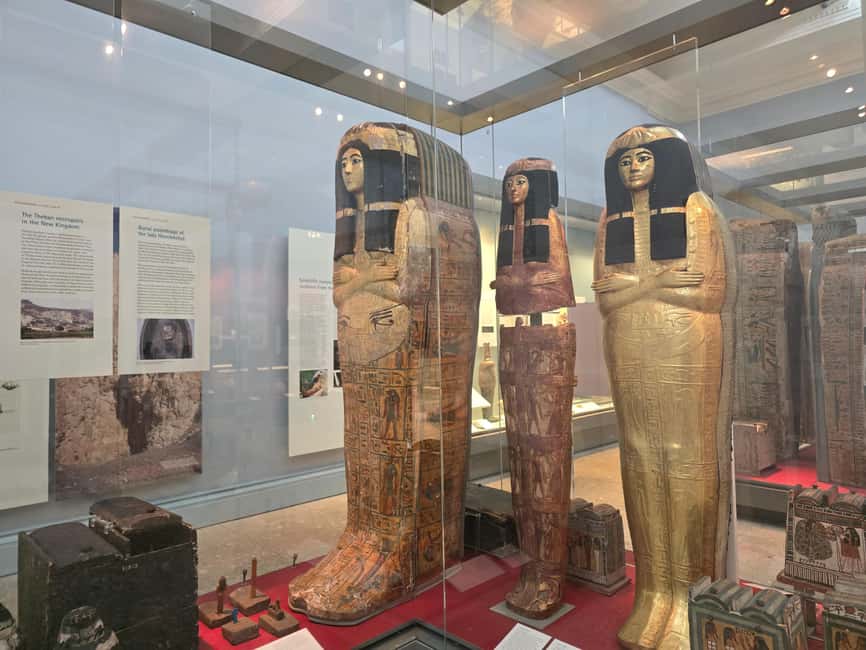
The Sutton Hoo ship burial gives the tour a welcome change of pace. After Egypt and ancient Greece, you move to early medieval England and see objects linked to an Anglo-Saxon ship burial.
The helmet and shield are the stars here. They show the skill of the craftsmen and offer clues about status, warfare, ceremony, and belief. A guide can help you picture the burial as more than a group of impressive metal objects. The arrangement reflects how early medieval society viewed power and death.
This stop is especially useful for visitors who associate the British Museum only with Egypt, Greece, and Rome. Sutton Hoo reminds you that Britain’s own past receives serious attention within the wider collection.
The display also works well in a short tour because the objects have a strong visual impact. You do not need a long introduction to appreciate the helmet, but the added context gives the stop more weight.
The Enlightenment Room and collections from Asia
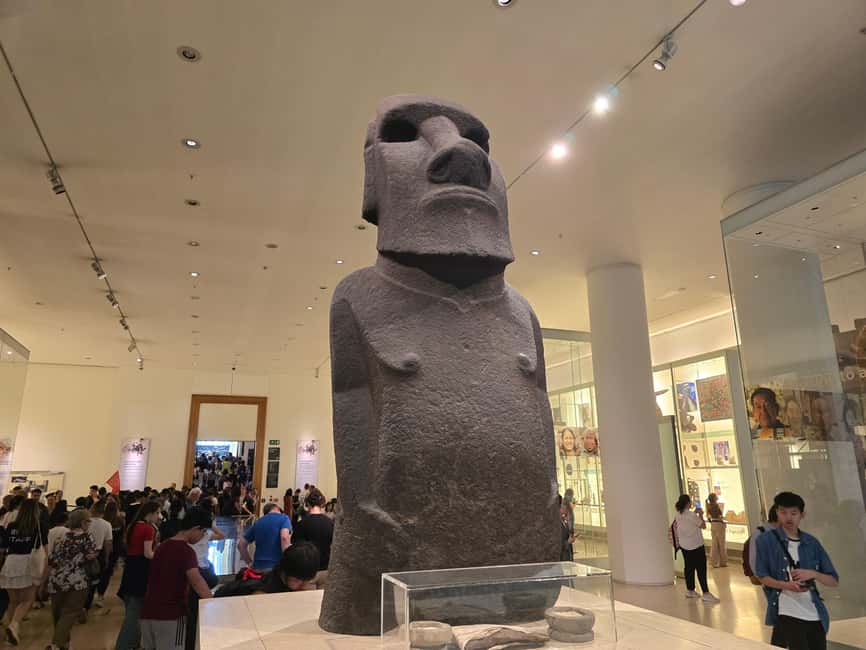
The Enlightenment Room represents the intellectual curiosity of the 18th century. It contains objects tied to scientific study, collecting, and the attempt to organize knowledge from around the world.
Your guide may use this room to explain how museums developed and how European thinkers approached objects from different cultures. That makes it an important bridge between the individual treasures and the institution itself.
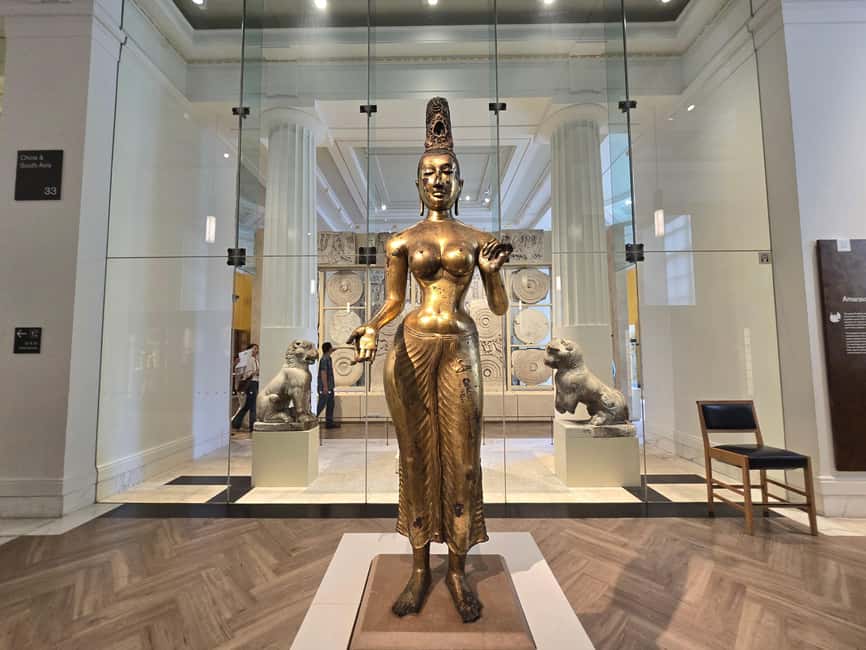
The route also includes Chinese objects and beautifully made pieces from Southeast Asia. These galleries bring artistic traditions and histories that can be overlooked on a fast first visit. The tour does not promise an exhaustive treatment of Asian collections, but it gives you a useful introduction to their range.
This is one place where the short duration is most obvious. The British Museum has far more material from Asia than any two-hour route can cover. If Chinese or Southeast Asian art is your main interest, treat the guided visit as a starting map and return afterward with a more focused plan.
How the guides shape the experience
The guide can make or break a museum tour. Here, the strongest pattern is a mix of clear organization, historical context, and room for questions.
Antonio has been praised for linking objects across continents and setting them in a wider world story. Tony is described as a strong choice for a first visit because he covers the main works while pointing out where to return for more time. Tara is noted for being both informed and fun, while James is praised for helping people get around the museum and locate its most important objects.
Mira and Alex have received especially warm praise for their timing, group care, humor, and ability to adjust as needed. That does not mean you should expect a specific guide on your booking. Guide assignment can vary, but these names give you a sense of the qualities to value: clear delivery, a well-planned route, and genuine enthusiasm for the objects.
Small groups are available. That can make a real difference in a museum, since a smaller party is easier to keep together and gives you a better chance to ask questions. The experience also has live guiding in English, Italian, and Chinese according to the booking information. Check the option you select so the language matches your needs.
Is $53.87 good value for two hours?
At $53.87 per person, this is not the cheapest way to enter the British Museum. The museum itself may offer general admission without this added tour cost, so the value comes from the guide, route, priority entry arrangement, and headsets.
I would consider it good value if you are visiting for the first time, have limited time, or feel uneasy about choosing among dozens of galleries. The tour helps you see major highlights quickly and gives you a framework for returning alone afterward.
The price is harder to justify if you enjoy wandering slowly, reading every label, or already know which rooms you want to visit. You may prefer to enter independently and spend two hours on one collection rather than crossing the museum to see several famous objects.
The strongest value comes when you use the tour as an introduction, not the entire museum visit. Afterward, stay and explore. One of the most useful details built into this experience is that you finish back at the meeting point, so you can continue on your own.
Who should book this British Museum tour?
I would recommend it to first-time visitors, couples, families with older children, and anyone with a tight London schedule. It is also a good fit if you want history explained in plain language rather than relying on labels and a map.
It suits people who like a brisk route through several civilizations. The tour covers Egypt, Greece, Anglo-Saxon England, the Enlightenment, China, and Southeast Asia, so you get variety rather than a single subject.
It is less suitable for anyone who needs step-free access or has significant mobility limitations. The activity is listed as unsuitable for wheelchair users and people with mobility impairments. It is also not suitable for babies under one year or hearing-impaired people, despite the availability of headsets.
Photography with flash is not allowed. You can still look closely and take permitted photographs, but follow the museum’s rules and keep the group moving.
Cancellation, timing, and practical planning
The tour lasts two hours, with starting times shown during booking. You can cancel up to 24 hours in advance for a full refund, and a reserve-now, pay-later option is available.
Bring your booking information and arrive early enough to use the allocated entry time. Since the guide waits inside by the information desk, do not assume the group will gather outside at Great Russell Street.
Wear shoes suitable for a museum visit and plan your energy. The tour moves through several galleries, and the museum’s size means you will spend much of the time standing and walking. No meal or drink is included, so arrange refreshments before or after the activity.
Should you book it?
Book this tour if you want a well-planned first look at the British Museum and value human explanation over wandering alone. The route covers the objects most people hope to see, while the headsets and small-group option make the crowded rooms easier to manage.
Skip it if you already have a detailed museum plan or want to spend the whole visit with one specialist collection. For most first-time visitors, though, $53.87 buys useful direction, a faster start, and stories that make the Rosetta Stone, mummies, Parthenon Sculptures, and Sutton Hoo more memorable. Just leave extra time afterward. Two hours shows you the door to the museum, not every room beyond it.
FAQ
How long does the British Museum tour last?
The guided tour lasts two hours. Starting times vary, so check availability when booking.
Where does the tour start?
The guide waits inside the British Museum next to the information desk. The listed location is 52 Great Russell Street.
Where does the activity finish?
The tour ends back at the meeting point inside the British Museum.
Does the tour include priority entrance?
Yes. The activity includes priority tickets for the main entrance with allocated timeslots and access through a separate entrance to skip the line.
Which languages are available?
Live guiding is listed in English, Italian, and Chinese. The included tour commentary specifically lists English and Italian, so check the available language option before booking.
Are headsets provided?
Headsets are available for the tour. They are intended to help you hear the guide’s commentary clearly in the museum.
Which British Museum objects are included?
The route includes the Great Court, Parthenon Sculptures, Egyptian mummies, the Book of the Dead, the bust of Ramesses II, the Rosetta Stone, the Enlightenment Room, Chinese and Southeast Asian objects, and Sutton Hoo artefacts.
Is transportation included?
No. Transportation to and from the British Museum is not included.
Are food and drinks included?
No. Food and drinks are not included in the activity.
Is the tour accessible for wheelchair users?
The activity is listed as unsuitable for wheelchair users and people with mobility impairments. It is also listed as unsuitable for hearing-impaired people and babies under one year.
New listings around London
- London: Secrets of Freddie Mercury Tour with a Cocktail★ 4.1 · 15 reviews
- London: Hampton Court Private Guided Tour★ 3.4 · 15 reviews
- London: Jack the Ripper Tour and Underground Prison in Spanish★ 5.0 · 15 reviews
- Spanish Language : Original Harry Potter Walking Tour★ 4.5 · 15 reviews
- London: Private Couples Photography Session with Landmarks★ 5.0 · 15 reviews
- London: The Saturday Supershow Cabaret at Phoenix Arts Club★ 4.5 · 15 reviews
- London: 2-Hour Guided Tour of the British Museum★ 4.7 · 16 reviews
- London’s Ghosts & Gruesome Past Nighttime Walking Tour★ 4.8 · 16 reviews
London Tours, compared.

Westminster to Greenwich River Thames Cruise
Read our review →
Magical London: Harry Potter Guided Walking Tour
Read our review →


Warner Bros. Studio Harry Potter Tour with Transfers
Read our review →Browse the lists this tour appears in