
Reviewed · LONDON TOURS
London: British Museum Highlights: Private Tour
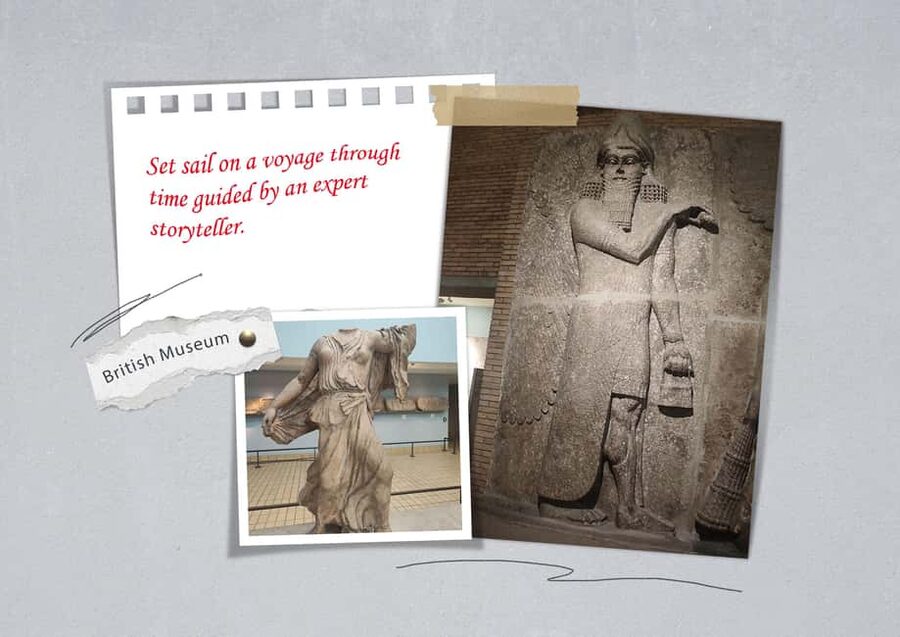
The British Museum holds more than eight million objects, but this private tour gives you a clear path through its greatest stories. You’ll see the Rosetta Stone, Parthenon Marbles, Egyptian mummies, and other major works while asking how old ideas still shape life today.
I like the small group limit of four, which makes it easier to ask questions, and I like the human themes: beauty, love, death, belief, and family stories. Richard is one of the guides associated with the experience, and his warm, enthusiastic style has earned especially strong praise. The main drawback is time. Two hours goes quickly in a museum this large, and the tour involves a moderate amount of walking.
Key points at a glance
- Rosetta Stone and lost languages: See the object that helped scholars read Egyptian hieroglyphs.
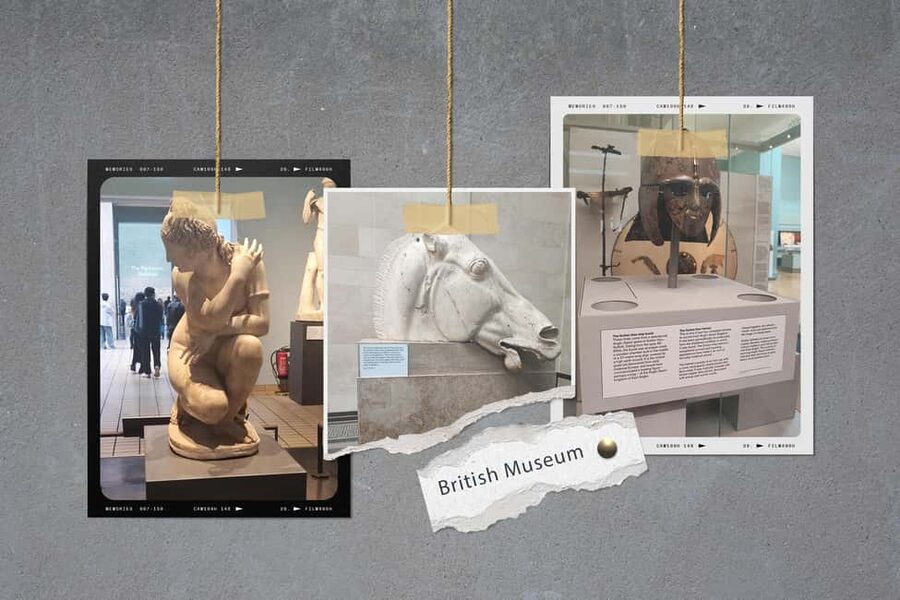
- Parthenon Marbles and beauty: Consider how ancient Greek art shaped later ideas about the human body.
- Egyptian mummies: Connect burial customs, medicine, and beliefs about life after death.
- Private group of up to four: Enjoy a more personal visit than a large shared tour.
- Professional storyteller: Richard is one named guide, with praise focused on his enthusiasm and clear explanations.
- Fast-track security entry: Meet at Edward VII’s Entrance and use the express security check.
Why this private British Museum tour works
The British Museum can be hard to handle on your own. Its galleries cover continents and thousands of years, and the sheer number of famous objects can leave you wandering without a sense of order.
This tour solves that problem with a theme rather than a simple list of dates. You move through questions that still matter: What do people call beautiful? How do societies face death? Why do tragic love stories last? Which religious stories were left outside the official tradition?
That approach gives the visit a human scale. You are not expected to memorize rulers, dynasties, or excavation dates. Instead, you look at objects and connect them to familiar concerns. The guide’s job is to turn a large collection into a conversation you can follow.
A private format helps here. Your group can pause for a question, spend a little longer with an object, or move on when a topic is not your priority. With only two hours, that flexibility matters more than it would on a full-day museum visit.
The tour is designed for up to four people. That makes it a good fit for a couple, a family, or a small group of friends who want direct contact with the guide. You are not sharing the experience with a large crowd, and the guide can adjust the level of explanation to your interests.
More Museum Tours in London
- London: Chelsea Football Club Stadium and Museum Tour
★ 4.8 · 4,576 reviews - London: British Museum Guided Tour
★ 4.3 · 1,182 reviews - London: Jack the Ripper Museum Tickets
★ 4.2 · 894 reviews
Starting at Edward VII’s Entrance
You meet at the group entrance to the British Museum, known as Edward VII’s Entrance. Look for the guide holding a sign reading My London Guide.
The tour includes fast-track entry through an express security check. You still need to pass security, and the museum’s rules apply, but this can save useful time at the start. Since the tour lasts only two hours, avoiding a long wait helps protect the time you paid for.
Plan to arrive ready to walk. Large bags and backpacks are not allowed inside, so pack lightly. Food and drinks are also not permitted in the exhibition halls. Photography is allowed without flash, but selfie sticks are prohibited, as are sharp objects, weapons, alcohol, drugs, and explosive substances.
The tour ends back at the meeting point. Hotel pickup and drop-off are not included, so you arrange your own way to and from the museum.
The Rosetta Stone and the story of written language
The Rosetta Stone is an ideal first major stop because it is both famous and easy to understand. Its importance comes from the same message appearing in three forms of writing. That comparison helped scholars make sense of Egyptian hieroglyphs.
A guide can help you look beyond the stone’s fame. It is not simply an old slab covered in marks. It represents a turning point in the study of an entire writing system, and it shows how one object can connect different languages and periods.
This part of the tour suits curious first-time visitors because the idea is clear even if you know little about Egypt. You can also ask questions about how ancient people recorded power, religion, and public announcements.
The museum’s Egyptian material reaches far beyond the Rosetta Stone. The guide links writing to larger questions about medicine, death, and the afterlife. The result is a useful progression: first, how people recorded ideas, then how they understood the body and the soul.
Egyptian mummies, medicine, and life after death
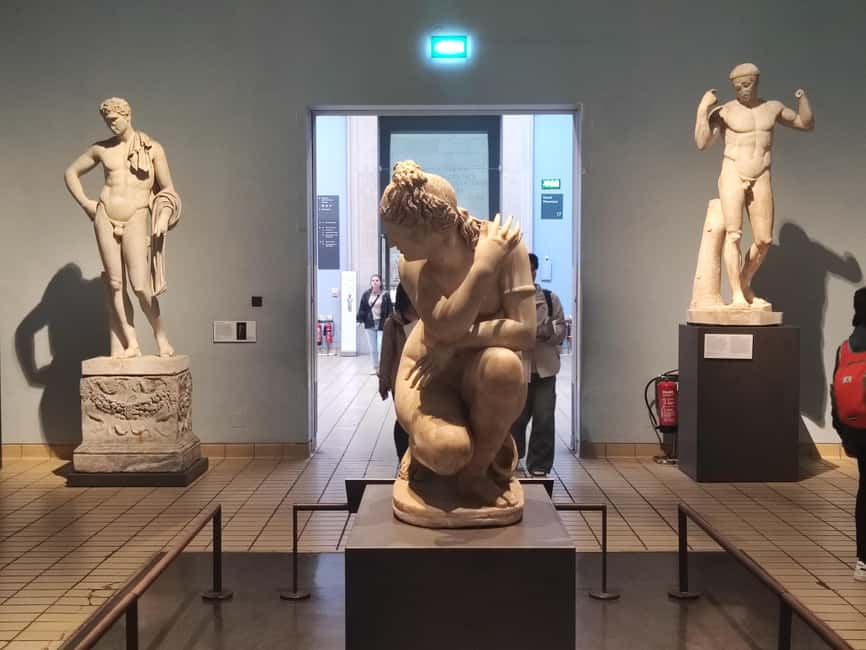
The Egyptian section brings the tour toward one of its most memorable themes: the relationship between life and death. Mummies are not only objects of curiosity. They reflect religious beliefs, funeral customs, ideas about the body, and advances in medicine.
The tour invites you to consider what people hoped would happen after death. Egyptian burial practices can seem distant from modern life, yet the basic concern is familiar. People wanted to preserve identity, honor the dead, and prepare for what might come next.
You will also hear about Egypt’s work in medicine and its wider achievements, including pyramids and hieroglyphs. The guide’s storytelling style is important here. A dry list of facts would make the displays feel remote, while a story about beliefs and human fears gives them meaning.
You should expect some walking between major areas. The experience is not designed as a seated lecture, and the museum’s scale means you will cover a fair amount of ground. If you prefer slow, detailed examination of every case, two hours will feel brief.
Further British Museum visits:
- London: Tour of the British Museum
★ 4.1 · 678 reviews - London: British Museum Audio Tour & Priority Entrance Ticket
★ 4.5 · 631 reviews - Afternoon Tea at the British Museum
★ 4.2 · 511 reviews - London: British Museum Guided Tour
★ 4.5 · 267 reviews
Ancient Greece and the Parthenon Marbles
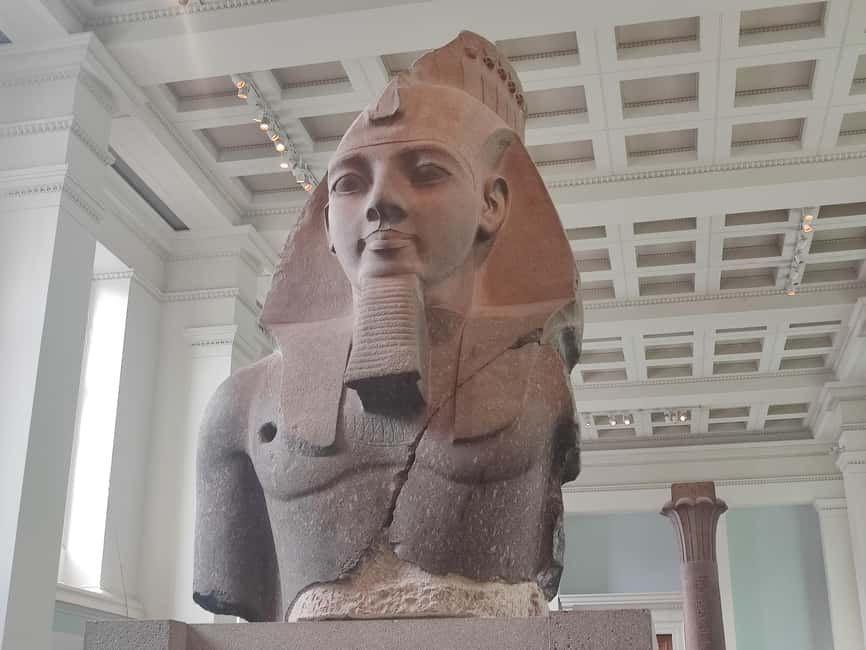
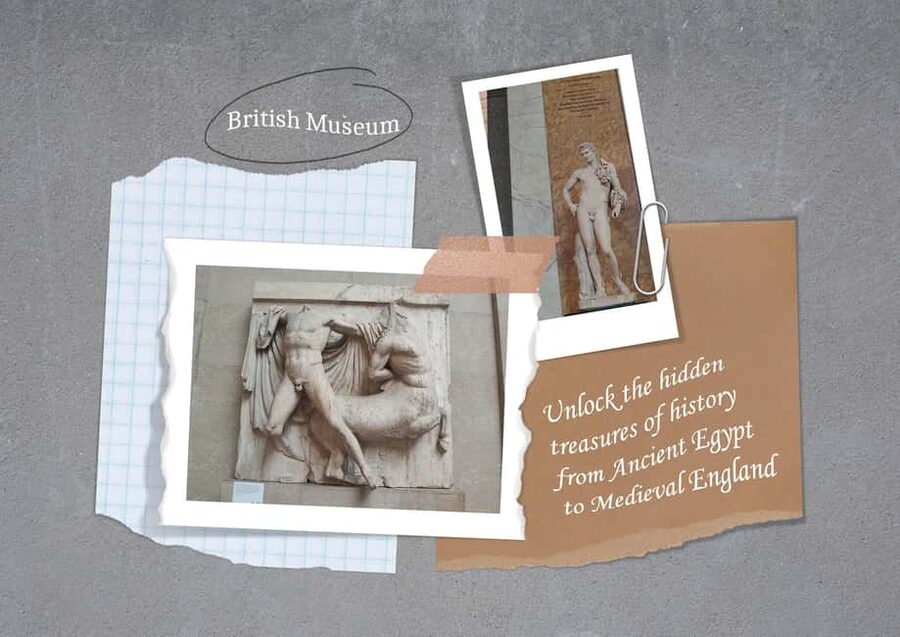
The Parthenon Marbles provide the tour’s main discussion of beauty and the human form. Ancient Greek art has had a lasting effect on European ideas about proportion, balance, and the ideal body.
The guide uses these works to ask whether beauty is natural or shaped by culture. That is a better question than simply calling the sculptures beautiful. It encourages you to notice what Greek artists emphasized and why later societies kept returning to those models.
The Greek galleries also connect art to philosophy, democracy, theatre, and drama. These subjects are not treated as isolated achievements. Instead, the tour considers how Greek ideas continue to influence art and culture.
The marbles also come with a difficult museum issue: their removal from the Parthenon and their present location in London. The supplied details do not promise a dedicated discussion of that debate, so you should not book this tour expecting a full treatment of museum ownership or repatriation. Its focus is beauty, art, and cultural influence.
For many people, this will be one of the most visually striking parts of the visit. For others, the theme may feel familiar if they have already studied classical art. The private format gives you a chance to ask for more context if this is an area you care about.
Mesopotamia and the inventions behind daily life
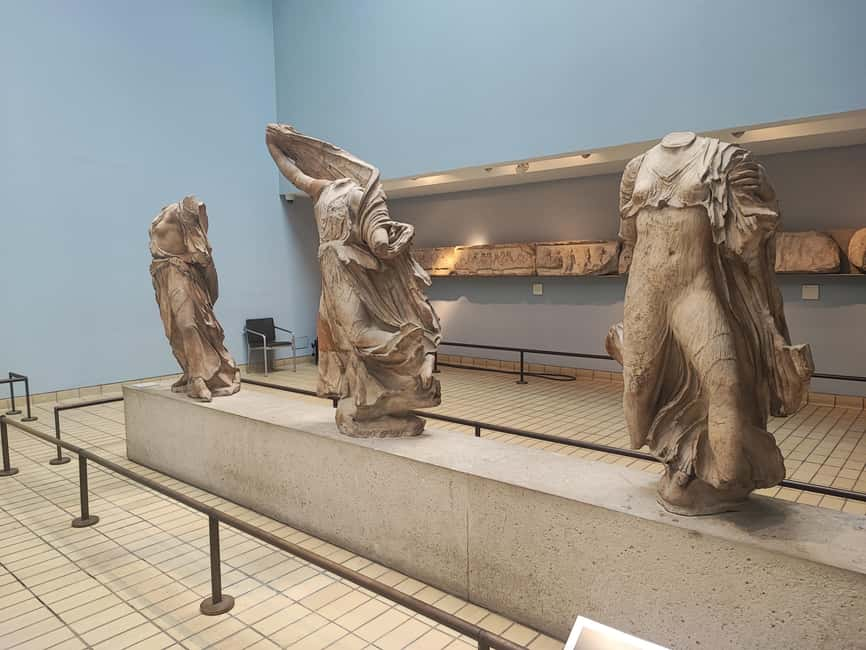
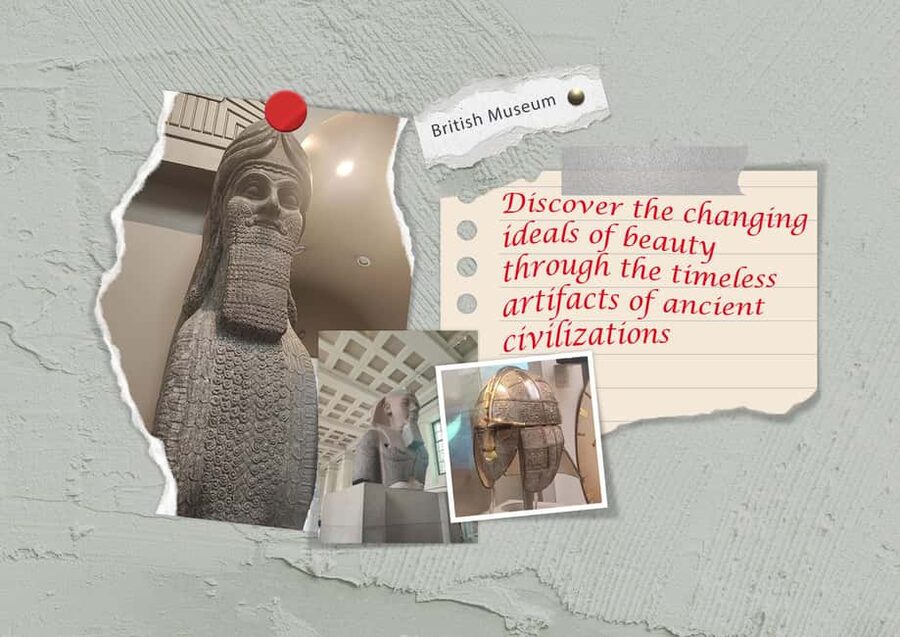
The tour also turns to ancient Mesopotamia, a region associated with the wheel, siege engines, and early farming. These achievements help you think about history in practical terms.
Rather than viewing ancient societies only through palaces and temples, you consider the tools and systems that changed ordinary life. Farming, transport, and warfare all depend on technology, organization, and shared knowledge.
This section can be especially useful for families and younger visitors because the subjects are concrete. A wheel is easy to understand. So is the question of how food production and transport altered the way communities lived.
The limitation is that two hours does not allow for a long treatment of every civilization. Mesopotamia is one part of a wider route that also includes Egypt, Greece, India, tragic love stories, and medieval religious tales. Think of it as a well-chosen introduction, not a specialist study.
Ancient India, rebirth, and the search for inner peace
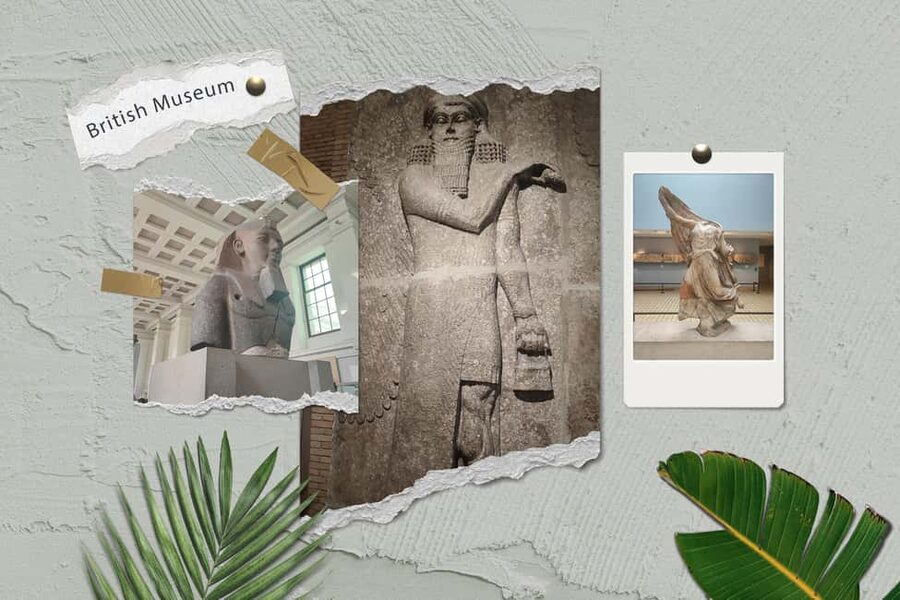
Ancient India adds a different set of questions. The tour brings in yoga, rebirth, and paths toward enlightenment, then asks how these ideas still affect modern views of life and the soul.
This topic broadens the visit beyond objects connected to rulers or military power. It focuses on personal belief and the effort to understand suffering, death, and spiritual purpose.
You may find this section especially appealing if you are interested in religion or philosophy. The guide presents the material as part of a larger human conversation, not as a set of exotic customs.
Because the tour is in English and built around storytelling, the quality of the explanation matters. Richard received repeated praise for enthusiasm and information, which is encouraging for visitors who want more than a quick label beside each display. Still, exact guide assignment can vary, so do not assume Richard will lead every departure.
Tragic love, fate, and the art of strong emotion
One of the tour’s more unusual themes is tragic love. Ancient art often deals with passion, loss, jealousy, duty, and fate, and these stories remain powerful because the emotions are easy to recognize.
The guide asks what these tales meant to the people who first heard them. Were they warnings? Entertainment? Religious lessons? Reflections of family and social rules? Those questions make the objects feel less like decoration and more like evidence of how people thought.
This part can add welcome variety after the large historical subjects. Instead of moving only from one civilization to another, you follow an emotion across cultures and periods.
It is also a reminder that museums preserve stories, not just objects. A scene of love or grief may tell you about an audience’s values as clearly as a written record.
Medieval comic books and the childhood of Jesus
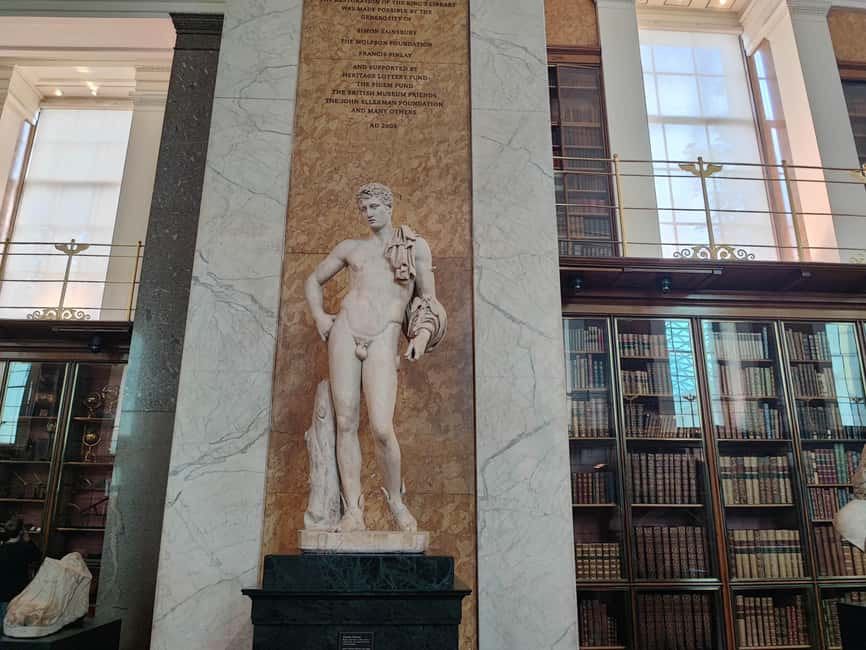
The final promised theme is especially distinctive: alternative stories about the childhood of Jesus, presented through medieval art described as comic books.
These narratives sit outside the best-known Gospel accounts. That does not make them unimportant. Their presence shows how medieval communities used images and stories to explore religious figures in ways that went beyond the official texts.
The comic-book comparison makes the material easier to approach. Medieval art can seem formal and distant, but sequential images often work like visual storytelling. You can follow the action, notice the characters, and think about the audience for whom the work was made.
This stop will appeal to anyone interested in religion, storytelling, or the gap between official tradition and popular belief. It also gives the tour a memorable ending because it presents familiar history from an unexpected angle.
What the two-hour schedule really means
Two hours is enough for a focused introduction to selected highlights. It is not enough to see the whole British Museum, and no honest tour can cover more than a fraction of eight million objects in that time.
You should expect a brisk pace with short stops at major works. The guide will provide the thread connecting them, while you decide which questions deserve attention. If you want a slow look at every Egyptian case or a full survey of Greek sculpture, book extra museum time before or after the tour.
The schedule may suit a first morning in London, especially if you want orientation before returning to the museum on your own. It also works well for people with limited time who would rather see a few important objects with context than wander through unfamiliar galleries.
The moderate walking requirement is worth taking seriously. This is not suitable for wheelchair users, according to the activity information. If mobility is a concern, confirm the current arrangements before booking.
Is $74.08 per person good value?
At $74.08 per person, the tour costs more than entering a museum and walking through it independently. The price is easier to justify if four people share the private booking, since you receive a personal guide for a small group and fast-track security entry.
For one or two people, the per-person price may feel high. You are paying for direction, storytelling, and the ability to ask questions, not simply for admission. The value depends on how much help you want making sense of a very large collection.
I would consider it good value for a first visit if you dislike reading long labels or worry about missing the museum’s major objects. It is less compelling for repeat visitors who already know the galleries and prefer to set their own route.
The strongest practical value comes from the guide. Richard is specifically praised for being very nice, informative, and enthusiastic. That personal connection can turn a crowded museum into a more focused experience, though guide assignment should be confirmed at booking.
Free cancellation up to 24 hours before the start gives you useful flexibility, and you can reserve now and pay later. Those terms help if your London schedule is still changing.
Who should book this experience?
I would recommend this tour to:
- First-time British Museum visitors who want a clear route
- Couples or families who prefer private guiding
- Small groups of up to four people
- Visitors interested in art, religion, mythology, and ancient civilizations
- People who want a lively explanation rather than a silent walk through galleries
- Anyone with only two hours for the museum
I would think twice if you want a specialist tour of one civilization, a long discussion of the Parthenon Marbles dispute, or a fully accessible route for wheelchair users. The subject range is broad, and the pace is designed to cover major ideas rather than examine one collection in great depth.
Should you book the British Museum private tour?
Book it if you want the museum’s famous objects placed in a human story. The Rosetta Stone, Parthenon Marbles, mummies, Mesopotamian achievements, Indian beliefs, tragic love scenes, and medieval stories about Jesus make a varied two-hour route.
The small group is the real advantage. You can ask questions, follow your own interests, and benefit from a guide such as Richard, whose enthusiasm has been singled out repeatedly. Just pack light, prepare to walk, and accept that this is an introduction rather than a complete museum visit.
If that sounds like the right balance of focus and flexibility, the price is reasonable for a group of four. If you prefer to wander alone and read at your own speed, save the fee and explore independently.
FAQ
How long does the British Museum private tour last?
The tour lasts about two hours.
How many people can join the private tour?
The tour is reserved for a private group of up to four guests.
What language is the tour conducted in?
The live tour guide speaks English.
Where does the tour begin?
You meet at the group entrance to the British Museum, Edward VII’s Entrance. The guide will hold a sign reading My London Guide.
Where does the tour end?
The activity ends back at the meeting point.
Is fast-track entry included?
Yes. The tour includes an express security check for faster entry.
Which British Museum highlights are included?
The themes include the Rosetta Stone, Parthenon Marbles, Egyptian mummies, ancient Mesopotamia, ancient India, tragic love stories, and medieval stories about the childhood of Jesus.
Are food and drinks included?
No. Food and drinks are not included, and food and drinks are not allowed inside the exhibition halls.
Can I take photographs during the tour?
Photography is allowed without flash. Selfie sticks are not allowed.
Can I cancel for a refund?
Yes. You can cancel up to 24 hours in advance for a full refund. You can also reserve now and pay later.
New listings around London
- London: Bermondsey Craft Brewery Tour★ 5.0 · 3 reviews
- Colourful Notting Hill Photography Tour★ 5.0 · 3 reviews
- The London Historic Pubs Tour★ 4.0 · 3 reviews
- Ultimate Royal London, Thames River Boat Ride & Walking Tour★ 5.0 · 3 reviews
- London: Wallace Collection & National Gallery Private Tours★ 5.0 · 3 reviews
- London: The Birthplace of The Rolling Stones Private Tour★ 5.0 · 3 reviews
- Historic pub tour with Brazilian guide (in Portuguese)★ 5.0 · 3 reviews
- London: Royal Tour with Westminster Abbey & Afternoon Tea★ 3.0 · 3 reviews
London Tours, compared.

Westminster to Greenwich River Thames Cruise
Read our review →
Magical London: Harry Potter Guided Walking Tour
Read our review →


Warner Bros. Studio Harry Potter Tour with Transfers
Read our review →Browse the lists this tour appears in