
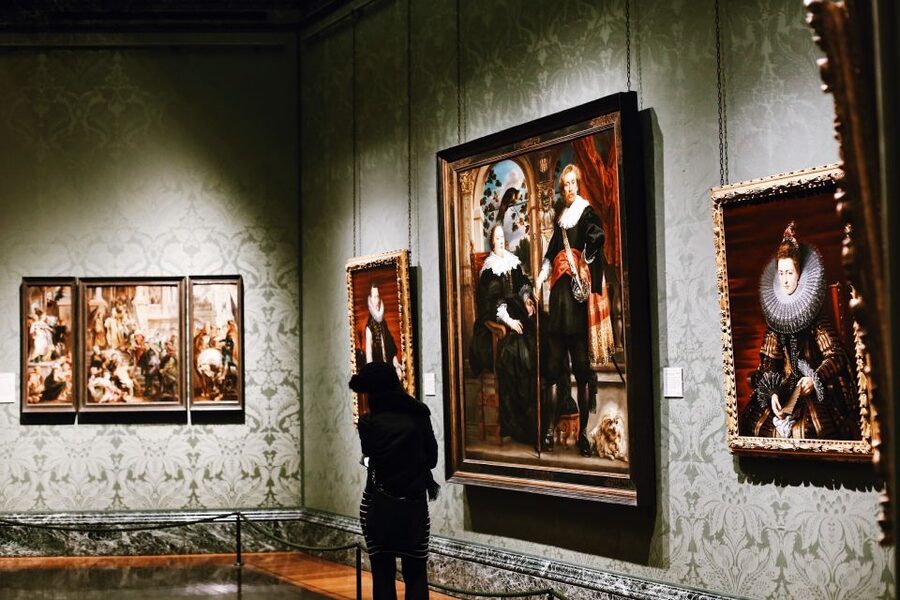
Reviewed · NATIONAL GALLERY TOURS
London: National Gallery of London Masterpieces Guided Tour
The clever part of this National Gallery tour is its sweeping route through 600 years of painting. In one visit, you can move from early devotional art and Botticelli to Da Vinci, Vermeer, Van Gogh, and Seurat without getting lost in the museum’s enormous collection.
I like the small-group limit of eight, which gives you a real chance to ask questions. I also like the guides’ lively teaching style, especially the way Jake, Matilda, Stephanie, and Alex connect technique, symbols, rivalries, and history. The main drawback is the price: at $112 per person, it is a serious outlay for 2.5 hours, and busy galleries can make it hard to hear unless you stay close to the guide.
Key points to know before you book

- A fast course in Western painting: Follow the changing styles from the 1300s to the modern era in a single museum visit.
- Major works in the route: Look for Da Vinci’s The Virgin of the Rocks, Van Gogh’s Sunflowers, Vermeer’s Lady Standing at a Virginal, and Seurat’s Bathers at Asnières.
- Small groups only: Shared tours have at least two people and no more than eight, while private bookings give you a more personal format.
- Strong guide-led experience: Jake, Matilda, Stephanie, Alex, Becky, and others are praised for clear explanations, humor, and enthusiasm.
- Plan for light walking: You will move between galleries, but this is not a physically demanding tour.
- Bring ID, leave luggage behind: A passport or ID card is required, and large bags are not allowed.
Why a guided tour helps at the National Gallery

The National Gallery is free to enter, but free admission does not make it simple. The collection covers centuries of European painting, and the most famous works are spread through different rooms. You can easily spend hours wandering, then leave having seen plenty without understanding how one period connects to another.
This tour gives you a route and a story. Rather than treating each painting as an isolated prize, the guide uses selected works to show how artists changed their ideas about religion, the human body, light, space, and everyday life.
That structure matters most if you are new to art museums. You do not need to arrive with a list of painters or a background in art history. The guide supplies the basic setting, then points out the details worth your time.
I also like the way the tour appears to balance famous paintings with useful connections. You are not simply marched from one postcard image to the next. Botticelli can help explain an earlier ideal of beauty, Da Vinci can show a new interest in natural detail, and Seurat can bring you to a very different way of building an image with color and small marks.
Further National Gallery visits:
- London: National Gallery Guided Tour with Art Expert Guide
★ 4.7 · 440 reviews - London: National Gallery Guided Tour
★ 3.8 · 67 reviews - London: National Gallery Guided Tour and Afternoon Tea
★ 4.5 · 64 reviews
Botticelli and the early rooms
The tour begins with paintings from the 1300s onward, giving you a look at the religious purpose of much early European art. Early devotional pictures were not made only for decoration. Their symbols, poses, colors, and gestures helped communicate stories to people who might not read.
Raphael is part of this early section. His devotional paintings offer a useful bridge between religious subject matter and the softer, more balanced style associated with the Renaissance. Your guide can explain how composition and human expression became increasingly important.
Botticelli’s Venus and Mars adds a different mood. This panel painting brings mythology, beauty, and a hint of playful tension into the route. It is also a good example of why a guide can help. You can look at the figures and decorative details on your own, but the story behind the scene gives the painting more shape.
This opening portion is likely to appeal to you if you enjoy symbols and stories. It may feel slower if your only goal is to reach Van Gogh, but the early rooms establish the changes that make the later paintings easier to appreciate.
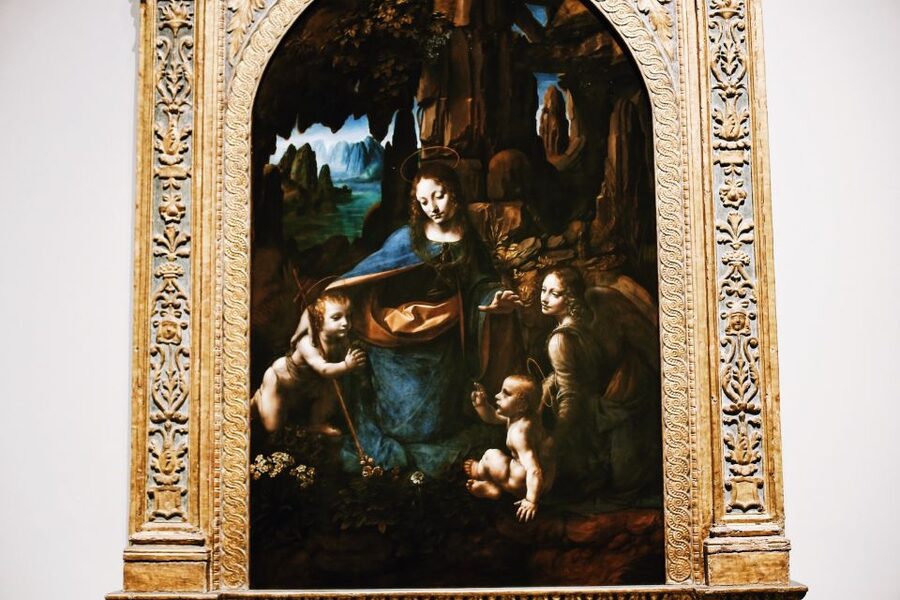
Da Vinci’s The Virgin of the Rocks
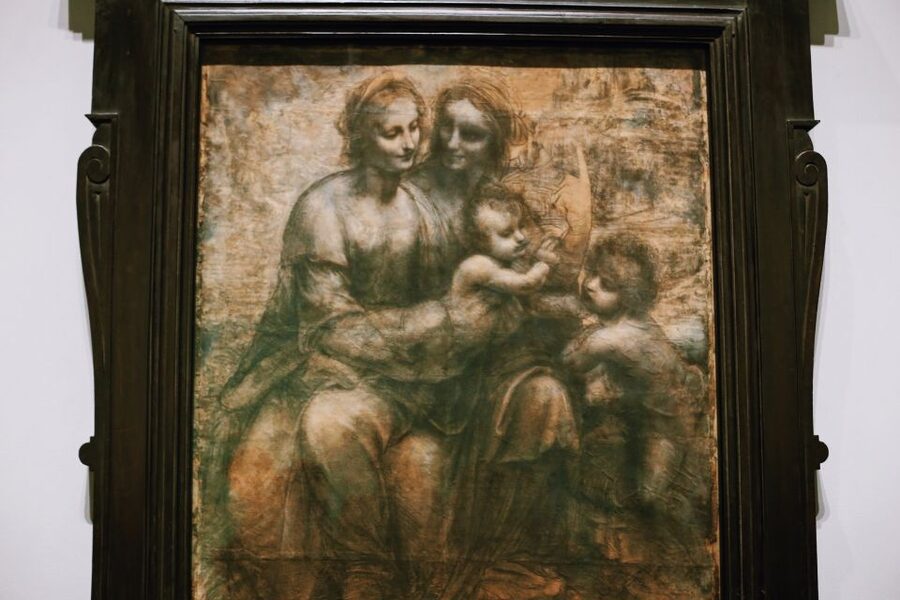
Da Vinci’s The Virgin of the Rocks is one of the central stops. It gives the guide plenty to discuss: the arrangement of the figures, the rocky setting, the soft transitions between light and shadow, and Da Vinci’s attention to nature.
You will probably spend more time here than you would during a casual museum visit. A good guide can direct your eye toward small relationships between the figures instead of leaving you with the broad impression that the work simply looks mysterious or beautiful.
The value of this stop is not only the painting itself. Da Vinci marks a turning point in the tour, when artists were increasingly interested in convincing space, human emotion, and close observation of the natural world.
If you are visiting with teenagers, this is the sort of painting that can benefit from questions and conversation. One guide, Matilda, was especially praised for encouraging curiosity and helping younger visitors stay involved. That is worth considering if your family usually finds old-master galleries a little stiff.
Velázquez, Vermeer, and the art of looking closely
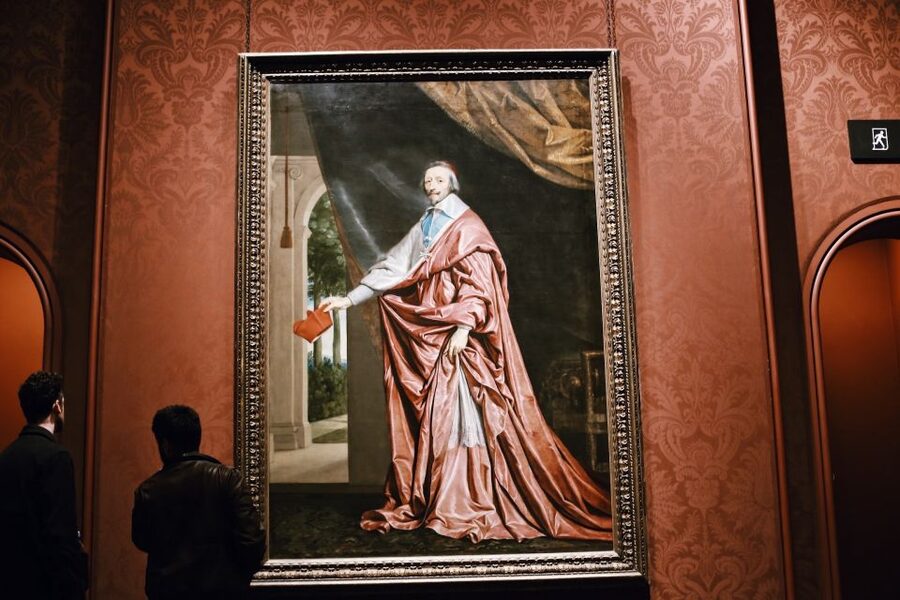
The route also includes Velázquez’s The Rokeby Venus, a later work that brings the human body and the act of looking into focus. It is a painting that rewards careful attention to pose, reflection, and the way the figure is presented to you.
Vermeer’s Lady Standing at a Virginal offers another change of pace. The scene is quiet and domestic, yet the controlled light and carefully arranged interior give the painting a strong sense of order. Your guide can help you notice how little is happening on the surface, while the details create the atmosphere.
This is where the tour’s live commentary becomes particularly useful. A guide can point out an object, gesture, or shift in light, then explain why it matters. Without that help, you might admire the calm appearance but miss the choices that produce it.
I would especially recommend this section if you prefer paintings that reward slow observation. You may not get unlimited time in front of each work, since the tour has a set length, but the guide helps you look with purpose rather than simply pause and move on.
More Museum Tours in Britain:
- Liverpool: Liverpool Football Club Museum and Stadium Tour
★ 4.8 · 10,764 reviews - London: Chelsea Football Club Stadium and Museum Tour
★ 4.8 · 4,576 reviews - London Transport Museum Entrance Ticket
★ 4.5 · 1,323 reviews - Manchester: National Football Museum Admission Ticket
★ 4.4 · 1,243 reviews
Van Gogh’s Sunflowers
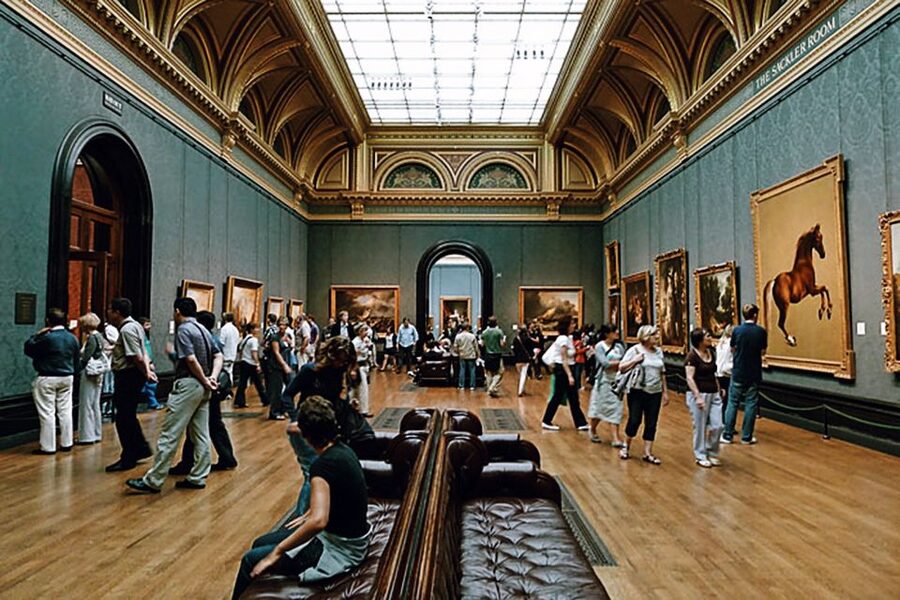
Van Gogh’s Sunflowers is one of the tour’s most familiar stops. The challenge with a famous painting is that you may feel you have already seen it through reproductions. In person, the surface, color, and brushwork give you a different way into the picture.
The guide can explain how Van Gogh’s choices create energy and how the flowers become more than a straightforward still life. You will hear the story around the artist and the work, but the strongest part of the stop should be the direct look at paint, texture, and color.
This painting is also a useful reminder that the National Gallery is not only about old masters. The tour does not stay in one period or style. It takes you from paintings made for worship and courtly settings to works that feel more personal and immediate.
If Van Gogh is your main reason for booking, check the exact route and timing when you arrive. The tour promises highlights rather than a complete museum visit, so the guide must choose a selection of works within 2 to 2.5 hours.
Seurat and the changing language of color
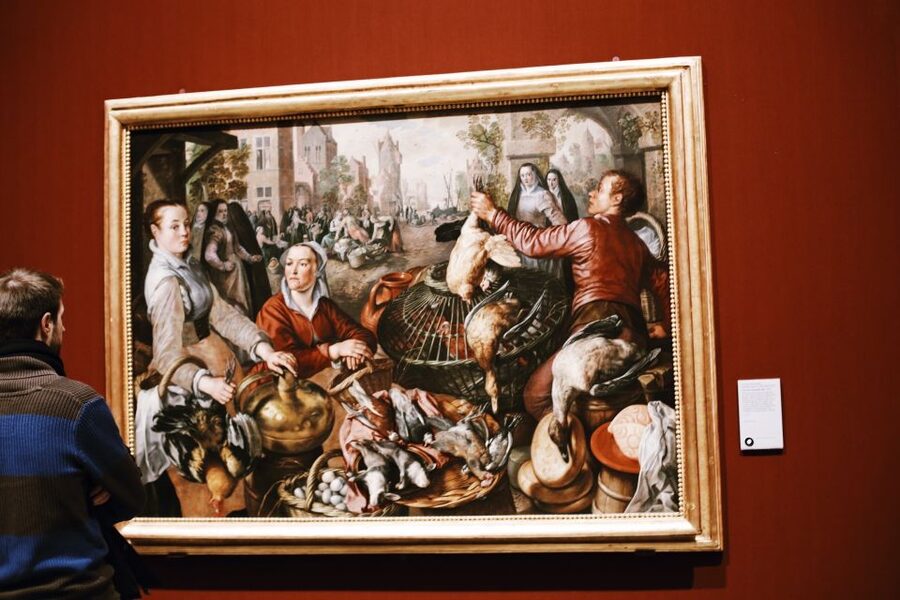
The route fast-forwards to Seurat’s Bathers at Asnières. This work gives you a clear contrast with the earlier paintings. The subject is modern leisure, and the method of painting reflects a new interest in color theory and carefully organized marks.
Placed after Da Vinci, Botticelli, Vermeer, and Van Gogh, Seurat helps bring the tour’s main idea into view. Painting does not develop in a straight line toward one perfect style. Artists make new choices in response to older traditions, new ideas, and changing subjects.
This final section should suit you if you like seeing connections across periods. You do not have to love every style to understand why the comparison matters. The pleasure comes from noticing how the museum’s collection turns into a conversation between artists who worked centuries apart.
The route is selective by design. You should not expect every major room or painter. Instead, you get a guided set of examples that explains broad changes while keeping the visit manageable.
What the guides add to the visit
The guide is the real variable in a museum tour, and this experience has a strong record in that area. Jake is repeatedly praised for his clear explanations, professional manner, and ability to keep people interested. He also seems to work well for visitors who speak English as a second language.
Stephanie receives similar praise for her enthusiasm and clear speaking voice. One useful detail for visitors with hearing aids is that she was easy to understand even in a crowded museum. That does not guarantee the same conditions on every departure, but it suggests that guide clarity is taken seriously.
Matilda is described as patient, friendly, and good at showing how art developed from one period to another. Becky is praised for being engaging and informative, while Alex is described as energetic and fun. These details point to a tour that relies on conversation rather than a dry recital of dates.
The guide style may not suit you if you want to move independently and spend twenty minutes with one painting. It is better for someone who wants a strong introduction, clear explanations, and a lively path through the collection.
One practical concern is sound. The museum can be noisy, and one visitor wished for Bluetooth headsets. Stay near the guide, especially in crowded rooms, and tell the guide early if you have hearing concerns. The shared group limit helps, but it does not remove the problem entirely.
Shared group or private tour?
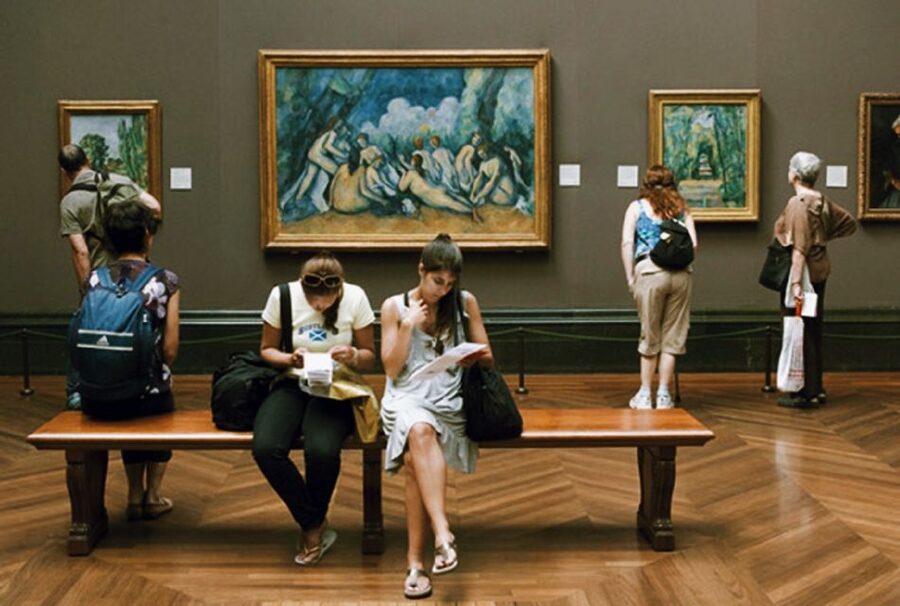
The shared option is limited to eight people, with a minimum of two. That is much more personal than a large coach-style museum tour. You should have a better chance to hear the guide and ask a question without stopping the whole visit.
The private option makes sense if you have a very specific interest, are traveling with family, or want to set the pace around a smaller party. The information provided does not promise a custom itinerary, so ask what can be adjusted before booking if you want to focus heavily on Van Gogh, Renaissance art, or a particular artist.
A shared tour is likely the better value for solo visitors and couples who want guidance without paying for an entire private group. A private tour can be worth the extra cost for a family with mixed interests, since the guide may be able to keep both children and adults involved.
The group size also affects how much time you get with each painting. Eight people is still enough to crowd around a favorite work, so do not expect a completely private viewing area. The benefit is access to a guide, not exclusive control of the gallery.
Is $112 a fair price?
At $112 per person, this is not a budget museum visit. The National Gallery itself has free general admission, so the price pays for the guide’s preparation, live explanations, and the convenience of a planned route.
I think the cost can make sense if you have only one London afternoon, are unsure how to approach European painting, or want an expert to turn a large collection into a clear story. The value is highest for first-time visitors who might otherwise spend hours choosing rooms and still miss the works that fit together best.
The price is harder to justify if you already know the National Gallery well or enjoy reading labels and setting your own route. You can visit independently and return to specific paintings at your own speed.
For a honeymoon, family visit, or special London day, the private option may feel worthwhile. For most couples and solo visitors, the shared group of no more than eight is the sensible choice.
Timing, meeting point, and what to carry
The tour lasts about 2.5 hours, with departures available daily. Starting times vary, so check the available slot before building the rest of your day around it.
The meeting point can change according to the option you book. Read the final booking details carefully rather than assuming every departure begins at the same entrance.
Bring a passport or ID card. Do not bring luggage or large bags, since those are not allowed. Food and drinks are not included, and temporary exhibitions are outside the tour price.
Only a small amount of walking is involved, but you will move through museum galleries and spend much of the visit standing. Wheelchair-friendly tours can be arranged on request, yet the experience is also listed as unsuitable for wheelchair users. If accessibility affects your decision, contact the provider before paying so you can confirm what can be provided for your date.
The cancellation policy is helpful for uncertain London plans. You can cancel up to 24 hours before the tour for a full refund, and the reserve-now, pay-later option lets you hold a place without paying immediately.
Who will enjoy this National Gallery tour?
I would choose this tour for you if you:
- Want the museum’s best-known paintings explained in a logical order
- Have limited time in London
- Prefer a live guide to reading room labels
- Are visiting with teenagers who need a story to keep their attention
- Want to compare artists from different centuries
- Feel unsure about how to approach old-master paintings
- Prefer a small group instead of a large guided crowd
I would skip it if you want a quiet, self-directed visit or plan to spend most of your time in temporary exhibitions. Those exhibitions are not included, and the set route may not match a highly specialized art interest.
Should you book it?
Book this tour if you want a well-paced introduction to the National Gallery and value a guide who can explain what you are seeing rather than simply point it out. Jake, Matilda, Stephanie, Becky, and Alex are all associated with the warm, clear teaching style this experience needs.
The strongest reasons to book are the small groups, the carefully chosen sequence from the 1300s to Seurat, and the chance to see major works by Da Vinci, Vermeer, Van Gogh, Botticelli, Velázquez, Raphael, and Seurat in one sitting.
At $112, it is a premium way to visit a museum with free general admission. I would pay it for a first visit, a tight schedule, or a family that needs help making sense of the collection. If you already have a personal shortlist and plenty of time, save the money and explore on your own.
FAQ
How long does the National Gallery masterpieces tour last?
The tour lasts 2.5 hours, although departures are described as taking between 2 and 2.5 hours.
How many people are in the small group?
Shared small-group tours have a maximum of eight people and require at least two participants.
Is a private tour available?
Yes. You can choose either a private tour or a shared small-group option.
What language is the tour conducted in?
The live tour guide speaks English, and English is the listed tour language.
Which paintings can I expect to see?
The route includes major works such as Da Vinci’s The Virgin of the Rocks, Van Gogh’s Sunflowers, Vermeer’s Lady Standing at a Virginal, Seurat’s Bathers at Asnières, Botticelli’s Venus and Mars, Velázquez’s The Rokeby Venus, and paintings by Raphael.
Is the National Gallery tour wheelchair accessible?
Wheelchair-friendly tours are available upon request, but the activity is also listed as unsuitable for wheelchair users. Confirm arrangements with the provider before booking.
What should I bring?
Bring a passport or ID card. Large bags and luggage are not allowed.
Can I cancel the tour?
Yes. You can cancel up to 24 hours in advance for a full refund. The reserve-now, pay-later option is also available.
New listings around Britain
- London: Secrets of Freddie Mercury Tour with a Cocktail★ 4.1 · 15 reviews
- London: Hampton Court Private Guided Tour★ 3.4 · 15 reviews
- Edinburgh: Isle of Skye, Highlands & Jacobite Steam Train★ 4.6 · 15 reviews
- London: Jack the Ripper Tour and Underground Prison in Spanish★ 5.0 · 15 reviews
- Spanish Language : Original Harry Potter Walking Tour★ 4.5 · 15 reviews
- THE HANGOVER BRUNCH | Benidorm Bingo & Drag Queens★ 4.5 · 15 reviews
- London: Private Couples Photography Session with Landmarks★ 5.0 · 15 reviews
- London: The Saturday Supershow Cabaret at Phoenix Arts Club★ 4.5 · 15 reviews
National Gallery Tours, compared.
National Gallery Guided Tour with Art Expert Guide
Read our review →

Browse the lists this tour appears in