
Reviewed · LONDON TOURS
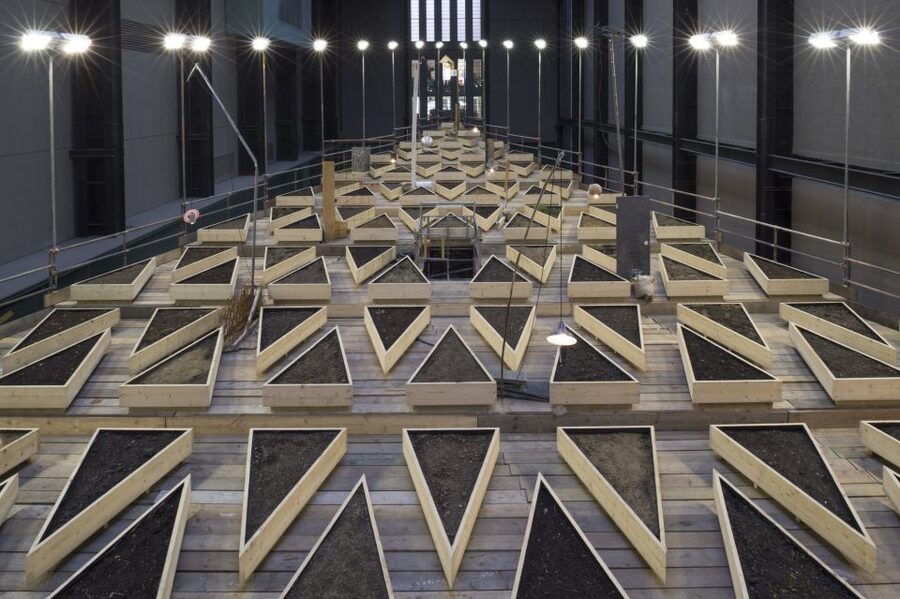
London Tate Modern Museum – Guided Tour 8 guests 2,5h
Tate Modern is at its best when someone helps you make sense of the bold, strange, and sometimes baffling art inside. This 2.5-hour tour moves from Monet and Picasso to Mondrian, Rothko, Warhol, and Duchamp, with an art historian supplying the stories and arguments behind the pictures.
I like the small maximum of eight people, which gives the tour a better chance of feeling personal than a large museum walk. I also like the mix of famous names and serious questions, from why Mondrian reduced art to lines and squares to whether Duchamp’s Fountain deserves its place in a museum.
The main consideration is value. At $112 per person, this is not a casual museum introduction, and one recent booking described the presentation as expensive and somewhat standard. Check exactly what your chosen option includes, especially the Chinatown food stop and timed Buckingham Palace entry.
Key points at a glance
- A focused 2.5-hour route through Tate Modern: The tour concentrates on major 19th- and 20th-century art rather than trying to cover every room.
- Small-group or private format: Semi-private tours are limited to eight people, with private options also available.
- Famous works with useful context: Expect Monet, Picasso, Dali, Mondrian, Rothko, Warhol, and Duchamp.
- A guide-led art discussion: The tour is designed to explain movements, artists, and ideas, not simply point at pictures.
- Possible wider London add-ons: The advertised highlights include Chinatown food and timed Buckingham Palace entry, but you should confirm these details for your booking.
- A high price for a short museum visit: The cost makes the guide’s quality and the exact package contents especially important.
Starting with Tate Modern’s biggest questions
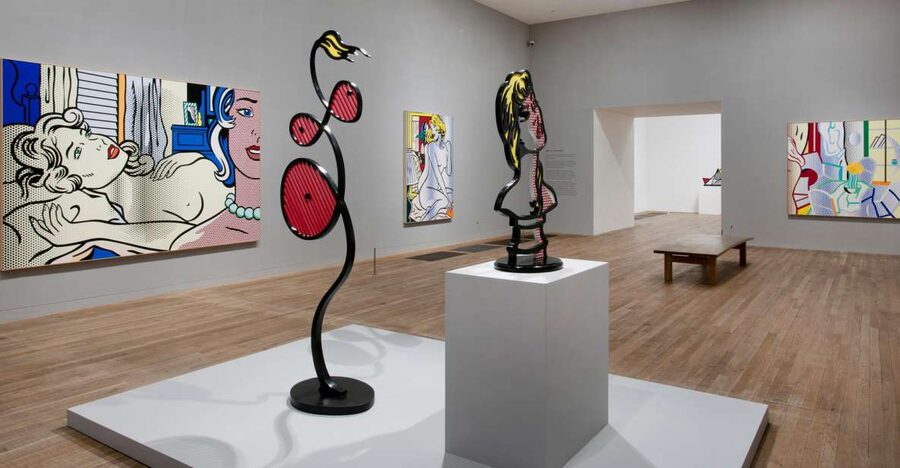
Tate Modern is not a museum where every picture politely tells you what it is. A blue square, a row of black lines, a soup can, or a white urinal may ask more questions than it answers. That is exactly why a guide can help.
The tour begins with the broad story of modern art across the 19th and 20th centuries. You can expect an explanation of the movements that changed painting, sculpture, and ideas about what art could be. The value is not just in seeing famous works. It is in learning why artists rejected older rules and what they tried instead.
I like this approach because it gives your museum visit a clear thread. Instead of wandering from one gallery to the next, you move through turning points in art. You also get permission to disagree. That matters at Tate Modern, where some of the most important works can look simple, unfinished, or downright puzzling.
The experience is offered in English with a professional art historian guide. The name of the guide is not fixed, but Becky led at least one April 2025 booking and received especially warm praise for making the 2.5 hours exciting and fun. You should not assume Becky will lead your date, but her performance gives you a useful sense of what the tour can be at its best.
More Museum Tours in London
- London: Chelsea Football Club Stadium and Museum Tour
★ 4.8 · 4,576 reviews - London: British Museum Guided Tour
★ 4.3 · 1,182 reviews - London: Jack the Ripper Museum Tickets
★ 4.2 · 894 reviews
Monet and the road toward modern art
Claude Monet provides a natural starting point for the move into modern art. His Impressionist work helps explain how artists began to care less about painting every detail and more about light, color, atmosphere, and the changing act of seeing.
You will likely find that Monet is easier to approach than some of the later artists. That makes his work useful early in the tour. A guide can show you how a painting that first looks loose or unfinished reflects a deliberate break from precise academic painting.
This section should appeal to you if modern art often feels as if it appeared from nowhere. It did not. Impressionism helped shift attention from polished historical scenes toward ordinary life, changing light, and the artist’s own visual response.
The drawback is that 2.5 hours passes quickly. Tate Modern holds far more than one guided route can cover, so you should expect selected works rather than a complete museum tour. If you want to study every major room at your own pace, plan extra museum time after the guide finishes.
Picasso and Dali in a time of conflict
The route then moves toward Spanish-born artists Pablo Picasso and Salvador Dali, including work connected with the Spanish Civil War. This gives the tour a chance to connect art with political fear, violence, and upheaval rather than treating paintings as isolated objects.
Picasso’s work is especially useful for discussing how an artist can distort bodies, space, and faces to express something that a realistic picture might miss. Dali opens a different door, one shaped by dreams, anxiety, and the logic of Surrealism.
I like this part of the itinerary because it gives you more than a list of celebrated names. Picasso and Dali become examples of artists responding to a difficult period in different ways. The discussion can also help you separate the familiar public image of an artist from the work in front of you.
You should be ready for a conversation rather than a simple speech. One booking described the guide as fun and engaging, while another found the delivery too standard and not passionate enough. That difference matters at a museum tour. The works are famous, but the guide must make the connections feel fresh.
Mondrian’s lines, squares, and radical simplicity
Piet Mondrian’s work is one of the tour’s best opportunities to understand how much modern art asks you to reconsider. His lines, blocks, and limited colors can look almost childlike at first glance. The point is to see how much control and thought goes into reducing an image to basic visual elements.
The tour specifically encourages discussion of Mondrian’s exactitude and the way his simplicity baffled other artists. That is a useful detail. The paintings are not merely simple pictures. They represent a serious argument about balance, order, space, and what can be removed before an image stops being a traditional painting.
I would pay close attention here, even if Mondrian is not your favorite artist. His work makes the larger story of modernism clear. Artists were not simply trying to shock people. They were testing the limits of painting itself.
This is also the sort of stop where a small group helps. With no more than eight people on the semi-private option, you have a better chance of asking why one line is placed where it is or how a painting creates balance without showing a recognizable subject.
Elsewhere in London, a change of pace:
- From London: Harry Potter Warner Bros Studio Tour
★ 4.7 · 26,588 reviews - London: Westminster to Greenwich River Thames Cruise
★ 4.5 · 22,836 reviews - Magical London: Harry Potter Guided Walking Tour
★ 4.7 · 22,044 reviews - London: Madame Tussauds London
★ 4.6 · 20,915 reviews
Rothko and the emotional power of color
The tour later reaches abstract expressionism through Mark Rothko. His large fields of color can be difficult to discuss with ordinary art vocabulary. A guide can help you think about scale, color relationships, mood, and the physical effect of standing in front of an abstract painting.
Rothko is a good counterpoint to Mondrian. Mondrian gives you structure and measured order. Rothko gives you broad areas of color and a more open emotional reading. Both artists reduce familiar subjects, but they arrive at very different results.
I like having both in the same tour because the comparison gives abstract art some shape. You are not simply told that modern artists became more abstract. You can see different reasons for removing recognizable objects from a painting.
Still, no guide can guarantee that a work will affect you in a particular way. If Rothko leaves you cold, that is a fair response. The best part of this stop is the chance to discuss why, rather than feeling that you have failed an art test.
Warhol, Marilyn Monroe, and art made for mass culture
Andy Warhol brings the tour into Pop Art and the world of celebrity images. His Marilyn Monroe works are instantly familiar, which makes them an easy entry point for discussing repetition, advertising, fame, and the boundary between commercial design and fine art.
Warhol’s importance is not only that he painted famous people. He helped challenge the idea that serious art had to be unique, handmade, and separate from popular culture. A guide can show you how repetition changes the meaning of an image and why a familiar face can become both a person and a brand.
This is likely to be one of the more accessible sections for families and first-time museum visitors. You already recognize the subject, so you can spend less time identifying the picture and more time considering what Warhol changed.
The warning is that famous images can receive too little time. A guide has many major artists to cover, and the tour is only 2.5 hours. If Warhol interests you most, note the room and return later for a slower look.
Duchamp’s Fountain and the art-world argument
Marcel Duchamp’s Fountain is the tour’s invitation to scratch your head. It is also where the basic question of modern art comes into sharp focus: can an ordinary object become art because an artist selects it, presents it, and asks you to look at it differently?
You will not need to admire Fountain. In fact, the tour encourages debate about its merits. That is a strength. A museum visit becomes more useful when you can argue with a work instead of quietly assuming that famous means beautiful.
Duchamp’s piece also helps explain the shift from art as an object made by hand to art as an idea. That change influenced later artists, including those who used found objects, repetition, commercial images, and stark geometric forms.
I would save your strongest questions for this part of the tour. Ask what makes a work original, who decides its value, and how much the museum setting changes what you see. The small-group format should make that discussion easier than it would be on a crowded public tour.
What the wider London plan may add
The supplied highlights also include authentic food in Chinatown and timed entry to Buckingham Palace after the guided museum visit. Those additions could change the value of the booking considerably, especially if you want a day that combines art, food, and a major royal sight.
But the details need care. The included section lists a professional art historian guide and private or semi-private options, while food and drinks are listed as not included. Temporary exhibitions are also excluded. Because of that, confirm whether Chinatown is a suggested stop, a separate part of your selected package, or simply an advertised highlight that requires you to pay for your own meal.
The same applies to Buckingham Palace. The timed entry is presented as part of the wider plan, but it is worth checking the exact option before paying. Do not assume that every $112 booking includes every highlight in the same way.
If the palace entry is included, the tour could suit you well as a structured half-day plan. If it is not, the value rests mainly on the Tate Modern guide. That distinction is important because $112 is a substantial price for a 2.5-hour museum visit.
Price, group size, and what you are really paying for
At $112 per person, you are paying for access to a guided interpretation, skip-the-ticket-line treatment, and a small or private format rather than simply museum admission. The price makes sense only if you want help understanding modern art and value a tighter route through the galleries.
The semi-private group is capped at eight people. That is small enough for questions and shared discussion, though it is not the same as having a fully private guide. A minimum of two people is required for the semi-private tour to operate. If that minimum is not met, an alternative date or full refund is offered.
A private booking will generally give you more control over the pace and conversation, but the supplied price is stated per person and does not explain how private pricing changes. Ask before booking if you are comparing the options closely.
One recent booking rated the experience at three out of five and found it expensive for what was provided, with a fairly standard presentation. Another gave five out of five and praised Becky as a perfect guide after 2.5 enjoyable hours. I would read this as a reminder that the guide is the central part of the purchase. The art will be there either way. The quality of the explanation is what separates a good value from an ordinary museum walk.
Practical details before you enter
The meeting point can vary according to the option you book, so check your confirmation carefully. Hotel pickup and drop-off are not included, and food and drinks are not included either.
Bring valid photo identification, such as a passport or ID card. Large bags, luggage, and suitcases are not allowed inside the museum. Only a handbag or small, thin backpack can pass through security, so pack lightly.
The tour involves a small amount of walking. Appropriate dress may be required for some sites included in the wider plan. Temporary exhibitions are not included, so do not expect this tour to cover every special show happening during your visit.
Museum or attraction closures can happen without warning. If Tate Modern opens more than an hour later than the scheduled start, an alternative is provided, but a refund is not offered in that situation.
Wheelchair-friendly tours are available only by request, while the activity is also described as unsuitable for wheelchair users. That wording is not perfectly clear, so contact the provider before booking if access needs are important to you.
You can cancel up to 24 hours in advance for a full refund, and reserve now while paying later. Those policies help if your London schedule is still shifting, but they do not remove the need to verify the meeting point and package details.
Who should book this Tate Modern tour?
I would recommend this tour to you if modern art interests you but you want a clear introduction before exploring alone. It is also a good fit if you enjoy asking questions about art rather than simply taking photographs of famous pieces.
The route includes enough major names to satisfy a first visit, from Monet and Picasso to Warhol and Rothko. At the same time, Duchamp and Mondrian give the tour some intellectual bite. You get the well-known faces, plus the harder questions behind them.
Families and mixed-interest groups may also benefit. Marilyn Monroe, Picasso, and Dali offer familiar starting points, while the guide can explain the more abstract works without assuming that everyone already knows the vocabulary.
I would be more cautious if you already know Tate Modern well or prefer to move slowly through a few artists. The pace must cover a wide range of movements in 2.5 hours. You may find the route too selective, and the $112 price may feel high if the guide gives a general talk rather than a lively, tailored discussion.
Should you book it?
Book this Tate Modern tour if you want structure, major works, and a small group where you can ask why modern art looks the way it does. The best version of the experience will give you a clear path from Impressionism to Pop Art and leave you with better questions than you had at the start.
Before paying, confirm three things: who is guiding your date, whether Buckingham Palace entry is included in your chosen option, and how the Chinatown food stop works since food and drinks are not included. If those details line up with your plans, the tour can be a useful introduction to Tate Modern.
If you mainly want entrance to the museum and plenty of quiet time, save the $112 and explore independently. The price is justified by a strong guide, not by the artworks alone.
FAQ
How long does the Tate Modern guided tour last?
The guided museum experience lasts 2.5 hours. Starting times vary, so check availability for your chosen date.
What language is the tour offered in?
The tour is offered in English with a live guide.
How large is the semi-private group?
The semi-private option allows a maximum of eight people. At least two people are required for the tour to run.
Is the tour private?
You can choose either a private tour or a semi-private tour, depending on the option you book.
Are food and drinks included?
No. Food and drinks are not included. Temporary exhibitions are also excluded.
What should I bring to Tate Modern?
Bring valid photo identification, such as a passport or ID card. Large bags, luggage, and suitcases are not allowed. Only a handbag or small, thin backpack is permitted through security.
New listings around London
- London: Bermondsey Craft Brewery Tour★ 5.0 · 3 reviews
- Colourful Notting Hill Photography Tour★ 5.0 · 3 reviews
- The London Historic Pubs Tour★ 4.0 · 3 reviews
- London: Wallace Collection & National Gallery Private Tours★ 5.0 · 3 reviews
- Ultimate Royal London, Thames River Boat Ride & Walking Tour★ 5.0 · 3 reviews
- London: The Birthplace of The Rolling Stones Private Tour★ 5.0 · 3 reviews
- Historic pub tour with Brazilian guide (in Portuguese)★ 5.0 · 3 reviews
- London: Royal Tour with Westminster Abbey & Afternoon Tea★ 3.0 · 3 reviews
London Tours, compared.
Westminster to Greenwich River Thames Cruise
Read our review →
Magical London: Harry Potter Guided Walking Tour
Read our review →

Warner Bros. Studio Harry Potter Tour with Transfers
Read our review →Browse the lists this tour appears in