
Reviewed · LONDON TOURS
Women in art – National Gallery
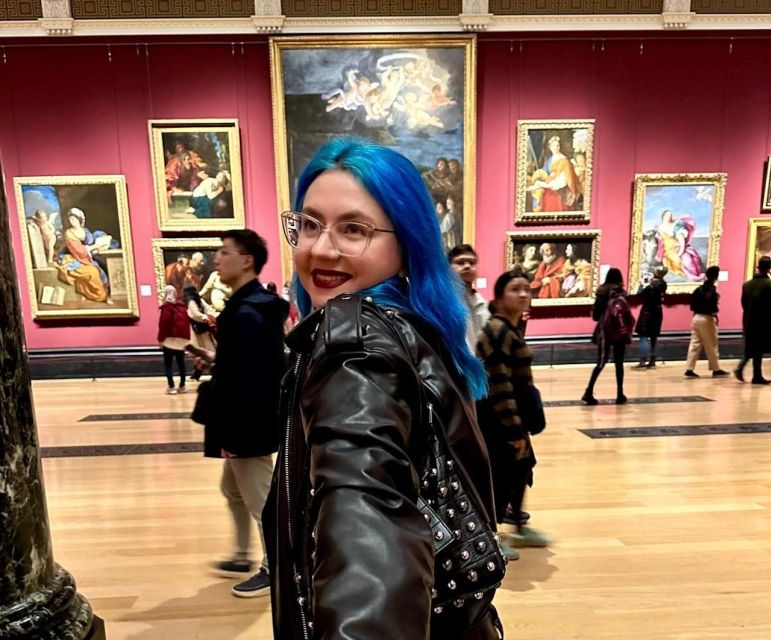
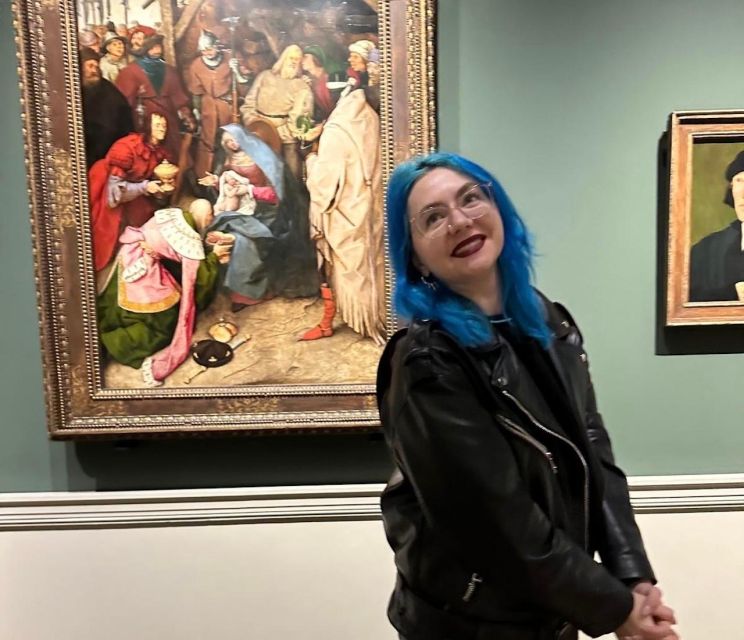
Women take many roles in this National Gallery tour: holy figures, mythic beauties, symbols of power, subjects of desire, and artists’ attempts to understand the world around them. Rather than simply ticking off famous paintings, you’ll look at how women were shown and what those images reveal about the time in which they were made.
I like the focused theme, which gives familiar masterpieces a fresh purpose. I also like the private-group format, since your guide can shape the discussion around your questions instead of delivering a fixed speech to a crowd.
The main drawback is the short 1.5-hour running time. The National Gallery is packed with major works, so this tour can offer a sharp introduction rather than a full study of every painting or every aspect of women’s lives in art.
Key points to know before you book
- Leonardo’s Madonna of the Rocks: Explore the painting’s sacred female figures and Leonardo’s careful handling of mood, gesture, and mystery.
- Michelangelo, Raphael, and Rubens: Compare very different approaches to female holiness, beauty, mythology, and power.
- Van Gogh’s Sunflowers: See how a modern masterpiece fits into a tour that moves beyond Renaissance art.
- Private tour for up to six people: The price is $404.10 per group, not per person.
- English or Russian guide: Katya is the guide named in the detailed feedback, though you should confirm who will lead your booking.
- Flexible but tightly timed: You can cancel up to 24 hours ahead for a full refund, but the tour itself must finish on schedule.
Why the women in art theme works so well
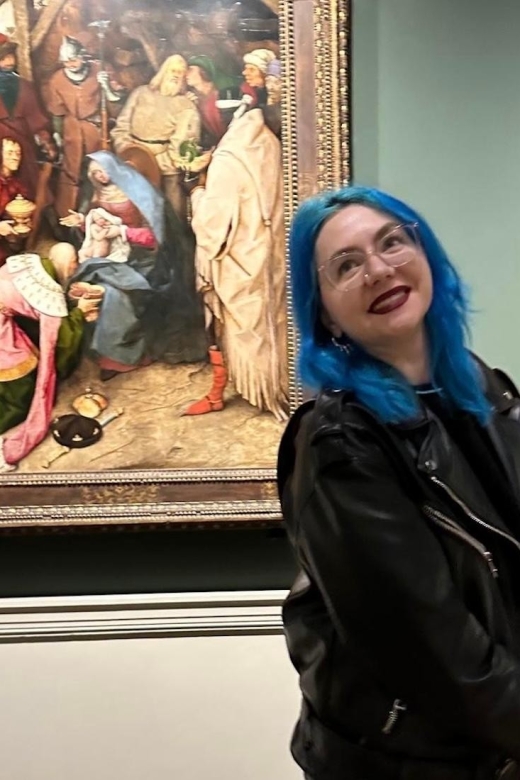
A museum tour built around women can easily become a simple parade of famous female figures. This one has the chance to do more. The key question is not only who appears in each painting, but who had the power to create the image, commission it, own it, or decide how women should be seen.
That makes the National Gallery a strong setting. Its collection covers several centuries, so you can watch ideas change from sacred Renaissance scenes to classical myths and modern still life. In 90 minutes, the guide can connect those periods without asking you to cross London or change museums.
You should expect a conversation about representation as much as technique. A painting may present a woman as a saint, mother, goddess, ideal beauty, or domestic subject. Your guide’s job is to explain the visual clues and historical setting, then connect them to the larger question of how women have shaped and been shaped by art.
The tour is also a good choice if you have already seen some of these paintings but felt you were only collecting famous names. A theme gives you a reason to look again. Leonardo’s soft transitions, Raphael’s calm elegance, Rubens’ theatrical figures, and Van Gogh’s direct brushwork begin to speak to one another.
More Museum Tours in London
- London: Chelsea Football Club Stadium and Museum Tour
★ 4.8 · 4,576 reviews - London: British Museum Guided Tour
★ 4.3 · 1,182 reviews - London: Jack the Ripper Museum Tickets
★ 4.2 · 894 reviews
Meeting in front of the National Gallery
The tour starts in front of the National Gallery in central London and returns to the same meeting point at the end. That simple arrangement matters in a busy city. You do not need to arrange a second pickup or work out where the guide will leave you.
Give yourself enough time to find the meeting point. The instructions identify the front of the National Gallery, but the building sits in one of London’s busiest central areas. Your active telephone number is important because the guide may need to reach you if plans go wrong or you are delayed.
Punctuality is especially important here. The guide must keep the tour moving so it ends on time, and the itinerary may be adjusted if your group spends longer than expected at one painting. That is fair, but it means you should not treat the start time as approximate.
The return to the meeting point also makes this easy to fit into a day of sightseeing. You can plan lunch, another museum, or a walk through central London afterward without guessing where the tour will finish.
Leonardo’s Madonna of the Rocks and sacred women
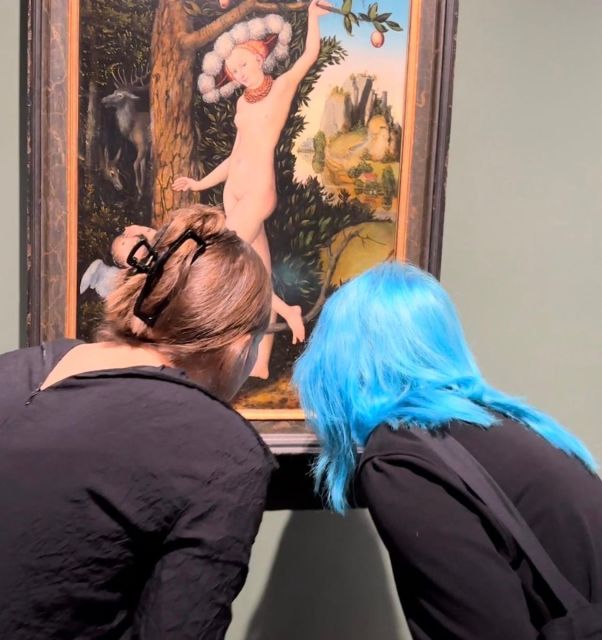
Leonardo da Vinci’s Madonna of the Rocks is one of the tour’s strongest opening points. It offers much more than a familiar image of the Virgin Mary. Leonardo uses a rocky setting, shadow, gesture, and close grouping to create a scene that feels both tender and strange.
Here, Mary is central without appearing stiff or distant. Her body and hands help organize the figures around her, while the children create a sense of movement and human connection. The guide can help you notice how Leonardo makes a religious subject feel like a living encounter rather than a flat symbol.
This is a useful painting for the tour’s theme because Mary carries several identities at once. She is a sacred figure, a mother, and the visual focus of a scene shaped by religious beliefs and artistic choices. Looking closely at her position and gestures shows how female power could be expressed through care, dignity, and spiritual importance.
You may also find this stop rewarding if you enjoy works that do not explain themselves at once. The dark setting and softly blended forms leave room for questions. In a short tour, that kind of painting gives the guide plenty to unpack without relying on a long list of dates.
Michelangelo’s The Entombment and the weight of grief
Michelangelo’s The Entombment brings a different mood. The subject is sorrow, but the picture is also marked by movement, unfinished qualities, and the physical strength associated with Michelangelo’s figures.
The women around Christ are central to the emotional force of the scene. Their gestures and postures help carry the grief, and they make the event feel personal rather than remote. A good guide can show you how their bodies communicate pain and how the painting’s incomplete areas affect the way you see it.
This is an important contrast with Leonardo. In Madonna of the Rocks, female presence can feel protective and calm. In The Entombment, women are caught in a moment of loss. The change reminds you that women in religious art were not always decorative figures. They could be the emotional center of the story.
Do not expect a long technical lecture on Michelangelo alone. The tour’s purpose is comparison. Your guide will likely use the painting to discuss the roles women play in sacred narratives and how artists use posture, clothing, and group arrangement to direct your attention.
Further National Gallery visits:
- London: National Gallery Guided Tour with Art Expert Guide
★ 4.7 · 440 reviews - London: National Gallery Guided Tour
★ 3.8 · 67 reviews - London: National Gallery Guided Tour and Afternoon Tea
★ 4.5 · 64 reviews - Westminster and National Gallery 3.5-Hour Tour in Italian
★ 4.9 · 28 reviews
Raphael’s St Catherine and the image of sainthood
Raphael’s St Catherine shifts the focus from a group scene to a single female figure. Catherine’s presence is controlled and graceful, with the calm balance associated with Raphael’s work.
The painting gives the guide a chance to discuss how a saint’s identity is communicated. A saint is not presented simply as an ordinary portrait sitter. Her expression, pose, and symbols tell you how to read her character and spiritual importance.
I like this stop because it adds a quieter note to the route. After the emotional tension of The Entombment, Raphael’s figure invites slower looking. You can pay attention to the way ideal beauty and religious devotion overlap, and ask where the historical woman ends and the artistic image begins.
That question is central to the entire tour. Women in art were often presented through stories chosen by male artists, religious institutions, wealthy patrons, or classical traditions. The painting can be beautiful while still raising questions about who controlled the image and what viewers were expected to believe about women.
Rubens’ The Judgement of Paris and beauty as a contest
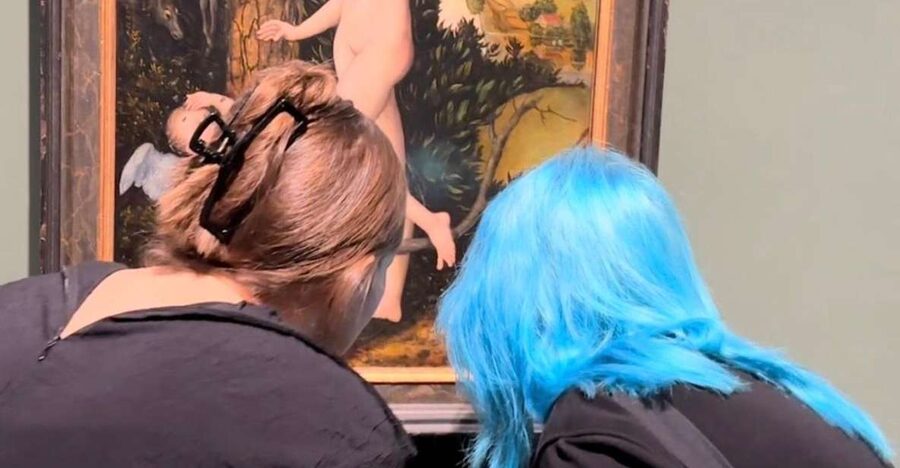
Rubens’ The Judgement of Paris introduces mythology, competition, and physical beauty. The subject centers on Paris choosing the most beautiful among three goddesses, making the work a direct way to discuss how female beauty has been turned into a public contest.
Rubens’ style is very different from Raphael’s. His figures are fuller, more animated, and more theatrical. The painting gives you a chance to compare how the female body is handled across periods and artists, and how myth allowed painters to present subjects that would have been restricted in ordinary portraiture.
The theme here is not simply that the women are beautiful. The scene asks who gets to judge them, who gets to define beauty, and what happens when female identity is reduced to appearance. Those questions give the painting a modern edge without forcing it into a modern setting.
This may be the most useful stop for visitors who want the tour to address power and objectification. It also keeps the route from becoming a sequence of saintly women. You see women as divine figures, but also as subjects placed within a competitive story shaped by male artistic tradition.
Van Gogh’s Sunflowers and women beyond portraiture
Vincent van Gogh’s Sunflowers may seem like the surprise choice on a women in art tour. There is no female figure to identify. That is precisely why the painting can broaden the discussion.
Women’s role in art is not limited to being painted as subjects. A tour on this theme can also ask who has been allowed to become an artist, whose work enters major collections, and how art history chooses its celebrated names. Van Gogh’s presence opens the door to the wider issue of artistic reputation and the uneven attention given to women artists.
The painting also shifts the mood from narrative and mythology to color, paint, and still life. Instead of reading a woman’s gesture or expression, you look at how a modern artist gives ordinary objects emotional force. That change helps keep the tour from treating women only as images within stories created by men.
You should not expect Sunflowers to answer every question about women artists. Its value is as a prompt. It can help your guide connect the National Gallery’s famous collection to the larger history of who makes art, who receives recognition, and how museum displays shape what you remember.
A private group makes the discussion more personal
The tour is for a private group of up to six people. That is a major difference from a large public tour. You can ask why a figure is posed in a certain way, request a comparison between two paintings, or return to a detail you missed without worrying about slowing down a large crowd.
The private setup is particularly useful for this subject because the questions can become personal and interpretive. Different people may respond differently to images of motherhood, beauty, sainthood, or desire. A small group gives you room to talk rather than simply listen.
Katya is the guide named in the most detailed feedback, and the comments describe her as engaging, clear, and able to connect historical material with present-day concerns. They also point to her willingness to answer questions at length. Confirm the assigned guide when booking, but those details give you a useful sense of the style to expect.
The guide speaks English or Russian. If language matters to your group, check the selected option carefully before paying. A strong thematic tour depends on discussion, so you want to be sure everyone can follow the explanations and join in.
What $404.10 means for your group
The listed price is $404.10 for a private group of up to six people. At six participants, that works out to $67.35 per person. For two people, the effective cost is much higher, so the value depends heavily on your group size and how much you value a private guide.
You are paying for a personal 90-minute museum experience rather than admission to a general lecture. The price makes the most sense for a family group of adults, a small circle of friends, or anyone who wants to ask questions and set the pace within the fixed schedule.
The tour includes the guide, but no other inclusions are specified. Keep that in mind when comparing it with a standard museum visit or a larger group tour. The benefit here is not extra transport or a meal. It is the focused subject, the private setting, and the chance to see major paintings through one connected idea.
You can reserve now and pay later, which helps if your London plans are still shifting. Free cancellation is available up to 24 hours before the tour for a full refund. Those terms reduce the risk, but you still need to provide an active telephone number and arrive on time.
Who will enjoy this National Gallery tour
I would choose this tour if you want famous art with a clear human question behind it. It suits people who enjoy discussing how images shape ideas about women, beauty, faith, motherhood, and power.
It also works well for repeat museum visitors. You may already know Sunflowers or Madonna of the Rocks, but a new theme can change what you notice. The guide’s comparisons are likely to be more useful than a basic list of dates and artist names.
The tour is less suitable if you want a broad National Gallery highlights tour. Five named works anchor the experience, but the 90-minute limit means the guide cannot cover everything. It is also not suitable for children under six, and very young children may find the discussion and museum pace difficult even when older children are interested in the subject.
Wheelchair access is listed as available. If your group has specific access needs, it is still sensible to confirm the practical details before booking, since the tour moves through a large museum and timing is fixed.
Should you book Women in Art at the National Gallery?
Book it if you want a private, discussion-led look at major paintings and you like the idea of seeing art through questions of female identity and representation. The mix of Leonardo, Michelangelo, Raphael, Rubens, and Van Gogh gives the hour and a half a clear arc, from sacred figures and saints to mythic beauty and modern artistic fame.
The strongest value comes when six people share the cost. I would also book if you want an English or Russian guide who can respond to questions, with Katya the named guide associated with the most detailed account of the experience.
Skip it if you want to explore the National Gallery independently or spend a long time with each painting. This is a concise, guided route, not an open-ended museum day. For the right group, though, it offers a thoughtful way to see well-known works with fresh eyes.
FAQ
Where does the Women in Art tour start?
The tour starts in front of the National Gallery in London.
Where does the tour finish?
The activity ends back at the meeting point in front of the National Gallery.
How long does the tour last?
The tour lasts 1.5 hours.
How much does the private tour cost?
The price is $404.10 for a private group of up to six people.
Which languages are available?
The live guide is available in English or Russian.
Is the tour wheelchair accessible?
Yes, the activity is listed as wheelchair accessible.
Can children join the tour?
Children under six are not permitted to join this activity.
Can I cancel for a full refund?
Yes. You can cancel up to 24 hours in advance for a full refund.
New listings around London
- London: Bermondsey Craft Brewery Tour★ 5.0 · 3 reviews
- Colourful Notting Hill Photography Tour★ 5.0 · 3 reviews
- The London Historic Pubs Tour★ 4.0 · 3 reviews
- Ultimate Royal London, Thames River Boat Ride & Walking Tour★ 5.0 · 3 reviews
- London: Wallace Collection & National Gallery Private Tours★ 5.0 · 3 reviews
- London: The Birthplace of The Rolling Stones Private Tour★ 5.0 · 3 reviews
- Historic pub tour with Brazilian guide (in Portuguese)★ 5.0 · 3 reviews
- London: Royal Tour with Westminster Abbey & Afternoon Tea★ 3.0 · 3 reviews
London Tours, compared.

Westminster to Greenwich River Thames Cruise
Read our review →
Magical London: Harry Potter Guided Walking Tour
Read our review →


Warner Bros. Studio Harry Potter Tour with Transfers
Read our review →Browse the lists this tour appears in