
Reviewed · BATH TOURS
Bath: Roman Baths Entry Ticket with Audio Guide
The Roman Baths are more than a pretty pool beneath Bath’s modern streets. This carefully presented site takes you from a sacred spring and temple to heated rooms, massage areas, saunas, and plunge pools, showing how Roman Britain combined worship, medicine, and leisure. The Great Bath is the star, especially when steam curls above it on a cold morning.
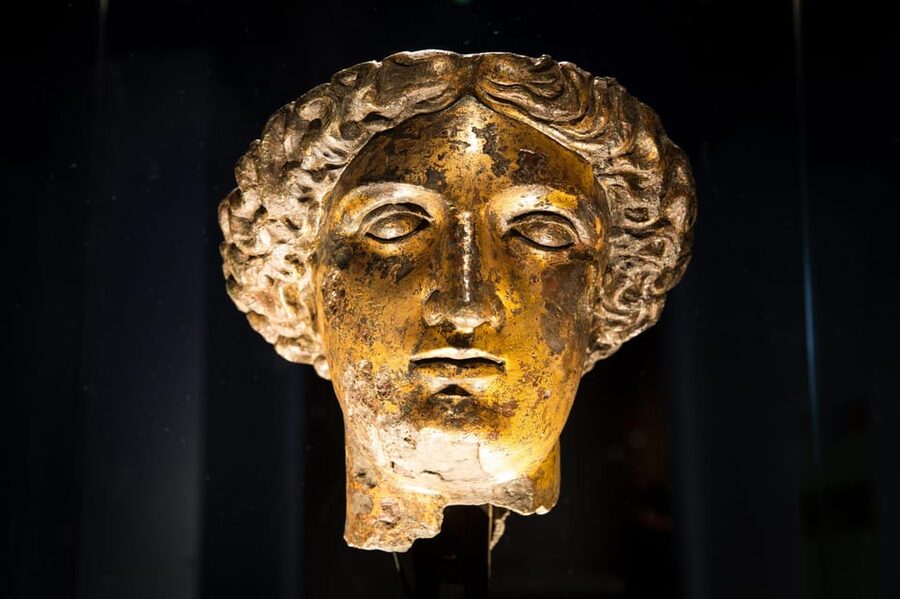
I like the excellent audio guide, which lets you move at your own pace and adds useful detail without forcing you into a scheduled group tour. I also like the mix of objects and atmosphere: the Gorgon’s head, the gilded bronze head of Sulis Minerva, projected scenes, and the actual Roman pavements all help make the site easier to picture.
The main drawback is that the guide is a handheld device rather than headphones, so holding it for the whole visit can tire your arm or shoulder. The Baths can also become crowded quickly, and booking ahead does not necessarily mean you walk straight past every queue.
Key things to know before you go
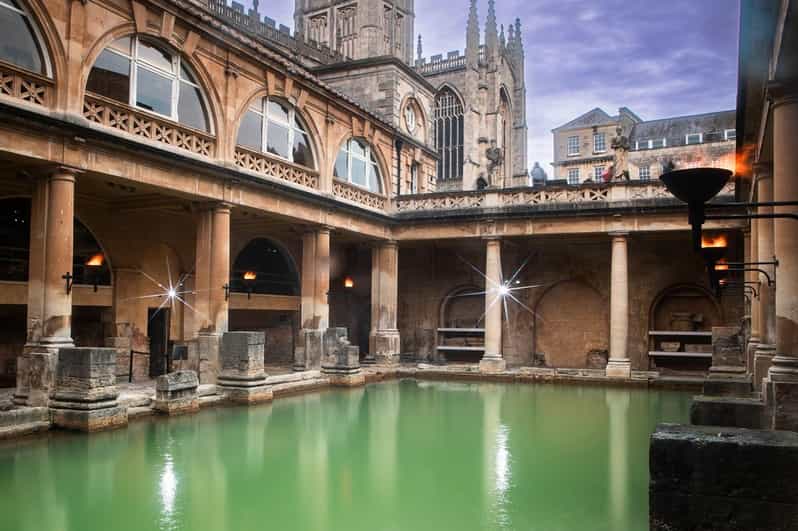
- The Great Bath is only the beginning: Allow time for the museum, temple remains, East Baths, West Baths, Roman gym, sauna, and Circular Bath.
- The audio guide carries the visit: It is available in 12 languages, with a separate BSL video guide, and includes a children’s version.
- Arrive early for a calmer visit: The site can fill soon after opening, making an early time especially useful for photographs and a less hurried walk.
- Look closely at Sulis Minerva: The gilt bronze head once belonged to the goddess’s cult statue inside the temple.
- Save room for the spa water: You can sample water containing more than 43 minerals from a dedicated tap at the end.
- Plan for a long standing visit: Seating is available, but the full route can take around two and a half hours if you listen carefully.
Why the Roman Baths are worth your time
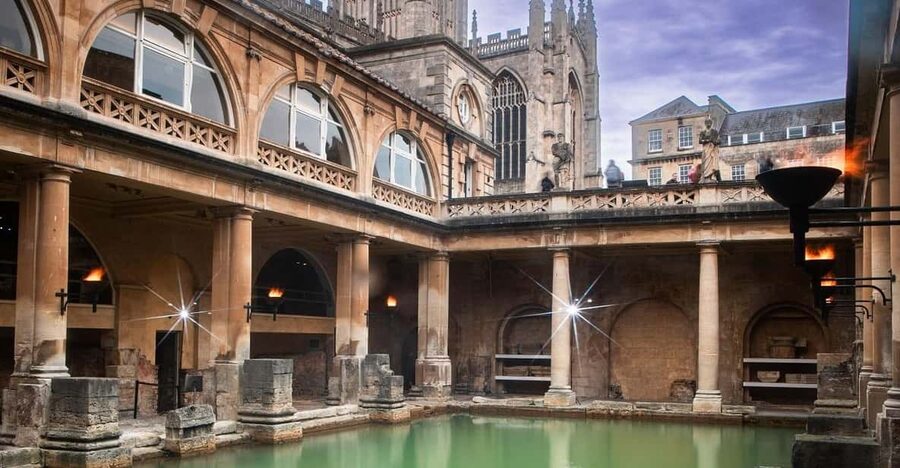
Bath’s Roman complex gives you a rare chance to see an ancient bathing site in the middle of a living city. The remains are not isolated ruins in an empty field. They sit below Bath’s streets, with the stone rooftops and sky visible above the Great Bath, creating a strong link between Roman Aquae Sulis and the city you are exploring today.
The site was both a religious centre and a place connected with the natural hot springs. People came to worship Sulis Minerva, a goddess who joined local and Roman traditions, and to seek the healing effects of the thermal water. That combination gives the visit more depth than a simple look at old pools.
At the listed price of about $30.31 per person, this is not a bargain basement attraction. Still, I think the admission can be good value if you give it time. You are paying for a substantial museum, preserved Roman structures, an audio guide, accessible interpretation, and the chance to see the Great Bath up close. If you rush through in 45 minutes, the price will feel high. If you spend two hours or more, it makes more sense.
Further Roman Baths visits:
- Bath: City Walking Tour with Optional Roman Baths Entry
★ 4.7 · 1,401 reviews - Bath: Guided City Walking Tour with Entry To The Roman Baths
★ 4.8 · 343 reviews - London: Windsor, Stonehenge, Bath, and Roman Baths Day Trip
★ 4.5 · 5,131 reviews
Start with the museum and its Roman voices
After you redeem your ticket at the Roman Baths, the route begins in the museum. This is a smart arrangement because the objects give you context before you reach the larger ruins.
The displays focus on the people of Roman Britain and the possessions they left behind. That human angle matters. Instead of seeing only walls and stone channels, you get clues about daily life, belief, status, and the role of the baths in the community.
The audio guide is the key to making sense of the collection. Each stop is labelled, and arrows help you follow the route. You can listen, pause, and continue when ready, rather than keeping pace with a guide or a fixed group.
The commentary is detailed but easy to follow. If you enjoy history, you can spend time with the longer explanations. If you prefer a lighter visit, you can keep moving and focus on the main stops. A children’s version is also available, and it adds a more playful layer for younger visitors. Children around eight and older are likely to get the most from the stories and visual displays, though interest will vary.
One practical weakness is the equipment. The audio unit is held in your hand, and you may need to keep it up to your ear for much of the route. Headphones are not supplied as part of the experience, so parents managing children or anyone with shoulder or mobility problems may find this less comfortable than a standard headset.
Study the Gorgon’s head and Sulis Minerva
Two museum objects deserve special attention. The first is the Gorgon’s head, which once decorated the temple pediment. It was positioned high above approaching worshippers, about 15 metres up, and would have looked down over the sacred area.
The display raises an interesting question: is this the mythical Gorgon, or could it be a representation of a water god? The uncertainty gives you something to think about rather than offering a neat answer.
The other major object is the gilded bronze head of Sulis Minerva. This once formed part of the goddess’s cult statue inside the temple. The workmanship is striking, and the face gives you a direct connection to the religious heart of the complex.
These objects also explain why the baths were not simply a place to wash. The temple and spring were central to the site. The water had religious meaning, and the bathing facilities grew around that sacred source.
Step into the Great Bath
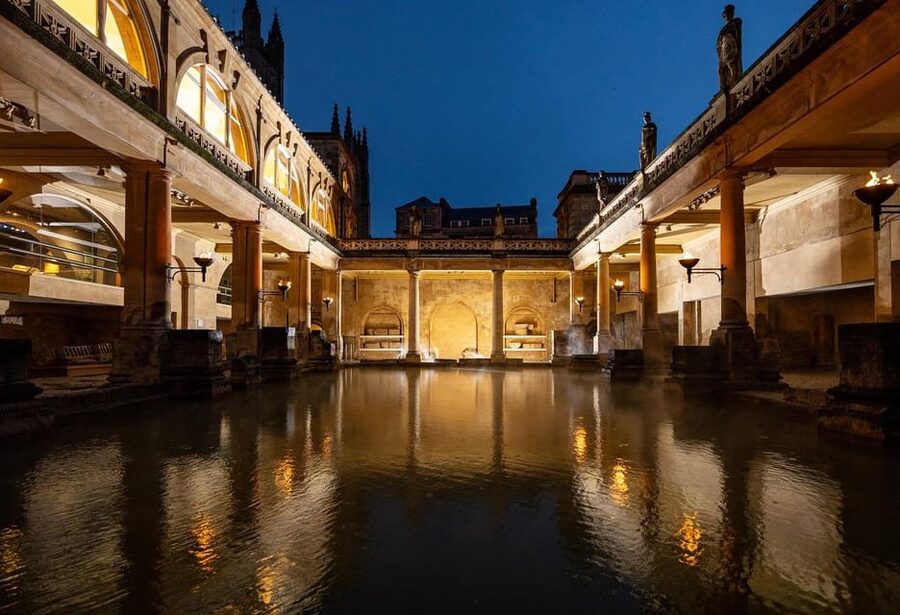
The route eventually brings you out of the museum and into the bathing complex. This is the moment many people have been waiting for.
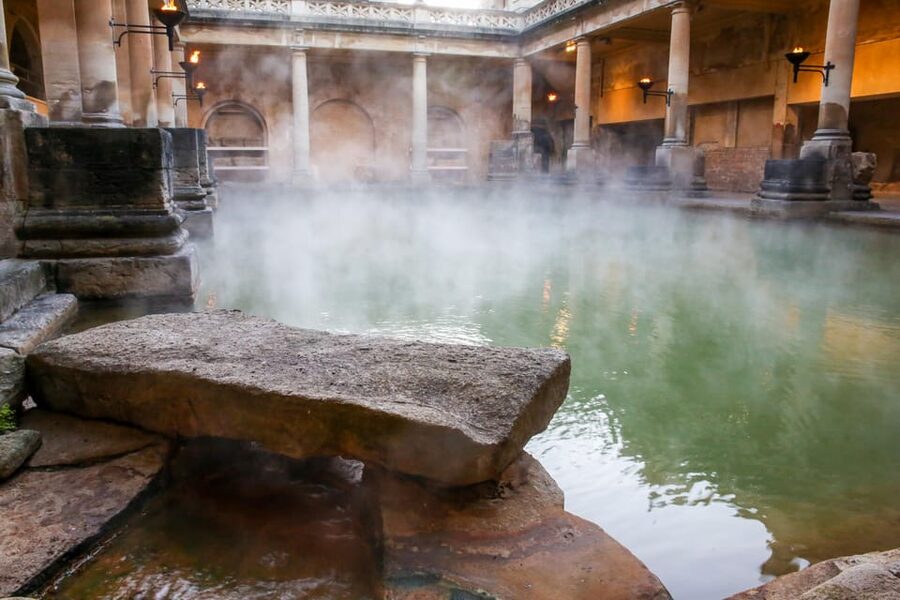
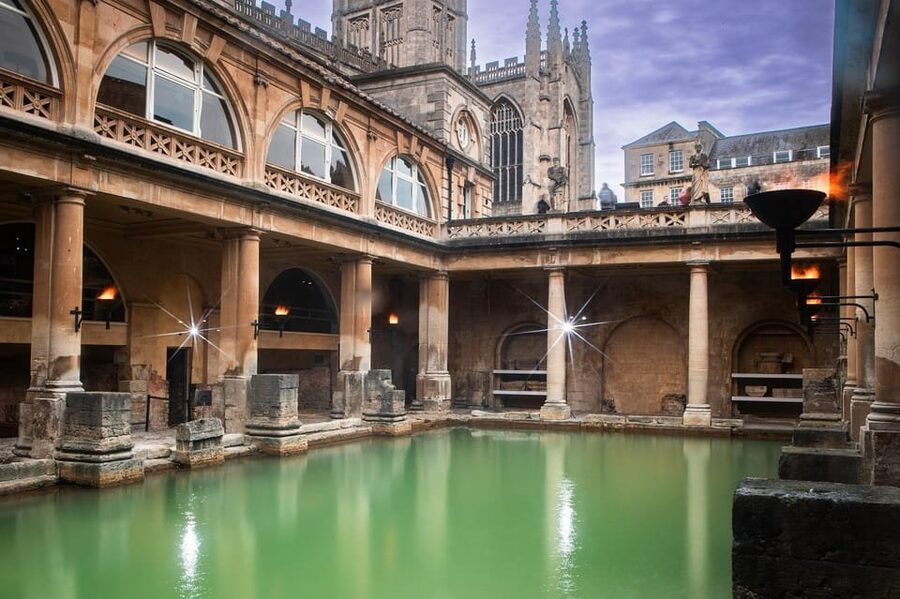
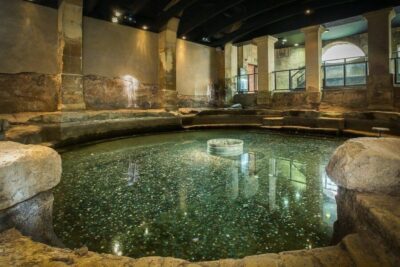
The Great Bath is a broad pool bordered by a stone walkway. You look down at the water while Bath’s modern buildings and open sky frame the scene above. On a cold day, steam may rise from the surface, adding to the atmosphere without the need for theatrical effects.
You cannot enter the water, but you can walk around the pool and see the Roman paving under your feet. Take your time here. The audio commentary helps explain how the bath functioned, and the surrounding architecture shows how the Romans managed heat, water, movement, and public space.
This area can become crowded. The pool is the most recognisable part of the site, so people naturally pause for photographs. An early entry time gives you the best chance of seeing it without being pressed along by a dense crowd. Even then, be patient. The best view may require waiting for a small gap.
The site is indoors and outdoors, so it works in poor weather, but the Great Bath area can feel cool and damp. Comfortable shoes are a good idea because the visit involves walking and standing across several levels.
More Self-Guided Tours in Bath:
- Bath : 2 Hour Historic Walking Tour With An App
★ 3.6 · 19 reviews - London: Emirates Stadium Entry Ticket and Audio Guide
★ 4.7 · 5,513 reviews - London: British Museum Audio Tour & Priority Entrance Ticket
★ 4.5 · 631 reviews - Canterbury Cathedral: Entry Ticket with Audio Guide
★ 4.6 · 266 reviews
Continue through the East Baths

Do not stop after the Great Bath. The East Baths show how much more complicated the Roman bathing routine was.
Here you can see heated rooms and areas linked with massage. The baths were social spaces as well as places for bathing, and the arrangement suggests a sequence of rooms with different temperatures and uses.
The audio guide is particularly useful in this section because bare walls and foundations can be hard to read on their own. Explanations help you picture how the rooms may have worked, while projected scenes in some areas offer visual suggestions of Roman life and use.
I like the fact that you are not rushed through this part. You can pause in each room, listen to the relevant track, and decide how much detail you want. There are also places to sit, which helps if you need a break.
Find the Roman gym and ancient sauna
The Roman gym and the laconicum, or sauna, add another layer to the visit. They show that physical activity and bathing were connected.
You might picture the complex as a single pool, but the remains reveal a full routine involving exercise, heat, washing, cooling, and social time. The audio guide explains the spaces in a way that makes the layout easier to understand.
The sauna is a good reminder that Roman engineering was not only about stone buildings. The complex depended on controlled heat and water systems, much of which is now visible through foundations and surviving structures rather than complete rooms.
Some displays use projected images to suggest how the interiors looked and how people may have used them. These effects are restrained, so they add context without covering up the original remains.
See the West Baths and Circular Bath
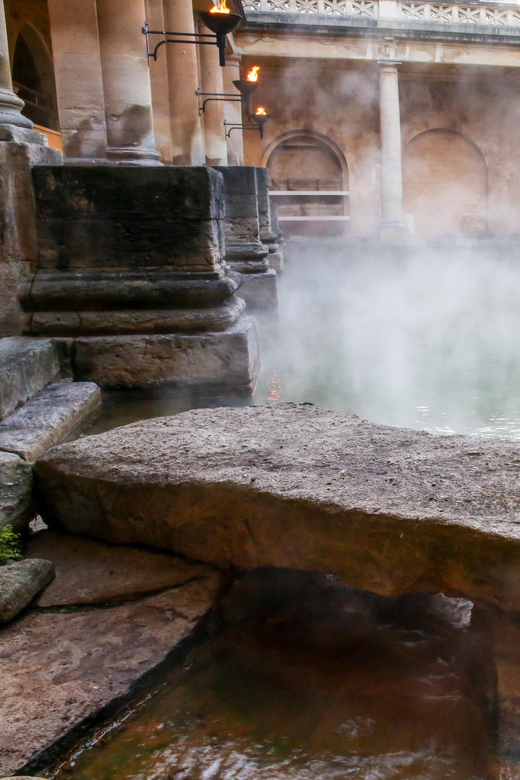
The West Baths include plunge pools, giving you a useful contrast with the hot water of the Great Bath. Cooling down was part of the bathing experience, and these smaller pools help explain the sequence of hot and cold spaces.
The Circular Bath completes the picture. By this point, you should have a clearer idea that the Roman Baths were a large complex with several functions, not one famous pool with a few fragments around it.
The route is well marked, with numbered audio stops and arrows. You can move at your own speed, return to a display, or skip a section if your attention is fading. That freedom is one of the strongest reasons to choose this ticket instead of a tightly timed guided tour.
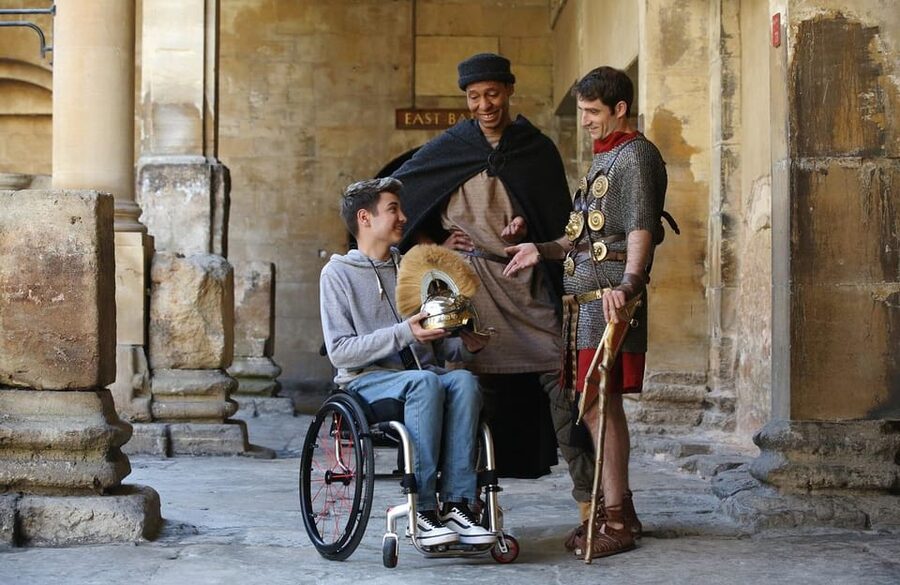
You may also meet a costumed Roman character during the visit. These encounters are informal and give you a chance to ask questions about life in Roman Britain or pose for a photograph. They can be especially helpful for children, who may respond more readily to a person in costume than to another museum label.
Sample the spa water at the end
The visit ends with a small but memorable extra: a taste of the spa water from a dedicated drinking tap.
The water contains more than 43 minerals and has attracted people to Bath for centuries because of its supposed healing properties. The taste may not be to everyone’s liking, but that is part of the point. This is not ordinary drinking water, and sampling it connects the modern visitor with the spring that made the site important in the first place.
Do not expect a full café stop here. The tasting is brief, and anyone who needs a longer rest should use the seating available along the route or plan a separate refreshment break elsewhere in Bath.
Allow two hours and choose your timing carefully

The ticket is valid for one day, with entry arranged around the available starting times. Last entry is one hour before closing, so do not arrive near the end of the day and expect a relaxed visit.
I would choose the earliest practical time. The museum can become busy quickly, and an early start gives you more room around the exhibits and Great Bath. It also lets you listen to the audio without constantly stepping aside for people moving past.
The full visit can take roughly two and a half hours if you listen to much of the commentary and stop to read displays. You can finish faster, but the site rewards patience. There is a lot to see below street level, and the museum is larger than the exterior suggests.
Although the experience is described as a small group activity limited to six participants, the visit itself is self-guided. Do not expect a personal guide leading your party from room to room. The advantage is independence. The tradeoff is that you must manage your own pace and choose how much information to absorb.
Accessibility and practical limits
The Roman Baths are about 90 percent accessible to wheelchair users, and elevators help connect the different levels. That is useful, but the figure also means some parts may not be accessible to every wheelchair user. If you need a completely step-free route, confirm the details before booking.
Baby strollers, pets, luggage, and large bags are not allowed. Pack lightly and avoid arriving with bulky items that you will need to store elsewhere.
There are several places to rest, but this is still a long museum visit with standing and walking. If you have a leg problem or tire easily, take the route slowly and use the seats when you find them. The experience does not require you to keep moving, and the audio guide lets you pause.
The ticket is non-refundable, so check your day and arrival plans carefully. If an unexpected delay affects your timing, contact the venue as soon as possible. A late arrival has sometimes been accommodated, but that should not be treated as guaranteed.
Who will enjoy this Bath attraction most?
I would recommend the Roman Baths to anyone who wants more than a quick photograph of Bath’s most famous ancient site. It suits history fans, families with school-age children, first-time visitors, and people who prefer to explore independently.
The audio guide also makes it a good choice for visitors who do not want a live tour in English. You can choose English, Dutch, French, German, Italian, Japanese, Chinese, Korean, Polish, Russian, Portuguese, or Spanish. A handheld BSL video guide is available as well.
The experience is less suitable if you want to bathe in the thermal water. This is an archaeological site, not a working spa, and the Great Bath is for viewing only. Choose it for Roman history, museum displays, architecture, and the spa water tasting.
Afterward, the shop has books, prints, jewellery, games, homeware, bathing products, and goods from local independent makers. Local honey, botanical gin, and handmade soaps make more distinctive souvenirs than generic Roman-themed items.
Should you book the Roman Baths ticket?
Book it if you can give the site at least two hours and want the freedom to explore without a scheduled guide. The audio commentary is detailed, the route is clear, and the combination of artefacts and original ruins gives you a strong sense of how the complex worked.
Book an early entry if possible, especially if you care about photographs or dislike crowded museum rooms. Bring comfortable shoes, travel light, and remember that the audio unit is held by hand rather than worn.
I would skip it only if your main goal is to take a thermal bath or if you have very little time in Bath. For most visitors spending a full day or more in the city, this is one of the most useful ways to understand why Bath exists where it does.
FAQ
How long is the Roman Baths ticket valid?
The ticket is valid for one day. Check availability for the starting times offered on your chosen date.
What languages are available on the audio guide?
The audio guide is available in English, Dutch, French, German, Italian, Japanese, Chinese, Korean, Polish, Russian, Portuguese, and Spanish.
Is a BSL guide available?
Yes. A handheld BSL video guide is available instead of the standard audio guide.
Can I enter the Great Bath water?
No information indicates that bathing is permitted. The Great Bath is presented as part of the archaeological site for viewing, while the spa water tasting takes place at a dedicated drinking tap.
Is the Roman Baths site wheelchair accessible?
The Roman Baths are 90 percent accessible to wheelchair users, and elevators are available to reach different levels.
Can I bring a stroller, pet, or large bag?
No. Pets, baby strollers, luggage, and large bags are not allowed.
Is a guided tour included?
No. The ticket includes entry and an audio guide or BSL video guide, but not a live guided tour or an adult or children’s guidebook.
More audio tours in Bath
- London: Churchill War Rooms Ticket & Political London Audio
★ 4.6 · 224 reviews - London: Royal Walking Tour and Buckingham Palace Audio Tour
★ 4.8 · 154 reviews - Bristol: Self-Guided Sightseeing Audio Tour
★ 4.4 · 151 reviews - Llandaff’s Ghosts: A Self-Guided Audio Tour
★ 4.5 · 29 reviews
New listings around Bath
- Bath: 2 Hour Private City Walking Tour★ 4.9 · 16 reviews
- From Bath: Cotswolds Private Day Tour with Pickup★ 4.9 · 17 reviews
- Bath : 2 Hour Historic Walking Tour With An App★ 3.6 · 19 reviews
- Bath: 90-Minute Private Ghost Walking Tour★ 4.8 · 20 reviews
- City of Bath: British Wine and Cheese Tasting Experience★ 4.9 · 21 reviews
- Bath: Guided Walking Tour★ 4.4 · 26 reviews
- Bath: Walking Tour of Bath and Guided Tour of Bath Abbey★ 5.0 · 27 reviews
- Bath: Local Pubs & Historic Sights Walking Tour (3h)★ 4.9 · 29 reviews
Bath Tours, compared.
City Walking Tour with Optional Roman Baths Entry
Read our review →


Stonehenge & the Cotswolds Day Tour with Entry
Read our review →

Bridgerton Filming Locations Walking Tour with Music
Read our review →
Guided City Walking Tour with Entry To The Roman Baths
Read our review →
Browse the lists this tour appears in