
Reviewed · LONDON TOURS
London: 2-Hour Guided Tour of the British Museum
The Rosetta Stone is the natural opening act at the British Museum. This two-hour tour uses famous objects to explain how people recorded belief, power, art, and daily life across several civilizations. You will move from ancient Egypt to Greece and Rome, then on to Sutton Hoo and a remarkable Moai from Easter Island.
I like the way the route gives you a clear framework in a museum that can otherwise feel like a city with no street signs. I also like the focus on major pieces such as the Rosetta Stone and Parthenon sculptures, rather than wandering past hundreds of objects with no context. The main caution is the language setup: one French booking became a bilingual tour, and repeated explanations meant less time for the collection.
Key points to know before booking
- The Rosetta Stone anchors the Egyptian section: Learn how one inscribed stone helped scholars read Egyptian hieroglyphics.
- The Parthenon sculptures are a major stop: You will see the famous Greek marble works and hear about their artistic and cultural importance.
- The tour crosses several continents: Sutton Hoo, Roman artifacts, and Hoa Hakananai’a add an appealing range beyond Egypt and Greece.
- A guide keeps the museum manageable: The tailor-made route concentrates on notable displays during a two-hour visit.
- Languages include English, French, and Italian: Confirm whether your tour will be single-language or bilingual.
- The price is $64 per person: That can be fair for a focused guided visit, but clarify the ticket arrangement before paying.
Why two hours can work at the British Museum
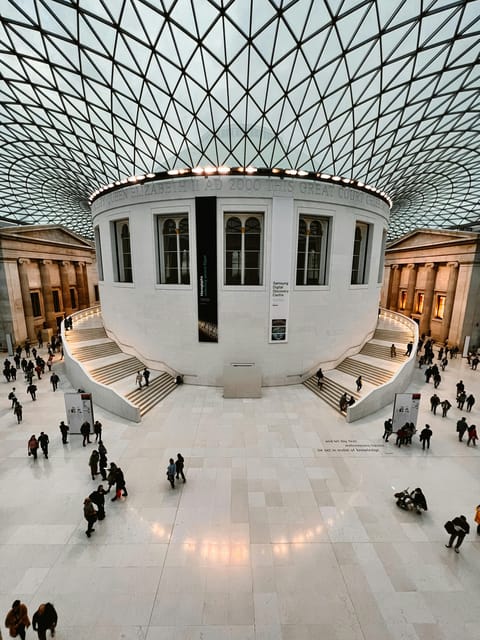
The British Museum is free to enter as a public museum, but free does not mean easy. Its galleries cover an enormous span of human culture, and a first visit can become a long march from one famous object to another. A two-hour guided route gives you a beginning, middle, and end.
That time limit is both the strength and the weakness of the experience. You get a useful introduction without giving up half a day, but you will not see everything. Think of this as a highlights tour with interpretation, not a slow study visit.
I find this format especially useful if you are visiting London for a short stay, traveling with children, or simply prefer an expert to choose the essential rooms. The guide can connect objects that are far apart in time and place, helping you understand the museum as a story about human choices rather than a warehouse of old things.
The route is described as tailor-made, so the exact order or amount of time at each display may vary. The main subjects remain clear: Egypt, Greece, Rome, Sutton Hoo, Hoa Hakananai’a, and other objects from around the world.
More Museum Tours in London
- London: Chelsea Football Club Stadium and Museum Tour
★ 4.8 · 4,576 reviews - London: British Museum Guided Tour
★ 4.3 · 1,182 reviews - London: Jack the Ripper Museum Tickets
★ 4.2 · 894 reviews
Meeting your guide inside the museum
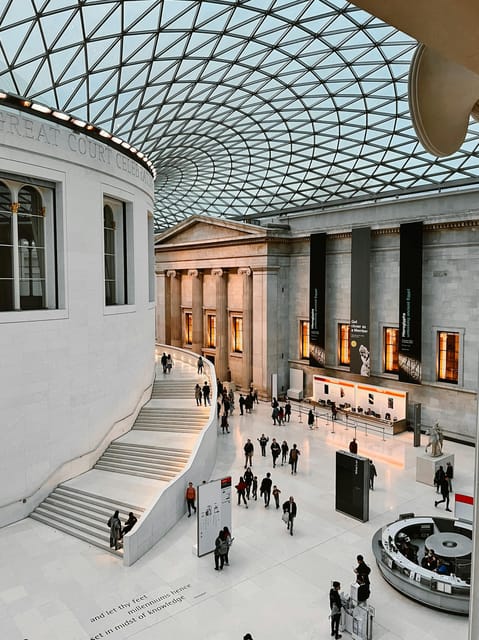
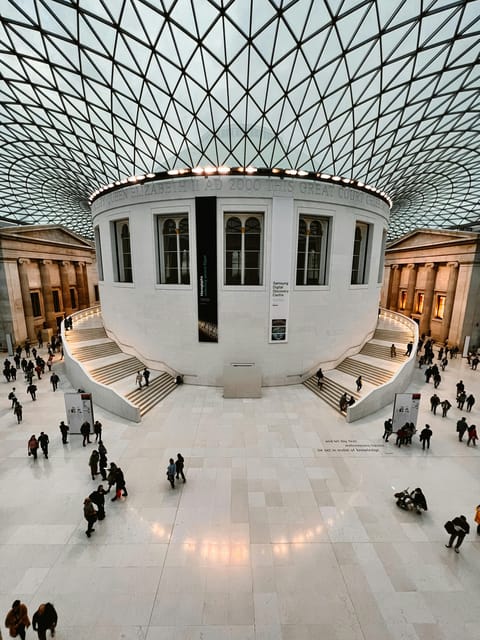
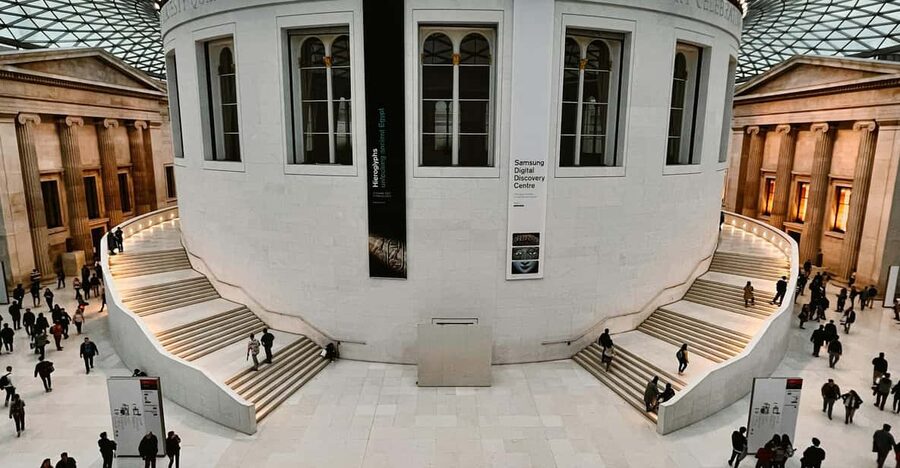
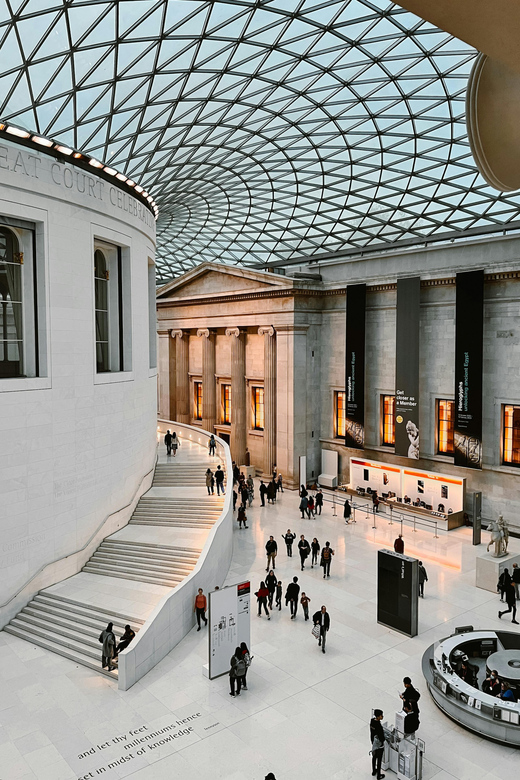
Your meeting point is easy to misunderstand, so read the directions carefully. You meet the guide inside the British Museum, in front of the portals on the stairs near the pillars, after passing the security check. This is not the area outside the gates.
Entry tickets are scheduled to be sent by WhatsApp one hour before the tour. If you do not use WhatsApp, you can contact the provider by email to receive them. That detail matters because the basic inclusion wording describes the booking as a guided tour, while the practical information also says the activity includes entry tickets. Confirm exactly what you will receive before departure, especially if the ticket arrangement is important to your plans.
The tour offers an express security check, but you still need to allow time to reach the meeting point and pass through security. Wear comfortable shoes. The museum is large, and even a guided route involves plenty of standing and walking.
Ancient Egypt and the Rosetta Stone
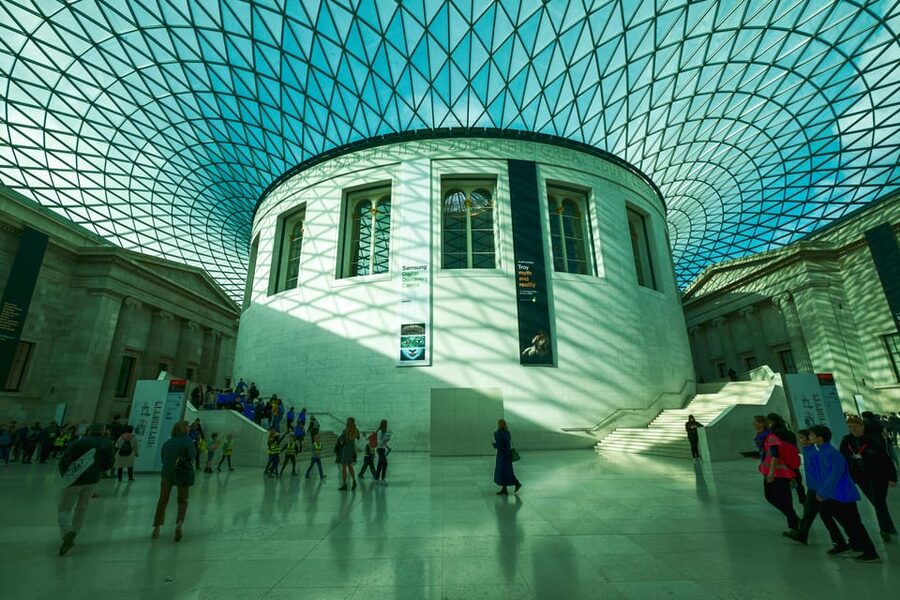
The Egyptian galleries provide a strong start because they combine visual drama with a clear intellectual puzzle. You will see objects connected with pharaohs and ancient Egyptian life, then focus on the Rosetta Stone, the famous inscription that helped scholars decipher hieroglyphics.
The stone carries the same decree in different scripts. By comparing the known Greek text with the Egyptian forms, scholars could begin to read a writing system that had been out of reach for centuries. Your guide can turn that technical breakthrough into a simple explanation of how language, translation, and archaeology work together.
This is one of the tour’s most useful moments because the Rosetta Stone is more than a famous object to photograph. It shows how a single artifact can change what people know about an entire civilization. I would pay close attention here, since this kind of explanation gives you a tool for looking at the rest of the museum.
The Egyptian section can also be busy around its best-known displays. A guide helps you focus, but you may not get long, quiet viewing time. If you want to study every inscription or artifact in detail, plan to return on your own after the tour.
Ancient Greece and the Parthenon sculptures
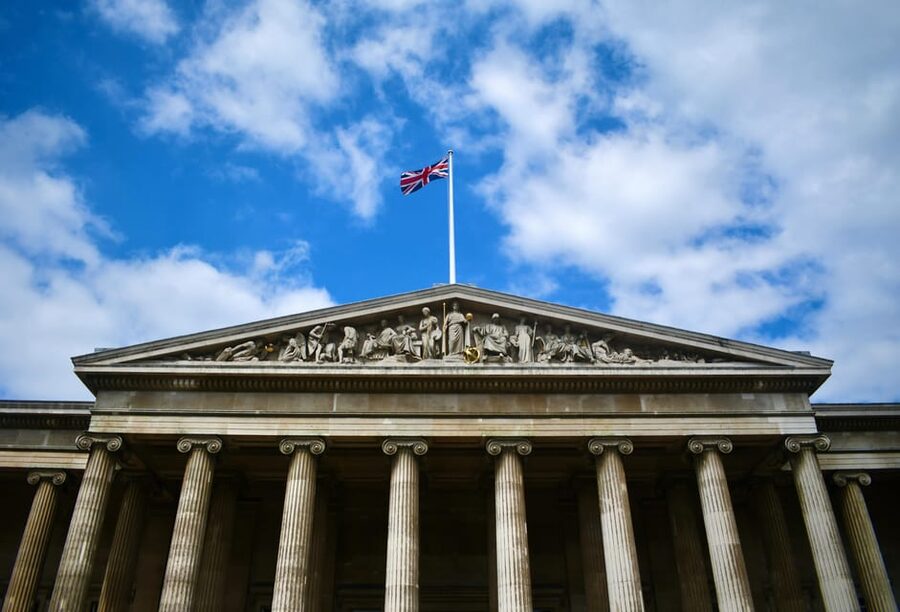
From Egypt, the route moves to ancient Greece, where sculpture, architecture, philosophy, and public life come together. The Parthenon sculptures are the central draw. These marble works once formed part of the Parthenon in Athens and remain among the museum’s most discussed objects.
The sculptures show how Greek artists represented the human body, movement, clothing, and myth. Even a short explanation can help you notice details that are easy to miss when you are simply standing in front of a large marble figure.
The tour also touches on inscriptions and ideas associated with Greek thought. This gives the Greek section more range than a simple art stop. You are not only looking at statues. You are considering how art, civic identity, religion, and philosophy shaped the culture that later influenced much of Europe.
The Parthenon sculptures are politically controversial because Greece has long disputed their removal and continued display in London. The tour highlights their artistic importance, but you should also feel free to ask about their contested ownership and the wider debate. The issue is part of the modern story of the museum, not a footnote that can be separated from the objects.
Time is the practical limitation. The collection is extensive, and a two-hour route cannot offer a full treatment of Greek art. Still, the Parthenon sculptures give the tour a strong visual center and a useful link between architecture, politics, and artistic skill.
Further British Museum visits:
- London: Tour of the British Museum
★ 4.1 · 678 reviews - London: British Museum Audio Tour & Priority Entrance Ticket
★ 4.5 · 631 reviews - Afternoon Tea at the British Museum
★ 4.2 · 511 reviews - London: British Museum Guided Tour
★ 4.5 · 267 reviews
Roman engineering, gods, and public power
The Roman section shifts the mood from Greek ideals to an empire known for administration, military power, engineering, and a taste for borrowing from earlier cultures. You will see mosaics, statues, and images of gods and heroes.
Roman objects are valuable in this tour because they show how a civilization expressed power in both public and private settings. A mosaic can reveal decorative taste and technical skill. A statue can tell you how emperors, deities, or heroic figures were presented to the public.
The guide’s role is important here. Roman galleries can blur together when you are looking at similar marble forms and repeated mythological subjects. A good explanation helps you distinguish between art made for worship, commemoration, decoration, or political messaging.
The Roman stop also connects back to Greece. Roman artists and patrons admired Greek sculpture, philosophy, and design, then adapted them for an expanding empire. That connection makes the route feel like a series of conversations between cultures rather than isolated historical boxes.
You should expect a selection of Roman highlights, not a complete survey. The tour promises a broad look at major sections, and the guide must keep moving to cover everything within two hours.
Sutton Hoo and the beginnings of English history
Sutton Hoo brings the route closer to home. The Anglo-Saxon treasures offer a glimpse into early English life, status, craftsmanship, and belief. The objects are especially useful because they move the story away from the Mediterranean world and show that the British Isles had complex connections and artistic traditions of their own.
The display is associated with a burial site and is best understood through its combination of objects. Metalwork and decorative details can reveal social rank and long-distance contact, while the burial setting raises questions about memory, leadership, and the afterlife.
I like this stop because it prevents the tour from becoming a parade of only familiar classical masterpieces. Sutton Hoo gives you a different visual language and a more local chapter in the story of Britain. It also helps explain why the British Museum is not simply about Egypt, Greece, and Rome.
The amount of time here will depend on the guide’s route. If Anglo-Saxon England is a major interest, ask how much attention the group will give this section at the start. A two-hour highlight tour has to balance this stop against the museum’s most famous objects.
Hoa Hakananai’a and a wider view of human culture
The tour then reaches Hoa Hakananai’a, a Moai from Easter Island. This large stone figure brings the experience into the Pacific and gives you a chance to consider how communities express spiritual ideas through monumental art.
Hoa Hakananai’a is not just another oversized statue. Its form reflects the importance of ancestors, community, and sacred identity in Rapa Nui culture. Seeing it after Egyptian, Greek, Roman, and Anglo-Saxon objects makes the central idea of the tour clear: people in very different places created powerful objects to explain their world and connect with those who came before them.
This stop also gives the guide a chance to broaden the discussion beyond European history. That matters at a museum built around collections from many parts of the world. You are encouraged to compare different approaches to belief, leadership, artistic skill, and remembrance.
As with the other sections, the tour can introduce the object but cannot provide a complete account of Rapa Nui culture in a few minutes. Treat the explanation as a starting point. The value is in seeing the Moai within a wider global route, not in expecting a full specialist lecture.
What the guide adds to the visit
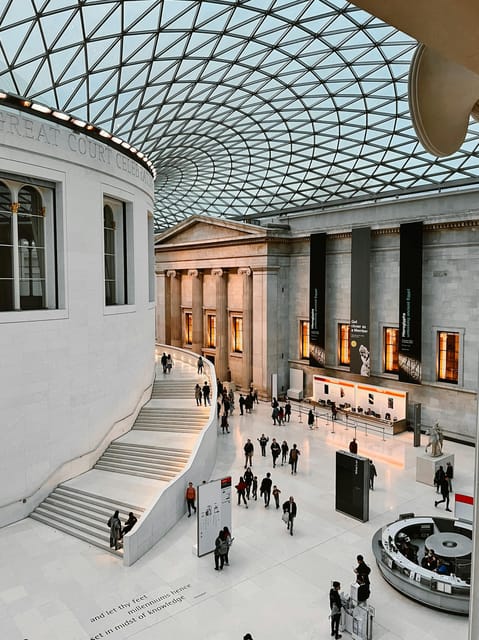
The guide is the reason to pay for this experience. The museum itself is public, but a guide can reduce the time you spend finding the key objects and provide a narrative that ties them together.
The strongest guide experiences are usually built around explanation rather than speed. You want someone who can tell you why the Rosetta Stone matters, how the Parthenon sculptures fit into Greek culture, and what makes Sutton Hoo different from the classical collections. The available guide languages are English, French, and Italian.
Filomena is one guide specifically praised in the booking feedback. Other guide names are not provided, so you should not assume Filomena will lead your departure. Her mention does suggest that the provider has at least one guide who made a positive impression.
Language arrangements deserve special attention. A French-language booking was conducted bilingually, with the guide repeating each explanation in two languages. The guide was described as friendly and capable, but the format reduced the number of works covered and caused some explanations to be missed. If you book in French or Italian, ask in advance whether the tour is dedicated to that language or shared with another group.
Is $64 per person good value?
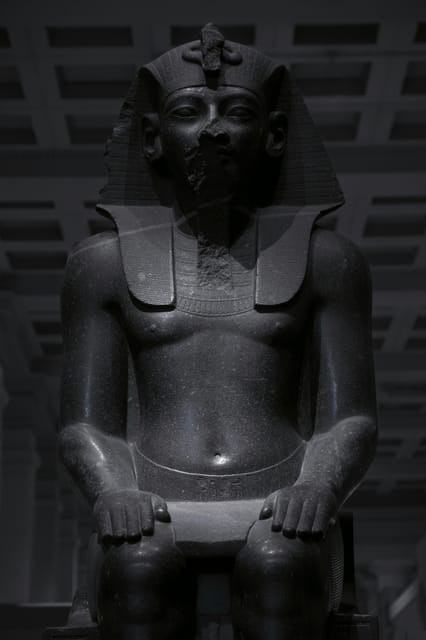
At $64 per person, this is not the cheapest way to enter a museum that is publicly accessible. You are paying for the guide, route planning, and the convenience of seeing major objects without having to organize the visit yourself.
The value depends on how you use your time. If you have only a short window in London, a guided highlights route can be worthwhile. It gives you an efficient first look and helps you decide which galleries deserve a second visit. If you already know the museum well or enjoy reading labels at your own pace, the price may feel harder to justify.
The express security check improves the practical side of the booking, especially when you have a fixed starting time. Still, the ticket information is presented in two slightly different ways: one section says entry is not included, while other instructions say tickets will be sent and the activity includes entry. Confirm this before booking so you know whether the $64 covers museum admission as arranged for your date.
Free cancellation up to 24 hours before the tour and reserve-now, pay-later booking make the commitment easier. Those terms are useful if your London schedule is still changing.
Who should book this British Museum tour?
I would recommend it to a first-time visitor who wants the famous objects explained without spending an entire day indoors. It also suits people who like history in broad strokes, families who need a clear route, and visitors who want a quick introduction before exploring alone.
The tour is a good match if you care about connections between cultures. Egypt leads to Greece, Greece leads to Rome, and the route then widens to Anglo-Saxon England and Easter Island. You get a sense of how humans have used art and objects to express faith, rank, memory, and power.
I would be more cautious if you want a quiet, detailed museum study. Two hours passes quickly, and a bilingual format can make it feel even shorter. I would also confirm the language and ticket details before paying, rather than sorting them out at the museum entrance.
The activity is wheelchair accessible, and the museum itself is accessible. You should still expect a walking-based visit and wear comfortable shoes.
Final verdict: book it for structure, not for total coverage
Book this tour if the British Museum feels too large to tackle on your own and you want the major objects placed in a clear story. The Rosetta Stone, Parthenon sculptures, Roman works, Sutton Hoo treasures, and Hoa Hakananai’a create a strong two-hour introduction.
Skip it if you prefer wandering freely, need extensive time with each display, or are unhappy with a bilingual format. My best advice is to confirm the tour language and entry ticket arrangement before booking. For the right visitor, $64 buys focus and context, which can be more useful than another hour spent trying to find the Rosetta Stone on your own.
FAQ
How long is the British Museum guided tour?
The tour lasts two hours.
What objects are included on the route?
The route includes the Rosetta Stone, Parthenon sculptures, Roman mosaics and statues, Sutton Hoo treasures, Hoa Hakananai’a, and other artifacts from around the world.
Is the Rosetta Stone included?
Yes. The tour begins with ancient Egypt and includes the Rosetta Stone.
Will I see the Elgin Marbles?
The tour includes ancient Greek artifacts and the sculptures of the Parthenon, commonly called the Elgin Marbles.
What languages are available?
The live guide service is available in English, French, and Italian.
Will the tour definitely be in only one language?
Not necessarily. A French booking was conducted bilingually, so ask in advance whether your tour will be dedicated to one language.
Where do I meet the guide?
Meet inside the British Museum, in front of the portals on the stairs near the pillars, after passing the security check. Do not wait outside the gates.
How will I receive the entry tickets?
The tickets are scheduled to be sent by WhatsApp one hour before the tour. If you do not have WhatsApp, contact the provider by email to receive them.
Is the museum wheelchair accessible?
Yes. The activity and museum are wheelchair accessible.
Can I cancel the tour for a refund?
You can cancel up to 24 hours in advance for a full refund. Reserve-now, pay-later booking is also available.
More two hour outings in London
- London: Ghastly Ghosts 2-Hour Walking Tour
★ 4.9 · 794 reviews - James Bond Shooting Locations 2-Hour Walking Tour of London
★ 4.7 · 332 reviews - London: 2-Hour Historic Pub Tour
★ 4.9 · 133 reviews - London: 2-Hour Guided Tour of the British Museum and History
★ 4.3 · 22 reviews
New listings around London
- London: Secrets of Freddie Mercury Tour with a Cocktail★ 4.1 · 15 reviews
- London: Hampton Court Private Guided Tour★ 3.4 · 15 reviews
- London: Jack the Ripper Tour and Underground Prison in Spanish★ 5.0 · 15 reviews
- Spanish Language : Original Harry Potter Walking Tour★ 4.5 · 15 reviews
- London: Private Couples Photography Session with Landmarks★ 5.0 · 15 reviews
- London: The Saturday Supershow Cabaret at Phoenix Arts Club★ 4.5 · 15 reviews
- London’s Ghosts & Gruesome Past Nighttime Walking Tour★ 4.8 · 16 reviews
- London: Private Walking Tour in Spanish★ 5.0 · 16 reviews
London Tours, compared.


Westminster to Greenwich River Thames Cruise
Read our review →
Magical London: Harry Potter Guided Walking Tour
Read our review →


Warner Bros. Studio Harry Potter Tour with Transfers
Read our review →Browse the lists this tour appears in