
Reviewed · LONDON TOURS
London: 2-Hour Guided Tour of the British Museum and History
The British Museum is too large to understand in one wandering visit. This two-hour highlights tour gives you a route through Egypt, Greece, Rome, Anglo-Saxon England, and Easter Island, with a live guide tying the objects into one story about human culture. The Rosetta Stone and Parthenon sculptures are the big draws, but Sutton Hoo and the Hoa Hakananai’a Moai add welcome variety.
I like the focused time limit. You get a useful first look without spending an entire day trying to choose between thousands of objects. I also like the chance to ask questions as you go, especially with guides such as Daniel and Filomena, who have been praised for clear storytelling and lively historical details. The main concern is the crowded museum: one recent tour became hard to hear, and the guide did not provide headphones. Ask about audio support before setting off.
Key points at a glance
- Rosetta Stone and Egyptian galleries: Begin with the object that helped scholars read Egyptian hieroglyphics, along with pharaoh-era artifacts.
- Parthenon sculptures: Examine the famous Greek marble works and consider the continuing debate around their removal from Athens.
- Roman art and engineering: See mosaics, statues, and objects linked to the empire’s gods, heroes, and rulers.
- Sutton Hoo treasures: Get a glimpse of early English life through one of Britain’s most important Anglo-Saxon discoveries.
- Hoa Hakananai’a Moai: Meet a powerful stone figure from Easter Island and compare its spiritual role with beliefs from the ancient Mediterranean.
- A practical first visit: The two-hour route is useful for orientation, then you can return on your own.
Why two hours works at the British Museum
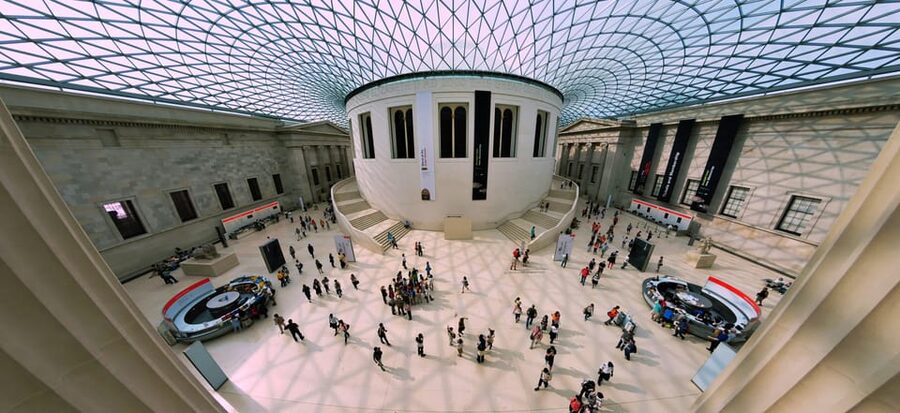
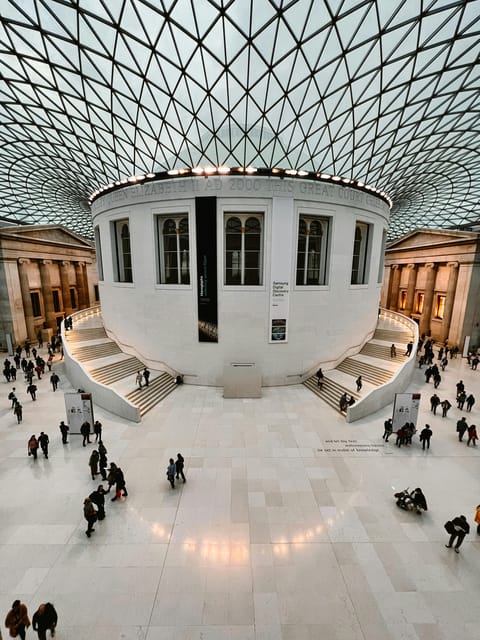
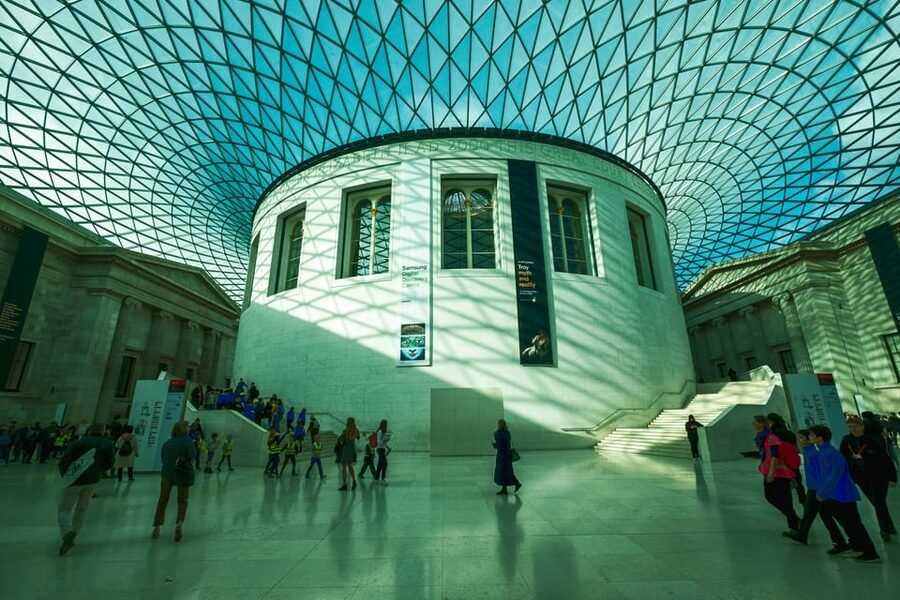
The British Museum can feel like several museums placed under one roof. Its collections cover human societies across continents and thousands of years, so a short visit without a plan can turn into a race between galleries.
This tour solves that problem with a set route and a guide. You are not simply shown isolated objects. You move from ancient Egypt to Greece and Rome, then to early England, Easter Island, and other parts of the world. That sequence helps you compare how different societies expressed power, religion, science, and daily life.
The pace matters. Two hours is long enough to see major objects and hear their basic stories, but not long enough for every room. I would treat this as an introduction, not a complete study of the museum. If you already know the collection well, the tour may feel selective. If this is your first visit, the selection can save you from wandering past important rooms without knowing why they matter.
The experience costs $37 per person. That is a reasonable price for a live two-hour guide in central London, especially if you value a clear route and historical explanation. The value drops if you cannot hear the guide or if the group spends too long at less important objects, so the quality of the individual guide and the crowd level both matter.
More History Tours in London
- London: Historic Pubs of Central London Walking Tour
★ 4.9 · 1,065 reviews - London: Soho Music and Historic Pubs Walking Tour
★ 4.9 · 836 reviews - London: Rock ‘n’ Roll History Tour
★ 4.6 · 645 reviews
Starting with Egypt and the Rosetta Stone
The tour begins with ancient Egypt, a sensible choice because the collection offers some of the museum’s most recognizable objects. You can expect to see relics connected with pharaohs and Egyptian belief, then reach the Rosetta Stone.
The stone is famous because its inscriptions helped scholars decipher Egyptian hieroglyphics. It carries the same text in different writing systems, giving researchers the comparison needed to read a script that had been misunderstood for centuries. A good explanation here turns the stone from a black slab behind glass into a key moment in the study of ancient Egypt.
The area can be crowded. That makes it harder to stand close, read every label, or hear a guide speaking at normal volume. Keep your attention on the explanation rather than trying to take the perfect photograph. You will get more from the stop if you understand why the inscriptions mattered.
There is also an important caution about the precise object being discussed. One recent visitor reported that a guide spent more than 30 minutes on a replica rather than the original Rosetta Stone. I cannot treat that as a normal feature of the tour, but it is a useful warning to ask your guide to identify the original object clearly. If the group remains at one Egyptian display for a long time, you may also want to ask how much of the remaining route is still ahead.
Greek sculpture and the Parthenon debate
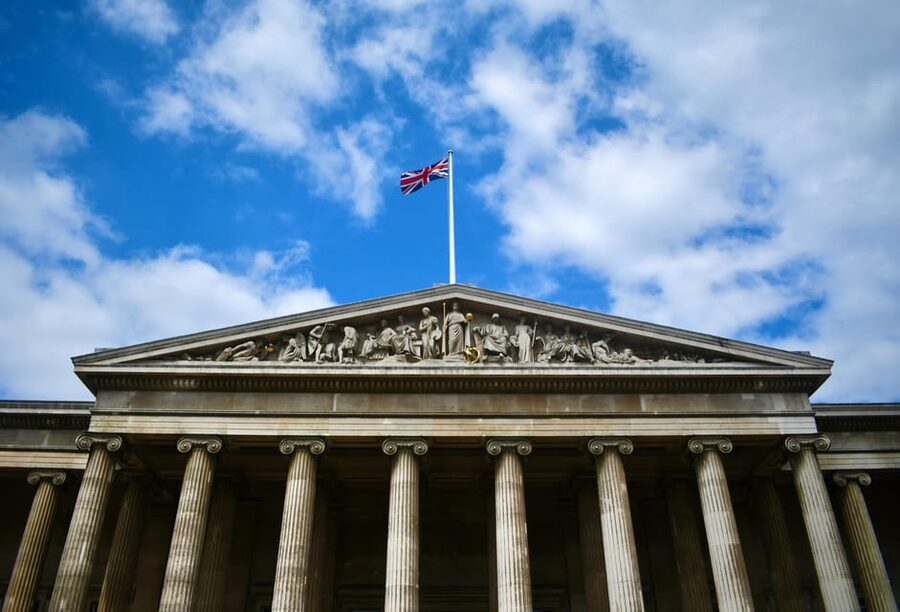
From Egypt, the route moves to ancient Greece. Here the central attraction is the group of sculptures associated with the Parthenon, along with marble inscriptions and other works tied to Greek art and thought.
The Parthenon sculptures are not just beautiful pieces of carved marble. They once formed part of a temple dedicated to Athena in Athens. Their display in London raises a major question about ownership, removal, and the right place for cultural objects. The tour gives you a chance to look closely at the carving while also thinking about the modern argument around the so-called Elgin Marbles.
That balance is important. You should not see these sculptures only as examples of idealized bodies and flowing fabric. They also carry a political story that remains unsettled. A guide can help you understand both the ancient setting and the modern controversy without turning the stop into a long lecture.
The Greek section may be one of the strongest parts of the route for first-time visitors. The objects are large, visually striking, and easy to connect with the wider story of temples, gods, public life, and philosophy. Still, two hours leaves limited time for close inspection. If Greek sculpture is your main reason for booking, tell the guide early. The route is tailor-made to the group, but that does not mean every gallery receives equal time.
Roman mosaics, statues, and imperial power
Ancient Rome comes next, shifting the focus from Greek ideals to a huge empire known for rule, building, roads, engineering, and military power. You can expect mosaics and statues depicting gods and heroes, along with objects that show how Roman art borrowed from and reshaped Greek traditions.
Mosaics reward a slower look. From a distance they can seem like decorative floors or wall panels, but their small pieces create faces, animals, patterns, and scenes. Roman statues, meanwhile, often connect public image with authority. The combination helps you see how art served both religion and politics.
The Roman section also links back to Greece. Roman artists and patrons admired Greek sculpture, while Roman leaders used classical imagery to present themselves as powerful and civilized. That connection makes the sequence of this tour more useful than a random walk through the museum.
Do not expect an exhaustive account of Roman Britain or the entire Roman Empire in this time. The Roman stop is one chapter in a much wider route. If you want a long look at mosaics, inscriptions, or imperial portraits, you will need to return after the guided visit.
More Museum Tours in London
- London: Chelsea Football Club Stadium and Museum Tour
★ 4.8 · 4,576 reviews - London: British Museum Guided Tour
★ 4.3 · 1,182 reviews - London: Jack the Ripper Museum Tickets
★ 4.2 · 894 reviews - London: Tour of the British Museum
★ 4.1 · 678 reviews
Sutton Hoo and early English life
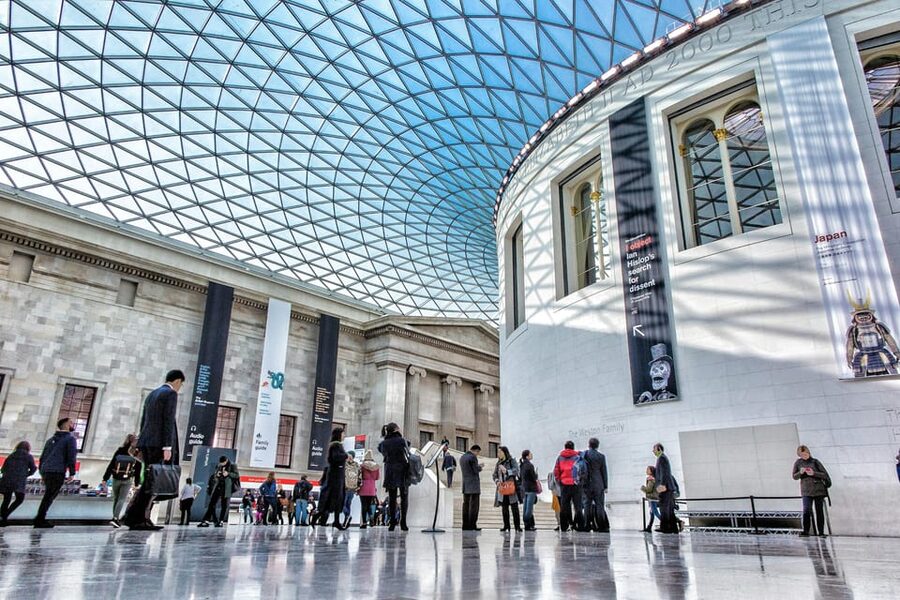
Sutton Hoo gives the tour a welcome change of setting. Instead of Egypt, Greece, or Rome, you encounter treasures linked to Anglo-Saxon England and the early history of the British Isles.
The collection offers clues about status, craft, trade, burial customs, and daily life. Even without seeing every piece in detail, you can begin to understand that early English society was connected to a much wider world. Fine metalwork and burial goods tell you about people who had access to skilled makers and valuable materials.
This stop is especially useful if you came to London expecting only classical sculpture. It shows that the British Museum is not simply a collection of Greek and Egyptian antiquities. The route keeps changing its subject, which helps prevent museum fatigue.
The drawback is that Sutton Hoo may receive less time than the headline objects. Visitors often arrive wanting the Rosetta Stone or Parthenon sculptures, so the guide has to balance famous pieces with less familiar ones. I would pay attention here, since the Anglo-Saxon material can be one of the more distinctive parts of the two-hour route.
Hoa Hakananai’a, the Moai from Easter Island
The Hoa Hakananai’a Moai provides the tour’s most dramatic change in scale and culture. This stone figure from Easter Island represents a very different artistic and spiritual tradition from those of Egypt, Greece, and Rome.
The Moai is more than a large statue to photograph. It reflects the beliefs and social world of the Rapa Nui people, and its presence in London invites questions about how sacred objects are collected, moved, and displayed far from their original setting.
Placed late in the route, the figure helps widen the story beyond Europe and the Mediterranean. You are reminded that human creativity developed in many places, not along one straight line from Egypt to Greece to Rome. That global comparison is one of the tour’s best ideas.
As with the other major objects, the guide’s explanation makes a big difference. Look for details about the figure’s role and meaning, not just its size. You may also want to ask how the museum acquired it, since the setting of an object can be part of its story.
How the guides shape the experience
The tour is offered in English, French, and Italian. Past departures have included guides named Daniel and Filomena. Daniel was praised for keeping the tour informative and free flowing while moving a group through a large museum and heavy crowds. Filomena was praised for unusual historical details and enthusiasm, with a recommendation for families with school-age children.
Those details suggest that the best guides do two jobs at once. They explain what you are looking at, and they keep the group moving. That second skill matters in the British Museum, where a few extra minutes at each famous object can leave the final galleries rushed.
The quality may not be identical on every departure. One serious complaint described a thick accent, poor audibility, no headphones, and a guide spending too long on objects the group had not expected. The complaint also described an offensive personal comment. That is not a minor issue, and it means you should speak up quickly if you cannot understand the guide. Ask the guide to repeat key points, move closer, or explain whether a listening device is available.
Crowds are a separate problem from language. Even a clear speaker can be difficult to hear beside a busy display. Stay near the guide, avoid drifting behind, and do not assume the group will automatically wait for you.
Meeting point, tickets, and timing
You meet in front of the British Museum portals, on the stairs near the pillars, after passing the security check. Do not wait outside the gates. This detail is easy to miss and could cost you time at the start.
Tickets are sent through WhatsApp one to two hours before the tour. If you do not use WhatsApp, contact the provider by email so the entry tickets can be sent there. The activity information says entry is included, although another part of the booking details repeats entry ticket as not included. Because of that contradiction, confirm the ticket arrangement before you leave for the museum.
The tour lasts two hours, with starting times based on availability. The museum is wheelchair accessible. You should still allow extra time to find the entrance, pass security, and reach the meeting point, since the guide meets you inside the security area.
Cancellation is flexible: you can cancel up to 24 hours in advance for a full refund. You can also reserve now and pay later, which helps if your London schedule is still shifting.
Who will get the most from this tour?
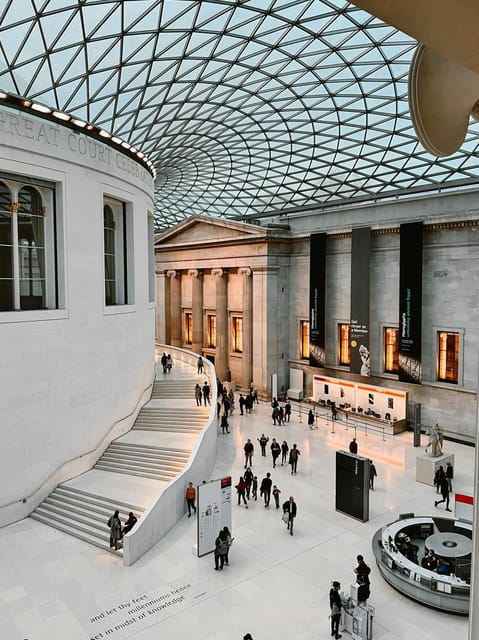
I would recommend it most strongly to first-time visitors who want a clear introduction rather than a full day of museum study. Families with school-age children may also appreciate the change of subjects, especially if the guide uses stories and unusual details to keep attention moving.
It suits you if you like having context before looking at objects, or if you worry that a huge museum will feel confusing. It also works well near the beginning of a London visit, since you can return later to the galleries that caught your interest.
You may prefer to visit independently if you need a quiet pace, want to read every label, or already have a detailed list of objects. A self-guided visit also avoids the risk of poor audibility. The tradeoff is that you must create your own route and supply your own background.
Is the $37 price worth it?
At $37, the price is fair for two hours with a live guide and museum entry, provided the ticket arrangement is confirmed and you can hear the presentation. You are paying for orientation and interpretation, not exclusive access or a private museum opening.
The strongest value comes from the range of the route. In two hours, you can connect Egypt, Greece, Rome, Sutton Hoo, and Easter Island, then continue alone if you wish. That is difficult to plan efficiently on a first visit.
The weaker value appears when the guide spends too long on minor objects, when the group cannot hear, or when a crowded room prevents you from seeing the display. If you book, arrive ready to stay close and ask direct questions. Those small choices can make the difference between a useful introduction and a frustrating walk.
Should you book the British Museum guided tour?
Book this tour if you want a short, organized route through the museum’s major cultures and you value a guide’s stories more than a leisurely inspection of every room. The Rosetta Stone, Parthenon sculptures, Roman objects, Sutton Hoo treasures, and Hoa Hakananai’a Moai give you a strong first framework for the collection.
I would hesitate if clear audio is essential and the operator cannot confirm how the guide handles noisy galleries. I would also confirm whether the entry ticket is included before paying, since the supplied booking information gives conflicting wording.
For most first-time visitors, this is a sensible starting point at a reasonable price. Plan to return independently if one section catches your interest. The tour gives you the map; your second visit can supply the time.
FAQ
How long does the British Museum guided tour last?
The tour lasts two hours.
What languages are offered?
The live guide service is offered in English, French, and Italian.
Is entry to the British Museum included?
The activity information says that entry tickets are included, but another booking detail lists entry ticket under not included. Confirm this point with the provider before booking.
Where do I meet the guide?
Meet on the stairs near the pillars in front of the British Museum portals, after passing the security check. Do not wait outside the gates.
How will I receive my ticket?
Tickets are sent through WhatsApp one to two hours before the tour. If you do not have WhatsApp, contact the provider by email to receive the tickets there.
Which museum objects are covered?
The route includes ancient Egyptian objects and the Rosetta Stone, Greek art including Parthenon sculptures, Roman mosaics and statues, Sutton Hoo treasures, the Hoa Hakananai’a Moai, and other objects from around the world.
Is the museum wheelchair accessible?
Yes, the museum is wheelchair accessible.
Can I cancel for a full refund?
Yes. You can cancel up to 24 hours before the tour for a full refund.
Can I reserve now and pay later?
Yes. The booking option allows you to reserve your place and pay later.
More two hour outings in London
- London: Ghastly Ghosts 2-Hour Walking Tour
★ 4.9 · 794 reviews - James Bond Shooting Locations 2-Hour Walking Tour of London
★ 4.7 · 332 reviews - London: 2-Hour Historic Pub Tour
★ 4.9 · 133 reviews - London: 2-Hour Shakespeare Walking Tour
★ 4.3 · 17 reviews
Further British Museum visits
- London: British Museum Audio Tour & Priority Entrance Ticket
★ 4.5 · 631 reviews - Afternoon Tea at the British Museum
★ 4.2 · 511 reviews - London: British Museum Guided Tour
★ 4.5 · 267 reviews - London: British Museum Archaeology Course and Guided Tour
★ 4.7 · 113 reviews
New listings around London
- London: Secrets of Freddie Mercury Tour with a Cocktail★ 4.1 · 15 reviews
- London: Hampton Court Private Guided Tour★ 3.4 · 15 reviews
- London: Jack the Ripper Tour and Underground Prison in Spanish★ 5.0 · 15 reviews
- Spanish Language : Original Harry Potter Walking Tour★ 4.5 · 15 reviews
- London: The Saturday Supershow Cabaret at Phoenix Arts Club★ 4.5 · 15 reviews
- London: Private Couples Photography Session with Landmarks★ 5.0 · 15 reviews
- London: 2-Hour Guided Tour of the British Museum★ 4.7 · 16 reviews
- London’s Ghosts & Gruesome Past Nighttime Walking Tour★ 4.8 · 16 reviews
London Tours, compared.
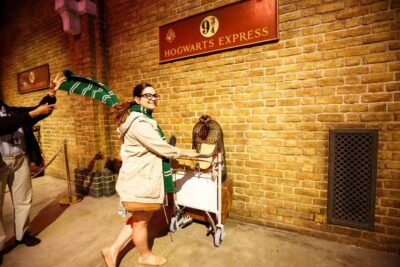

Westminster to Greenwich River Thames Cruise
Read our review →
Magical London: Harry Potter Guided Walking Tour
Read our review →
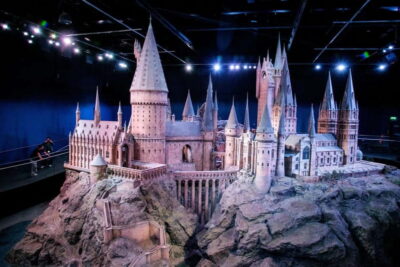


Warner Bros. Studio Harry Potter Tour with Transfers
Read our review →Browse the lists this tour appears in