
Reviewed · LONDON TOURS
Tower of London Crown Jewels and English Royal History Tour
The Tower of London packs royal power, glittering treasure, prison tales, and old-fashioned menace behind one set of stone walls. The best part of this tour is the contrast: you move from the Imperial State Crown and the Sovereign’s Sceptre to ravens, armor, chapels, and the grim Wakefield Tower.
I like the timed access and the way the tour links the buildings to kings and queens instead of leaving you to read every plaque alone. I also like the chance to see the Crown Jewels, the White Tower, the Beefeaters, and Tower Bridge in one focused visit. The main drawback is the pace and footing: three hours of stairs, inclines, cobbles, and uneven surfaces can be tiring, and late arrivals cannot join.
Key points at a glance
- The Crown Jewels are the star attraction: See the Imperial State Crown, the Koh-I-Noor Crown, and the Sovereign’s Sceptre with Cross among 100 objects and more than 23,000 gemstones.
- The White Tower gives the tour its Norman backbone: Learn how William the Conqueror’s fortress grew into a royal residence, prison, armory, and symbol of power.
- The history is personal, not just architectural: Stories include the Princes in the Tower, Anne Boleyn, Lady Jane Grey, Elizabeth I, and Richard II.
- The route includes several lesser-seen corners: You visit the Raven House, inner battlements, Lower Wakefield Tower, St John’s Chapel, and St Peter ad Vincula, subject to opening hours.
- Guide quality matters: A Blue Badge London guide leads the group in English. Fia is one possible guide and is noted for paying close attention to individual interests.
- The practical cost is time and mobility: At $120 per person, the tour suits you best if you value structure, access, and interpretation more than a low-cost self-guided visit.
Starting beside the Tower of London
Meet your guide outside the Starbucks at 3 Tower Place West Building, EC3R 5BT, at least 15 minutes before the scheduled start. This matters. The group enters together, and late arrivals cannot be accommodated or refunded.
The meeting point is close to the Tower, but it is not the entrance itself. Give yourself extra time to find the café, use a restroom, and get settled before the group moves on. You do not need to arrange hotel pickup or transport because the experience begins and ends at the Tower of London.
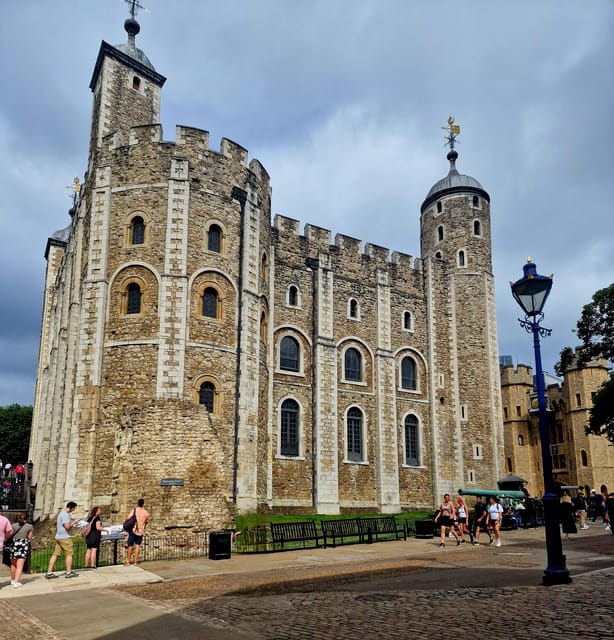
The guide starts outside with the fortress itself. This opening talk helps you read the site before entering: William the Conqueror began the White Tower in 1078 as a blunt Norman warning to London, and later rulers expanded the complex with walls, towers, halls, chapels, and military defenses.
I find this start useful because the Tower can feel like a maze of disconnected buildings. Once you know that it served as fortress, royal residence, armory, prison, and execution site, each stop has a clearer place in the story.
More History Tours in London
- London: Historic Pubs of Central London Walking Tour
★ 4.9 · 1,065 reviews - London: Soho Music and Historic Pubs Walking Tour
★ 4.9 · 836 reviews - London: Rock ‘n’ Roll History Tour
★ 4.6 · 645 reviews
Two hours inside a fortress built for power
The main Tower visit takes about two hours, followed by roughly one hour focused on the White Tower. The route includes a fair amount of walking, with stairs, hills, inclines, declines, and uneven stone surfaces.
This is not a polished museum with flat floors and wide corridors. That is part of the appeal, but it also sets the physical demands. Wear shoes with good support, dress for the weather, and keep your hands free. Large bags, oversize luggage, strollers, mobility scooters, non-folding wheelchairs, and electric wheelchairs are not permitted or recommended under the stated rules.
Inside, your guide explains how the Tower changed under different monarchs. Henry III added grander royal spaces and chapels, while Edward I strengthened the defenses and used the Tower as a base for military campaigns. These changes show how a fortress could shift from a threat to London into a working royal residence.
The royal stories give the stones their emotional force. Richard II was imprisoned here after Henry IV took the throne. During the Wars of the Roses, Henry VI was held at the Tower more than once and died in Wakefield Tower. The mystery of Edward V and his brother Richard, the Princes in the Tower, remains one of the site’s most unsettling chapters.
The Tudor period brings even more drama. Henry VIII used the Tower as both palace and prison, and Anne Boleyn was executed here. Lady Jane Grey, remembered as the Nine Days’ Queen, was imprisoned and executed at the Tower. Elizabeth I was held here before she became queen, during the reign of her half-sister Mary I.
These stories are valuable because they show the Tower as more than a place where famous people were locked up. It was a tool of royal authority. A king could display wealth in one room, hold a political prisoner in another, and keep weapons nearby in case London needed to be controlled.
The Crown Jewels and 23,000 gemstones
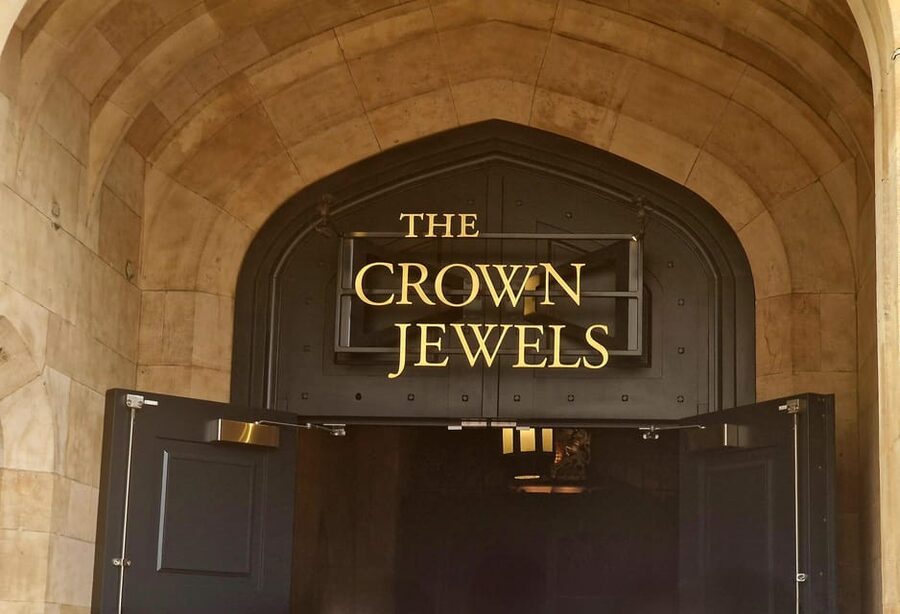
The Crown Jewels Exhibition is the central reason many people choose this tour. You see 100 objects set in a royal display, including more than 23,000 gemstones.
The Imperial State Crown is one of the major highlights. Its purpose is ceremonial, but it also represents the continuing machinery of monarchy. The Sovereign’s Sceptre with Cross carries the same message in a different form: the crown rules, and the symbols of authority are carefully displayed for public inspection.
The Koh-I-Noor Crown adds a more complicated layer. Its fame comes not only from its stones but also from the long and contested story of imperial possession. A good guide can help you understand why the objects are politically charged as well as beautiful.
Expect this section to be popular and visually intense. The jewels are designed to impress, but the experience is not just about sparkle. Look for the way crowns, scepters, and ceremonial objects turn abstract power into something you can see.
The timed ticket is especially useful here. It does not make the Tower quiet or private, but it gives your group a set route into one of London’s most sought-after sights. You should still allow patience around the busiest displays and follow the group’s pace.
The White Tower and the Line of Kings
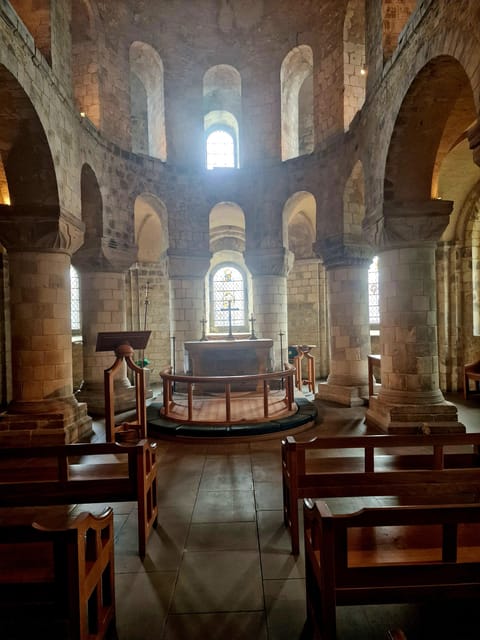
The White Tower is the oldest major structure in the complex and the clearest expression of William the Conqueror’s original purpose. Its pale stone mass was meant to dominate London, and it still feels imposing from inside and out.
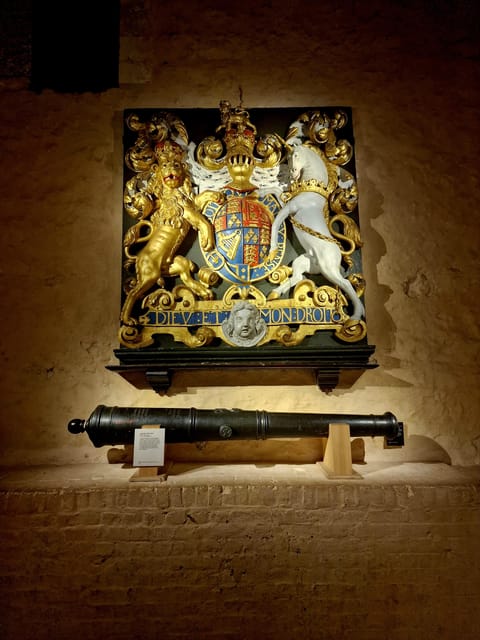
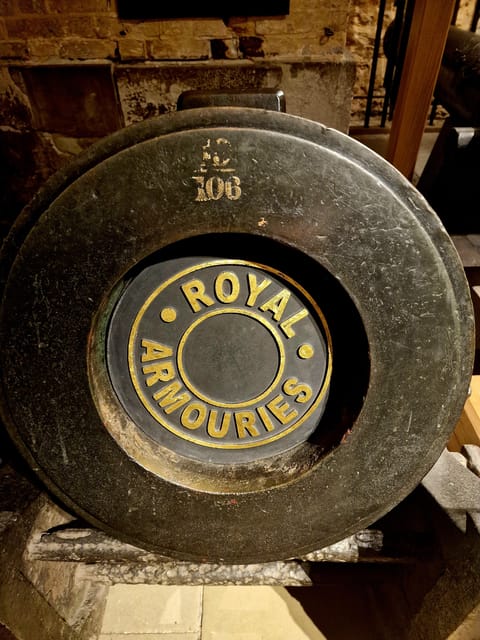
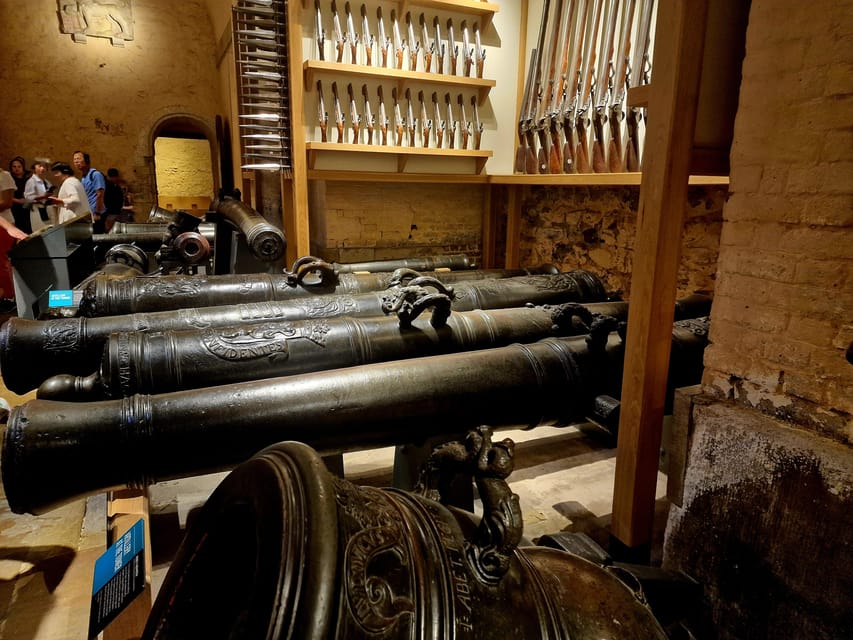
The tour allows entry to the White Tower and its armory displays. The Line of Kings includes tournament armor connected with Henry VIII and other kings. The suits are not simply military equipment. They show how rulers presented strength, size, wealth, and technical skill.
I like this section because armor makes royal ambition physical. You can understand the theater of medieval and Tudor power more quickly when you see a king’s armor rather than only hearing that he wanted to look formidable.
The White Tower also contains St John’s Chapel, a remarkably old royal chapel within the fortress. St Peter ad Vincula, the church associated with people executed at the Tower, is also included when opening hours allow. Since the chapels may not always be open, treat them as an important possibility rather than a guaranteed stop.
The White Tower route includes stairs and historic surfaces. If you dislike confined spaces or have trouble with steps, this part may feel more demanding than the Crown Jewels.
Further ways into the Tower of London:
- London: Tower of London Entry & Beefeater Private Audience
★ 4.4 · 1,441 reviews - London: Easy Access Tower of London and Crown Jewels Tour
★ 4.7 · 1,189 reviews - London: VIP Tower of London & Tower Bridge Early-Access Tour
★ 4.8 · 862 reviews - London: Tower of London Guided Tour with Boat Ride
★ 4.6 · 704 reviews
Ravens, Beefeaters, and the Tower’s living traditions
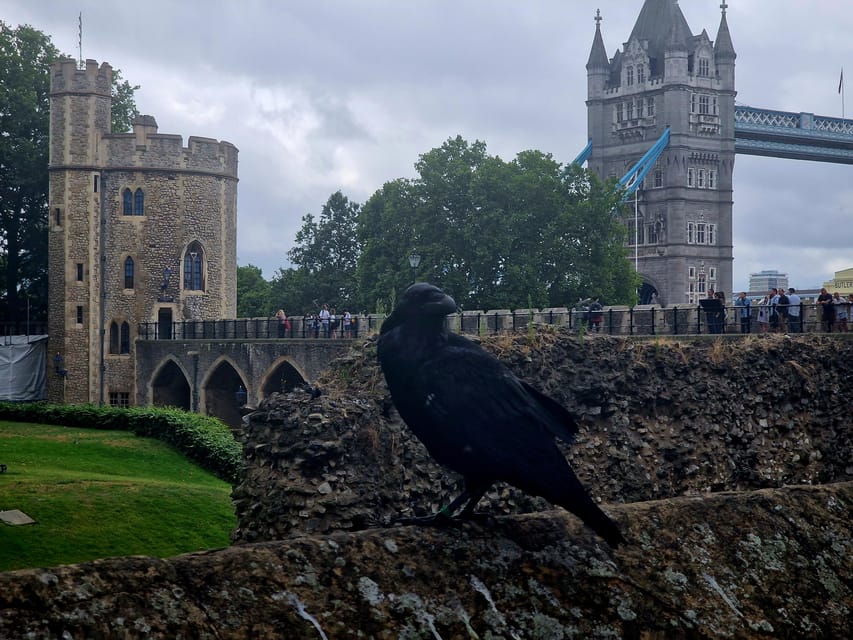
The Raven House offers a change of mood. The Tower’s famous ravens have been part of its public identity for more than 300 years, and their presence adds an almost theatrical touch to the fortress.
You visit the birds in their enclosure rather than simply hoping to spot one in passing. The ravens are still working symbols of the Tower, tied to the old belief that the kingdom will suffer if they ever leave. The experience does not depend on believing the legend. It is enough to see how an old story has become part of the site’s daily character.
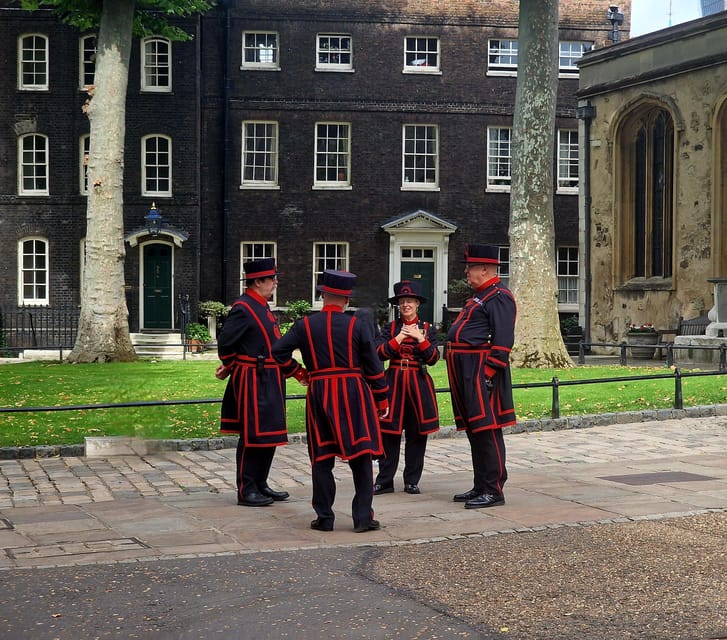
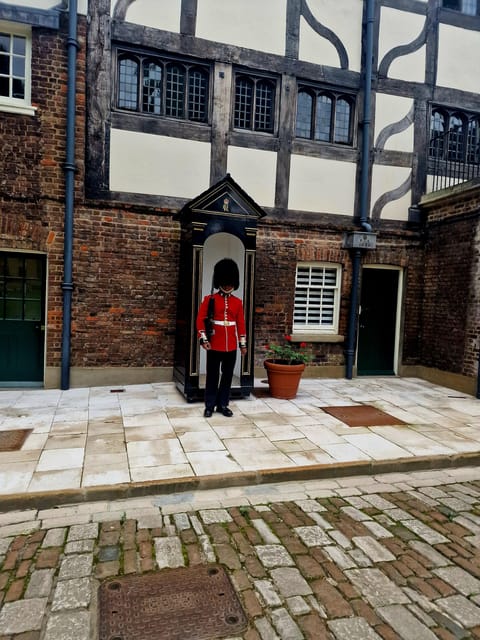
You will also see the Yeoman Warders, commonly called Beefeaters. They serve as ceremonial guardians and are among the most recognizable figures at the Tower. Keep your camera ready for a photo, but remember that they are working, not posing as actors for every passerby.
The Beefeaters help bridge past and present. Their uniforms and duties make the royal fortress feel like an active institution rather than a collection of ruins.
If Fia leads your group, she is associated with a careful, attentive approach that responds to the group’s interests. That can make a difference at a place with this much material. A strong guide helps you decide what to notice instead of burying you under dates and names.
Battlements and the Lower Wakefield Tower
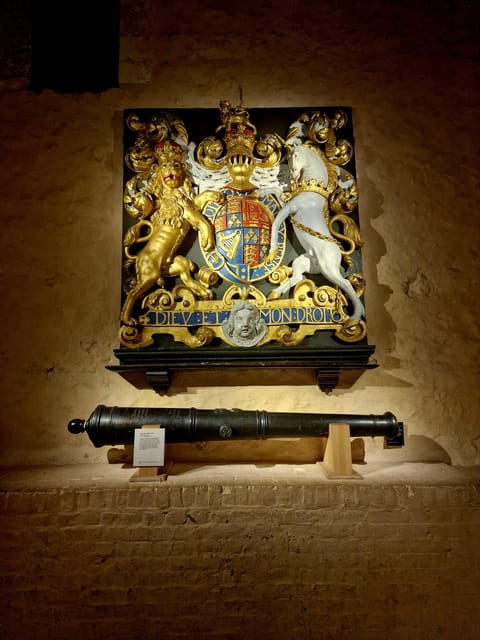
Walking the inner battlements gives you a better sense of the Tower as a defensive system. You move along walls and through large towers that protected the complex for centuries.
This is one of the tour’s more physical sections, but it also helps explain why the Tower mattered. From a drawing or map, walls can seem abstract. On the battlements, you see how towers, gates, and elevated positions worked together to guard the royal compound.
The route also includes Lower Wakefield Tower, where you can see instruments of torture and hear stories about people held at the Tower. This stop is grim rather than glamorous, and it gives the royal story a needed counterweight.
The Tower’s reputation as a prison is sometimes exaggerated in popular culture, but the suffering connected with the site was real. The displays are a reminder that royal authority relied not only on ceremony and jewels but also on confinement and fear.
I would not choose this tour for a very young child without first considering their interest in executions and torture. The material is part of the experience, and it is presented as history, but it may not suit every family.
Tower Bridge and the final view
The tour includes a chance to see Tower Bridge, England’s most famous bridge. It is an easy visual pairing with the Tower because the two landmarks represent different eras of London.
The Tower carries Norman, medieval, Tudor, and royal associations. Tower Bridge brings a later industrial age into view. Together they show how London changed from a fortified royal center into a modern city built around trade, transport, and the river.
The tour finishes at the Tower of London. You are not provided with transport, food, or drinks, so plan your next move before the visit ends. Because the tour occupies three hours, it fits well into a day that also includes the riverside, Tower Bridge, or nearby central London sights.
Is $120 a fair price?
At $120 per person, this is not a budget attraction visit. The price makes the most sense if you want a timed entrance, a live English-speaking guide, and a planned route through several parts of the Tower.
You are paying for interpretation as much as admission. The Crown Jewels are easy to admire on your own, but the royal succession stories, the Princes in the Tower, the Tudor prisoners, the chapels, and the defensive walls make more sense when connected.
A self-guided visit may cost less and give you more freedom to linger. It can also take longer because the Tower contains so much material. You may spend a full morning or afternoon reading signs and choosing your route.
This tour is a better value if you have only three hours, want help with the layout, or prefer a guide who can point out the meaning behind the objects. It is a weaker value if you dislike group pacing, already know the Tower well, or want to spend long stretches studying the Crown Jewels alone.
Free cancellation up to 24 hours before the start and the reserve-now, pay-later option reduce some booking risk. Still, the strict late-arrival rule means you should treat the meeting time seriously.
Who should book this Tower tour?
I would recommend it to a first-time London visitor who wants the major Tower highlights without having to plan the route. It also suits anyone who enjoys royal politics, military architecture, famous prisoners, and objects with a ceremonial purpose.
Families with older children may like the mix of ravens, armor, crowns, and dramatic royal stories. The amount of walking means the group should be comfortable with stairs and uneven ground.
History fans will get the most from the guide’s links between rulers. The tour touches William the Conqueror, Henry III, Edward I, Richard II, Henry VI, Edward IV, Richard III, Henry VIII, Lady Jane Grey, Elizabeth I, and James I, giving you a clear sweep across several centuries.
You should think twice if you have back problems, mobility impairments, or need a wheelchair or motorized aid. The route is not presented as suitable for those needs, and accessible ramps cannot be guaranteed. The tour operates in all weather, so rain protection and sensible footwear are essential.
The experience is in English, and anyone under 18 must be accompanied by someone at least 18 years old. Since no food or drinks are included, eat before you arrive or plan a meal afterward.
Should you book it?
Book this tour if you want the Crown Jewels, White Tower, ravens, battlements, and royal stories in one organized three-hour visit. The timed access and Blue Badge guide add real value when your London schedule is tight, and the range of stops is unusually broad.
Skip it if you want a slow, self-directed museum visit or if stairs and rough surfaces will make the day uncomfortable. At $120, the tour earns its price through structure and explanation, not through luxury. For a first visit to the Tower, that trade can be worthwhile.
FAQ
How long does the Tower of London tour last?
The experience lasts three hours. The Tower visit is planned as about two hours, followed by about one hour at the White Tower.
Where does the tour meet?
Meet your guide directly outside Starbucks at 3 Tower Place West Building, London EC3R 5BT. Arrive at least 15 minutes before the scheduled start.
What Crown Jewels can I see?
The visit includes the Imperial State Crown, the Koh-I-Noor Crown, and the Sovereign’s Sceptre with Cross. The display contains 100 objects and more than 23,000 gemstones.
Is the tour conducted in English?
Yes. The tour has a live English-speaking guide, including possible guide Fia.
Is Tower Bridge included?
You can see Tower Bridge as part of the experience. The tour does not include transport or a separate Tower Bridge attraction admission.
Is the tour suitable for wheelchair users?
No. The experience is not suitable for wheelchair users, people with mobility impairments, or people with back problems. The route includes stairs, cobblestones, inclines, declines, and uneven surfaces.
New listings around London
- London: Bermondsey Craft Brewery Tour★ 5.0 · 3 reviews
- Colourful Notting Hill Photography Tour★ 5.0 · 3 reviews
- The London Historic Pubs Tour★ 4.0 · 3 reviews
- London: Wallace Collection & National Gallery Private Tours★ 5.0 · 3 reviews
- Ultimate Royal London, Thames River Boat Ride & Walking Tour★ 5.0 · 3 reviews
- London: The Birthplace of The Rolling Stones Private Tour★ 5.0 · 3 reviews
- Historic pub tour with Brazilian guide (in Portuguese)★ 5.0 · 3 reviews
- London: Royal Tour with Westminster Abbey & Afternoon Tea★ 3.0 · 3 reviews
London Tours, compared.

Westminster to Greenwich River Thames Cruise
Read our review →
Magical London: Harry Potter Guided Walking Tour
Read our review →


Warner Bros. Studio Harry Potter Tour with Transfers
Read our review →Browse the lists this tour appears in