
Reviewed · BIRMINGHAM TOURS
Birmingham: Victorian Canals and Modern-Day Birmingham Tour
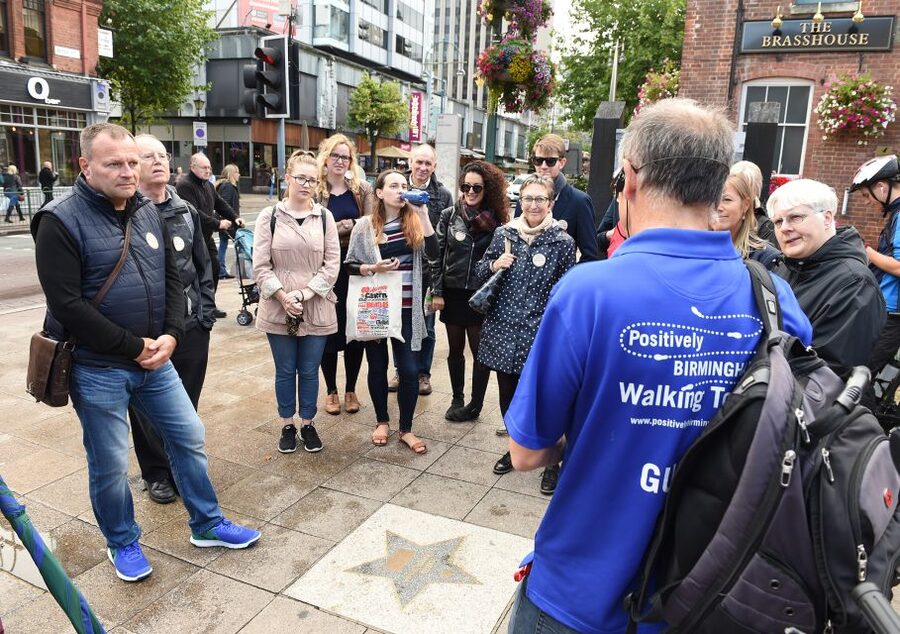
Birmingham’s canals are the key to understanding the city. This two-hour walk links James Brindley’s 18th-century waterway with modern concert halls, public art, Victorian civic projects, and bold new buildings. I like the way it shows Birmingham as a city that keeps rebuilding itself, rather than treating its past as a museum piece. Guide Jonathan is often praised for his humor and energy, while Michael Harrison brings a background in architectural history.
I especially like the loaned audio receiver, which helps you hear the guide above traffic and city noise, and the compact 3-kilometer route, which gives you a useful first look without taking up a full day. The main drawback is exposure to the weather. Cold wind and rain can make the open canal sections less comfortable, so bring a coat and headphones.
Key points at a glance
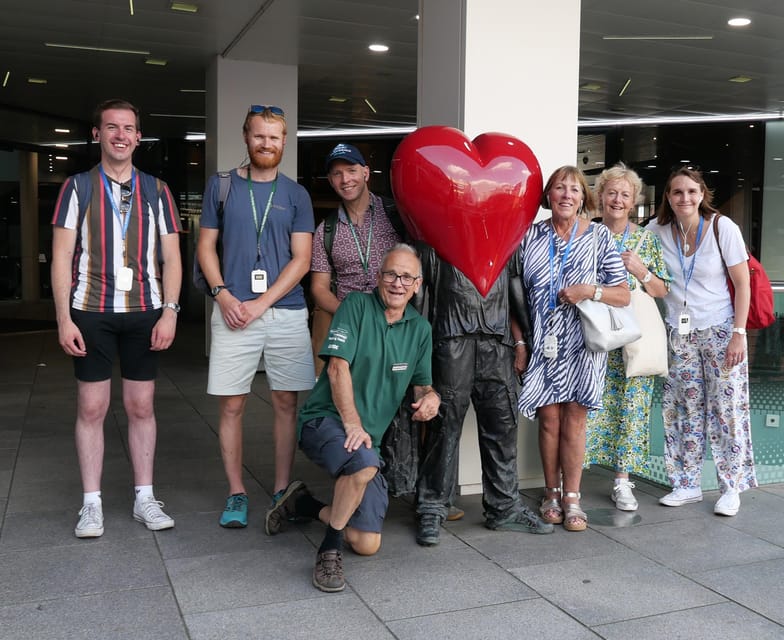
- Start at the Library of Birmingham: The tour opens in Centenary Square, where public art and modern buildings introduce the city’s industrial and cultural story.
- Follow the canals into Birmingham’s past: Learn why James Brindley’s canal, opened into town in the 1770s, helped change Birmingham’s fortunes.
- See old and new side by side: Brindleyplace, Symphony Hall, Oozells Square, Victoria Square, and Chamberlain Square reveal several centuries of city building.
- Hear every word clearly: A loaned audio receiver lets you follow live commentary while walking in a spread-out group.
- Get more than a standard sightseeing walk: The route covers civic reform, clean water, education, housing, public art, architecture, and modern redevelopment.
- Good value at $20: For two hours with a live guide and a guidebook, this is an inexpensive way to get your bearings.
Why the canals explain Birmingham better than a postcard
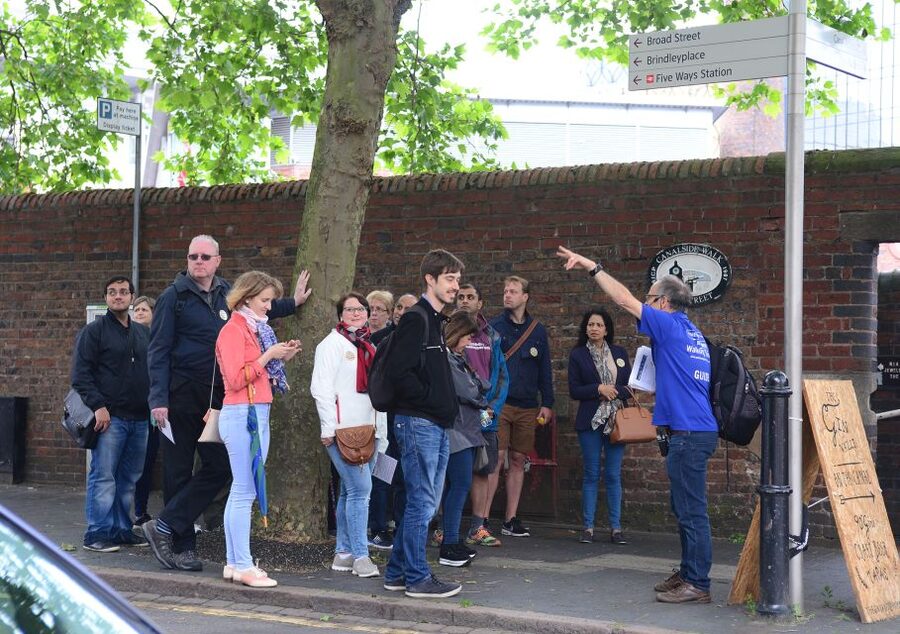
Birmingham can be hard to read at first. Its center mixes Victorian stone, modern glass, rebuilt public squares, traffic routes, cultural buildings, and waterways that once served industry. A walk gives those pieces a sequence.
The canal is not simply a pleasant path beside the water. It explains how Birmingham connected itself to the wider country and moved goods during the Industrial Revolution. The arrival of James Brindley’s canal into the town in the 1770s helped make the city more effective at trade and manufacture.
That context gives the route its purpose. You are not just ticking off squares or looking at attractive buildings. You are following the forces that helped turn Birmingham into a major industrial center, then seeing how later generations tried to improve the city and give it a stronger public face.
The walk also makes a useful point about Birmingham today. The city has not preserved one neat architectural period. Instead, it has added, removed, repaired, and reinvented. If you prefer a city with visible layers and a few rough edges, you will find plenty to think about here.
A handful of other Britain outings to weigh up
- Birmingham: Cadbury World Entry Ticket
★ 4.4 · 230 reviews - Birmingham: Slogging Gangs Guided Walking Tour
★ 4.2 · 216 reviews - From Birmingham: Cotswolds Full-Day Tour
★ 4.7 · 215 reviews
Starting beneath the Library of Birmingham
The meeting point is at the front entrance of the Library of Birmingham in Centenary Square. A pop-up stand usually marks the spot, which makes the beginning easy to find.
Centenary Square is a fitting opening. The Library of Birmingham gives you a bold modern landmark, while the square’s public art provides early clues about the city’s past. The guide uses this area to connect Birmingham’s industrial origins with its present role as a center for arts, business, and civic life.
Take a moment to look around before the group sets off. Buildings around the square help show how much of the city’s identity now rests on culture and public institutions as well as manufacturing. The opening is useful for first-time visitors because it gives you a basic map of the city’s story before you reach the canals.
The route returns to the same entrance at the end. That is handy if you have plans nearby or want to continue exploring from a known point.
Symphony Hall and the modern cultural quarter
The walk heads through the International Convention Centre toward Symphony Hall. This part of the route shifts attention from industrial growth to Birmingham’s role as a modern cultural city.
Symphony Hall is known for its exceptional concert-hall acoustics. You do not attend a performance on this tour, but the building helps explain the importance Birmingham places on music, events, and public culture. The route also shows how a city can use large, contemporary buildings to change the way people think about its center.
I like this contrast. The canal story could easily become a tour only about factories, freight, and Victorian engineering. Symphony Hall keeps the focus on what Birmingham has become, not only what it once produced.
The International Convention Centre adds another layer. It represents the city as a place for meetings, performances, and commerce. Together, these buildings give you a sense of the scale of Birmingham’s modern ambitions without requiring a separate museum visit.
Brindleyplace and the restored waterways
From the cultural quarter, the walk reaches the canal area and Brindleyplace. Here, the old waterways have been given new uses, and the surroundings feel very different from the industrial setting that first made the canals important.
The tour explains the canal’s role in Birmingham’s development, then shows how the water has become part of the modern city center. This is one of the most effective sections because the past and present sit next to each other. You can consider the canal as a working transport route, then see it as part of a renewed urban district.
Brindleyplace also helps explain Birmingham’s pattern of redevelopment. The city has not simply left its canals behind. It has brought them into daily city life through new buildings and public spaces.
The route is not a long canal walk. It uses selected parts of the waterway to tell a wider story, so do not book it expecting a quiet nature stroll or a full tour of Birmingham’s canal network. The canal is the thread connecting the city’s industrial past to its current shape.
Elsewhere in Britain, a change of pace:
- London: The London Eye Entry Ticket
★ 4.6 · 35,875 reviews - From London: Harry Potter Warner Bros Studio Tour
★ 4.7 · 26,588 reviews - London: Westminster to Greenwich River Thames Cruise
★ 4.5 · 22,836 reviews - Magical London: Harry Potter Guided Walking Tour
★ 4.7 · 22,044 reviews
Oozells Square and the Victorian civic mission
The route continues through Oozells Square and Brindleyplace, where the guide turns to the Victorian effort to make Birmingham a cleaner, better-run, and more respectable city.
This is where the story moves beyond factories and businessmen. The tour discusses the Civic Gospel and the Municipal Revolution, including efforts to educate residents, bring clean water into town, and clear poor-quality housing.
Those subjects matter because they show the social cost of rapid industrial growth. Birmingham’s success created wealth, but it also created crowded and unhealthy conditions. The civic response was an attempt to make the city work better for ordinary people.
You will hear about the Victorians’ desire to make Birmingham a model for other towns. That ambition gives the architecture and public spaces more meaning. Civic buildings were not just decoration. They were part of a claim that local government, public services, and education could improve urban life.
This section is especially useful if you enjoy social history. If you only want a quick parade of famous buildings, the discussion of housing, water, and municipal reform may feel more detailed than expected. For me, it is one of the parts that makes the walk more worthwhile than a basic photo tour.
Victoria Square and the city’s public face
Victoria Square provides another change of setting. The tour uses the square to look at Birmingham’s civic identity, public art, and architecture.
Squares are important on this route because they show how the city presents itself. A canal tells you how goods moved. A civic square tells you what local leaders wanted the city to say about itself.
The guide draws attention to the mix of architectural periods and public artworks. You will see how older forms sit beside modern design, and how Birmingham has repeatedly adjusted its center to meet new needs.
This is also a good point to ask questions. Jonathan is often praised for encouraging questions throughout the walk, rather than saving them all for the final stop. That makes the experience feel less like a speech and more like a guided conversation.
The route is not designed around one single landmark. Its value comes from the links between places. Victoria Square makes more sense after you have considered canals, commerce, and civic improvement, and it prepares you for the final look at how modern Birmingham has shaped its public spaces.
Chamberlain Square and the old city meeting the new
Chamberlain Square brings the walk back toward the cultural heart of Birmingham. Along with Centenary Square, it helps complete the picture of a city that has changed its center while keeping older stories in view.
The square offers more chances to consider public art and architecture. You can compare the appearance and purpose of buildings from different periods, then think about how they work together in the present city.
This is not a tour that pretends every part of Birmingham belongs to one tidy style. That is a strength. The city’s architectural variety can be confusing when you walk alone, but the guide gives you a way to read it.
By the time the group returns to the Library of Birmingham, you have covered a short distance but several major themes: industrial transport, cultural development, Victorian public services, urban reform, architecture, and civic pride.
What the live guide adds
The strongest part of this experience is the guide’s interpretation. Jonathan appears frequently on the route and is described as funny, friendly, energetic, and well informed about Birmingham. He also adapts the pace and content when conditions change, which matters on a walking tour.
Michael Harrison is another guide associated with the experience. His background as a former history of architecture lecturer gives the tour a different possible emphasis, especially for anyone interested in how buildings and city planning developed over time.
You should not expect a scripted audio tour. The commentary is live, and the guide can answer questions as you go. The loaned audio receiver is a practical touch. Birmingham’s center can be noisy, and a clear signal means you do not have to stay shoulder to shoulder with the guide to follow the explanation.
Bring your own headphones, as they are listed among the items to bring. The equipment is intended to help you hear the live commentary, not replace the guide.
Two hours and three kilometers: how demanding is it?
The full distance is about 3 kilometers, completed in two hours. That is a moderate city walk rather than a strenuous hike, but you should still expect to be on your feet for most of the experience.
The route includes stops for explanations, so the pace is not nonstop. It works well if you want an introduction before exploring museums, shopping areas, restaurants, or other parts of Birmingham on your own.
The open sections along the canal and in the squares can feel cold or windy. One tour group completed the walk in particularly chilly conditions, and the weather was also described as changeable on another occasion. A warm, waterproof layer is sensible, even if the forecast looks reasonable.
The route’s short length is an advantage for many people, but it also limits how much of Birmingham you can see. You will not cover every canal basin, neighborhood, or major building. Think of this as a central-city orientation with historical context.
Is $20 a fair price?
At $20 per person, the tour offers solid value for a two-hour introduction. You receive a live English-speaking guide, a loaned audio receiver, and a tourist guidebook.
The price makes particular sense if you are new to Birmingham and want a framework for later exploring. A good guide can save you time by explaining which buildings, squares, and canal sections deserve a closer look.
It is also a reasonable choice for local residents. One participant who lived in the area for years still found new details in the city center, especially the modern buildings and public art. That tells you the tour is not limited to the obvious old sights.
The value depends on what you want. If you prefer to wander alone and read plaques at your own speed, you may not need a guided walk. If you want the city’s pieces connected into one story, $20 is modest for the amount of interpretation included.
The booking terms add flexibility. You can reserve and pay later, and cancellation is allowed up to 24 hours before the activity for a full refund. Starting times vary, so check availability when choosing your date.
Who will enjoy this Birmingham walk?
I would recommend it most strongly to first-time visitors who want to understand the city before making their own plans. It is also a good fit for people interested in industrial development, public policy, architecture, public art, and urban renewal.
Families with older children may appreciate the manageable distance and the mix of subjects. The route is not only about dates and buildings, and the guide’s humor can keep the story moving.
It also suits people who already know Birmingham but have not looked closely at the city center. The combination of canal history and modern architecture gives the walk a wider angle than a standard old-town tour.
You may want to choose another activity if you need a fully indoor experience, have difficulty walking 3 kilometers, or want a narrow specialist tour focused only on canals or Victorian buildings. This route is broad by design.
Should you book it?
Book this tour if you want a clear, lively introduction to Birmingham’s central story in two hours. The best reasons are the live commentary, the excellent use of the audio receivers, the links between canals and civic reform, and the chance to see modern Birmingham alongside its Victorian roots.
Jonathan is a particularly strong guide when available, while Michael Harrison may appeal to you if architecture is your main interest. Bring headphones and weatherproof clothing, and treat the walk as an orientation rather than a complete survey of the city.
At $20, it is an easy choice for most first-time visitors, especially if you have a free morning or afternoon and want to begin your stay with useful context.
FAQ
Where does the Birmingham canals tour start?
The tour starts at the front entrance of the Library of Birmingham in Centenary Square. A pop-up stand usually marks the meeting point.
Where does the tour finish?
The walk returns to the Library of Birmingham.
How long does the tour last?
The guided tour lasts two hours.
How far do you walk?
The total walking distance is 3 kilometers, completed over two hours.
What language is the tour conducted in?
The live tour guide commentary is in English.
Is a guide included?
Yes. A live tour guide is included.
Are headphones or audio equipment provided?
An audio receiver is loaned to help you hear the live guide. You should bring headphones.
Is a tourist guidebook included?
Yes. A tourist guidebook is included with the activity.
What places does the tour visit?
The route includes Centenary Square, Oozells Square, Victoria Square, Chamberlain Square, Brindleyplace, parts of Birmingham’s canals, the International Convention Centre, and Symphony Hall.
Can I cancel the booking for a refund?
You can cancel up to 24 hours in advance for a full refund. You can also reserve now and pay later.
New listings around Britain
- London: Secrets of Freddie Mercury Tour with a Cocktail★ 4.1 · 15 reviews
- London: Hampton Court Private Guided Tour★ 3.4 · 15 reviews
- Edinburgh: Isle of Skye, Highlands & Jacobite Steam Train★ 4.6 · 15 reviews
- London: Jack the Ripper Tour and Underground Prison in Spanish★ 5.0 · 15 reviews
- Spanish Language : Original Harry Potter Walking Tour★ 4.5 · 15 reviews
- THE HANGOVER BRUNCH | Benidorm Bingo & Drag Queens★ 4.5 · 15 reviews
- London: Private Couples Photography Session with Landmarks★ 5.0 · 15 reviews
- London: The Saturday Supershow Cabaret at Phoenix Arts Club★ 4.5 · 15 reviews
Birmingham Tours, compared.


Guided City Center Walking Tour (10:30am & 2pm)
Read our review →

Browse the lists this tour appears in