

Reviewed · STRATFORD UPON AVON TOURS
Stratford-Upon-Avon: Private Walking Tour with Local Guide
Stratford-Upon-Avon is more than a Shakespeare shrine. This private 1.5-hour walk links the town’s Tudor buildings, riverfront, canal, churches, theatres, and literary landmarks into one easy route. You get a local guide for your own group, rather than a crowd moving at someone else’s pace.
I like the mix of Shakespeare and ordinary Stratford. You see the Birthplace and New Place, but also the old Town Hall, almshouses, the canal basin, and the town’s oldest pub. I also like the finish at the Royal Shakespeare Theatre, with the Swan Theatre and The Other Place along the way.
The main caution is the short running time. One and a half hours is enough for orientation and outside sightseeing, but not for a thorough visit inside every major attraction. The quality also depends on your guide. Peter has received especially warm praise for his friendly, entertaining approach, while one earlier booking found the historical detail too light.
Key points at a glance
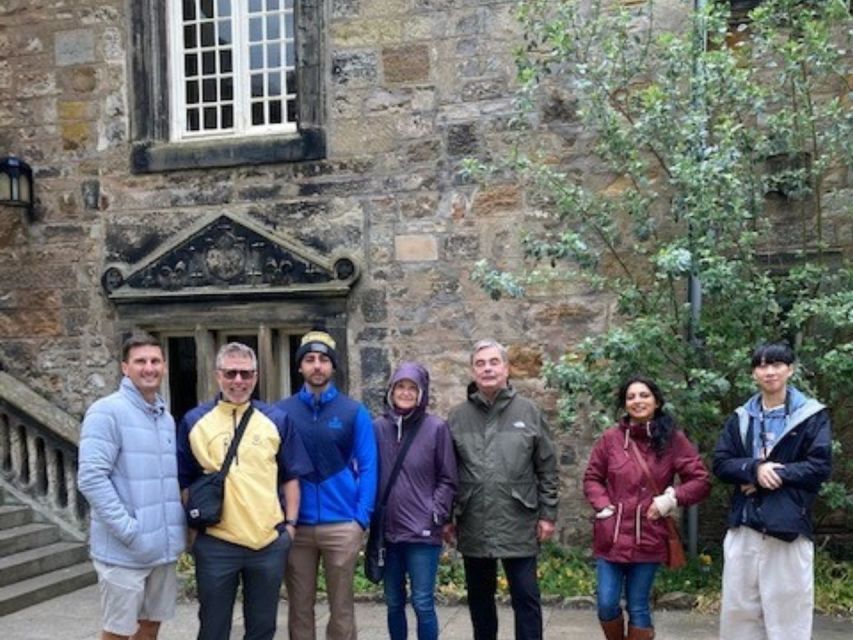
- Private group of up to six: The $197 price covers the group, not each person, so it becomes better value when shared by several people.
- A Shakespeare route with wider context: Birthplace, New Place, Holy Trinity Church, and three theatres are balanced with civic buildings and canal scenery.
- Peter may be your guide: He is described as proud of Stratford, cheerful, and good at balancing local history with Shakespeare.
- Starts at Gower Memorial: Meet outside in Bancroft Gardens, where the bright orange jacket or lanyard should make your guide easy to spot.
- Finishes by the Royal Shakespeare Theatre: The route ends in the heart of Stratford’s theatre district, a useful place to continue exploring.
- Rain or shine: Wear comfortable shoes and bring clothing suited to the weather. The tour goes ahead in rain.
Why this short private walk works well in Stratford
Stratford-Upon-Avon can feel simple at first glance: a few famous Shakespeare addresses, some old timbered buildings, and the river. A good guide gives those pieces an order and explains how the town changed from an old settlement, through invasions and trade, into the home of the Royal Shakespeare Company.
That context matters because the sights are close together but not all part of the same story. Shakespeare’s Birthplace is about the playwright’s early life. New Place is tied to his success and later years. The theatres represent the town’s modern cultural identity. Holy Trinity Church brings you back to the older religious and civic Stratford.
A private group is particularly useful here. You can ask why a building matters, pause for a photograph, or request more Shakespeare and less architecture. You are not locked into a large party’s pace. The guide can also point out details you might pass without noticing, including the oldest pub in town and lesser-known corners among the preserved buildings.
The tour is conducted in English. It is listed as wheelchair accessible, and the route is on foot, so comfortable shoes still matter. Since it takes place rain or shine, a waterproof layer is a sensible part of your Stratford plan.
More Walking Tours in Stratford Upon Avon:
- The Sinister Side of Shakespeare’s Stratford Walking Tour
★ 4.8 · 547 reviews - Stratford-Upon-Avon: The Famous Walk Talk Show
★ 4.9 · 342 reviews - Stratford-Upon-Avon’s Town Walking Tour (10:30am & 2pm)
★ 4.8 · 143 reviews
Starting beside the Avon at Gower Memorial
The meeting point is outside the Gower Memorial in Bancroft Gardens. Your guide should be wearing a bright orange jacket or lanyard, which is helpful in a busy public area.
Beginning here gives you an immediate sense of Stratford’s setting. You are near the river, gardens, and central sights, with the town’s Shakespeare connection already in view. It is a better starting point than meeting deep inside a narrow street because you can gather your group in an open, easy-to-find place.
The Gower Memorial itself is the first sightseeing stop. From here, the guide sets the tone for the walk: Stratford as both Shakespeare’s town and a living place with its own local character. This opening is not a long museum visit. It is a quick orientation before heading into the older streets.
Shakespeare’s Birthplace and Henley Street
Shakespeare’s Birthplace is the most obvious stop, and for many people it is the reason to come to Stratford. The attraction connects the town’s streets with the early life of William Shakespeare, giving the rest of the walk a clear starting point.
The route then continues along Henley Street. This is where the preserved buildings become part of the experience rather than just a backdrop for photographs. You can expect the guide to explain how Stratford looked and functioned around Shakespeare’s time, while pointing out buildings that have survived from earlier periods.
The value here is the local framing. If you visit the Birthplace alone, you may learn about Shakespeare’s family and early years but miss the shape of the town around him. A walking guide places that house in its setting and helps you notice the relationship between the famous address and the surrounding streets.
Keep your expectations sensible. This part is sightseeing from the outside unless you separately enter the attraction. The stated tour includes the private guide fee, not a listed admission to Shakespeare’s Birthplace.
Town Hall, fountain, and the centre of old Stratford
The Old Town Hall adds a civic note to a route that could otherwise become too focused on one famous man. It helps you see Stratford as a market town with its own public life, not simply a place built for Shakespeare tourism.
The Shakespeare Memorial Fountain follows. It is another visible reminder of the playwright’s hold on the town’s identity, but the guide’s job here is to keep the story moving rather than spend the whole walk repeating familiar facts.
This is one place where a private tour can be more useful than a standard group outing. If your party already knows the basic Shakespeare story, you can ask for more about Stratford’s buildings and development. If you are new to Shakespeare, the guide can explain the key links without burying you in dates.
That balance was a strong point for Peter, who was praised for combining town history with Shakespeare information without overloading the walk. Still, the tour’s advertised length means the explanations are likely to be compact. You are getting a well-planned introduction, not a specialist architectural study.
A handful of other Stratford Upon Avon outings to weigh up
- Stratford-upon-Avon: Shakespeare’s Birthplace Ticket
★ 4.6 · 476 reviews - Stratford-upon-Avon:City Sightseeing Hop-On Hop-Off Bus Tour
★ 4.4 · 296 reviews - Warwick: Entry Ticket for Warwick Castle
★ 4.7 · 215 reviews - Stratford-upon-Avon: Shakespeare’s Story Entry Ticket
★ 4.6 · 208 reviews
New Place, the almshouses, and Hall’s Croft
Shakespeare’s New Place changes the story from childhood to prosperity. It was Shakespeare’s later Stratford home and is a useful counterpoint to the Birthplace. The two stops together show a simple progression: the son of Stratford connected with the town’s early life later returned as a successful man.
The New Place stop is especially valuable for anyone who wants more than the standard birthplace visit. It links Shakespeare to property, status, and the town he came from. You should expect sightseeing and explanation rather than a full indoor visit as part of this walking tour.
The almshouses provide another welcome shift in subject. These buildings point toward local welfare and community life, giving you a glimpse of the town beyond the Shakespeare family. They also contribute to the pleasure of the walk because Stratford’s old streets are part of the attraction in their own right.
Hall’s Croft continues that residential story. It is associated with Shakespeare’s family and helps fill out the picture of his life in Stratford. The sequence of New Place, almshouses, and Hall’s Croft works well because it breaks up the main literary landmarks with buildings that say something about how people lived.
You will want to keep your camera ready, but do not treat each stop as a separate attraction requiring a long stay. The guide is leading you through a connected story, and the short duration depends on keeping a steady walking pace.
Holy Trinity Church and Shakespeare’s final connection
Holy Trinity Church is one of the most important stops on the route. It is associated with Shakespeare’s baptism and burial, giving the tour a strong closing point for the literary part of the story.
The church also widens the historical frame. Stratford’s story did not begin with Shakespeare, and Holy Trinity Church represents the older religious life of the town. Its setting near the water adds a quieter change of pace after the central streets.
The exact amount of time available inside depends on the guide and the conditions on the day. The tour promises sightseeing at the church, but it does not promise a full guided interior visit or admission arrangement. If entering Holy Trinity is essential to you, ask about the plan when you meet your guide.
For many people, this stop will carry more weight than another quick photograph at a Shakespeare sign. It connects the writer to a real place of worship and burial, rather than only to houses and memorials.
Canal Basin, swans, and Stratford’s gentler side
The canal and Canal Basin offer a welcome change from the literary centre. You can expect a scenic stretch with water, boats or canal features, and swans, along with a chance to see Stratford at a slower pace.
This part is useful because it keeps the outing from feeling like a chain of Shakespeare addresses. The water gives you a sense of Stratford’s setting and adds variety to the walking route. It is also a good moment for photographs and a breather between denser historical explanations.
The canal stop should not be mistaken for a separate cruise or long waterside excursion. The experience is a walking tour, and the guide uses the canal as one part of the wider town story. If you want time to sit by the water or watch the swans, you may need to return after the tour.
Three theatres and the modern Stratford story
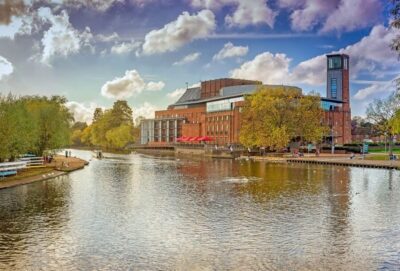
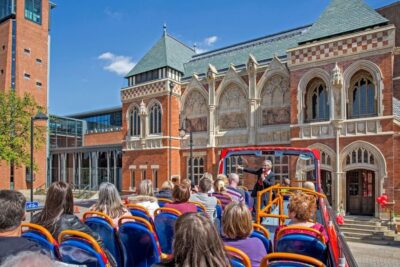
The route includes The Other Place, the Swan Theatre, and the Royal Shakespeare Theatre. Seeing all three in one walk is one of the experience’s strongest features because it connects Shakespeare’s legacy with the town’s current theatre life.
The Other Place is part of the Royal Shakespeare Company’s wider theatre presence. The Swan Theatre offers a different architectural and theatrical setting, while the Royal Shakespeare Theatre is the most recognisable finish. Together, the three stops show that Stratford is not only preserving the past. It is still building its cultural identity around performance.
The tour finishes at the Royal Shakespeare Theatre. That is practical if you have an evening performance planned, though the walk does not include a theatre ticket. It also gives you an easy point from which to continue along the river or return to central Stratford.
The theatre section will suit you especially well if you are deciding how much time to give Stratford. You get a quick map of the major performance venues before choosing whether to book a show, tour an interior, or simply enjoy the buildings from outside.
What $197 means for a group of six
The listed price is $197 per group of up to six people. For six, that works out at roughly $33 per person. For two people, it is close to $99 each, so the value changes sharply with group size.
I think the price makes the most sense for a family or small party that wants a private introduction without paying six separate per-person rates. The guide’s attention, flexible pace, and chance to ask questions are the main benefits. You are paying for interpretation and convenience, not admission to a series of attractions.
For a couple, the cost is harder to justify unless you place a high value on a private guide. You could see many central streets on your own, but you would lose the organised story linking the old town, Shakespeare sites, canals, and theatres.
The 1.5-hour length also affects value. This is a compact orientation walk. It can help you decide what deserves a longer visit later, but it will not replace a full day of independent sightseeing or paid house and theatre visits.
The flexible booking terms help if your plans are still moving. You can reserve and pay later, and cancellation is free up to 24 hours before the start time. Those policies are useful, but they should not be the main reason to book. The real question is how much you want a local voice guiding you through Stratford.
Guide style and the importance of expectations
Peter is the guide name most clearly associated with this experience. He has been praised for pride in his town, a sunny manner, and an entertaining way of presenting the material. That combination matters on a short walk because a friendly guide can make a familiar subject feel personal rather than rehearsed.
The strongest fit is for someone who wants history in plain language. You will get Shakespeare, but the route also covers Viking invasions, ancient origins, local buildings, canals, and the Royal Shakespeare Company. The emphasis appears to be broad and accessible rather than academic.
There is one important note of caution. An earlier experience with the tour found the guide’s architectural and historical detail too basic, with information that felt easy to find online. That suggests you should not book this expecting a specialist lecture on Tudor construction, theatre scholarship, or detailed archival history.
I would treat this as a guide-led introduction whose success depends on the person leading your walk. Ask questions as you go. A private format gives you the best chance to steer the discussion toward Shakespeare, architecture, local life, or theatre.
Who should book this Stratford walk?
This tour suits first-time visitors who want to get their bearings quickly. It is also a good choice for families or small groups who prefer a private experience and want the freedom to ask questions without holding up strangers.
Shakespeare enthusiasts will appreciate the sequence from Birthplace to New Place, Hall’s Croft, Holy Trinity Church, and the theatres. The route gives you the town’s main literary connections in a compact format.
It also works for people who enjoy town walks more than indoor attractions. You see preserved buildings, a canal with swans, public landmarks, and theatre exteriors while hearing the story of Stratford as you move.
I would be less inclined to recommend it to someone seeking extensive interior access. The advertised plan is sightseeing on foot, and the duration is too short for a full visit to the Birthplace, New Place, Holy Trinity Church, and three theatres. You should plan separate admission visits if those interiors are priorities.
Practical tips before you go
Meet outside the Gower Memorial in Bancroft Gardens and look for the bright orange jacket or lanyard. Arrive ready to walk, since the tour moves through several parts of central Stratford and ends at the Royal Shakespeare Theatre.
Wear comfortable shoes. Bring weather-appropriate clothing, especially because the walk operates in rain as well as fair weather. The route is wheelchair accessible, but the public streets and outdoor conditions can still make suitable clothing and footwear important.
The tour is in English and uses a live guide. It is a private group experience with a maximum of six people, so you can use the time well by deciding in advance what you most want explained.
If your main interest is theatre, save questions for the three venues. If you care more about Shakespeare’s personal story, focus on the Birthplace, New Place, Hall’s Croft, and Holy Trinity Church. The walk is short, so a little preparation will help you get more from it.
Should you book this tour?
Book it if you want a compact private introduction to Stratford with Shakespeare, local buildings, canals, and theatres all in one route. The $197 group price is reasonable for up to six people, and Peter appears to offer the warm, locally proud guiding style that suits this kind of walk.
Think twice if you want advanced historical research, long stops inside attractions, or detailed architectural analysis. For those needs, use this walk as an orientation and plan separate visits afterward. For a first look at Stratford, especially with a family or small group, it offers a useful and friendly way to connect the town’s famous name with its real streets.
FAQ
How long is the Stratford-Upon-Avon walking tour?
The tour lasts 1.5 hours.
How much does the private tour cost?
The price is $197 per private group of up to six people.
Where does the tour start?
It starts outside the Gower Memorial in Bancroft Gardens.
How will I identify the guide?
The guide will be wearing a bright orange jacket and/or lanyard.
Where does the walking tour finish?
The tour finishes at the Royal Shakespeare Theatre.
Which language is the tour conducted in?
The live tour is conducted in English.
Is the tour wheelchair accessible?
Yes, the activity is listed as wheelchair accessible.
What should I bring?
Bring comfortable shoes and clothing suitable for the weather. The tour operates rain or shine.
New listings around Stratford Upon Avon
- Stratford-upon-Avon: Shakespeare’s New Place Entry Ticket★ 4.0 · 3 reviews
- Stratford-upon-Avon: City Walking Tour & Exploration Game★ 4.6 · 3 reviews
- London: Canterbury, Dover Castle, White Cliffs & Kent Trip★ 3.3 · 3 reviews
- Gin Tasting at Judith’s, Shakespeare Distillery★ 5.0 · 6 reviews
- A tour of Warwick with Queen Elizabeth’s secret lover★ 4.9 · 7 reviews
- River Avon Gin Tasting Cruise★ 4.8 · 7 reviews
- Cotswolds: One Day Cotswolds Walking Tour★ 4.9 · 12 reviews
- From Stratford-on-Avon/Moreton-in-Marsh: Secret Cotswolds★ 4.9 · 19 reviews
Stratford upon Avon Tours, compared.

The Sinister Side of Shakespeare’s Stratford Walking Tour
Read our review →

Stratford-Upon-Avon’s Town Walking Tour (10:30am & 2pm)
Read our review →
Shakespeare’s Schoolroom and Guildhall Entrance Tickets
Read our review →Browse the lists this tour appears in