
Reviewed · STRATFORD UPON AVON TOURS
Stratford-Upon-Avon: The Famous Walk Talk Show
Stratford-upon-Avon’s story is much bigger than Shakespeare, and this 90-minute walking tour makes that clear from the start. You’ll trace the town from its seventh-century beginnings through Tudor England, while seeing the places tied to William Shakespeare, his family, his schooling, and his working life.
I like the route’s compact size and its mix of famous sights with easily missed details, such as the 1269 Guild Chapel, the old taverns, and the corner where buildings from five centuries face one another. I also like that guides such as Kate, Marcus, Dwayne, and Chris bring plenty of humour and personal energy to the walk. The main drawback is simple: it takes place in all but extreme weather, so you need good shoes and suitable clothing.
Key points to know before you book
- A 1.4-kilometre circular route: The walk begins and ends at the Royal Shakespeare Theatre, making it easy to fit into a day in town.
- Fourteen centuries in 90 minutes: You’ll move from early settlement and medieval power to Tudor religion, Shakespeare’s career, and modern Stratford.
- Shakespeare beyond the birthplace: The route includes his schoolroom, New Place, the Guild Chapel, local taverns, and the church where he was christened and buried.
- A guide-led experience: English-speaking guides including Kate, Marcus, Dwayne, and Chris are known for strong storytelling, humour, and useful answers to questions.
- Wheelchair and mobility scooter-friendly: The route is designed for accessible movement through the town centre.
- Good value at $16.16 per person: You get a focused introduction to Stratford without paying admission fees for individual attractions.
Why this Stratford walking tour works

The best way to begin in Stratford-upon-Avon is on foot. The town centre is compact, and the important sights sit close together, but the connections between them are not always obvious. A Tudor chapel may be next to a schoolroom linked to Shakespeare, while a modern theatre faces the River Avon and the old centre beyond it.
This walk gives you that framework. Instead of treating Shakespeare’s birthplace as an isolated stop, it places him inside the town that shaped him. You’ll learn about the streets he knew, the buildings he passed, the religious and political forces around him, and the Tudor world in which his writing took form.
The tour also covers about 1,400 years of local history. That is a lot to handle in 90 minutes, so expect a lively overview rather than a slow, academic lecture. The best guides keep the pace moving and use stories, jokes, and sharp details to make the chronology easy to follow.
The price is $16.16 per person, which is fair for a live guided introduction to Stratford. You are paying for the guide’s interpretation, not entry to the attractions themselves. If you plan to visit Shakespeare’s Birthplace, New Place, or the church interiors separately, those admissions cost extra, but the walk helps you decide which places deserve more of your time.
More Walking Tours in Stratford Upon Avon:
- The Sinister Side of Shakespeare’s Stratford Walking Tour
★ 4.8 · 547 reviews - Stratford-Upon-Avon’s Town Walking Tour (10:30am & 2pm)
★ 4.8 · 143 reviews - Magical London: Harry Potter Guided Walking Tour
★ 4.7 · 22,044 reviews
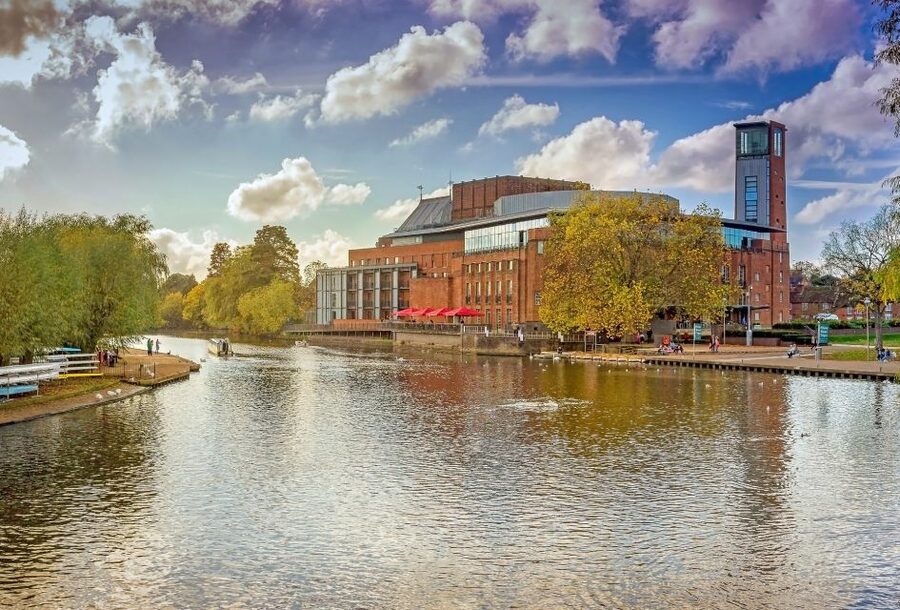
Starting beneath the Royal Shakespeare Theatre tower
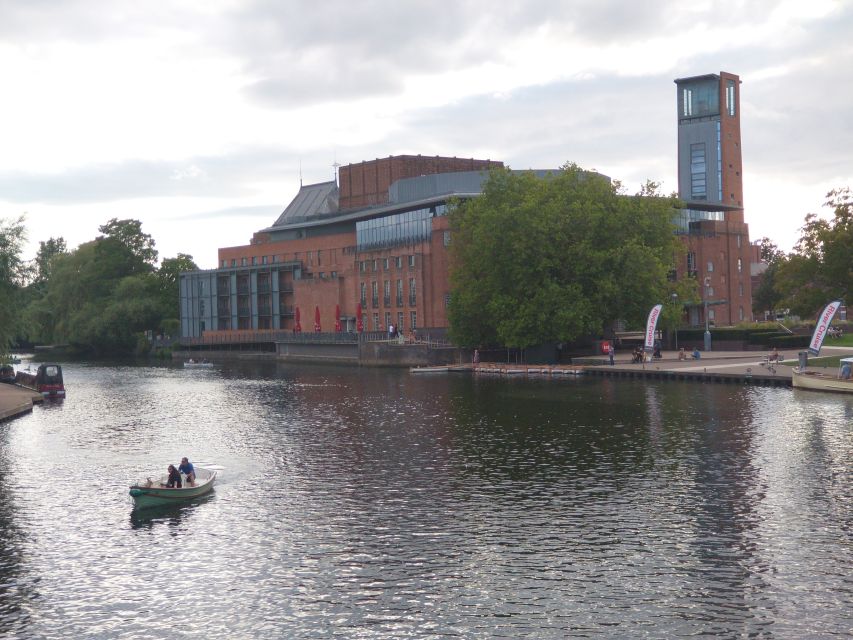
Meet outside the main entrance of the Royal Shakespeare Theatre, also called the RSC, just before the time printed on your ticket. The guide waits outside at the base of the large viewing tower, wearing a laminated WalkTalkShow.co.uk badge. At busy times, look for a red umbrella.
Do not go inside the theatre while waiting. The meeting point is outside, and entering the building could mean missing the group. This is a small detail, but it matters in a busy town where several entrances and theatre buildings can cause confusion.
The theatre is a fitting place to begin. It connects modern Stratford with its most famous historic resident, while the River Avon provides an attractive setting nearby. From here, the guide starts laying out the town’s long story before leading you into the older streets.
This opening also helps you understand the tour’s balance. It is not only a Shakespeare walk, and it is not only an architectural walk. The guide links the two, showing how the town’s religious, commercial, and political life formed the setting for Shakespeare’s family.
Market Cross and the old centre
The first part of the route takes you toward the Market Hall at Market Cross. Markets were central to town life, and this is where Stratford’s commercial identity comes into view.
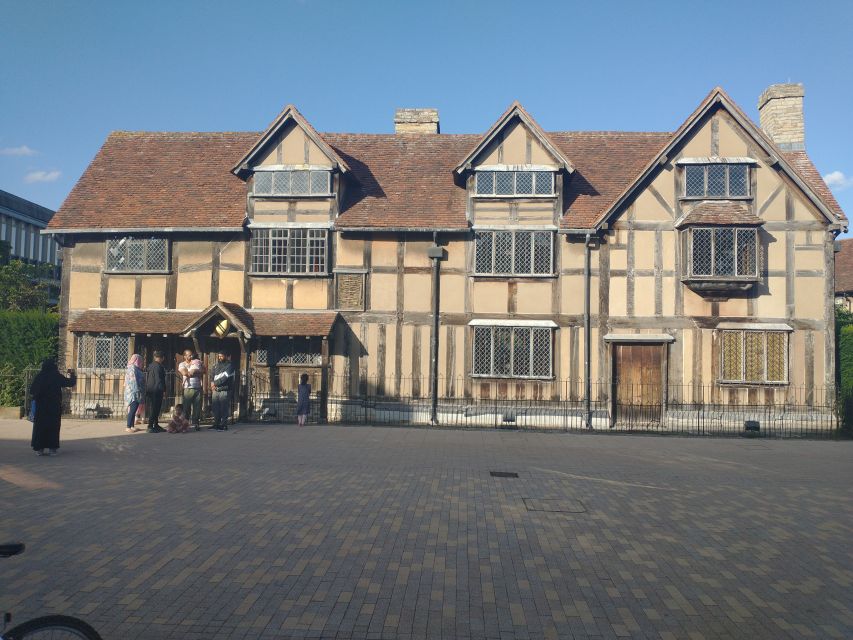
The walk then reaches Shakespeare’s Birthplace. The route lets you see this famous building and understand its place in the town, but admission to the house is not included. That distinction is important when planning your day. If you want the interior displays and rooms, you’ll need a separate ticket or attraction pass.
Even from the street, the building works well as a marker in the story. You are not simply told that Shakespeare was born in Stratford. You begin to see the town in which his family traded, lived, and moved through everyday life.
Rother Street Market follows. The market adds a more ordinary, modern feel to the walk and helps show that Stratford is still a working town, not merely a stage set for Tudor stories. The route then passes through Bell Court, where the guide continues to connect present-day streets with earlier layers of the town.
The pace is generally steady rather than strenuous. One guide was praised for presenting plenty of information without giving too much at once, while another kept the tour relaxed and well paced. That is useful if you want context without feeling trapped in a long classroom session.
The Town Hall and Stratford’s five-century corner
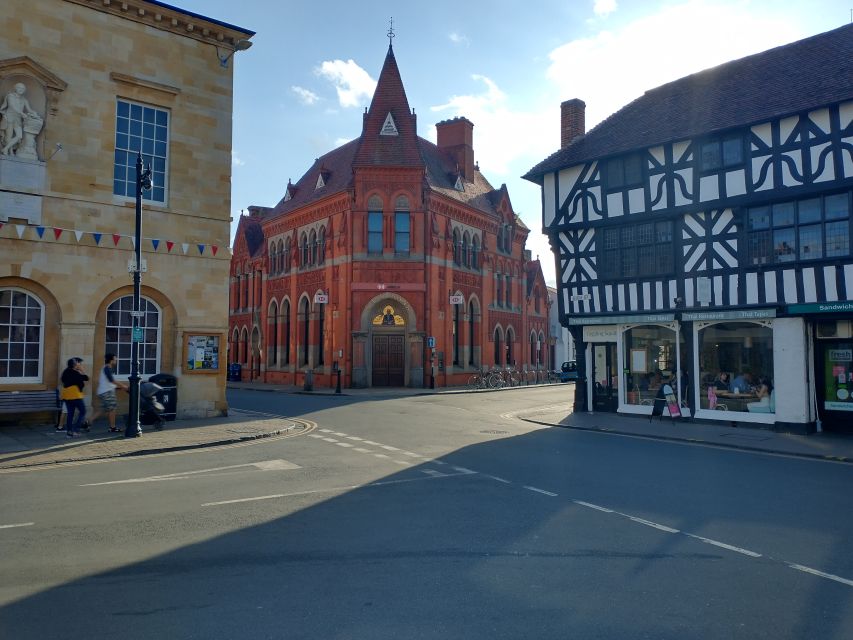
One of the more striking stops is the Town Hall and what the tour calls History Corner. Here, you can look across a single corner and see buildings representing five centuries.
That visual comparison is one of the walk’s strongest moments. Dates can blur when you hear them one after another, but standing in a place where different periods sit side by side makes the town’s development easier to grasp. You can see how the medieval and Tudor town gave way to later forms of civic and commercial life.
This corner is also linked to John Harvard, the man associated with the founding of Harvard University. He was born in a house here in 1607. The detail is a good reminder that Stratford’s connections reach beyond Shakespeare.
I like stops such as this because they widen the experience. If you book the walk only for Shakespeare, you may be surprised by how often the guide brings in other people and events. The result is a more useful understanding of Stratford as a real town with several important stories.
A handful of other Stratford Upon Avon outings to weigh up
- Comedy Horror Show: York Ghost Bus Tour
★ 4.4 · 2,496 reviews - London Vintage Bus Tour: Live Comedy Sightseeing Show
★ 4.3 · 217 reviews - London: Burlesque Cabaret Show in the West End
★ 4.2 · 127 reviews - London: Royal Observatory Planetarium Show Entry Ticket
★ 3.9 · 89 reviews
Shakespeare’s New Place and the Guild Chapel
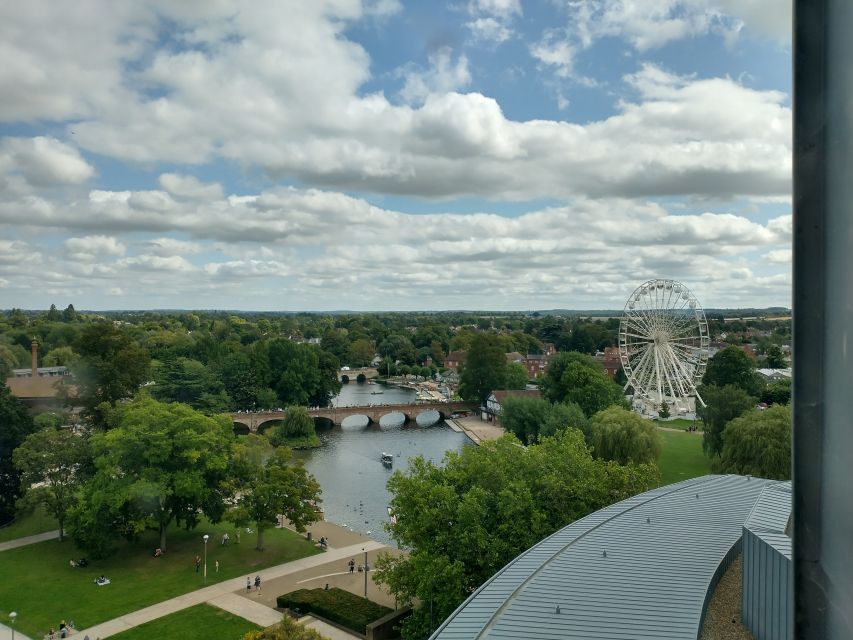
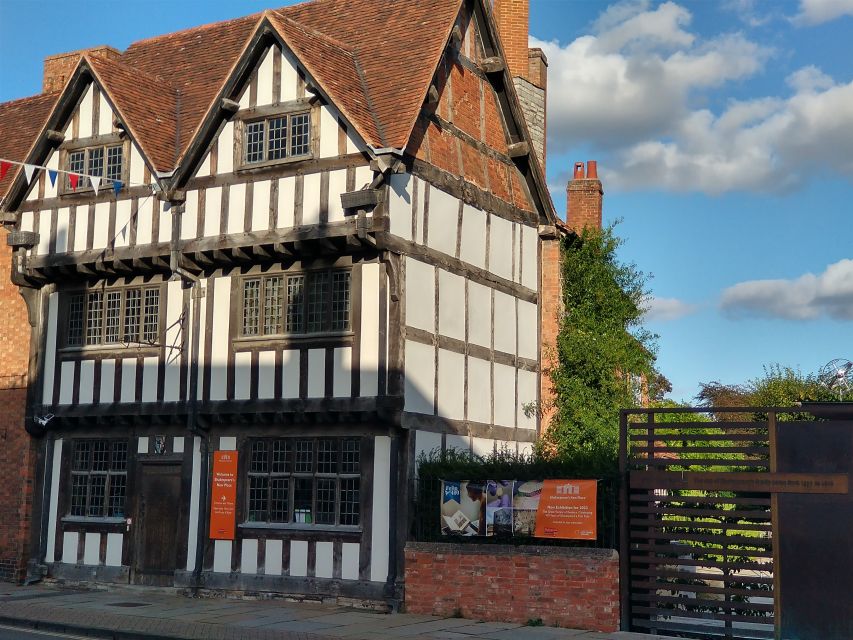
The route continues to Shakespeare’s New Place, the site of the home Shakespeare occupied later in life. This is an important counterpoint to the birthplace. You see the arc from his family origins to his success and status in Stratford.
As with the other Shakespeare properties, the walking tour does not include entry. Its value lies in explaining the site and placing it within the wider story. If you plan to spend a full day in Stratford, this is a natural point to decide if you want to return for a longer visit.
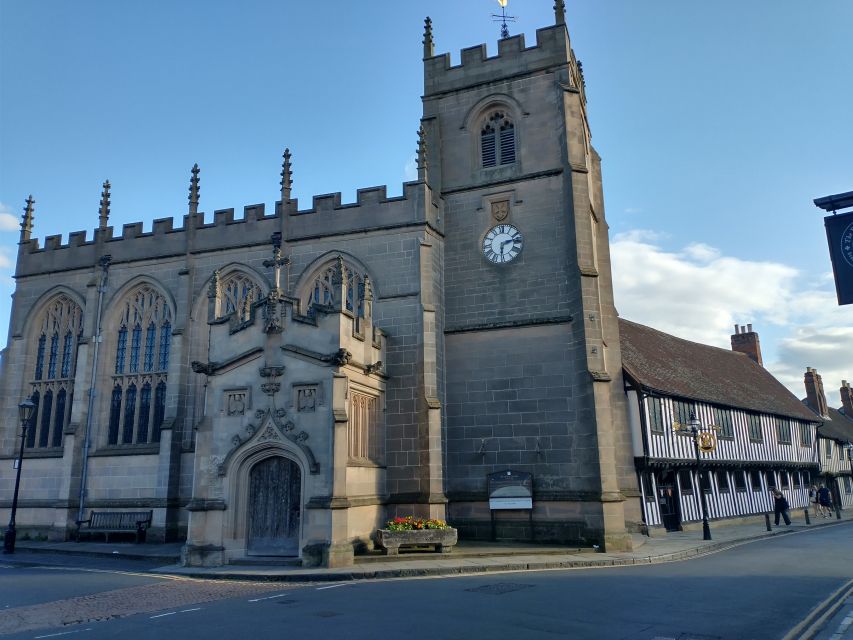
Next comes the Guild Chapel, one of the oldest and most historically important buildings on the route. Its chapel dates from 1269, and the Guild of the Holy Cross held power in Stratford for centuries. The guide explains how the Guild’s influence changed when it fell foul of Henry VIII and later rulers.
This is where the tour’s Tudor focus becomes especially useful. The Reformation was not an abstract event taking place somewhere else. It affected local institutions, buildings, education, charity, and town government. The forces that changed English religion also helped shape the society in which Shakespeare grew up.
The chapel is beside Shakespeare’s Schoolroom and the early sixteenth-century almshouses built by the Guild. Seeing these buildings together makes the relationship between religion, education, and care for the poor easier to understand.
Shakespeare’s Schoolroom and Tudor education
Shakespeare’s Schoolroom, also known as King Edward VI School in the modern setting, gives the walk another personal link to the playwright. You’ll hear about the education available to a boy in Tudor Stratford and how that period formed the language and ideas of his time.
The stop is valuable because it moves away from the familiar image of Shakespeare as a famous writer. Before the plays and sonnets, there was a local boy being raised in a town shaped by strict social structures, religion, trade, and schooling.
The guide also discusses the period from Henry VIII to Elizabeth I. That stretch of history saw major changes in religious practice, royal power, and English identity. These changes affected literature as well as daily life, and the walk helps you connect the national story with the streets in front of you.
The information comes quickly, but the guides are encouraged to keep it accessible. Kate is particularly associated with lively anecdotes and a strong interest in Shakespeare’s family and the town. Marcus has been praised for mixing clear history with jokes, while Dwayne is known for taking time with questions and adding extra explanation when the group is interested.
Historic taverns and Shakespeare’s social world
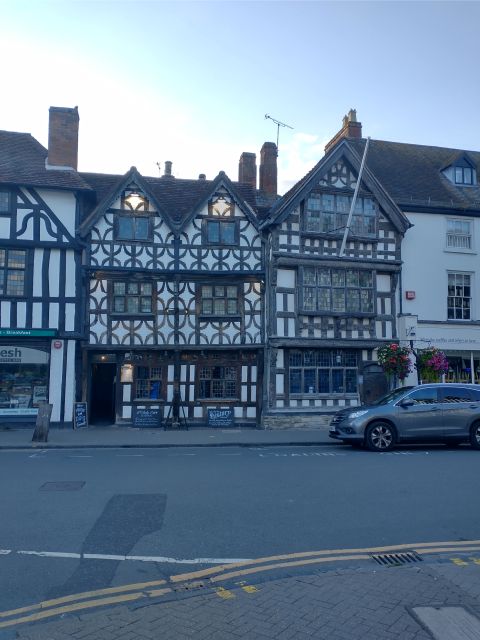
The route includes surviving taverns that served Shakespeare and his friends in the late sixteenth century. These are not just pretty old buildings. They help you picture the social world around the theatre, local business, and everyday conversation.
Some can still serve food and drink today, though the tour price includes neither. That makes the tavern stop practical as well as historic. You can return later for a meal or a drink, but you should not expect a scheduled refreshment break during the walk.
One particularly interesting detail is the Swan Theatre pub interior, where a mural was uncovered during renovation. Details like this are easy to miss if you wander alone. They also give the tour a sense of discovery without claiming that every building is directly tied to a famous event.
The taverns are a good reminder that Shakespeare’s life was not spent only in grand houses and formal institutions. He lived in a community of shops, markets, schools, churches, and drinking places. That everyday setting adds useful texture to the better-known story.
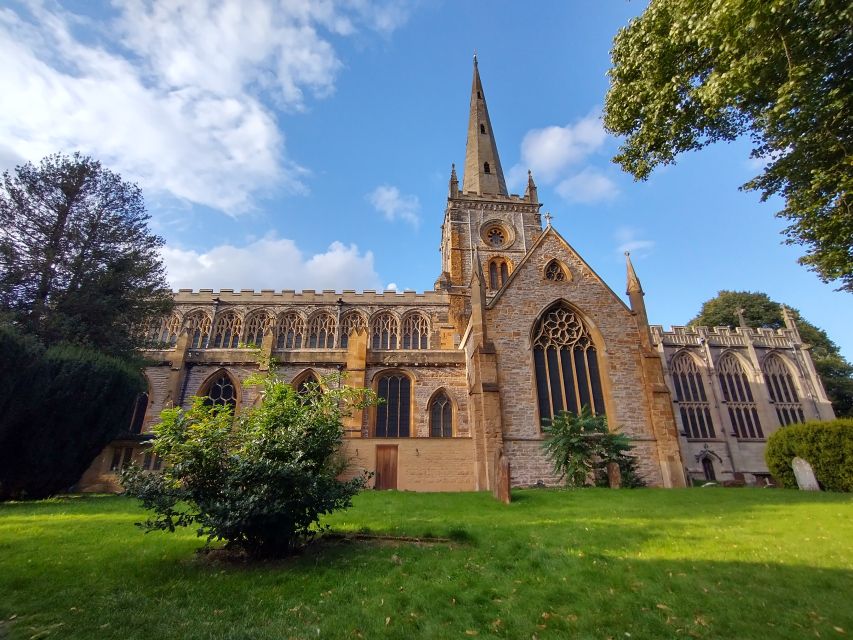
The church where Shakespeare was christened and buried
The walk also reaches the church where Shakespeare was christened and buried. This is one of the most meaningful stops for anyone coming to Stratford for his life story.
The route provides the setting and historical explanation, but you should check what is open and available inside on the day of your visit. The information supplied for the tour confirms the church’s connection to Shakespeare, but does not promise a particular interior visit or special access.
This stop works best when you treat it as part of the larger story rather than the grand finale. Shakespeare’s connection to Stratford began with his birth and baptism, continued through his family and property, and ended with his burial here. The town is not just the birthplace of his reputation. It was his home.
Returning by the Swan Theatre and the River Avon
The circular route continues to the Swan Theatre before returning to the Royal Shakespeare Theatre. The two theatres help you see how Stratford’s Shakespeare connection remains active rather than purely historic.
Along the way, you may pass scenic streets, gardens, quaint shops, and views toward the River Avon. The tour is not designed as a countryside walk, but these quieter sections give your eyes a break from buildings and let you see the setting that makes Stratford appealing as a day trip.
The route covers just under 1.4 kilometres, so the physical demand is modest. Still, you’ll be on your feet for roughly an hour and a half, often stopping outdoors while the guide talks. Wear comfortable shoes and dress for the weather.
The walk runs in rain or shine and cancels only when extreme conditions make it unsafe. One practical weakness is the lack of a guaranteed sheltered warm-up stop. On a cold or wet day, bring a waterproof layer and do not assume the guide can pause indoors for several minutes.
Guide style and the pace of the walk
The strongest part of this experience is the guide-led storytelling. Kate, Marcus, Dwayne, and Chris have each been singled out for clear explanations, humour, enthusiasm, and an ability to answer questions.
Expect a friendly and sometimes playful style. Dwayne is known for corny jokes, but also for giving thorough answers and allowing the walk to run longer when a topic deserves more time. Chris has been praised for making the history feel like a story populated by real people.
The tour can be relaxed, but it is not a stop-and-start attraction with long scheduled breaks. One description calls the walking pace rapid, while other comments describe it as steady and easy. The difference may depend on the group and the guide, so people who need a slower pace should mention this at the beginning.
The route is wheelchair and mobility scooter-friendly, which makes it a practical choice for many people. You should still prepare for outdoor surfaces, crowds, and standing at stops, since the activity is a town walk rather than a seated presentation.
Who should book this experience?
I would choose this tour if you are visiting Stratford for the first time and want a clear orientation before choosing which buildings to enter. It is especially useful for a day trip, since the route is short, central, and returns to its starting point.
It also suits families and mixed-interest groups. Someone fascinated by Shakespeare can focus on the birthplace, schoolroom, New Place, church, and taverns. Someone more interested in English history can follow the story of the Guild, the Reformation, Tudor rulers, markets, and civic life.
You may want a different experience if you already know Stratford well or want extended time inside each attraction. The tour does not replace a visit to the houses, chapel, or church. It gives you the map and the meaning, then leaves you to explore further.
Book with realistic expectations. You are getting a brisk, story-filled introduction with an English-speaking guide, not a private tour of every interior. At $16.16, that is a sensible trade if you value context and want to make better use of the rest of your day.
Practical details for your visit
Meet outside the Royal Shakespeare Theatre at the base of the viewing tower. Arrive just before the time on your ticket, and look for the guide’s badge or red umbrella.
The tour lasts 1.5 hours and is conducted in English. Food, drinks, hotel pickup, and hotel drop-off are not included.
You can cancel up to 24 hours before the activity for a full refund, and the reserve-now, pay-later option keeps your plans flexible. Wear comfortable shoes and weather-appropriate clothing, since the tour operates outdoors in normal rain and cold.
Should you book the Famous Walk Talk Show?
Book it if you want Stratford-upon-Avon explained rather than simply photographed. The compact route covers the town’s major Shakespeare sites while also giving proper attention to the Guild Chapel, Tudor politics, education, markets, taverns, and Stratford’s earlier centuries.
The best reason to go is the guide. Kate, Marcus, Dwayne, and Chris bring the facts to life with humour and plenty of detail, and the walk has enough room for questions. Just remember that bad weather can affect your comfort, and admission to the historic interiors is separate.
For a modest price, this is a useful first step into Stratford. It gives you the story, the street plan, and a better sense of which buildings deserve a closer look afterward.
FAQ
How long is the Stratford-Upon-Avon walking tour?
The tour lasts 1.5 hours, or 90 minutes, and covers just under 1.4 kilometres on a circular route.
Where does the tour start and finish?
It starts outside the main entrance to the Royal Shakespeare Theatre, at the base of the large viewing tower. The activity ends back at the same meeting point.
Is the tour conducted in English?
Yes. The tour has a live English-speaking guide, and English is the listed language.
Is the walk wheelchair accessible?
Yes. The route is described as wheelchair and mobility scooter-friendly.
Are attraction admission fees included?
No. The tour includes the guide only. Food, drinks, hotel pickup, hotel drop-off, and admission to attractions are not included.
What should I bring?
Bring comfortable shoes and clothing suited to the weather. The walk operates in rain or shine and cancels only if extreme weather creates a safety problem.
New listings around Stratford Upon Avon
- From Stratford-on-Avon/Moreton-in-Marsh: Secret Cotswolds★ 4.9 · 19 reviews
- From London: Warwick Castle Day Trip by Rail★ 4.4 · 25 reviews
- Warwickshire: The Explorer Pass by Shakespeare’s England★ 4.6 · 26 reviews
- Stratford-upon-Avon: Tudor World Museum Entrance Ticket★ 4.4 · 34 reviews
- Stratford-upon-Avon: Anne Hathaway’s Cottage Entry ticket★ 4.7 · 41 reviews
- Shakespeare Distillery Tour & Tasting (Gin & Rum)★ 4.8 · 69 reviews
- Shakespeare’s Schoolroom and Guildhall Entrance Tickets★ 4.4 · 70 reviews
- Stratford-Upon-Avon’s Town Walking Tour (10:30am & 2pm)★ 4.8 · 143 reviews
Stratford upon Avon Tours, compared.

The Sinister Side of Shakespeare’s Stratford Walking Tour
Read our review →

Stratford-Upon-Avon’s Town Walking Tour (10:30am & 2pm)
Read our review →
Shakespeare’s Schoolroom and Guildhall Entrance Tickets
Read our review →
Shakespeare Distillery Tour & Tasting (Gin & Rum)
Read our review →Browse the lists this tour appears in