
Reviewed · STRATFORD UPON AVON TOURS
Stratford-upon-Avon: Tudor World Museum Entrance Ticket
Tudor World takes you into the darker side of Shakespeare’s Stratford, with plague rooms, Tudor furniture, and stories about Henry VIII, Elizabeth I, Francis Drake, and ordinary people. The plague cottage gives the visit its strongest sense of place, while the Tudor bed and dining room make history easy to picture.
I like the mix of hands-on sets and short pieces of information. Sitting at a Tudor table or trying a quill gives children something to do, and the touchscreens, videos, and quiz help break up the reading. The main drawback is that this is not a guided tour, so you may find it too text-heavy if you want a live storyteller leading the way.
Key points to know before you go

- The plague cottage adds a sobering local angle: Learn how outbreaks affected Stratford during Shakespeare’s time and how illness was treated.
- Tudor rooms are made for hands-on learning: Sit in a dining room, lie across a Tudor bed, and visit a throne room.
- Children receive a quiz and small prize: Adults get character cards to help frame the stories as you explore.
- The setting is part of the attraction: The museum occupies a historic 16th-century Grade II building on Sheep Street.
- It works best as a self-guided stop: There is no guide, so you set your own pace and read or interact as much as you wish.
- The price is modest: At about $10 per person, it can make sense as a short family activity near the RSC, especially when paired with other Stratford sights.
Entering Tudor World on Sheep Street

Tudor World sits in central Stratford-upon-Avon, only a few meters from the Royal Shakespeare Company. That location makes it easy to add before or after a theatre visit, a walk along the river, or a tour of Shakespeare-related sights.
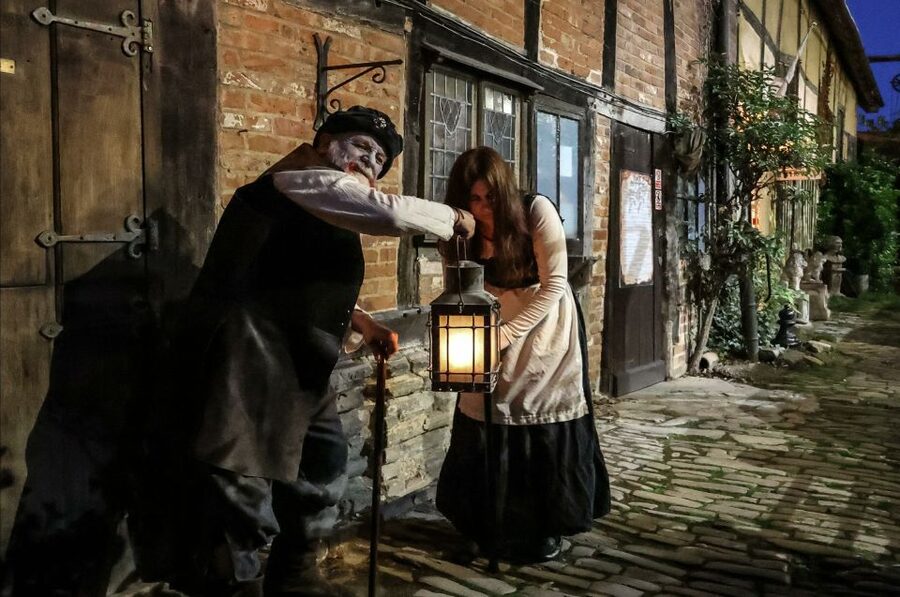
Look for the large Tudor building on Sheep Street. You go under an arch and continue through a cobbled courtyard to reach the entrance. The approach matters because the museum is not simply a modern room filled with displays. The old building helps set the mood before you see the first exhibit.
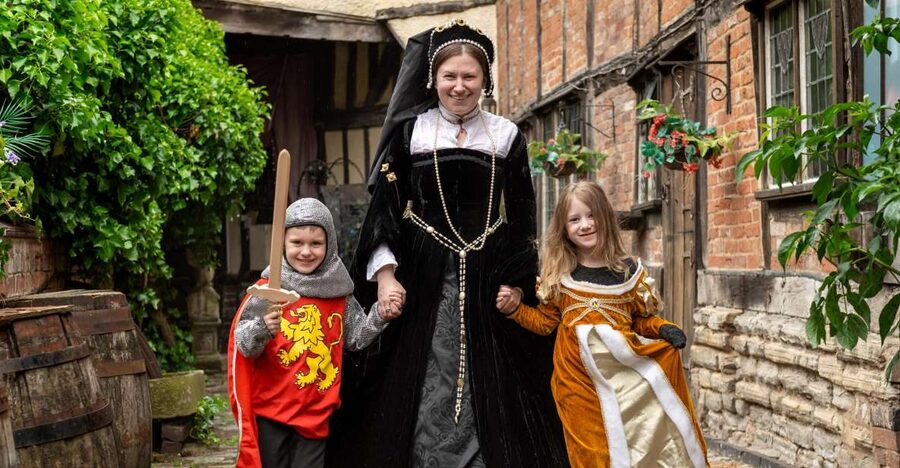
The museum uses historical rooms and staged settings rather than a standard museum layout. You move through spaces linked to Tudor life, public figures, illness, religion, and daily routines. Some scenes are designed for photographs, so you can pose rather than only look at objects behind glass.
The setting has a theatrical quality, which fits Stratford well. You are close to one of Britain’s most famous theatre companies, but the museum focuses on the period in which William Shakespeare lived rather than on a performance of one particular play.
More Museum Tours in Stratford Upon Avon:
- Liverpool: Liverpool Football Club Museum and Stadium Tour
★ 4.8 · 10,764 reviews - London: Chelsea Football Club Stadium and Museum Tour
★ 4.8 · 4,576 reviews - London Transport Museum Entrance Ticket
★ 4.5 · 1,323 reviews
Meeting Shakespeare’s Tudor world
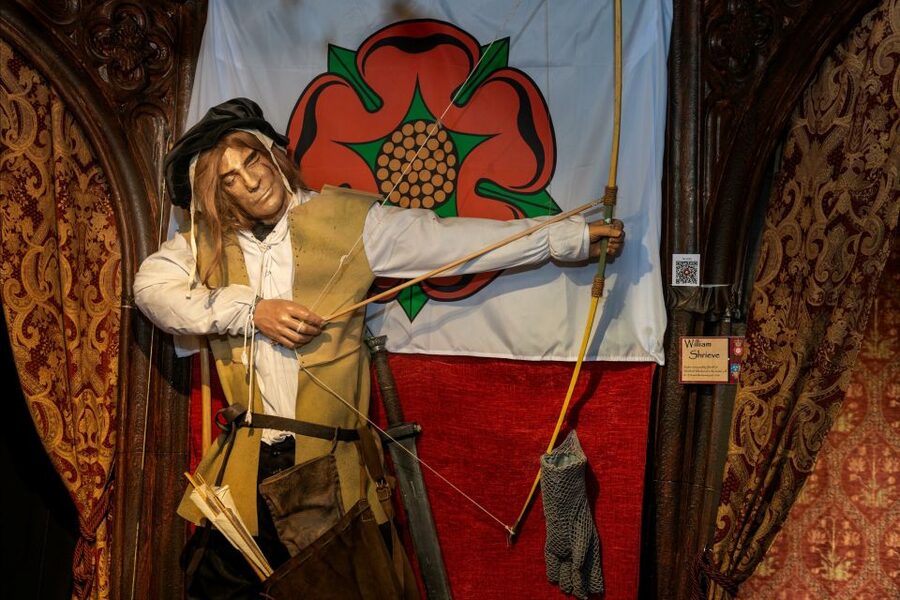
The visit covers a wide cast of people. Shakespeare is central because Stratford was his home, but the story also includes Henry VIII, Elizabeth I, and Francis Drake. The museum also gives attention to people who did not rule, sail, or write plays.
That last point is important. Tudor history is often taught through monarchs, battles, and famous names. Here, you also get a look at ordinary life, including rooms, food settings, illness, writing, and beliefs. These details help explain the world around Shakespeare rather than treating him as an isolated genius.
Adults receive character cards. These give you an extra way to approach the displays and may help you connect different people and events as you move through the building. Since there is no guide, the cards also add some structure to a visit that otherwise depends on your own reading.
The information is presented in a direct, accessible style. You should expect to read signs and use interactive features rather than listen to a scheduled talk. One visitor rated the experience highly and planned to return with relatives, while another found that it involved too much reading and lacked interaction. Both reactions point to the central question: you need to enjoy exploring at your own pace.
The plague cottage and Stratford’s hardest stories
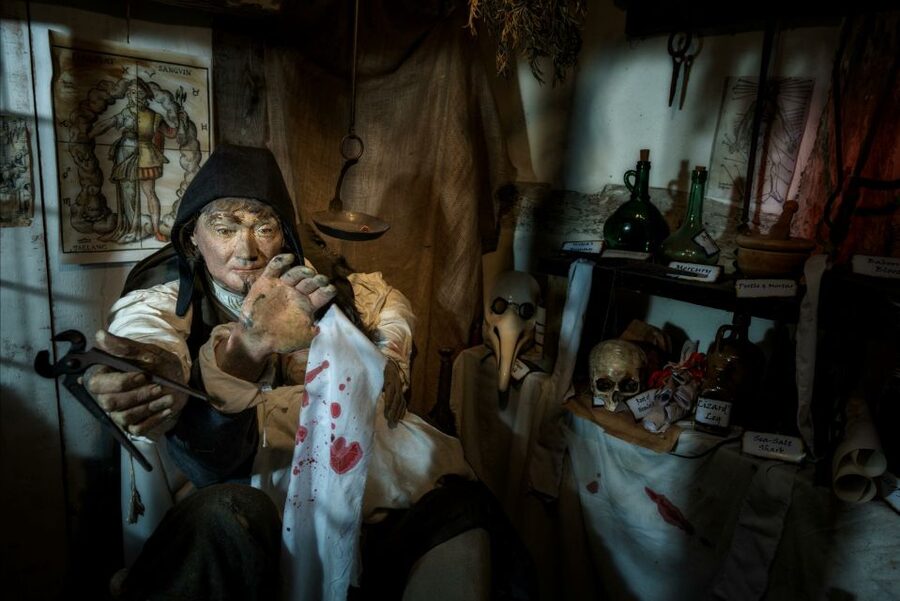
The plague section is one of the most distinctive parts of the museum. You enter a plague cottage designed to show how people in Tudor Stratford faced outbreaks and attempted to treat the disease.
This is not a cheerful part of the visit, but it gives useful context. Plague was not an abstract event in the 16th century. It affected homes, families, work, and town life. A cottage setting makes the subject more personal than a date on a wall or a short paragraph in a textbook.
You can also consider how limited medical knowledge shaped everyday choices. The museum explains the period’s approach to plague treatment, allowing you to see the gap between Tudor beliefs and modern medicine. The display is most useful when you take time with the text instead of rushing through the room.
Families should decide how much detail suits their children. The subject is serious, and the room may feel more unsettling than the brighter Tudor scenes. At the same time, it gives older children a clear reason to ask questions about sanitation, illness, and life in Shakespeare’s time.
Sitting in a Tudor dining room

The Tudor dining room is one of the places where the museum shifts from explanation to participation. You can sit in the room and look at the setting from the position of someone who might have eaten there.
That simple act helps you think about Tudor customs. A dining room is not just furniture. It raises questions about who sat where, how meals were served, and how social rank shaped daily life. The museum does not require you to know all the answers before you arrive. The setting gives you a starting point.
This is also a good photo stop. The museum encourages photographs throughout the visit, with sets designed to be as accurate as possible. You should still treat the rooms with care, but the chance to sit and pose makes the visit more memorable for children than a display they can only view from a distance.
The drawback is that a staged room cannot provide the same detail as a major historic house with original furniture and a large collection. Think of Tudor World as a compact learning attraction built around atmosphere and participation, not as a specialist archive.
A handful of other Stratford Upon Avon outings to weigh up
- The Sinister Side of Shakespeare’s Stratford Walking Tour
★ 4.8 · 547 reviews - Stratford-upon-Avon: Shakespeare’s Birthplace Ticket
★ 4.6 · 476 reviews - Stratford-Upon-Avon: The Famous Walk Talk Show
★ 4.9 · 342 reviews - Stratford-upon-Avon:City Sightseeing Hop-On Hop-Off Bus Tour
★ 4.4 · 296 reviews
The Tudor bed, throne room, and quill
The museum includes a Tudor bed and invites you to lie across it. That unusual touch gives you a quick sense of the size and style of a period bed, while also offering one of the more playful moments in the visit.
You can also visit a throne room. The room connects the domestic scenes with the larger political world of Tudor kings and queens. After seeing how ordinary people lived, the throne room reminds you that the same period contained sharp differences in power, wealth, and status.
Writing with a quill is another hands-on activity. You can try the basic act of putting words on a page with a period-style tool. It is a small activity, but it helps explain why writing and reading were not as quick or casual as they are today.
The museum also asks you to discover if you are a witch. This adds a lighter note to a period in which superstition and fear could shape real lives. The activity is likely to appeal most to children, though adults can enjoy the theatrical silliness too.
Touchscreens, videos, and the children’s quiz

Tudor World mixes physical sets with touchscreens and videos. These digital elements provide another way to take in the information, especially if you prefer short explanations to long blocks of text.
The children’s quiz gives younger visitors a task to complete as they walk through the rooms. A small prize is offered to children who do well. That reward can help keep a family moving when attention begins to fade.
I like this format for mixed-age groups. Adults can spend longer with the background information, while children have questions and activities to guide them. The quiz also turns the visit into a search for clues rather than a passive walk through rooms.
Still, the interactive side should not be overstated. There is no guide leading a live presentation, and at least one recent booking found the visit mainly focused on reading with little interaction. If your priority is a lively actor-led performance, this may feel quiet. If you prefer to pause, skip sections, and choose your own pace, the self-guided design is useful.
How much time should you allow?

The ticket is valid for one day, but the available information does not give a fixed length for the museum visit. You can plan it as a flexible stop during a day in Stratford rather than as a timed tour with a set finish.
That flexibility is helpful near the RSC. You can fit the museum around a theatre schedule or other sightseeing without committing to a long guided walk. Check the available starting times when booking, since the ticket information directs you to availability for the operating schedule.
The exact time you spend will depend on how much you read and how long your children use the quiz and interactive displays. A family that stops for photographs, tries every activity, and reads the historical notes will need longer than someone making a quick circuit.
I would avoid treating the one-day validity as permission to come and go repeatedly unless the admission conditions confirm that. In practical terms, plan to visit once and allow enough time to enjoy the rooms without hurrying.
Is $10 a fair price?

At about $10 per person, Tudor World is priced as an affordable central attraction rather than a major full-day museum. The value depends on what you want from it.
The price works well if you are already exploring Stratford and want a short, themed activity close to the RSC. It is also easier to justify for a family because the ticket includes a children’s quiz and small prize, while adults receive character cards. Those extras give the group a reason to pay attention instead of simply walking through.
The value is less clear if you expect a professional guide, a large collection, or hours of detailed scholarship. Food and drinks are not included, and there is no guide. You are paying for entry to the historic building, staged rooms, historical information, and interactive features.
I would compare it with your own interests. If you enjoy costumes, period rooms, photographs, and accessible stories, the price is reasonable. If you want original objects, formal interpretation, or a live historical character, you may prefer to spend your admission budget elsewhere.
Who will enjoy this museum most?
Families with school-age children are the clearest match. The quiz, small prize, quill writing, witch activity, throne room, bed, and dining room give children several ways to take part. The plague cottage also creates an opening for age-appropriate conversations about illness and life in the past.
Shakespeare fans may enjoy the local connection, especially when combining the visit with the RSC and other Stratford sights. The museum helps place Shakespeare in his own period, alongside monarchs, explorers, disease, religion, and ordinary household life.
It can also suit adults who want a light, self-guided introduction to Tudor history. You do not need specialist knowledge, and you can choose which displays deserve the most time.
It is less suitable if you want a guided experience. Without a guide, you must read the displays and build the story yourself. That is fine for independent visitors, but it may disappoint anyone expecting a narrated tour or a live demonstration.
There is conflicting accessibility information that you should take seriously. The activity details describe the museum as wheelchair accessible, but the suitability information says it is not suitable for wheelchair users. Contact Tudor World directly before booking if step-free access or room access matters to you, rather than relying on the general ticket label.
Booking, cancellation, and practical planning
The ticket costs $10 per person and can be reserved with payment later, which may help if your Stratford plans are still changing. Free cancellation is available up to 24 hours in advance for a full refund.
The entry ticket covers the museum itself. Food and drinks are not included, so plan to eat elsewhere in Stratford. The central location makes it easy to combine the visit with other town activities, but the museum does not provide a guide.
The meeting point is specific but easy to find once you are on Sheep Street: enter the large Tudor building through the arch, then follow the cobbled courtyard to the entrance. Give yourself a few extra minutes if you are meeting family members, since the entrance is set back from the street.
The published rating is 4.4 from 34 reviews, which suggests a generally positive experience but not universal agreement. The praise centers on enjoyment and family appeal, while the main criticism is the lack of a guide and limited interaction. That split gives you a reliable way to judge the fit before paying.
Should you book Tudor World?
Book it if you want an affordable, central Stratford activity with period rooms, hands-on moments, and a clear focus on Tudor life. I especially recommend it for families who will use the quiz, try the quill, and take time with the plague cottage and Tudor rooms.
Think twice if you want a guided tour or a large museum collection. The attraction relies on signs, touchscreens, videos, and staged settings, so your enjoyment will depend on how much you like self-guided reading.
For many people, the best plan is to treat Tudor World as one compact stop in a Stratford day, not the sole reason to visit town. At $10, it offers enough unusual detail and family activity to earn its place, provided you arrive expecting a self-guided museum rather than a live show.
FAQ
Where is Tudor World Museum located?
The museum is on Sheep Street in central Stratford-upon-Avon, Warwickshire, in a large Tudor building near the RSC. Enter through the arch and follow the cobbled courtyard to the entrance.
How much does admission cost?
The listed price is $10 per person.
How long is the ticket valid?
The ticket is valid for one day. Check availability for the starting times offered on your chosen date.
Is the visit guided?
No. A guide is not included. You explore the rooms and displays independently, using the touchscreens, videos, character cards, and other activities.
What does the ticket include?
Admission is included, along with character cards for adults. Children can take a quiz and may receive a small prize if they do well.
Are food and drinks included?
No. Food and drinks are not included in the ticket.
Is Tudor World wheelchair accessible?
The activity information gives conflicting details. It describes the museum as wheelchair accessible but also lists it as unsuitable for wheelchair users. Contact Tudor World before booking to confirm the access arrangements.
Can I cancel the booking?
Yes. You can cancel up to 24 hours in advance for a full refund. A reserve-now-and-pay-later option is also available.
New listings around Stratford Upon Avon
- From Stratford-on-Avon/Moreton-in-Marsh: Secret Cotswolds★ 4.9 · 19 reviews
- From London: Warwick Castle Day Trip by Rail★ 4.4 · 25 reviews
- Warwickshire: The Explorer Pass by Shakespeare’s England★ 4.6 · 26 reviews
- Stratford-upon-Avon: Anne Hathaway’s Cottage Entry ticket★ 4.7 · 41 reviews
- Shakespeare Distillery Tour & Tasting (Gin & Rum)★ 4.8 · 69 reviews
- Shakespeare’s Schoolroom and Guildhall Entrance Tickets★ 4.4 · 70 reviews
- Stratford-Upon-Avon’s Town Walking Tour (10:30am & 2pm)★ 4.8 · 143 reviews
- Stratford-upon-Avon: Shakespeare’s Story Entry Ticket★ 4.6 · 208 reviews
Stratford upon Avon Tours, compared.

The Sinister Side of Shakespeare’s Stratford Walking Tour
Read our review →




Stratford-Upon-Avon’s Town Walking Tour (10:30am & 2pm)
Read our review →
Shakespeare’s Schoolroom and Guildhall Entrance Tickets
Read our review →Browse the lists this tour appears in